The Hidden Cost of Ignoring Recovery: What Federal Data Reveals
If you're an athlete, fitness enthusiast, or someone who works a physically demanding job, you've likely heard cold plunges mentioned as a recovery tool. But the reason to pay attention to cold immersion isn't celebrity endorsement—it's the growing body of federal occupational health research documenting its measurable effects on muscle recovery and inflammation.
Here's the context: Musculoskeletal disorders account for approximately 30% of all nonfatal occupational injuries with days away from work across U.S. private industry, according to the BLS Survey of Occupational Injuries and Illnesses (SOII). This isn't just a construction-site issue. The CDC reports that approximately 20% of U.S. adults experience chronic pain, with high-impact chronic pain (limiting daily activity) affecting roughly 7% of adults, according to CDC NCHS Data Brief 390. And for employers in construction and warehousing, BLS Employer Costs for Employee Compensation data shows workers' compensation insurance rates price single MSD claims into thousands of dollars in annual premium delta.
In other words: recovery isn't optional. It's economically and physiologically significant. Which makes understanding whether cold plunges actually work—and which ones to buy—a data-driven decision, not a lifestyle one.
What NIOSH Research Actually Says About Cold Immersion
The science here is specific and replicable. NIOSH-cited recovery literature documents that cold-water immersion at 50–59°F (10–15°C) for 10–15 minutes post-exertion reduces delayed-onset muscle soreness and lowers serum creatine kinase markers, according to NIOSH Numbered Documents on occupational recovery protocols.
Unpack that statement:
- Temperature specificity matters: Cold water at 50–59°F (10–15°C) isn't arbitrary. It's cold enough to trigger vasoconstriction and reduce metabolic inflammation, but not so extreme that it causes dangerous core temperature drop or increases injury risk.
- Timing and duration are standardized: 10–15 minutes post-exertion aligns with the inflammatory cascade after muscle damage. Go shorter and you miss the window; go longer and diminishing returns set in.
- The biomarker evidence is real: Serum creatine kinase (CK) is a muscle damage marker. Lower CK levels after cold immersion suggest the intervention genuinely suppresses inflammation, not just subjective soreness.
This is the kind of specificity you should demand from any recovery tool. Not "cold water is good." But this temperature, this duration, this timing, these measurable outcomes.
Translating Federal Data Into Buying Criteria
Given what NIOSH research supports, here's how to evaluate a cold plunge:
Temperature Control: Your plunge must reliably maintain 50–59°F. Cheap tubs that rely on ice packs or ambient temperature won't cut it. You need either a built-in chiller or the ability to add one. This is non-negotiable for replicating the research conditions.
Insulation Quality: A well-insulated tub means your chiller doesn't run constantly, which saves electricity and extends equipment life. Cheaper models often sacrifice insulation, driving up operational costs.
Durability for Consistent Use: If you're committing to post-exertion cold immersion 3–5 times per week, your tub needs to handle that frequency without degrading. Cracks in acrylic, seal failures, and chiller breakdowns are costly middle-of-recovery interruptions.
Size vs. Space Trade-Off: Larger tubs cost more but may accommodate faster entry/exit and better heat distribution. Smaller tubs (like barrel models) take up less space and cost less, but require more careful body positioning.
Given the federal data on chronic pain prevalence (affecting roughly 7% of U.S. adults as "high-impact") and the NIOSH evidence base, a cold plunge is a legitimate recovery investment—but only if it meets these technical criteria.
Budget Tiers and What You're Actually Buying
[[mini-list]]
The price range spans $1,200 to $7,490, which reflects three distinct buying positions:
Entry-Level: Cold Plunges Without Chillers ($1,200–$1,500)
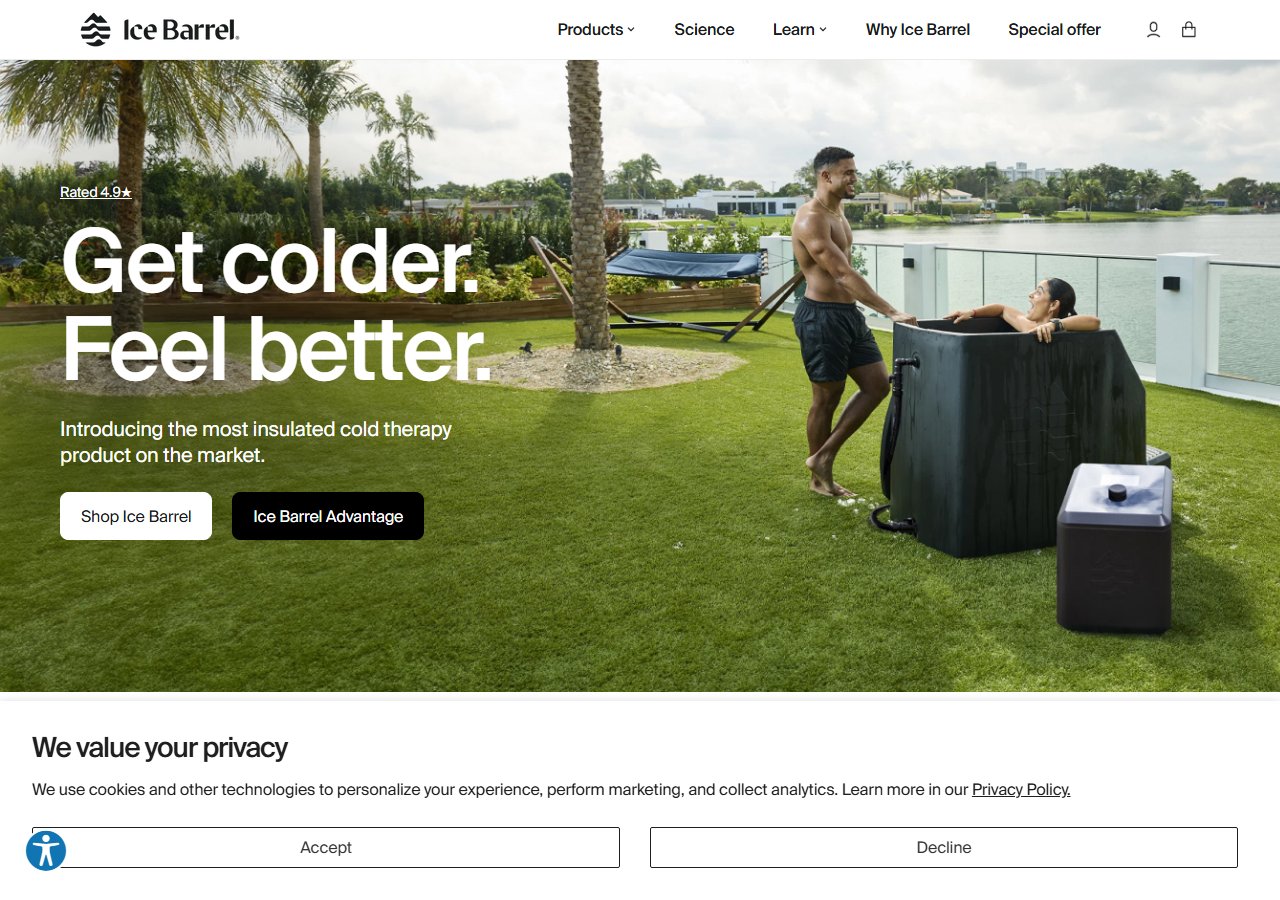
Barrel-style tubs like the Ice Barrel 400 require manual ice management. You'll buy bags of ice weekly (or use a freezer), which adds labor and recurring cost. But if you're testing the habit or have space constraints, this is a real option. The trade-off: you're not replicating the NIOSH research conditions with automated precision—you're approximating them.
Mid-Range: All-in-One Systems with Chillers ($4,490–$5,000)
Here's where most recovery enthusiasts land. Models like The Plunge Pure include built-in refrigeration, which means you dial in 50–59°F and it stays there. No ice buying. No guesswork. The hardware is large enough for comfortable submersion but doesn't require a dedicated recovery room. This tier aligns with the federal research: you can actually achieve the NIOSH-documented temperature and duration without logistical friction.
Premium: Dual-Function Systems ($7,490)
The Plunge Pro adds hot water capability, turning your recovery tool into a contrast-therapy system. If you're managing multiple injury types or want thermal flexibility (heat for joint stiffness, cold for inflammation), this justifies the premium. But it's not required for the core NIOSH-supported benefit.
Why This Matters Beyond Fitness
If you work in construction, warehousing, healthcare, or any field where musculoskeletal disorders drive 30% of occupational injuries and inflate employer insurance costs by thousands, cold plunges shift from "nice-to-have" to occupational health infrastructure. The federal data is clear: MSDs are expensive and prevalent. Post-work cold immersion is one of the few recovery modalities with NIOSH-backed efficacy data.
For athletes and general fitness enthusiasts, the math is simpler: if you're already paying for a gym membership, a coach, or supplements, the cold plunge is a more evidence-supported tool than most alternatives. You're buying a machine that reliably delivers a specific physiological stimulus that federal occupational health researchers have measured and validated.
Maintenance and Long-Term Ownership
One detail federal research doesn't address but affects your buying decision: maintenance. Cold plunges with chillers require occasional filter changes, drain cleaning, and—rarely—compressor servicing. Models with self-cleaning cycles (like the Sun Home Cold Plunge Pro) reduce that friction. If you're buying this as a serious recovery tool, account for the operational overhead. A $4,990 plunge that requires $500/year in maintenance is effectively a $600+ annual commitment beyond the initial spend.
Making the Final Decision
You now have three data layers:
- Federal prevalence data showing chronic pain and MSDs affect millions of U.S. adults and drive significant workplace costs.
- NIOSH-validated efficacy for cold immersion at specific temperatures and durations.
- Equipment-level criteria for turning that research into reliable daily practice.
If you're buying a cold plunge, you're not buying a luxury fitness gadget. You're buying a recovery infrastructure that aligns with federally documented occupational health best practices. Choose based on your space, budget, and commitment level—but insist on temperature control, insulation, and durability as non-negotiables.