The Data Behind Trucker Fatigue: Why Sleep Quality Is a Safety Issue
If you've spent three weeks on the road, alternating 11-hour driving shifts with 10-hour off-duty windows, your sleep debt isn't just personal - it's a federal safety concern. FMCSA driver-safety data documents elevated fatigue and sleep-disorder rates among long-haul commercial vehicle operators, contributing to crash risk. This isn't speculation. The Federal Motor Carrier Safety Administration tracks crash causation, and fatigue-related incidents remain a leading category among preventable collisions.
Yet most truckers sleep in cab sleepers, recliners, or roadside motels with whatever mattresses came stock - usually thin, unsupportive surfaces designed for transit, not recovery. Your body doesn't care that you're on the road. After 11 hours of forward-flexed spine, gripping the wheel through traffic and monotony, your lumbar spine, cervical joints, and circadian system are all dysregulated. The problem isn't just how long you sleep; it's how well.
CDC sleep and sleep disorders data shows approximately 35% of U.S. adults report sleeping less than 7 hours per night, the threshold associated with elevated chronic disease risk. For long-haul drivers, that percentage climbs significantly higher. The 10-hour mandatory off-duty window is your window to recover - not to partially rest in a reclined position that maintains postural stress.
Why Truckers' Spines and Sleep Architecture Are Under Siege
Your day in the cab is biomechanically brutal. You're in mild lumbar flexion for hours, with your neck slightly protracted to see the mirrors, your hips at 90 degrees, and your core stabilizers fatiguing without variation. This posture compresses your intervertebral discs and stretches your hip flexors and posterior chain. Blood flow to your lower extremities slows. Your circadian system - which is entrained to light, not kilometers - becomes confused by irregular schedules and the blue light of GPS and dashboard displays.
When you finally arrive at your destination and try to sleep, your nervous system is in a state of partial activation. Your parasympathetic tone is low because you've been in sustained alertness. Your body temperature hasn't dropped as it should, because you've been sitting in a climate-controlled cab without natural light-dark cycles. And if you're sleeping in a flat, firm surface - or worse, a reclined bucket seat - your spine remains in a compromised position that doesn't allow the intervertebral discs to rehydrate or the posterior chain to fully elongate.
Sleep position dictates spinal load: side-sleeping with a pillow between the knees keeps the pelvis neutral and reduces lumbar load. Stomach-sleeping is the worst position for back and neck pain. NIH back pain guidance lists sleep posture as a primary modifiable factor. Most truckers can't achieve ideal sleep posture on a flat surface or in a reclined position. An adjustable bed that raises the head and foot independently allows you to find a position that takes load off your lumbar spine while supporting your cervical curve - something impossible in a traditional flat mattress or cab sleeper.
There's also a secondary benefit: slight head elevation (15 to 30 degrees) can reduce snoring and ease mild gastroesophageal reflux, both common in shift workers. If you're waking up with a sore throat or acid creeping up at 3 a.m., positional adjustment alone can add hours of continuous sleep time.
Try These First: The Interventions That Don't Require Buying an Adjustable Bed
Before you invest in equipment, understand that the cheapest intervention is the one that doesn't require buying anything. Three evidence-based adjustments can dramatically improve your sleep quality during off-duty windows.
First: dark, cool, no screens. CDC sleep hygiene guidance recommends bedroom temperatures of 65 to 68 degrees Fahrenheit, blackout conditions, and no screens in the hour before bed. Your motel room or sleeper cab is usually too warm (75 - 80 degrees), brightly lit by parking-lot lights, and you're scrolling your phone or watching the television. These are sleep saboteurs. When you check into a motel, close the blackout curtains (or use a sleep mask), lower the thermostat to 66 degrees, and leave your phone in another room. This single behavioral change can add 60 - 90 minutes of deep sleep per night, according to NIH sleep research. It costs nothing.
Second: walking for chronic back pain. AHRQ evidence reviews list walking as a first-line non-drug intervention for chronic low back pain; 30 minutes of moderate walking most days outperforms most passive interventions in meta-analyses. You've been sitting for 11 hours. Your first action during your off-duty window should be a 20 - 30 minute walk, not a nap. This resets your circadian system, activates your parasympathetic nervous system, mobilizes your lumbar spine, and primes you for deeper sleep 2 - 3 hours later. Truck stops are often near rest areas or parking lots - a simple walk around the perimeter of the lot is sufficient. No gym membership required.
Third: screen for sleep apnea before buying gear. Adjustable beds help with positional snoring and mild GERD but do not treat moderate-to-severe sleep apnea. Before you purchase an adjustable bed, ask yourself: Do you snore loudly? Have you been told you stop breathing at night? Do you wake up gasping? Do you feel exhausted even after 8 hours? If yes to any of these, NHLBI guidance states anyone with loud snoring, witnessed gasping, or daytime sleepiness should be screened with a sleep study. Sleep apnea is treatable with CPAP or positional devices, but an adjustable bed alone won't solve it. Get screened first.
If you've applied these interventions - optimized your sleep environment, added daily walking, ruled out sleep apnea - and you're still waking with lower-back pain or not hitting the 7-hour sleep-quality mark, then equipment becomes the next logical step. This is where adjustable beds enter the picture not as a first-resort luxury, but as a targeted tool for postural support during the specific recovery demands of long-haul driving.
The Adjustable Bed Advantage for Trucker Recovery
An adjustable bed - specifically, a model with independent head and foot adjustment - allows you to achieve sleep positions that flat mattresses cannot. Here's the physiology:
When your head is raised 20 - 30 degrees and your legs are elevated (foot end raised 10 - 15 degrees), your spine assumes a semi-reclined posture that distributes load more evenly across your intervertebral discs. Your hip flexors lengthen. Your cervical spine is supported without hyperextension. This position is biomechanically closer to a neutral spine than any flat or reclined position. For a trucker whose vertebral discs have been compressed by 11 hours of forward posture, this 8 - 10 hour period of load-reduction is critical for disc rehydration and soft-tissue healing.
Secondly, an adjustable base allows you to lower your head and raise your legs slightly - a "anti-Trendelenburg" position - which can ease lower-back tension without requiring you to lie flat (which many truckers find uncomfortable). You can also keep your head elevated while sleeping on your side, which maintains the optimal side-sleeping posture while supporting your cervical curve.
Thirdly, many modern adjustable bases include adjustable firmness zones. If you're a 200+ pound driver, a firmer base prevents you from sinking into the mattress, which maintains spinal alignment. If you're lighter, a softer zone under your hips reduces pressure-point pain. The FDA 510(k) Class II clearance data covers adjustable bed mechanism patents and motorized base designs, providing federal-level engineering review of motor durability and pinch-point safety - meaning adjustable bases sold in the U.S. undergo rigorous safety testing for motor function, weight capacity, and entrapment hazards.
For truckers, the three models worth considering are the Sven & Son Bliss Adjustable Bed Base-Frame + 14 inch Hybrid Spring Mattress in Medium Soft, which offers a hybrid construction that balances pressure relief with lumbar support - ideal if you're recovering from chronic back pain and need the mattress paired with the base. If you want a more affordable option with the same independent head-foot adjustment, the Sven & Son Harmony Adjustable Bed Base provides motorized positioning without the premium mattress bundle, allowing you to use your own mattress. For a tight budget, the Sven & Son Classic Adjustable Bed Base is the entry point - a bare-bones adjustable base that still delivers independent head-foot adjustment and quiet motors, suitable for test-driving whether postural adjustment actually improves your sleep before you invest in a premium mattress.
Adjustable Beds for Trucker Off-Duty Recovery
Three adjustable-bed models engineered for independent head-foot positioning and motor durability, each suited to different budget levels and mattress preferences. All three support the postural variation and spinal load-reduction critical for circadian recovery during 10-hour mandatory off-duty windows.
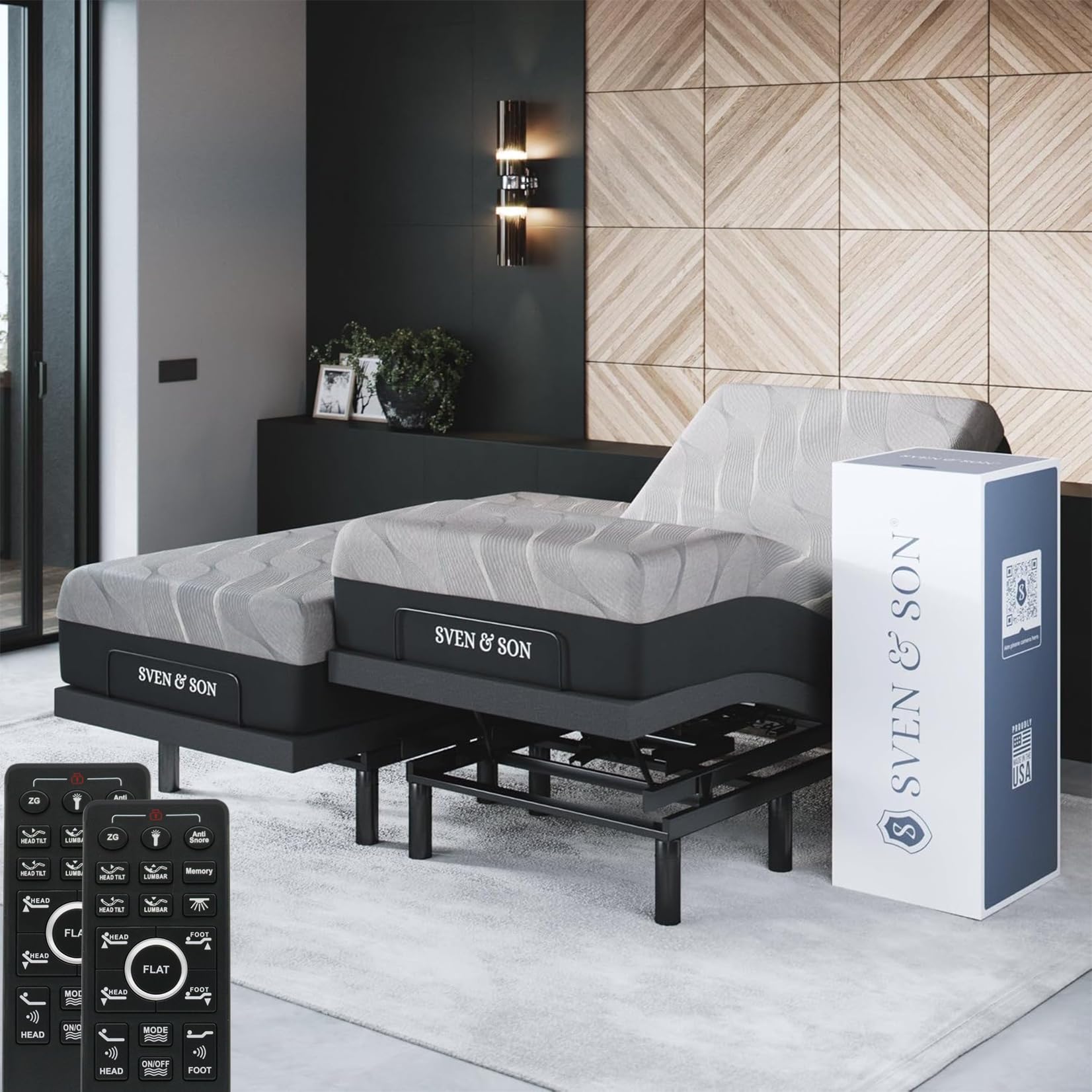
Sven & Son Bliss Adjustable Bed Base-Frame + 14 inch Hybrid Spring Matt (Medi...
$2,749.95
Check Price on Amazon →
Sven & Son Harmony Adjustable Bed Base, Head and Foot Lift, Massage, Under-Be...
$2,194.95
Check Price on Amazon →
Sven & Son Classic Adjustable Bed Base, Head and Foot Lift, Massage, Under-Be...
$1,994.95
Check Price on Amazon →When to See a Clinician: Red Flags Specific to Trucker Back and Sleep Issues
Not all back pain during or after driving requires imaging or intervention. NIH guidance states most low back pain resolves in 4 to 6 weeks without imaging. However, certain patterns demand urgent evaluation.
Seek immediate clinical evaluation if pain radiates down a leg (sciatica), comes with bowel or bladder changes, follows trauma, or comes with fever. These indicate nerve compression, infection, or structural damage that an adjustable bed cannot address. Additionally, if you're experiencing progressive weakness in your legs or feet, or if pain wakes you from sleep more than three times per week despite environmental and postural adjustments, a sleep medicine evaluation and spine imaging are warranted. Sleep apnea screening is also critical if you report daytime drowsiness despite 8+ hours in bed, as untreated apnea increases cardiovascular risk - a serious concern for drivers whose occupations already elevate stress on the heart.
The Recovery Product Stack for Long-Haul Drivers
Three adjustable-bed models stand out for trucker-specific recovery. The Bliss offers the most comprehensive package - mattress plus base - if you want a complete turnkey recovery system. The Harmony base pairs with any mattress you own, offering maximum flexibility. The Classic base is your budget entry point for exploring whether adjustable positioning actually solves your sleep issues before committing significant capital.
The key is that all three are mechanically identical in terms of head-foot adjustment range and motor durability. The difference is in mattress engineering and price. Choose the Bliss if you want the mattress engineered for your body weight and sleep style. Choose the Harmony if you already have a mattress you trust. Choose the Classic if you're still skeptical and want to test the concept at minimal cost.
What the Data Actually Shows: Sleep Quality, Not Sleep Duration
One critical caveat: an adjustable bed will not magically add hours to your sleep. It won't override the circadian disruption of irregular schedules, and it won't fix sleep apnea. What it will do is improve the quality of the hours you do sleep, particularly the deep-sleep and REM stages where physiological recovery happens.
A trucker sleeping 6 quality hours in an adjustable bed may wake more rested than one sleeping 8 hours on a flat, unsupportive surface. Quality matters as much as quantity. CDC data shows approximately 35% of U.S. adults report sleeping less than 7 hours per night - a population-level marker of insufficient recovery. But within that 35%, some are sleeping 6 hours in optimal conditions, while others are sleeping 7 hours in suboptimal ones. For long-haul drivers with inflexible schedules, optimizing quality during mandatory off-duty windows is often more realistic than increasing total duration.
Your Off-Duty Window is Recovery Time, Not Convenience Time
The federal regulation is 10 hours off-duty between driving shifts. Use it. Walk for 30 minutes. Lower your room temperature to 66 degrees. Blackout the windows. Then spend 8 - 9 hours in a properly positioned, supportive sleep surface.
If you're using a flat motel mattress or a cab sleeper, you're leaving recovery on the table. An adjustable bed - paired with sleep hygiene, regular movement, and sleep apnea screening - is a targeted tool for extracting maximum restoration from the limited recovery window your schedule allows. The data supports it. Your spine will thank you. And safer drivers are better drivers.