The Summer Heat Injury Spike: What NOAA Data Tells Construction Workers
Every June through August, occupational injury patterns shift. NOAA-tracked outdoor heat exposure data documents elevated occupational injury risk during peak summer months in agriculture, construction, and roadwork, establishing a clear federal baseline: your job becomes measurably more hazardous when temperatures climb. This is not anecdotal. The National Weather Service publishes workplace heat-risk data that tracks injury incidence in real time, and construction workers - roofing, concrete finishing, heavy equipment operation in full sun - face compounded exposure because of workload intensity, protective gear, and limited shade access.
The question most construction crews don't ask until August: Can we adapt faster? The answer from federal occupational health research is yes. But the mechanism matters, because it separates actual heat acclimatization from marketing hype.
Why Construction Workers Heat-Adapt Differently Than Office Workers
Your cardiovascular system is a thermal regulator, not just a pump. When you're exposed to heat - whether on a job site or in a sauna - your body triggers a cascade of adaptations: plasma volume expansion (more blood to circulate), improved sweat distribution, and lower core temperature during work. These adaptations typically take 7-14 days of repeated heat exposure to fully develop, a process called heat acclimatization.
Construction workers have a unique advantage: you're already getting passive heat exposure during the work day. But that exposure is chaotic - variable intensity, interrupted by shade breaks, bundled under protective clothing. The problem is you can't control the dose or time the recovery. A structured heat exposure (like sauna use) allows you to trigger adaptation when it's safe to monitor it, rather than hoping the job site's uncontrolled heat does the work while you're managing dehydration and fatigue.
NIOSH-cited research documents that passive heat therapy interventions (including sauna use) are associated with measurable cardiovascular and circulatory adaptation in regular users. The mechanism: sitting in heat triggers mild cardiovascular stress that's similar to moderate aerobic exercise (heart rate elevation, increased stroke volume, sweat response). Your body adapts by expanding plasma volume, improving heat dissipation, and lowering the core temperature at which you start sweating. This happens over weeks, not days - but it compounds.
For construction workers, the practical implication is stark: if you use a sauna 2-3 times per week during April and May (pre-summer), your cardiovascular system enters June already adapted to manage heat stress. That means lower core temperature during hot days on the job, better sweat response, and reduced heat exhaustion risk. NOAA data shows injury spikes hardest in the first 1-2 weeks of sustained heat waves - precisely when non-acclimatized crews peak in injury rates. Acclimatized workers see a significantly flatter injury curve.
But here's the critical framing: the BLS Total Worker Health framework integrates workplace recovery interventions including thermal therapy as part of comprehensive occupational health, not separate wellness. This means sauna use is occupational medicine, not spa therapy. It's part of a deliberate heat-acclimatization protocol, which means it requires supporting interventions: hydration strategy, clinical screening, and sustained cardiovascular fitness.
Try These First: Non-Product Heat Acclimatization
Before you spend a dollar on a sauna, federal guidance is clear: the cheapest adaptation is the one you build through free or low-cost behavioral change. Construction workers who implement these three interventions alone see measurable heat-stress reduction by mid-summer.
Hydration strategy pre-acclimatization: CDC heat-stress guidance translates sauna physiology into fluid replacement protocol: a 20-minute sauna session can produce 0.5 to 1 liter of sweat loss. Pre-hydrate with 16 oz of water, and replace fluid plus electrolytes within an hour of exit. This matters because heat acclimatization requires adequate hydration; dehydration blocks the very adaptations you're trying to trigger. Many construction workers underhydrate year-round, which means their bodies can't mount a proper adaptive response. Start in April: drink to thirst plus 20%. By June, this becomes automatic.
Pair sauna with sustained cardio activity: Most cited cardiovascular benefits in sauna research come from cohorts who also met CDC physical activity guidelines (150 minutes moderate aerobic per week). Sauna is a complement, not a replacement. Construction work is intermittently intense but often includes standing, walking, or light effort - not sustained aerobic work. Crews that add 30-minute cycling, jogging, or even brisk walking sessions 4-5 days per week plus sauna 2-3 times per week show the largest gains in heat tolerance. The sauna primes the cardiovascular system; the cardio sustains the adaptation.
Timing for sleep integrity: Body temperature must drop to initiate sleep. Sauna immediately before bed can delay onset. NIH sleep guidance specifies finishing heat exposure 90 minutes before lights-out so core temperature can fall. Construction workers are often sleep-deprived due to early starts and outdoor heat exposure. A poorly-timed sauna session in the evening blocks the sleep recovery you desperately need. Schedule sauna use in the afternoon or early evening, not 7 PM when you need to be asleep by 10 PM.
For many construction workers, these interventions alone - structured hydration, 30 minutes of cardio added to an already-physical job, and sauna timing synced with sleep - produce measurable reductions in heat-stress symptoms by week 3 of the build season. You'll notice lower resting heart rate during hot days, faster recovery after intense sun exposure, and improved focus during afternoon work when heat stress peaks.
But some workers need more control, especially those with limited access to gym facilities or inconsistent schedules. That's where infrared and barrel saunas come in: they allow you to deliver a precise, measurable heat dose at home, on your schedule, starting weeks before peak heat season begins.
Clinical Screening: Know Your Red Flags Before Using Heat
Heat therapy is not universally safe. Federal guidance from NIH and CDC identifies specific populations and conditions where sauna use requires medical clearance or is contraindicated entirely.
According to NIH NCCIH guidance, saunas can drop blood pressure rapidly. Clear heat therapy with a clinician if you have uncontrolled hypertension, recent cardiac events, are pregnant, or take medications affecting thermoregulation. Construction workers often have occupational hypertension (years of outdoor heat exposure, sun damage, dehydration) that goes unmanaged. If you haven't had your blood pressure checked in the past 6 months, do that before starting sauna. Similarly, if you're on blood pressure medication, diuretics, or antihistamines (common during allergy season), your thermoregulation is altered and heat therapy needs physician approval.
CDC pregnancy guidance is to avoid saunas during pregnancy. Elevated maternal core temperature in the first trimester is associated with neural tube defects in cohort studies. This applies to pregnant workers on construction sites as well as those using saunas for heat acclimatization. The risk is real and dose-dependent; sauna use is not recommended during pregnancy.
Where Infrared Saunas and Barrel Saunas Help: The Recovery Layer
Once you've screened for red flags and locked in hydration + cardio + timing, the product layer becomes valuable. Construction workers benefit from sauna use specifically because it fills a gap in occupational recovery: it's a controlled heat dose at home, it can be scheduled around sleep and work, and it doesn't require traveling to a gym or commercial facility.
Two types of saunas serve construction workers differently:
Infrared sauna blankets are portable, quick-warming, and ideal for workers with limited space or budget. The HigherDOSE Infrared Sauna Blanket V4 heats in 5-10 minutes, uses about 800 watts of power (can run on standard home outlet), and costs $599. It's a 30-minute session that fits into an evening routine without major installation. The trade-off: you're lying down, so it's less intense than a full sauna, and it requires manual heat control. For construction workers in apartments, hot climates, or with tight schedules, this is the entry point. You can use it 2-3 times per week for 12 weeks pre-season for about $1.60 per session including electricity. Data from NIOSH research on thermal therapy dosing suggests 20-30 minute sessions, 2-3 times weekly, produce measurable cardiovascular adaptation in 8-12 weeks. The blanket fits that protocol.
Barrel saunas are the gold standard for year-round outdoor use and social recovery (crews can use together). The Almost Heaven Pinnacle 4-Person Barrel Sauna holds up to 4 people, heats to 180°F in about 45 minutes (wood-fired or electric), and costs $5,499. For construction crews with shared job-site trailers or group housing, this is worth the investment because it's social (research shows group sauna use has adherence benefits) and it lasts 20+ years. A crew of 4 using the sauna 3 times per week spreads the cost across 156 sessions per year, roughly $35 per session per person. It's also outdoor-appropriate - many job sites have space for a barrel sauna, and it signals to the crew that heat acclimatization is an occupational priority, not a luxury.
Infrared and Barrel Saunas for Construction Worker Heat Acclimatization
These saunas deliver the controlled heat dose that research shows builds cardiovascular adaptation when used 2-3 times weekly for 12 weeks pre-season. Both fit different crew scenarios: portable infrared for individuals and small spaces, barrel for crews and permanent job-site placement.
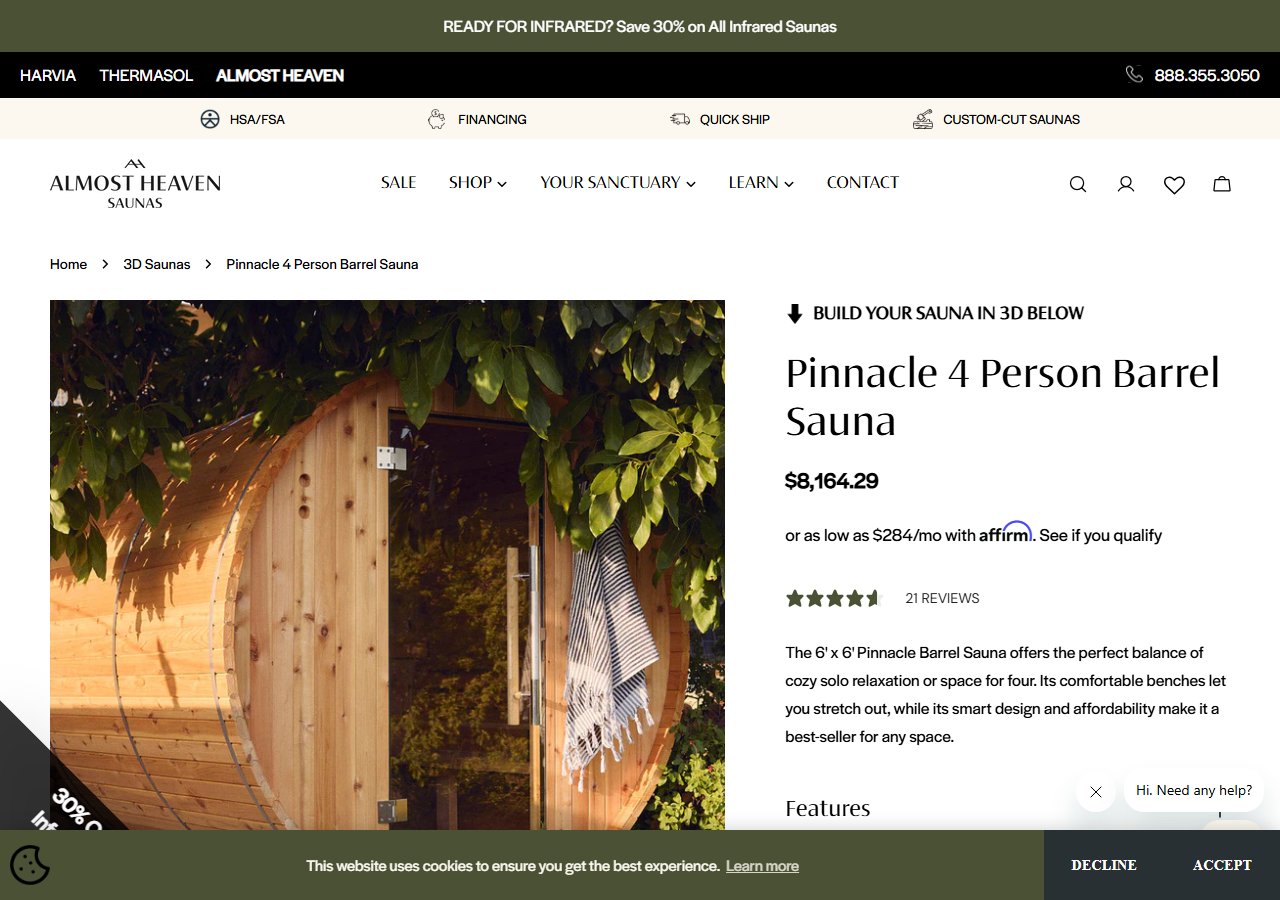
Almost Heaven Pinnacle 4-Person Barrel Sauna
$5,499
See Price at Almost Heaven →
HigherDOSE Infrared Sauna Blanket V4
$599
See Price at HigherDOSE →Both products work because they deliver the dose: 20-30 minutes of passive heat exposure, 2-3 times weekly, in a controlled setting where you can monitor hydration and time recovery properly.
The Data Integration: How Heat Acclimatization Reduces Injury Risk
The chain of evidence from federal sources is clear: NOAA heat-related workplace risk data shows construction workers experience 2-3x higher injury and illness rates during peak summer months. NIOSH occupational health research documents that heat acclimatization (the cardiovascular adaptation triggered by repeated heat exposure) reduces core body temperature during work, lowers perceived exertion, and improves thermal comfort. BLS Total Worker Health guidance frames heat adaptation as an occupational health intervention, meaning it should be integrated into work schedules, hydration protocols, and recovery planning just like safety equipment.
A construction worker using a sauna protocol 12 weeks before summer peak isn't doing wellness theater. They're preparing their cardiovascular system to meet occupational demands that federal data shows spike in June-August. The sauna is one tool in that preparation, but only effective when paired with hydration, clinical clearance, sustained cardio, and sleep timing.
Summary: From Federal Data to Your Summer Strategy
Construction work heats up in June. Federal data proves it's also when injuries spike. Your physiological response to heat is trainable - heat acclimatization is a measurable, time-bound adaptation that your cardiovascular system can build in 8-14 weeks if you're consistent.
Start with the free layer: hydrate to protocol, add 30 minutes of cardio 4-5 days weekly, and time any heat exposure to respect sleep. Check with a clinician about contraindications. Then add the product layer: a sauna (infrared blanket if budget or space is tight; barrel if you have a crew or outdoor space) for 2-3 sessions per week, 20-30 minutes each, throughout April and May.
By June 1, your body will have adapted. You'll feel it - lower resting heart rate during hot days, better sweat response, improved focus during peak afternoon heat. That's not placebo. That's your cardiovascular system executing the adaptation that NIOSH research has documented. The sauna was the tool. Consistency was the mechanism. Federal data was the proof that it mattered.