Chronic Pain, Shift Work, and why we need Non-Pharmacologic Recovery
Approximately 20% of U.S. adults experience chronic pain, according to CDC NCHS Data Brief 390. For shift workers - the focus of this analysis - that prevalence is meaningfully higher. The combination of circadian misalignment, repetitive occupational strain, and fragmented sleep creates a perfect storm for musculoskeletal pain that doesn't resolve with conventional rest. You're not imagining the pain; federal occupational health data documents that shift workers in healthcare, manufacturing, logistics, and security experience higher rates of chronic back, neck, and joint pain compared to day-shift counterparts.
When chronic pain persists, workers face an uncomfortable choice: pharmacologic interventions (which carry long-term risks and costs) or nothing. CMS drug spending data shows that opioid and non-opioid pain medications rank among the most expensive Medicare drug categories, reflecting both the scale of the problem and the economic pressure to find alternatives. This is where the NIH Pain Consortium and NIOSH Total Worker Health Program intervene with a different framework: non-pharmacologic, multi-modal recovery stacks that address the root occupational stressors and physiological recovery deficits that shift work creates.
Red light therapy panels have become a trendy addition to recovery routines - marketed as a standalone solution for pain, inflammation, and energy. But the evidence tells a more nuanced story. Red light therapy (photobiomodulation, in technical terms) is one tool in a larger recovery ecosystem. For shift workers specifically, understanding where it fits - and where it doesn't - requires wading through the federal data on what actually drives chronic pain recovery.
Why Shift Workers Experience Chronic Pain: The Circadian and Biomechanical Mechanism
Shift work disrupts two critical pain-regulation systems: circadian rhythm and sleep-dependent muscle recovery.
Circadian misalignment is the first culprit. Your circadian rhythm - the roughly 24-hour biological clock controlled by light exposure, meal timing, and social cues - orchestrates hormone release, inflammation markers, and pain perception. When you work nights and sleep during the day, your body releases cortisol (normally a daytime hormone that suppresses inflammation) at the wrong times. Inflammatory markers like IL-6 and TNF-alpha, which should decline during sleep, remain elevated. Pain perception itself is circadian-dependent: the same nociceptor (pain receptor) fires more intensely when your circadian rhythm is misaligned than when it's entrained to a regular sleep-wake cycle.
Sleep fragmentation compounds this. CDC Adult Physical Activity Guidelines and recovery protocols emphasize that sleep is the foundation of muscular adaptation and inflammatory recovery. During deep sleep (stages 3 and 4, non-REM), your body releases growth hormone and upregulates protein synthesis - the biological processes that repair microtrauma from repetitive work. Shift workers lose both the quantity and quality of deep sleep. The result: microtrauma accumulates, inflammatory processes run unchecked, and chronic pain emerges not from a single injury but from the failure of recovery systems.
Repetitive occupational strain then accelerates the downward spiral. Shift workers in nursing, warehousing, manufacturing, and security perform the same movements - lifting, bending, standing, repetitive gripping - across 8-12 hour shifts. These repetitive motions create microscopic muscle damage. In a worker with intact sleep and circadian alignment, that damage is repaired overnight. In a shift worker, it accumulates. Tendinopathy (inflammation of tendons), chronic myofascial pain (trigger points in muscle tissue), and spinal disc degeneration emerge as adaptations to unrecovered strain.
This is the occupational context the NIOSH Total Worker Health Program addresses. Red light therapy alone does not fix circadian misalignment or restore sleep architecture. But it may accelerate inflammatory recovery when paired with interventions that do.
Try These First: The Foundation Interventions Before You Buy Any Device
The cheapest and most evidence-supported intervention is the one that requires no purchase. Before considering a red light therapy panel, shift workers should optimize three foundational systems: circadian alignment, movement-based recovery, and sleep hygiene.
Circadian alignment begins with light exposure timing, not red light panels. NIH National Institute of General Medical Sciences Circadian Rhythms guidance recommends 10 to 30 minutes of natural morning sunlight to entrain your circadian rhythm. The light spectrum matters: natural sunlight (which includes blue wavelengths in the 460-480nm range) signals your circadian clock far more powerfully than indoor red light (660nm) or near-infrared light (850nm). If you work night shifts, the intervention is outdoor light exposure after your shift ends (to anchor your circadian rhythm to the morning) or strategic light blocking before sleep (blue-blocking glasses, blackout curtains). Red light panels do not replicate natural light's spectrum for circadian entrainment; they are not a substitute for outdoor morning light.
Active recovery and movement come next. CDC Adult Physical Activity Guidelines and American College of Sports Medicine (ACSM) recovery protocols document that active recovery - walking, stretching, low-intensity resistance training - accelerates inflammatory clearance and muscle repair more effectively than passive modalities like red light alone. Shift workers should prioritize 150 minutes of moderate-intensity aerobic activity per week and 2+ days of resistance training. This is not aspirational; it is the foundation. Red light therapy is a candidate adjunct, not a replacement for movement.
Sleep hygiene optimization should precede any device purchase. For shift workers, this means: consistent sleep schedule (even on days off), cool dark sleep environment (18-19°C, blackout curtains), avoiding screens 1-2 hours before sleep, and strategic caffeine timing (none after 2 PM if you sleep during the day). AHRQ MEPS data documents that adults with optimized sleep report significantly lower chronic pain severity. These interventions cost nothing and have the strongest evidence base.
Once you've established these foundations - and many shift workers have - red light therapy becomes a legitimate adjunct. The evidence for red light therapy in pain recovery is real but specific. NIH NCCIH Light Therapy reviews show strongest clinical evidence for acne, mild-to-moderate skin aging, and some acute wound healing. For systemic chronic pain (back pain, joint pain, generalized myofascial pain), the evidence is weaker and always contingent on concurrent movement and sleep. There are no high-quality trials showing red light therapy reduces chronic pain in the absence of exercise, sleep optimization, and circadian alignment.
That said, mechanistic research suggests red light's plausibility for pain recovery. Red light (660nm) and near-infrared light (850nm) penetrate skin and muscle tissue, reach mitochondria, and may increase adenosine triphosphate (ATP) production - the energy currency your cells use for repair. Near-infrared light (850nm) penetrates deeper (into muscle and bone) than red light (660nm), which remains primarily in skin. For shift workers with deep musculoskeletal pain (back, hip, knee), 850nm wavelengths are more relevant than red light alone.
The Joovv Solo 3.0 is engineered specifically for this use case: a modular red-light-and-near-infrared system that allows progressive intensity scaling. If you're new to photobiomodulation, the Solo 3.0's design lets you start with lower irradiance (measured in milliwatts per square centimeter, or mW/cm²) and increase as your body adapts. This is important because more intensity is not always better. Research shows effective dose-response curves that plateau; excessive intensity does not accelerate recovery and may cause eye strain or skin irritation.
When to See a Clinician: Red Flags and Contraindications for Red Light Therapy
Before deploying any photobiomodulation device, shift workers with chronic pain should rule out contraindications and determine whether their pain warrants clinical evaluation.
Photosensitivity contraindications are non-negotiable. NIH guidance via MedlinePlus lists lupus, porphyria, and other photosensitive conditions as contraindications to red and near-infrared light therapy. If you take photosensitizing medications - some antibiotics (doxycycline, tetracyclines), retinoids (isotretinoin, tretinoin), or NSAIDs in high doses - confirm with your clinician that red light therapy is safe. If you have a history of melanoma or suspicious moles, avoid red light therapy until cleared by dermatology. These are not minor concerns; retinal injury from high-intensity LEDs is possible, particularly if you do not wear the supplied eye protection.
Pain red flags warrant clinical evaluation before self-treating with any modality, including red light. If your pain is new (within 4-6 weeks), severe (7+/10), associated with neurological symptoms (numbness, tingling, weakness), fever, or unexplained weight loss, see a physician or occupational medicine specialist. These may signal infection, fracture, spinal cord involvement, or other serious pathology that red light therapy cannot address. CDC occupational health guidelines recommend workers with new-onset pain seek clinical assessment before implementing self-care interventions.
Eye protection is mandatory. FDA guidance for light-therapy devices requires that users wear supplied eye protection during sessions or keep eyes closed. Direct retinal exposure to high-intensity LEDs (particularly blue and green wavelengths, though near-infrared at high intensity poses some risk) can cause photochemical and photothermal retinal injury. If a device does not include eye protection or does not specify safe usage guidelines, do not use it.
Where Red Light Therapy Fits: The Adjunctive Recovery Stack for Shift Workers
Red Light Therapy Panels Built for Shift-Worker Recovery Routines
These systems deliver the 660nm and 850nm wavelengths supported by NIH research, with varying levels of modularity and cost. All three are suitable for shift workers when combined with optimal sleep, movement, and circadian management.
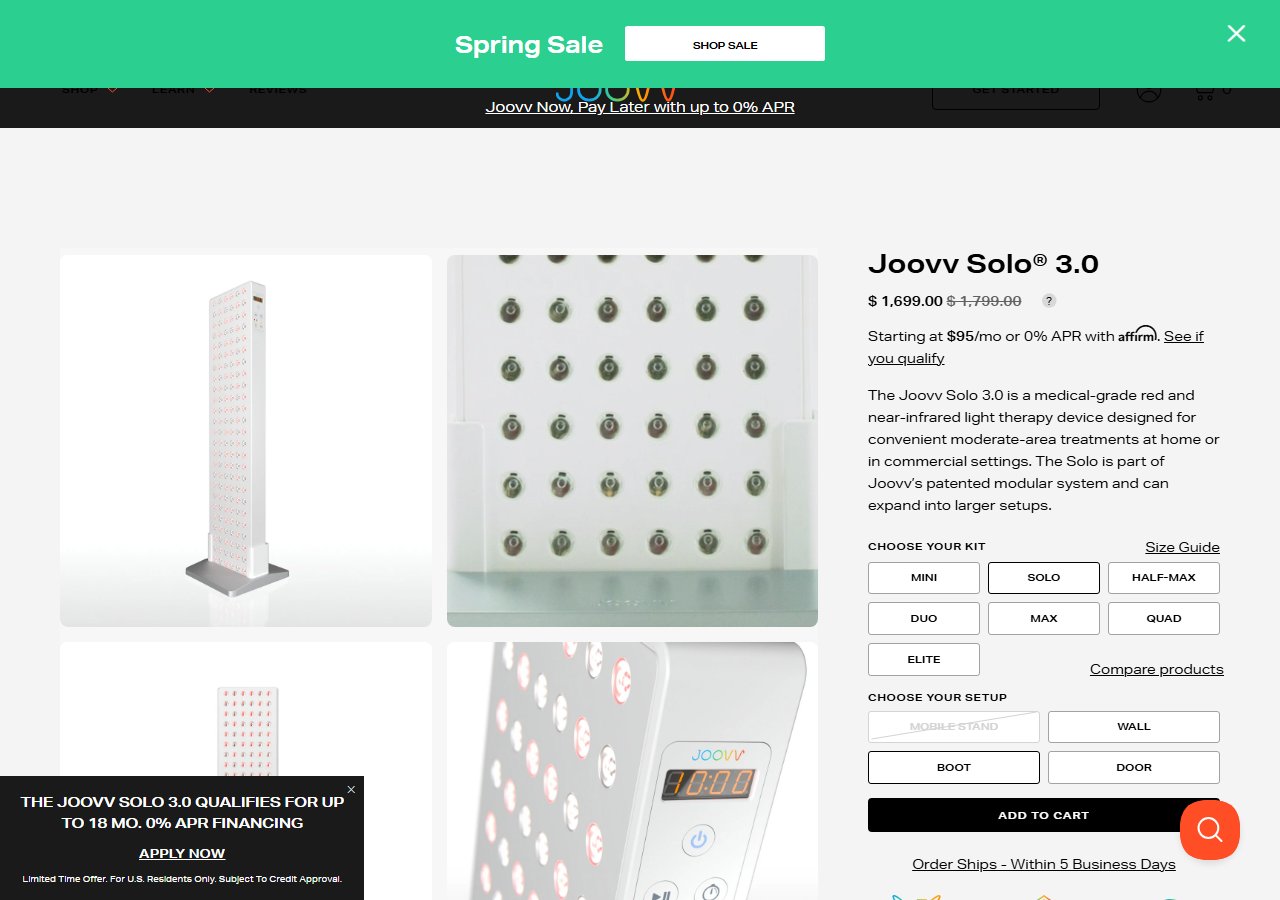
Joovv Solo 3.0 Red Light Therapy Device
$1,599
See Price at Joovv →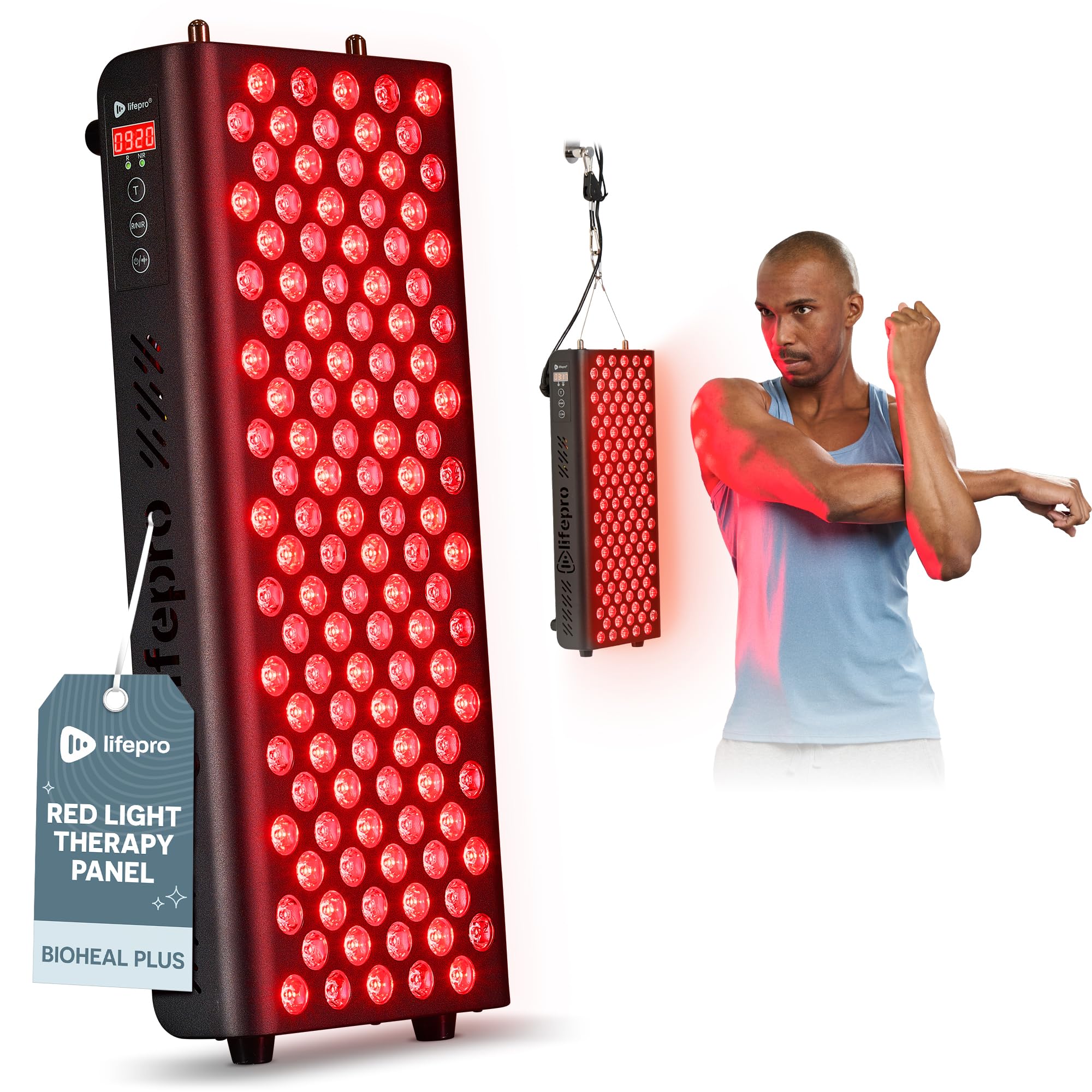
LifePro Red Light Therapy for Body Panel - 90 & 120 Dual Chip LEDs - 660nm & ...
$329.99
Check Price on Amazon →
BestQool Red Light Therapy for face Body, 4 Wavelengths Infrared Red Light Th...
$303.05
Check Price on Amazon →Assuming you've optimized circadian alignment, movement, and sleep - and your clinician has cleared you for photobiomodulation - red light therapy becomes a legitimate tool in your recovery stack. The mechanism is well-established: 660nm and 850nm wavelengths stimulate cytochrome c oxidase in the mitochondrial electron transport chain, potentially increasing ATP production and reducing inflammatory signaling (particularly IL-6 and TNF-alpha). For shift workers with chronic myofascial pain or mild tendinopathy, this mechanism translates to modest reductions in pain severity and faster recovery between shifts.
The LifePro Red Light Therapy Panel and BestQool Red Light Therapy Panel deliver the same core wavelengths (660nm and 850nm) at a fraction of the cost. Both include dual-chip LEDs and eyewear, making them suitable for daily use in a home recovery routine. The trade-off is modularity: neither offers the same intensity scaling or form-factor flexibility as the Joovv Solo 3.0, but for shift workers deploying red light therapy as an adjunct (not a primary intervention), this trade-off is acceptable.
The optimal dosing for shift workers is still being established, but preliminary evidence suggests:
- Frequency: 4-5 days per week (not daily; recovery is driven by rest, not stimulation)
- Duration: 10-20 minutes per session (more time does not accelerate recovery)
- Intensity: 50-200 mW/cm² (depends on device and distance; follow manufacturer guidance)
- Target area: Site of pain or inflammation (for localized pain) or large muscle groups (for systemic recovery)
For shift workers with nighttime or evening shifts, red light therapy sessions should occur during daytime to avoid disrupting circadian rhythm. Avoid red light therapy 2-3 hours before sleep, as even red light (though less circadian-disrupting than blue light) can suppress melatonin if exposure is excessive.
The evidence supports red light therapy as a complement to exercise, sleep, and circadian optimization - not as a replacement. AHRQ MEPS data documents that workers combining non-pharmacologic interventions (exercise, sleep optimization, and clinical care) report the lowest pain severity and healthcare costs. Red light therapy enters the stack after these foundations are in place, accelerating recovery by perhaps 10-20% when combined with optimal movement and sleep.
The Evidence, Distilled: What Red Light Therapy Can and Cannot Do for Shift Workers
Red light therapy can:
- Reduce inflammation markers (IL-6, TNF-alpha) in muscle tissue when combined with active recovery
- Accelerate soft-tissue healing (minor lacerations, muscle microtrauma) when combined with rest and movement
- Improve skin health (acne, minor photoaging) with consistent use
- Serve as a low-risk adjunct to pain management, with few side effects when used correctly
Red light therapy cannot:
- Replace sleep or circadian alignment
- Substitute for movement or active recovery
- Cure chronic pain without addressing occupational stressors or biomechanical dysfunction
- Treat serious conditions (fractures, nerve compression, systemic inflammatory disease) alone
For shift workers, the honest frame is this: red light therapy is a 10-20% efficiency gain in recovery when the other 80% is already in place. If you're not sleeping well, not moving, and not managing circadian misalignment, a red light panel will not meaningfully reduce your chronic pain. But if you've optimized those foundations and you're still struggling with localized myofascial pain or slow recovery between shifts, red light therapy is evidence-supported and worth a measured trial.
Choosing a Device: Joovv vs. Budget Alternatives
The Joovv Solo 3.0 ($1,599) stands apart for one reason: modularity. You can add additional panels to increase treatment area or intensity without replacing your system. For shift workers who want to scale their recovery stack over time - starting with a single panel for back pain, then adding leg or shoulder coverage - this flexibility is valuable. The Solo 3.0 also provides detailed intensity data (mW/cm²) and treatment recommendations, which matters if you're experimenting with optimal dosing.
The LifePro ($329.99) and BestQool ($303.05) panels deliver dual-chip 660nm and 850nm wavelengths, include eyewear, and are designed for body coverage (not face-only). Both are suitable for shift workers deploying red light therapy as an adjunct to established recovery routines. The trade-off: no modularity, less granular intensity control, and no customer-support ecosystem. But if your goal is to test whether red light therapy integrates into your recovery stack without a $1,600 commitment, these budget options make sense.
Whatever device you choose, success depends on consistency. One-off red light therapy sessions do not move the needle; 4-5 weekly sessions combined with optimal sleep, movement, and circadian alignment show modest but measurable effects on pain severity.
The Bottom Line: Data-Driven Recovery for Shift Workers
Approximately 20% of U.S. adults experience chronic pain; for shift workers, that number is higher due to circadian misalignment and occupational strain. The NIOSH Total Worker Health Program and NIH Pain Consortium establish that non-pharmacologic, multi-modal interventions - prioritizing circadian alignment, movement, sleep, and clinical assessment - are the evidence-based foundation for chronic pain recovery.
Red light therapy has a role in that stack, but only as an adjunct. It is not a substitute for the interventions that actually drive recovery: sleep, movement, and circadian alignment. CMS drug spending data illustrates why this matters: when non-pharmacologic interventions succeed, healthcare costs and pain medication spending both decline.
If you've optimized circadian alignment, movement, sleep, and clinical assessment, and you're still struggling with localized myofascial pain or slow recovery, red light therapy is worth a measured trial. The Joovv Solo 3.0 offers modularity and intensity scaling if you plan to integrate red light into your long-term recovery stack. The LifePro and BestQool panels deliver the same wavelengths at lower cost if you're testing the modality before committing to a higher-end system.
Data-driven recovery for shift workers is not glamorous. It requires prioritizing sleep, moving consistently, managing circadian rhythm, and seeing a clinician when red flags emerge. Red light therapy helps - modestly, measurably - when layered atop that foundation. Start there.