The Federal Data Healthcare Workers Aren't Reading - But Should
You spend your shift protecting other people's bodies. The data suggests your own body is absorbing a disproportionate cost for that work. According to BLS Musculoskeletal Disorders by Occupation tracking, the back is the most common injured body part across all U.S. occupations with days away from work - and healthcare occupations consistently rank among the highest-risk industries for musculoskeletal disorders (MSDs) in that dataset. Nurses, patient care technicians, and surgical staff routinely appear in the top tiers of BLS injury tables, driven by the biomechanics of patient handling: lateral transfers, repositioning, leaning over beds, and sustained static postures during long procedures.
Layer that occupational exposure onto disrupted sleep, and the compounding effect becomes clinically meaningful. CDC data on sleep and sleep disorders shows approximately 35% of U.S. adults report sleeping fewer than 7 hours per night - the threshold the CDC associates with elevated risk for obesity, diabetes, cardiovascular disease, and mental health disorders. For healthcare workers rotating between day, evening, and overnight shifts, that 35% figure is almost certainly an undercount of your personal exposure. The circadian disruption that comes with shift work isn't just fatigue; it's a physiological state that impairs the tissue repair and inflammatory regulation your musculoskeletal system depends on to recover from occupational load.
This article treats the mattress decision the way a good occupational health physician would: as one intervention inside a larger protocol, selected after understanding the biomechanical mechanism, the free interventions, and the clinical referral criteria. If you are looking for an affiliate roundup with a numbered list and a 'Best Overall' badge, this is not that article.
Why Healthcare Workers' Backs Break Down: The Occupational Biomechanics
CDC NCHS Data Brief 390 reports that approximately 20% of U.S. adults experience chronic pain, with the lower back as the most common pain location. But that 20% figure is a population average across sedentary office workers, retail staff, and retired adults. Among healthcare workers, the loading pattern is qualitatively different and worth understanding before you make any product decision.
The core mechanism is cumulative spinal loading combined with disc compression under asymmetric load. When a nurse performs a lateral patient transfer - sliding a 200-pound patient from a stretcher to a bed - the lumbar spine absorbs shear forces that, repeated across a 12-hour shift over months and years, progressively degrade the annular fibers of the intervertebral disc. Unlike a discrete acute injury, this degradation is silent until it isn't. The first sign is often morning stiffness that resolves within an hour; the clinical progression moves toward persistent lumbar ache, then radicular symptoms if disc material encroaches on a nerve root.
Shift rotation compounds this by fragmenting the sleep architecture your body uses to repair that cumulative damage. Deep sleep - particularly slow-wave sleep - is the phase during which growth hormone surges and drives musculoskeletal tissue repair. When shift schedules fragment or curtail slow-wave sleep, that repair cycle is interrupted. The result is that the micro-damage from Tuesday's patient transfers is still partially unresolved when Thursday's shift begins. Over months, this creates a deficit that presents clinically as 'chronic' back pain even when the individual shift exposures might be manageable in isolation.
AHRQ Medical Expenditure Panel Survey data documents that adults with chronic back conditions incur substantially higher annual personal healthcare expenditures than those without - a cost burden that falls on the same workers whose occupational exposures helped create those conditions. Understanding the mechanism is not just academic; it is the foundation for choosing interventions that address causation, not just symptom relief.
The Recovery Stack: What Costs Nothing Comes First
The cheapest intervention is the one that does not require buying anything. Before this article recommends a single product, the federal evidence base for non-product interventions deserves serious space - because the research is clear that for most people with occupational back pain, behavioral and movement-based interventions are the first line, not mattress firmness.
Sleep position is the biggest free variable in your off-duty recovery. NIH guidance on back pain from the National Institute of Arthritis and Musculoskeletal and Skin Diseases is explicit: side-sleeping with a pillow between the knees, or back-sleeping with a pillow under the knees, keeps the lumbar spine in a neutral position that minimizes disc pressure overnight. Stomach-sleeping, by contrast, forces the lumbar spine into extension and rotates the cervical spine - a sustained posture that worsens mechanical back pain regardless of mattress quality. Changing your sleep position costs nothing and can produce measurable improvement in morning pain levels within days.
Daily walking is more powerful than most passive treatments. NIH NCCIH's evidence review on low back pain finds that walking 30 minutes most days reduces chronic low back pain as effectively as most non-drug clinical treatments. For healthcare workers who spend 12 hours on their feet, this may feel absurd - but clinical walking for back pain is mechanistically different from occupational standing. Purposeful, rhythmic walking activates the posterior chain, promotes disc hydration through cyclic compression-decompression, and reduces the sustained static loading that characterizes clinical and bedside work.
Lifting mechanics are rehearsable and protective. OSHA's ergonomics guidance emphasizes hinging at the hips rather than the lumbar spine, keeping loads close to the body, and avoiding rotational loading under weight. Most acute disc episodes in healthcare settings are mechanical and preventable with technique - a point that matters because no mattress corrects a movement pattern that stresses the spine 12 hours before you lie down on it.
Mattress replacement has a legitimate clinical threshold. CDC Sleep Hygiene guidance provides a useful frame: if your mattress has visible sag, you wake stiffer than you went to bed, or it is older than 7 - 10 years, the surface itself may be contributing to your symptoms. But the CDC guidance is equally clear that no mattress substitutes for sleep hygiene fundamentals - consistent sleep and wake times, a dark and cool sleep environment, and limiting stimulants before bed.
For some healthcare workers - particularly those who have already optimized sleep position, are walking regularly, and whose mattress is within its useful life - the surface itself remains a limiting factor. Shift workers who cannot maintain a consistent sleep schedule have particular need for a mattress that performs well across multiple sleep positions, because circadian disruption means your body will not always enter sleep in the same posture. That is the context in which the following product evaluation is offered.
When to See a Clinician: Red Flags That a Mattress Cannot Address
This is not medical advice. It is a reading of federal clinical guidance that every healthcare worker should internalize for their own body, not just their patients'.
NIH National Institute of Neurological Disorders and Stroke back pain guidance is unambiguous about the presentations that require prompt clinical evaluation rather than conservative management: back pain that radiates below the knee, pain that follows significant trauma, pain accompanied by leg weakness or numbness, any change in bowel or bladder function associated with back symptoms, and back pain with fever or unexplained weight loss. These presentations can indicate nerve root compression, cauda equina syndrome, vertebral fracture, or spinal infection - conditions where delayed evaluation carries serious consequences and where mattress selection is clinically irrelevant.
For healthcare workers specifically, there is an additional consideration: occupational desensitization. The same clinical training that makes you a skilled practitioner can make you a poor self-assessor. Healthcare workers are statistically more likely to delay seeking care for their own musculoskeletal symptoms than the general population. If your back pain has been present for more than 6 weeks, is worsening despite conservative measures, or is affecting your ability to work safely, a clinical evaluation is indicated regardless of whether you can identify a structural explanation.
Where Mattress Selection Fits: The Evidence for Surface-Level Intervention
With the mechanism understood, the free interventions applied, and the red flags screened, the question of mattress selection becomes narrower and more answerable. The relevant criteria for healthcare shift workers are not the same as the criteria for a sedentary office worker or a recreational athlete. Three factors dominate:
Pressure relief at the shoulders and hips matters disproportionately for side sleepers and for workers who shift sleep positions across a night due to discomfort. Healthcare workers with lumbar disc involvement frequently find that even moderate hip-sinking on a too-firm surface generates enough lateral spinal flexion to interrupt sleep.
Spinal alignment across positions is the second variable. A mattress that keeps the lumbar spine neutral in supine position but allows excessive lumbar flexion in lateral position - common in softer all-foam constructions - will underperform for workers who cannot control their sleep position due to shift fatigue.
Temperature regulation is a clinically underappreciated factor for shift workers. Overnight shifts followed by daytime sleep create a physiological conflict: the body's core temperature is naturally higher during daylight hours, and a mattress that traps heat will fragment sleep architecture regardless of its spinal support properties.
The Saatva Loom & Leaf: Premium Memory Foam for Lumbar-Specific Pain
For healthcare workers whose primary complaint is lumbar pain with significant morning stiffness - the presentation most consistent with cumulative disc loading - the Saatva Loom & Leaf Memory Foam Mattress is the premium memory foam pick in this evaluation. The Loom & Leaf uses a multi-layer American-made memory foam construction with a lumbar zone enhancement in the center third of the mattress - a design feature that directly addresses the spinal alignment failure mode described above. It is available in two firmness options (Relaxed Firm and Firm), and for most healthcare workers with lumbar MSD, the Relaxed Firm performs better for multi-position sleeping. The organic cotton cover and cooling gel memory foam layers address the temperature regulation concern without the off-gassing that characterizes lower-grade memory foams. At $1,695 - $3,295, this is a deliberate purchase, not an impulse buy - but for a worker who is spending nights on a degraded surface while managing an occupational injury, the AHRQ cost burden data provides useful context: the annual personal healthcare expenditures associated with chronic back conditions dwarf the cost of an appropriate sleep surface.
The Saatva HD: For Larger-Body Healthcare Workers and Spinal Load Distribution
The BLS data on healthcare worker MSDs includes a specific population that standard mattress recommendations systematically underserve: larger-body workers whose spinal load profiles exceed the design parameters of standard mattress constructions. A mattress engineered for a 150-pound body behaves differently under a 250-pound body - the comfort layers compress more rapidly, the coil system may bottom out, and the effective firmness shifts toward soft regardless of the manufacturer's firmness rating. The Saatva HD Mattress is the only mattress in this evaluation specifically engineered for body weights up to 500 pounds, using a dual-coil architecture (individually wrapped comfort coils over tempered steel support coils) and a reinforced perimeter that prevents the edge collapse that compromises sleep position for heavier sleepers. For healthcare workers in the 230-pound-and-above range, the HD's construction approach is not a marketing distinction - it is a functional one that determines whether spinal alignment is actually maintained through the night. Priced at $2,395 - $3,995, the HD sits at the premium end, but the alternative - a standard mattress that fails to support spinal alignment for a larger body - is not a savings.
The Purple Hybrid Premier: Pressure Relief for Multi-Position Shift Sleepers
For healthcare workers whose sleep disruption is driven primarily by pressure-point pain - shoulder pain in side sleeping, hip pain that prompts position shifts, or the night sweats and heat retention that plague daytime sleepers on overnight rotations - the Purple Hybrid Premier Mattress addresses a different part of the problem. Purple's GelFlex Grid technology is materially different from memory foam: it is a hyper-elastic polymer grid that collapses under point pressure (shoulders, hips, heels) while remaining firm under distributed load (lumbar spine, thoracic spine). This means the mattress can simultaneously provide deep pressure relief at high-pressure contact points and spinal support at the lumbar zone - a combination that memory foam achieves only imperfectly. The grid is also inherently temperature-neutral; there is no foam to trap body heat, which makes the Purple Hybrid Premier the strongest option in this evaluation for workers sleeping during daylight hours in warmer climates. At $2,499 - $4,799 for the Hybrid Premier, this is the highest-priced option in the evaluation, but for the specific profile of a shift worker with pressure-driven sleep disruption and heat sensitivity, the construction rationale is sound.
Mattresses Built for Healthcare Worker Recovery: Pressure Relief, Spinal Support, and Shift-Sleep Performance
These three mattresses were selected because their construction approaches directly address the spinal load patterns, pressure-point profiles, and temperature regulation needs specific to healthcare workers managing occupational back pain across disrupted shift schedules.

Saatva Loom & Leaf Memory Foam Mattress
$1,695-$3,295
See Price at Saatva →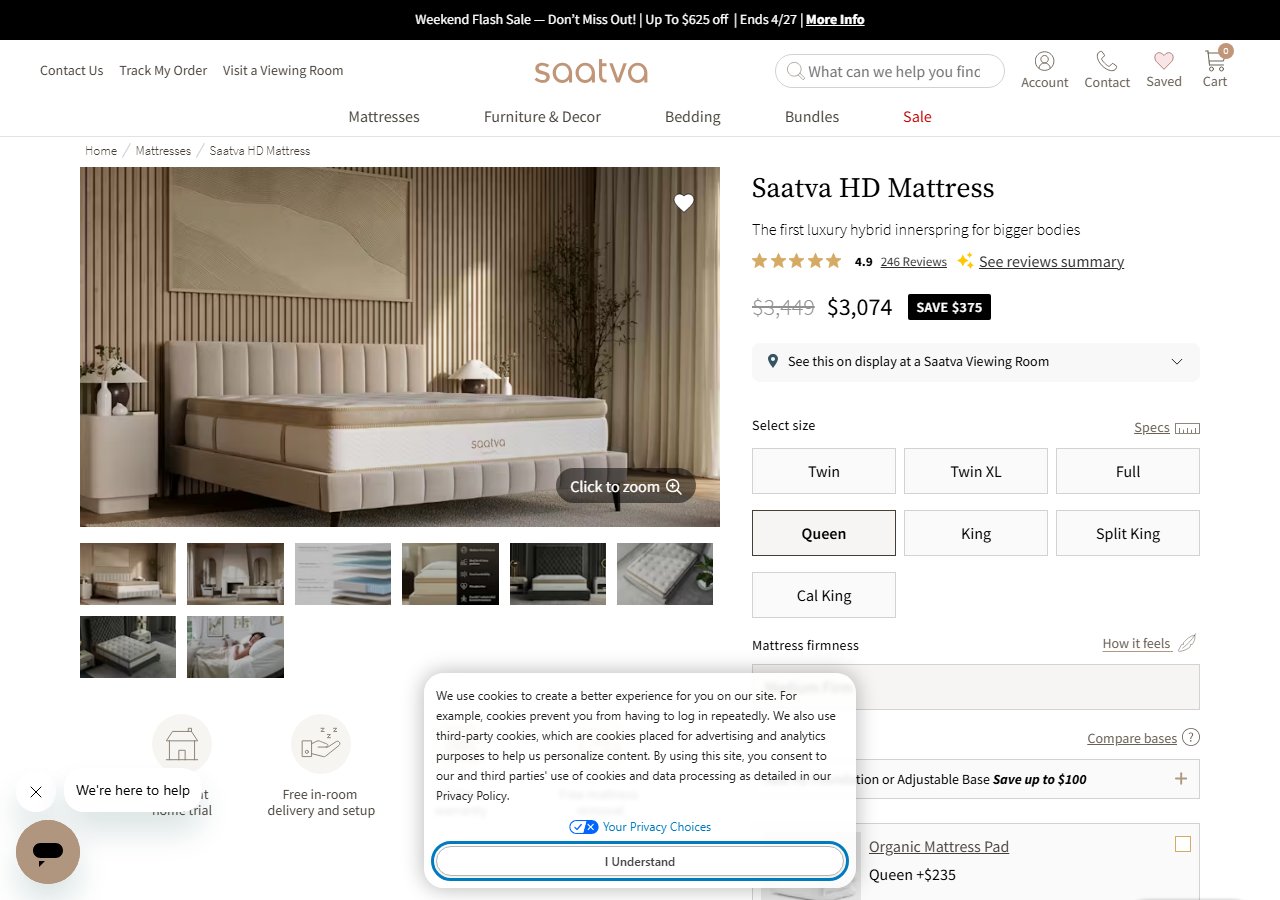
Saatva HD Mattress (Heavy-Duty)
$2,395-$3,995
See Price at Saatva →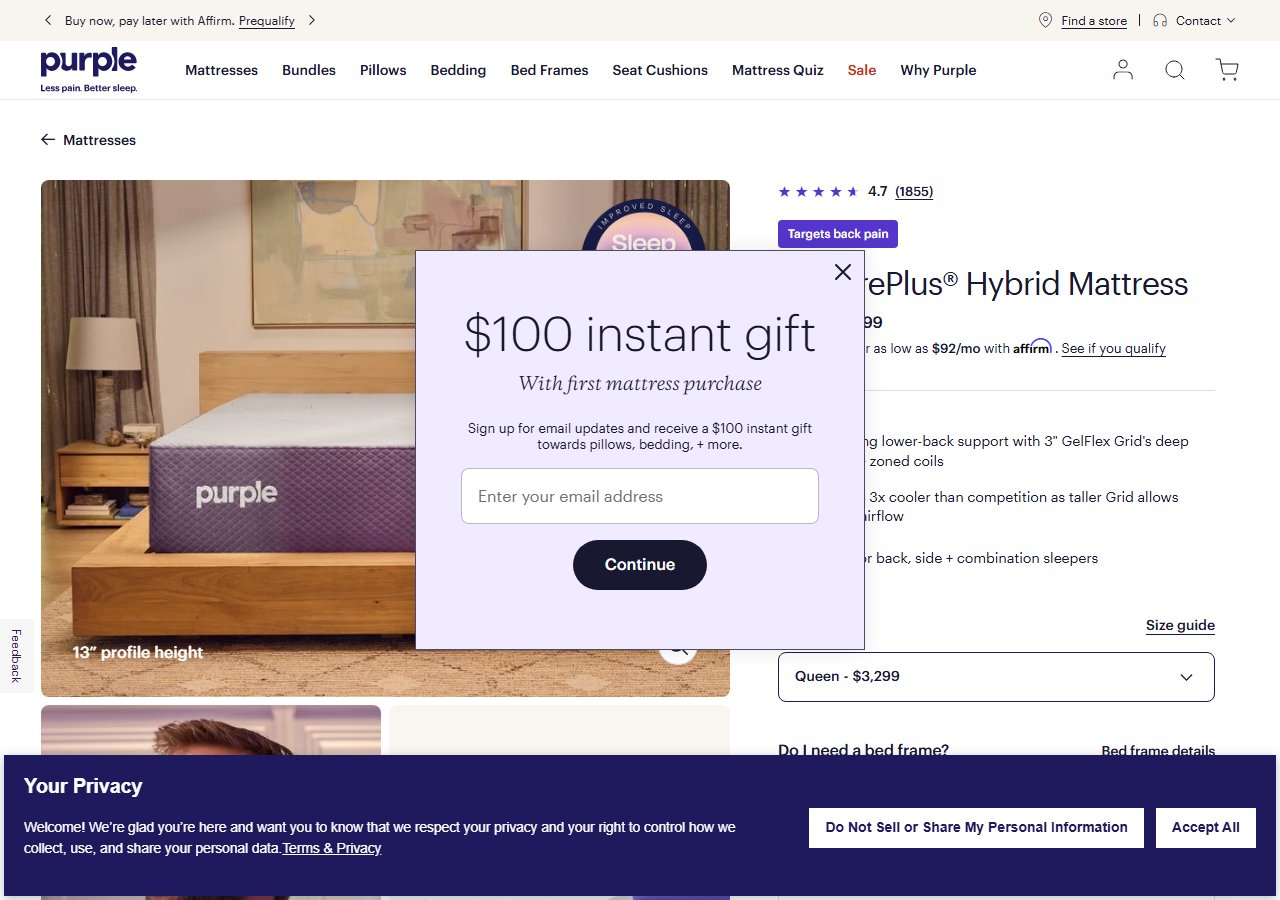
Purple Hybrid Premier Mattress
$2,499-$4,799
See Price at Purple →Building the Full Recovery Protocol
The federal data on healthcare worker MSDs paints a clear picture: the occupational exposure is real, the cumulative mechanism is well-documented, and the downstream costs - personal, financial, and functional - are substantial. But the data also supports a specific hierarchy of intervention.
Free interventions - sleep position, daily walking, lifting mechanics, and sleep hygiene fundamentals - have federal evidence backing and zero acquisition cost. They come first because the evidence says they should, not because this publication is trying to talk you out of buying a product. NIH NCCIH's evidence review is explicit that walking rivals most non-drug clinical treatments for chronic low back pain. That finding should inform every healthcare worker's recovery stack before a mattress enters the conversation.
Clinical evaluation comes before product selection for any presentation that meets the NIH red flag criteria: radicular pain below the knee, neurological symptoms, post-traumatic pain, or systemic signs. The occupational desensitization problem in healthcare settings is real, and the instruction here is the same one you would give a patient: do not self-manage past the clinical threshold.
When the mechanism is understood, the free interventions are optimized, and clinical causes are excluded, mattress selection becomes a legitimate and impactful lever. For most healthcare workers with lumbar MSDs, the decision narrows to three variables: the degree of lumbar-specific support needed (Loom & Leaf), the body-weight load distribution profile (Saatva HD), and the pressure-point and temperature profile of your sleep pattern (Purple Hybrid Premier). Those are engineering questions with engineering answers, and the products in this evaluation were selected because their construction approaches map to those specific failure modes - not because of a manufacturer's marketing claims.
The CDC NCHS data on chronic pain prevalence establishes that 20% of U.S. adults are living with chronic pain. For healthcare workers, the occupational data suggests that percentage is higher. The goal of this analysis is to ensure that the decisions you make in your off-duty hours - including the surface you sleep on - are grounded in the same evidence-based rigor you apply to your patients.