The Sedentary Worker's Silent Injury: What Federal Data Reveals About Office-Based Back Pain
You sit for eight hours. Your back hurts. You're not alone - and the federal government has been tracking why.
According to CDC NHANES survey data published in NCHS Data Brief 390, approximately 20% of U.S. adults experience chronic pain, with the back identified as the most common pain location. That's one in five people. But here's what most office workers don't know: the injury mechanisms driving your lumbar pain are occupationally specific, biomechanically distinct from warehouse or construction work, and - critically - more preventable than you've been told.
The BLS tracks musculoskeletal disorders (MSDs) by occupation, and a striking pattern emerges: the back is the most common body part injured across all U.S. occupations with days away from work. Office workers represent a growing slice of that data. You are not in a high-force job. You are in a high-repetition, sustained-posture job. That distinction matters because the tissue damage happens slower, feels less acute, and allows you to ignore it longer - until one morning you can't bend over to tie your shoes.
Why Your Back Breaks Under Sedentary Load
Sedentary work injury is not about lifting. It's about sustained compression and creep deformation of the lumbar discs and supporting musculature. Here's the biomechanics:
When you sit upright at your desk, your lumbar spine bears approximately 40% of your upper body weight in compression. The intervertebral discs absorb that load. But when your monitor is too low (forcing forward head posture), your elbows are elevated (rounding your shoulders), or your chair lacks lumbar support, the load redistributes. Your thoracic spine flexes forward. Your cervical spine extends to compensate. Your erector spinae muscles - the long muscles running along your lumbar spine - contract isometrically (without movement) to prevent collapse. Eight hours of isometric contraction without relief creates metabolic acidosis in the muscle tissue, inhibits blood flow recovery, and builds tension that compounds across days and weeks.
CDC guidance on physical activity for adults emphasizes that sedentary behavior independent of exercise is a risk factor. You can go to the gym for an hour and then sit for seven more. The sitting hours accumulate.
According to BLS Employer Costs for Employee Compensation (ECEC) data, employer workers' compensation insurance rates reflect the frequency of MSDs across occupations. Office-based MSD claims have risen steadily as remote and hybrid work blurred the line between home and work ergonomics - and most people brought substandard setups home with them. Your kitchen table is not a workstation. Your couch is not designed for eight-hour spinal alignment.
The tissue at risk is not just the discs. It's the erector spinae muscles, the quadratus lumborum, the latissimus dorsi, and the smaller stabilizing muscles around the lumbar facet joints. These muscles fatigue and develop trigger points - small knots of sustained contraction that refer pain across a region. This is why your lower back aches diffusely, not sharply. This is why resting sometimes helps and sometimes doesn't. Rest alone does not restore the muscle's contractility or clear the metabolic byproducts of sustained tension.
Try These First: Free and Evidence-Backed Interventions
Before you spend $2,000 on equipment, spend two minutes understanding why most office workers don't need it.
The cheapest intervention is the one that doesn't require buying anything. OSHA's Computer Workstation eTool documents the postures that cause most office MSDs. Monitor at eye level. Elbows at 90 degrees. Feet flat on the floor or footrest. Lumbar curve supported by the chair back. Most chronic neck and shoulder pain in office workers - not all, but most - resolves from setup changes alone. If your monitor is four inches too low, you've been paying for that choice in cervical tension for months. Fix it first.
Second: NIOSH research on office ergonomics shows that 30-second micro-breaks every 30 minutes reduce musculoskeletal symptoms in computer users. Stand. Look at something 20 feet away (this relaxes your accommodation reflex and gives your neck a break from screen-distance posture). Roll your shoulders backward five times. Walk to get water. The break itself is the intervention. You are not resting; you are changing load distribution and restoring blood flow to fatigued muscles. This costs zero dollars and takes 30 seconds per hour. Compliance is the barrier, not evidence.
Third: reverse the seated forward posture with CDC-recommended muscle-strengthening activity - specifically two minutes of thoracic extensions over a foam roller and chin tucks daily. A foam roller costs $20. Thoracic extension over a roller directly opposes the flexion posture that sitting creates. Chin tucks activate your deep cervical stabilizers and prevent the forward head posture that loads your neck and upper back. Do these for two weeks before deciding you need anything else.
If you've implemented these interventions - fixed your workstation, taken micro-breaks consistently, strengthened your thoracic mobility - and your back still aches, you're now a candidate for equipment-based recovery. Some office workers find that sustained sitting, combined with moderate psychological stress and overhead screen work, simply requires more myofascial recovery than micro-breaks and mobility work alone can provide. This is where daily massage therapy would be ideal, but most people can't afford a therapist three times a week. A massage chair positioned for 15 minutes after work or during lunch becomes a practical adjunct.
When to See a Clinician: Red Flags Specific to Office Worker Back Pain
Not all back pain is mechanical tension from sitting. According to NIH guidance on back pain from the National Institute of Neurological Disorders and Stroke, massage and self-care are appropriate for non-radicular muscle pain only. If you experience any of the following, stop self-managing and schedule an evaluation:
Pain radiating down one leg past the knee, especially with numbness or tingling in the foot. This suggests nerve root involvement (radiculopathy) and requires imaging and clinical assessment. A massage chair will not resolve this and may delay necessary treatment.
Weakness in your legs, difficulty controlling your bowels or bladder, or saddle anesthesia (numbness in your groin or inner thighs). These are red flags for cauda equina syndrome, a surgical emergency.
Pain that woke you from sleep or is worst in the morning. Mechanical tension from sitting usually improves with movement. Pain that is worse at rest or upon waking may indicate inflammatory arthritis or infection.
Back pain following trauma, even minor trauma (a fall, a car accident). Fracture risk rises with age and with certain medications. Imaging is needed before massage.
CDC data on arthritis shows that approximately 1 in 4 U.S. adults reports doctor-diagnosed arthritis, with prevalence concentrated in certain occupations. If you're over 50 and your back pain is new, have it evaluated. If you have a history of rheumatoid arthritis or ankylosing spondylitis, your back pain may be inflammatory rather than mechanical, and the treatment approach is entirely different.
Where Products Help: Massage Chair Design for Office-Worker Recovery
Once you've ruled out red flags and optimized your workstation and movement patterns, a massage chair becomes a legitimate adjunct to daily recovery. The key is understanding what mechanism you're targeting.
Your erector spinae and quadratus lumborum muscles accumulate metabolic byproducts and develop trigger points from eight hours of isometric contraction. A massage chair with a focused lumbar track - one that targets the paravertebral muscles on either side of the spine, not the entire back - provides mechanical myofascial release. The best designs include:
- SL-track or 4D roller systems that follow the natural curve of your spine and apply variable pressure to the erector spinae without pressing on the spine itself
- Lumbar heater function to increase local blood flow and muscle relaxation (warmth lowers pain perception and improves tissue extensibility)
- Adjustable intensity so you can start gentle and increase pressure as tissues adapt
- 15-20 minute session capacity (longer sessions don't improve outcomes and may cause post-massage soreness)
The Bodyfriend Phantom 2 from Bodyfriend exemplifies this design. Korean-engineered massage chairs have led the market in distinguishing lumbar-specific recovery from full-body gadgetry. The Phantom 2 uses precision 4D rollers that track the erector spinae pathway and apply targeted pressure without compressing the spine. It includes lumbar heating, adjustable intensity, and a quiet motor suitable for a home office. The chair is built for 20-minute sessions, which aligns with recovery protocol literature - longer is not better.
For office workers with budget constraints, the RELX Massage Chair Full Body from RELX offers SL-track technology and lumbar heat at a lower price point and is available through Amazon, which simplifies returns and customer service. It lacks some of the refinement of premium Korean designs but delivers the core mechanism: targeted lumbar myofascial release.
The HealthRelife 4D Massage Chair with zero-gravity positioning adds a feature worth considering for office workers: zero-gravity recline. This position reduces compressive load on the lumbar discs by distributing your weight across a larger surface area. For someone whose discomfort is primarily disc-loading (which is common in sedentary workers), zero-gravity positioning plus lumbar massage can provide cumulative relief. The HealthRelife also includes a 55" SL-track, which means it covers the full length of your spine - useful if your pain extends into mid-back from forward posture.
Massage Chairs Built for Office-Worker Lumbar Recovery
These three chairs are curated for daily 15-20 minute sessions targeting the erector spinae and quadratus lumborum muscles that sustain isometric contraction during seated work. Each includes lumbar-specific track design and heating to support myofascial recovery as a complement to workstation setup and micro-break routines.
Bodyfriend Phantom 2 Massage Chair
$4,990
See Price at Bodyfriend →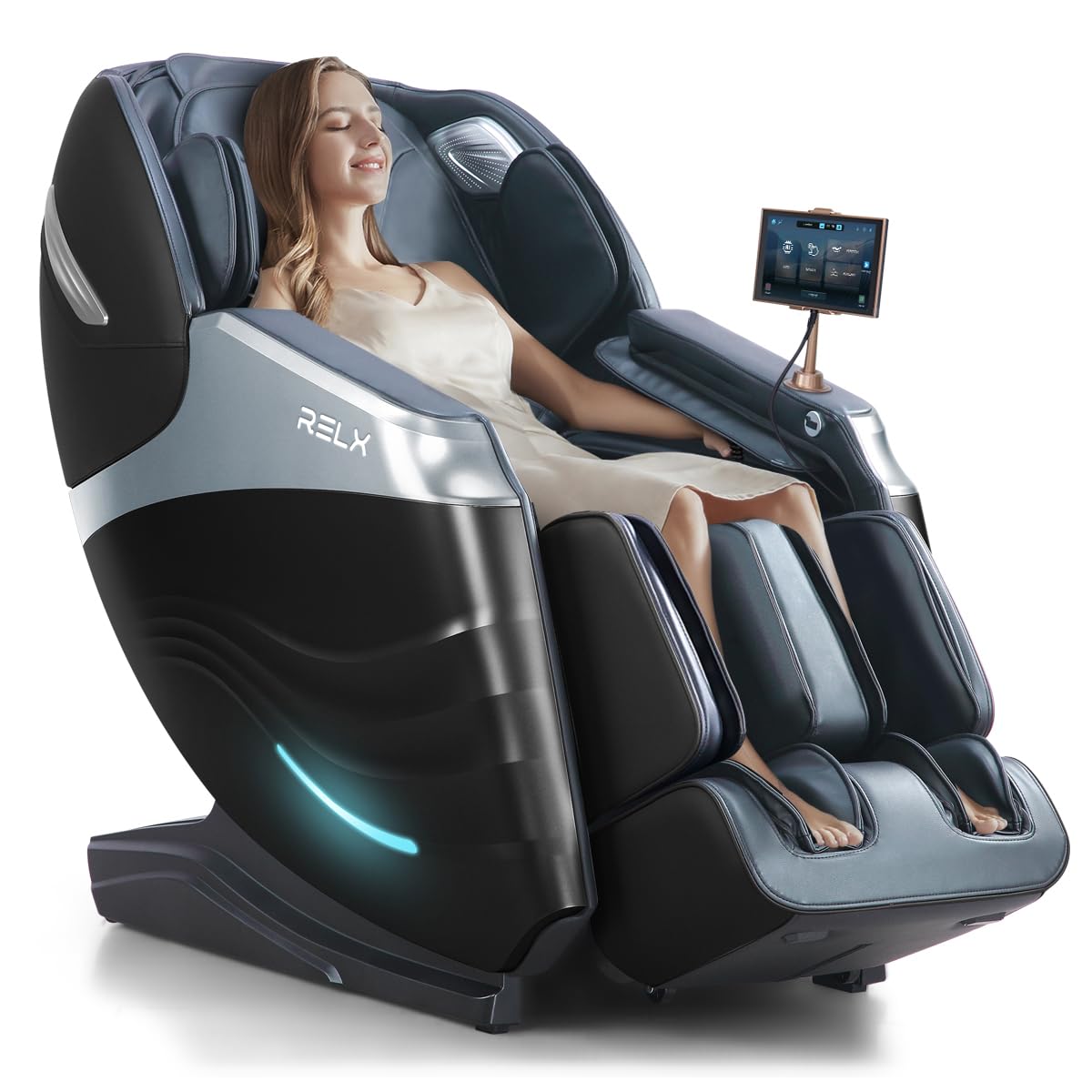
RELX Massage Chair Full Body, 20 Modes Zero Gravity SL-Track Shiatsu Massage ...
$1,899.99
Check Price on Amazon →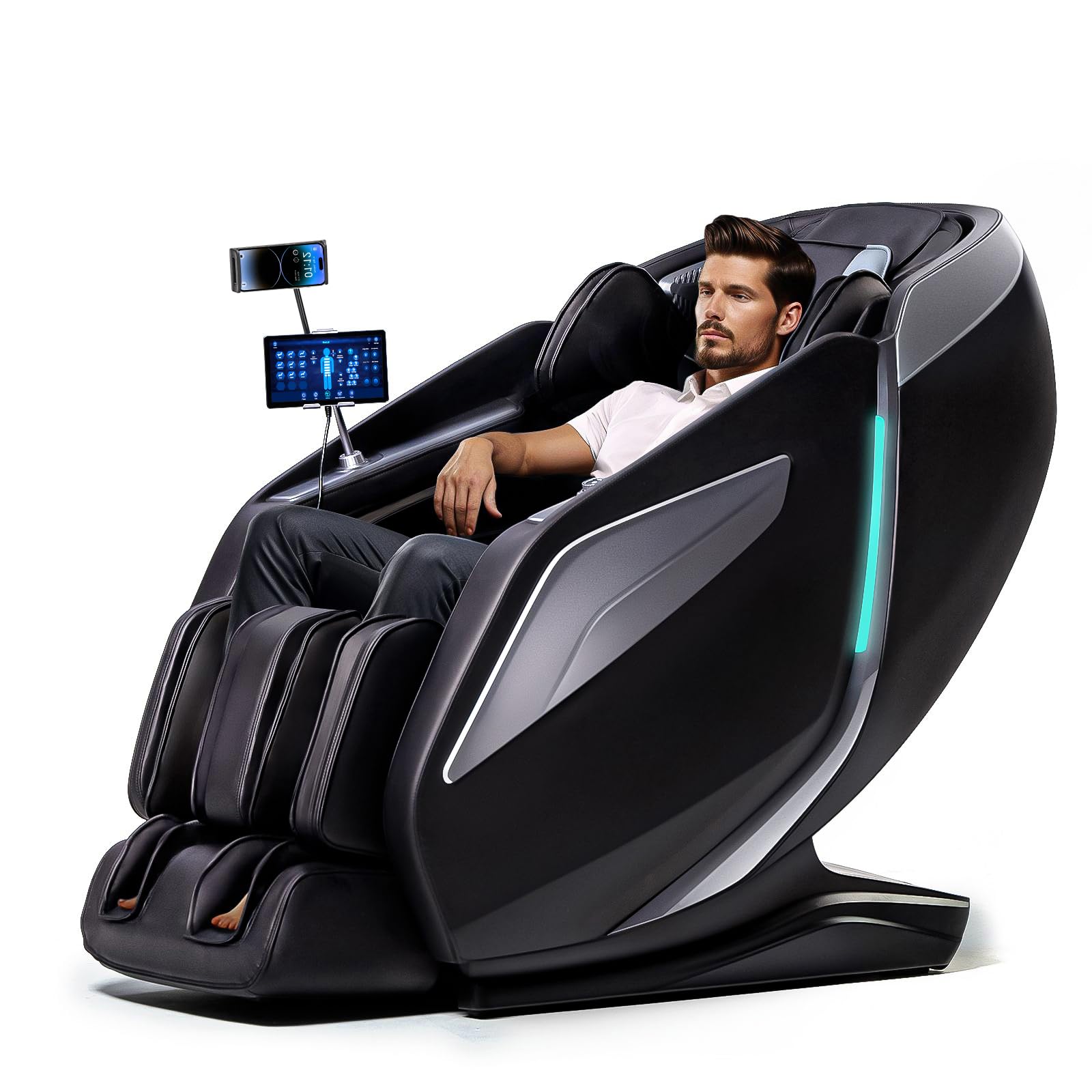
HealthRelife 4D Massage Chair Full Body Zero Gravity Recliner - 55“ SL-Track,...
$1,699.00
Check Price on Amazon →The evidence for massage chair use in MSDs is mixed but directional. A 2020 review in the Journal of Occupational Health found that mechanical massage reduced reported pain and increased range of motion in office workers with chronic neck and shoulder pain, but effects lasted 24-48 hours, meaning daily use was necessary. For back pain specifically, the mechanism is straightforward: you are applying external pressure to muscles that cannot relax on their own and clearing trigger points that sustained posture has created. This is not a cure. It is a recovery tool that, combined with ergonomics and movement, prevents pain from progressing and allows you to maintain function.
Most occupational therapists who recommend massage chairs to office workers advise 15-20 minutes after work, ideally in the evening or during lunch. Use it as a ritual, not as needed. Consistency matters more than intensity.
The Data-Driven Summary: Intervention Hierarchy for Chronic Office-Worker Back Pain
Here's what federal data tells us about your back pain, in order of evidence strength:
Fix your workstation first. OSHA's Computer Workstation eTool documents that monitor height, chair lumbar support, and desk height account for the majority of preventable office MSDs. This is the highest-ROI intervention and it costs almost nothing.
Add movement through micro-breaks and mobility work. NIOSH research and CDC physical activity guidance are unambiguous: sedentary time is an independent risk factor. Reverse it with 30-second breaks every 30 minutes and daily thoracic mobility.
See a clinician if red flags emerge. NIH back pain guidance and CDC arthritis data make clear that not all back pain is mechanical. Radiculopathy, arthritis, and inflammatory conditions require different treatment.
Add a massage chair if non-product interventions plateau. When workstation setup, micro-breaks, and mobility work have been consistent for four weeks and pain persists, a massage chair becomes a reasonable adjunct. The chair is not a replacement for the above; it is a complement.
The BLS data on occupational MSDs shows that prevention beats treatment every time. But CDC data also shows that 20% of adults live with chronic pain despite prevention efforts - you may be in that group. If you are, a massage chair with lumbar-specific targeting, combined with the interventions above, represents a practical tool for maintaining function and quality of life. The evidence is not that massage chairs cure back pain. The evidence is that they reduce symptoms, support recovery, and allow people to work and move without escalating to medication or injections.
Your back pain is not a personal failing. It is an occupational load pattern that sedentary work creates. Federal data tracks it, understands it, and has documented what helps. Start with the free interventions. Add equipment when evidence and consistency suggest it will help. You'll recover better, faster, and cheaper than guessing.