The Sleep Debt That Federal Data Has Been Tracking for Years
CDC sleep statistics put the headline number plainly: approximately 1 in 3 U.S. adults does not get the recommended 7 or more hours of sleep per night. For most readers of this publication, that number is not a surprise — it's a mirror. High-stress professionals in healthcare, law, finance, technology, and executive leadership routinely describe sleep as the variable they sacrifice first when workload increases. The federal data says that sacrifice has consequences that compound over time.
The scale is not trivial. The NIH National Heart, Lung, and Blood Institute estimates that 50 to 70 million U.S. adults have a chronic sleep or wakefulness disorder. These are not people who had one bad week — these are Americans with persistent, documented disruption to the biological process most essential to cognitive function, immune regulation, metabolic health, and emotional regulation. If you're a high-stress professional reading this at midnight after your third consecutive 12-hour day, you are somewhere in that cohort.
What distinguishes high-stress professionals from the broader population is not just the volume of hours worked — it's the neurological load carried into the sleep window. Cortisol elevation from sustained cognitive and emotional stress delays sleep onset, compresses slow-wave sleep, and increases nocturnal awakenings. The result is a shorter sleep architecture that skews away from the deep and REM stages where cellular repair, memory consolidation, and hormonal regulation actually happen. You can spend eight hours in bed and still accumulate a deficit that degrades next-day decision-making, immune function, and cardiovascular health.
Why Stress and Sleep Are a Federal Occupational Health Problem — Not Just a Lifestyle Issue
The framing of sleep as a personal responsibility — something you fix with willpower and an earlier bedtime — is contradicted by a substantial body of federal occupational health guidance. NIOSH Total Worker Health guidance explicitly treats sleep as an occupational health variable that employers and workplaces bear responsibility for supporting. NIOSH does not categorize insufficient sleep as a failure of personal discipline; it categorizes it as a workplace exposure.
The downstream cost of that exposure is captured in BLS Workers' Compensation data, which documents injury rates among sleep-deprived workers — particularly in transportation and healthcare — that translate directly into employer liability and worker harm. The mechanism is not mysterious: fatigue degrades reaction time, attentional control, and risk assessment in ways that mirror mild alcohol intoxication. FMCSA hours-of-service regulations exist precisely because federal crash data established a direct link between driver fatigue and accident risk — a policy acknowledgment that sleep deprivation is a safety variable, not a character variable.
BLS data on shift and flexible schedules shows that millions of U.S. workers operate in evening, night, or rotating shift roles where circadian disruption is not a choice — it is built into the job description. High-stress professionals who aren't shift workers face a different but related version of this problem: voluntarily delayed sleep due to workload, combined with alarm-clock-enforced early wake times, creates a chronic social jet lag that mirrors the physiological profile of shift work without the formal occupational label.
NIOSH research on work schedules and long work hours identifies sleep deprivation as an occupational hazard with measurable injury and accident consequences — language that should land differently for high-stress professionals who manage teams, operate vehicles, make clinical decisions, or sign contracts. Sleep debt is not background noise. It is a performance and safety variable.
The biomechanical picture is equally direct. During slow-wave sleep, the glymphatic system — the brain's waste-clearance network — flushes metabolic byproducts accumulated during waking cognition. Chronic curtailment of that window allows those byproducts to accumulate. Across years, this is the pathway researchers associate with elevated cardiovascular and neurodegenerative risk. Sleep is not a luxury protocol for high performers. It is the maintenance cycle the body cannot run during operating hours.
The Cheapest Intervention Is the One That Doesn't Require Buying Anything
Before any device enters the conversation, it is worth being precise about what the federal evidence base actually recommends. The strongest, most cost-effective interventions are behavioral and environmental — and they are backed by the same agencies whose injury data we just reviewed.
CDC sleep hygiene guidance lists the bedroom environment as a primary modifiable factor for sleep quality: cool temperature (65 to 68 degrees Fahrenheit is the commonly cited target), blackout darkness, no screens for the hour before bed, and a consistent wake time. These are not suggestions that require a product purchase. A programmable thermostat, blackout curtains, and a phone left outside the bedroom cost far less than any device in this article — and the evidence behind them is not weaker.
NIH NHLBI guidance makes a point that surprises many high-performers: consistent timing matters more than total hours. The same bedtime and same wake time, seven days a week, produces stronger effects on sleep quality than chasing an extra two hours on Saturday. Most high-stress professionals do the opposite — they compress sleep Monday through Friday and attempt to recover on weekends. Federal sleep science says this strategy does not work. It delays circadian phase, degrades Monday morning alertness, and does not pay down deep structural sleep debt.
For the approximately 30 million U.S. workers in shift, night, or evening roles, NIOSH shift-work guidance prioritizes blackout curtains, eye masks, and noise reduction during daytime sleep as first-line interventions. Light exposure during off-shift sleep windows is the primary driver of shift-worker sleep deficit — and eliminating it costs nothing beyond window treatments.
CDC adult physical activity guidelines connect daily movement directly to sleep quality. The recommended 150 minutes of moderate activity per week is associated across multiple cohort studies with improved sleep latency and overall sleep quality. Movement is a sleep input. High-stress professionals who sacrifice exercise to create more working hours are trading a proven sleep lever for marginal productivity.
For readers who have implemented the environmental and behavioral changes above — thermostat set, screens out of the bedroom, wake time locked in, movement routine established — and still find themselves awake at 3 a.m. or exhausted by noon, the evidence base supports adding technology as an adjunct. The critical word is adjunct. Devices do not replace the behavioral foundation; they extend it, add measurement, or automate variables the environment alone cannot control. With that frame established, here is where specific technology earns its place.
When to See a Clinician Before You Buy Anything
Federal data includes one warning that belongs before any product recommendation. CDC obesity statistics document approximately 40% adult obesity prevalence in the U.S. — and obesity is a well-established risk factor for obstructive sleep apnea (OSA). OSA is a clinical diagnosis. It cannot be detected by a smart ring, treated by a cooling mattress cover, or managed with a sunrise alarm clock. The only appropriate response to suspected OSA is a sleep study ordered by a physician.
The NIH NHLBI sleep apnea page lists the clinical warning signs clearly. If you experience any of the following, a clinical evaluation must come before any device purchase:
- Loud, frequent snoring — particularly if reported by a sleep partner
- Witnessed apnea episodes — gasping, choking, or breathing pauses observed by another person
- Unrefreshing sleep despite adequate time in bed, consistently
- Excessive daytime sleepiness that interferes with work function or driving safety
- Morning headaches occurring regularly upon waking
These are not symptoms that sleep technology resolves. A cooling mattress pad may improve your thermal comfort; it will not restore oxygen saturation during apnea events. A biosensor wristband will flag disrupted sleep architecture; it will not treat the airway obstruction causing it. For high-stress professionals — particularly those with elevated BMI, sedentary work postures, or alcohol use patterns common to high-pressure industries — OSA screening should be a prerequisite, not an afterthought.
Where Technology Earns Its Place
For readers who have addressed the behavioral fundamentals and ruled out clinical sleep disorders, a targeted set of sleep technologies can meaningfully extend what the environment alone provides. Three categories are worth examining with discipline: active thermal regulation, recovery load monitoring, and circadian light entrainment.
Active thermal regulation addresses what passive bedroom temperature control often cannot: the micro-fluctuations in core body temperature that govern sleep stage transitions. The Eight Sleep Pod 4 Cover is the most studied device in this category. It pumps temperature-controlled water through a mattress layer, enabling individualized heating and cooling across the full sleep cycle — warming slightly during early sleep stages to accelerate onset, cooling during deep sleep to sustain it, and warming again near wake time for a more natural arousal. For high-stress professionals who share a bed with a partner whose thermal preferences differ, the dual-zone functionality resolves a friction point that a thermostat alone cannot. The Pod 4 Cover also integrates sleep staging data and heart rate variability monitoring, making it a passive measurement tool that does not require wearing anything to bed. At $2,049 to $5,049 depending on bed size, it is a significant equipment investment — justified for professionals who have already maximized behavioral interventions and have a documented temperature-sensitive sleep pattern.
Recovery load monitoring serves a different function. High-stress professionals are not athletes in the traditional sense, but their cognitive and emotional load creates physiological stress signatures that are directly measurable through heart rate variability, respiratory rate, and overnight resting heart rate patterns. The Whoop 4.0 is a wrist-worn biosensor that does not have a screen and does not show notifications — a deliberate design choice that keeps the device anchored to health signal rather than attention capture. Its Recovery Score — a daily output based on overnight HRV, sleep performance, and strain from the previous day — gives high-stress professionals a quantified read on readiness that can inform training decisions, meeting scheduling, and alcohol or caffeine timing. The subscription model ($239 hardware plus ongoing subscription) means ongoing cost, but the data output is substantially richer than what most consumer wearables produce. For professionals who want to understand how their stress load actually lands in their physiology, Whoop's recovery methodology is the most clinically adjacent option in consumer wearables.
Circadian light entrainment targets the mechanism that both stress and screen exposure disrupt. Cortisol and melatonin secretion are anchored to light cues. High-stress professionals who work under artificial light until late and then attempt abrupt transitions to darkness create hormonal timing mismatches that delay sleep onset. The Hatch Restore 3 Sunrise Alarm Clock automates the light-to-dark-to-light transition that the circadian system is designed to receive. A gradual dawn simulation beginning 30 minutes before wake time triggers cortisol secretion in alignment with the intended wake window — producing a more natural arousal than an abrupt alarm. The evening wind-down mode dims light gradually and shifts color temperature toward warm amber, supporting melatonin onset. At $169.99, it is the lowest-cost device in this list and the most directly tied to the behavioral intervention that federal sleep guidance already recommends: consistent timing and light management. If you purchase only one device from this list, the Hatch Restore 3 is the most defensible starting point.
Sleep Tech Built for High-Stress Professional Recovery
These three devices were selected specifically for professionals managing chronic stress loads — each targets a distinct mechanism (thermal regulation, recovery quantification, circadian entrainment) that behavioral interventions alone may not fully address.
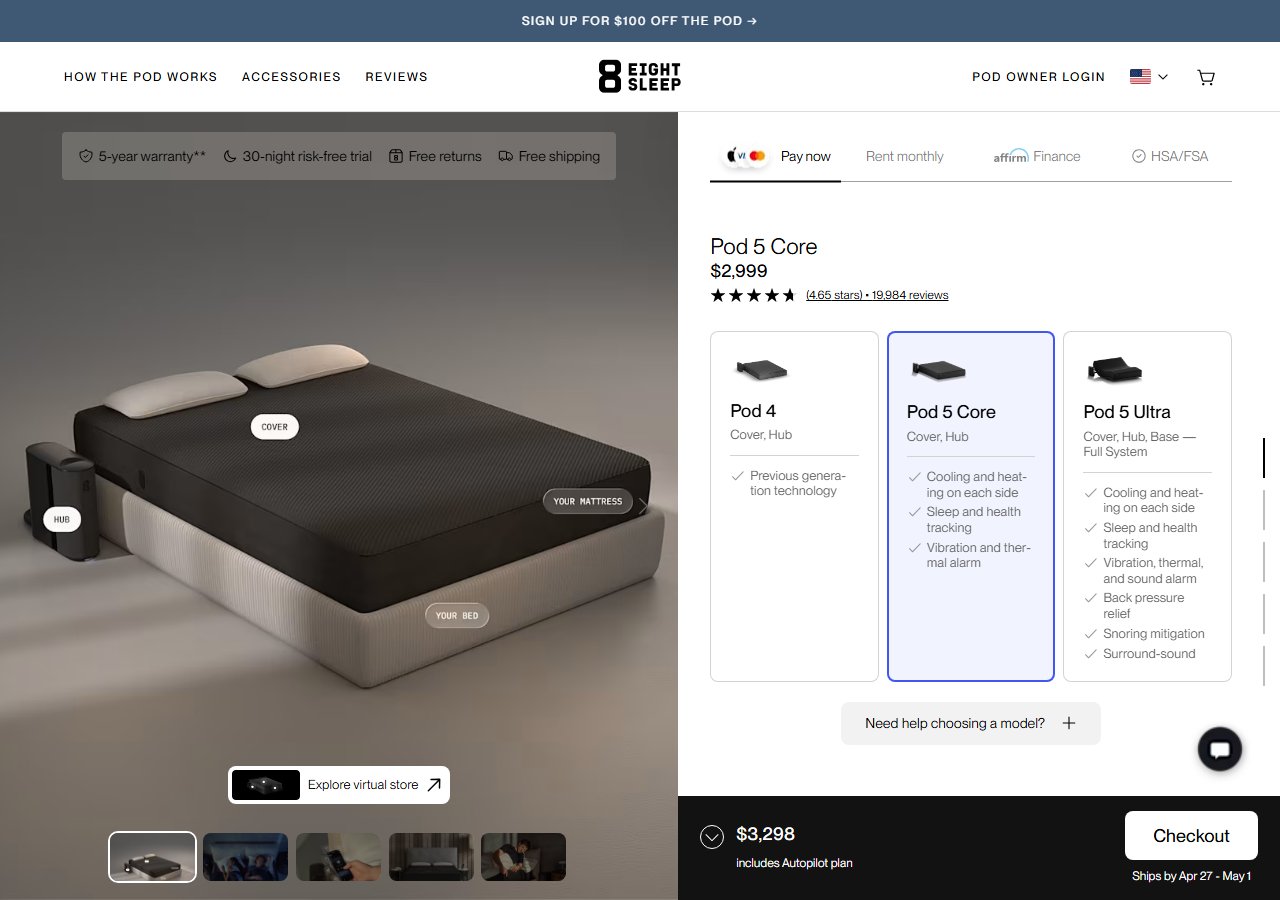
Eight Sleep Pod 4 Cover
$2,049-$5,049
See Price at Eight Sleep →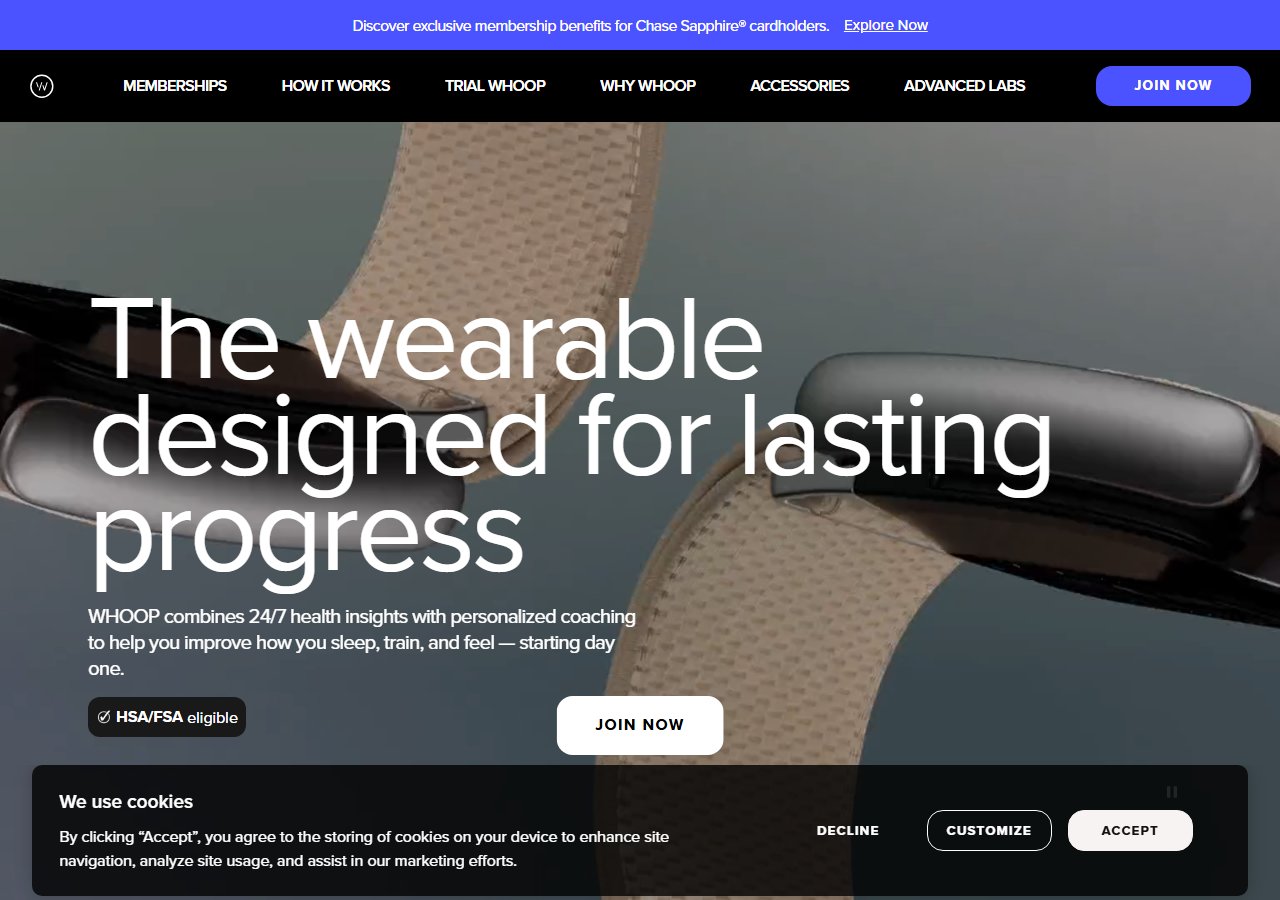
Whoop 4.0
$239 + subscription
See Price at Whoop →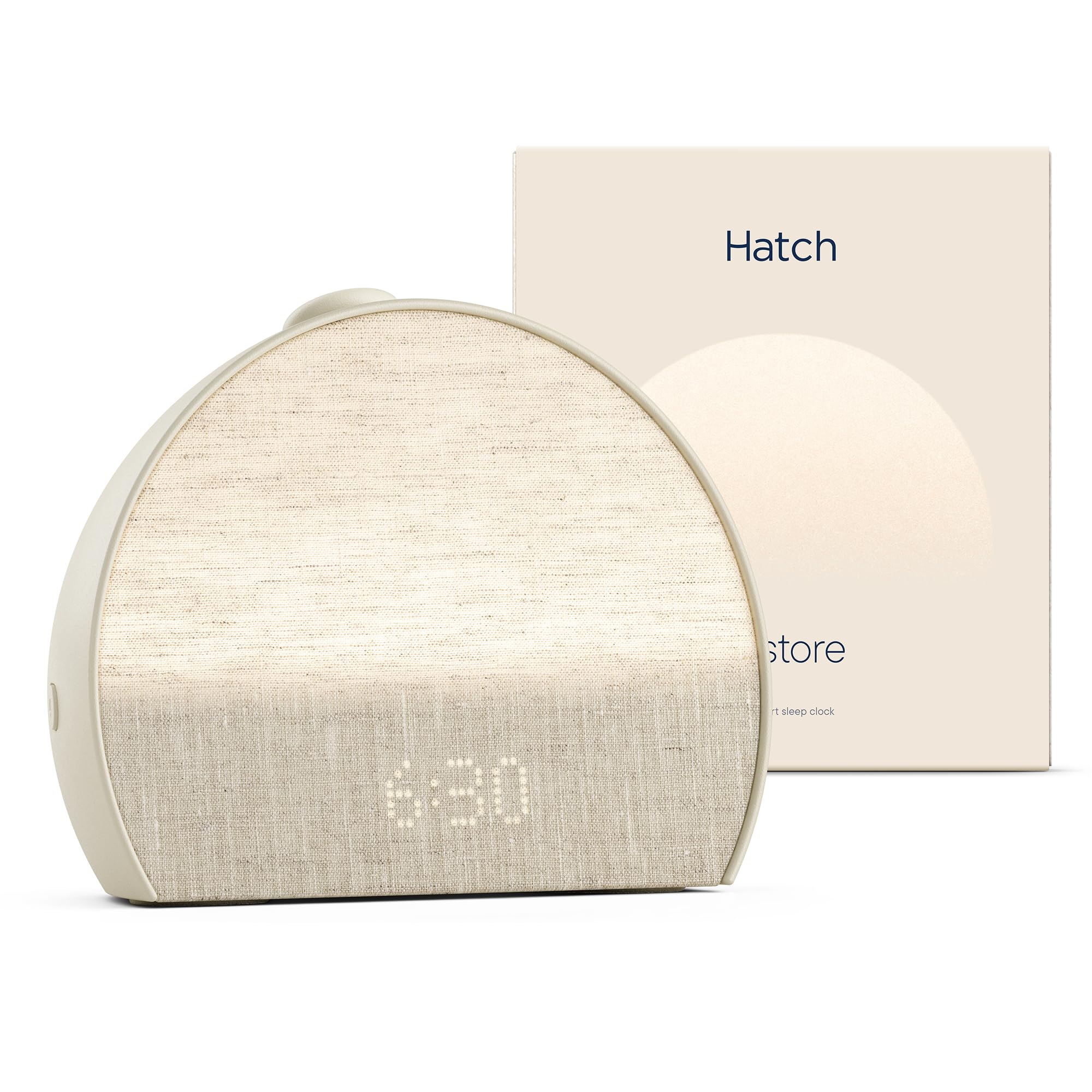
Hatch Restore 3 Sunrise Alarm Clock, Sound Machine, Smart Light (Putty) - Whi...
$169.99
Check Price on Amazon →The Hierarchy That Federal Data Actually Supports
The evidence base reviewed in this article produces a clear hierarchy, and it is not one that starts with equipment.
It starts with the CDC bedroom environment checklist: cool, dark, screen-free, consistent. It continues with the NIH NHLBI timing protocol: same bedtime, same wake time, every day. It incorporates CDC activity guidance: 150 minutes of moderate movement per week as a direct sleep input. It runs through NIOSH shift-work environmental controls for anyone whose job creates circadian disruption. And it gates any device purchase behind a clinical screen for OSA if the warning signs are present.
What NIOSH Total Worker Health has established — and what the full weight of federal occupational health guidance supports — is that sleep is a workplace variable, not a personal-life variable. Fifty to seventy million Americans with chronic sleep disorders are not all failing at personal discipline. They are operating in occupational and environmental conditions that the evidence base identifies as structurally hostile to adequate sleep.
The interventions in this article — behavioral, clinical, and technological — are tools in a response to a documented public health condition. Use them in the order the evidence supports. Fix the environment. Lock in the timing. Move daily. Screen clinically if warranted. Then, and only then, evaluate whether a specific device adds measurable margin to a foundation that is already solid.
The BLS injury data will continue to capture the downstream cost of failing to act. The professionals who close that gap — through whatever combination of behavioral discipline and targeted technology fits their life — are the ones who perform, recover, and compound health across decades rather than drawing down on it.