The Scale of the Problem: One Quarter of American Adults
CDC surveillance data puts the prevalence of chronic low-back pain at roughly one in four U.S. adults in any given year — a figure that has remained stubbornly persistent across decades of pharmaceutical innovation, surgical advances, and wellness-industry marketing. That means if you are reading this with a dull ache in your lumbar region after another long day at your desk, your truck cab, or your warehouse floor, you are sharing that experience with approximately 65 million Americans at this very moment.
What makes this number remarkable is not just its size but its distribution. The BLS Survey of Occupational Injuries and Illnesses identifies back injuries as the most common musculoskeletal injury type causing days away from work across multiple industries — not just construction or manual labor, but office work, healthcare, transportation, and retail. Back pain is not a niche problem for a high-risk occupational subset. It is, by federal measurement, a pan-industry epidemic.
And the costs are not merely physical. BLS Workers' Compensation data consistently places back claims among the highest-cost claim categories across all compensation types, meaning back pain is simultaneously the most common and most expensive occupational health event employers face. For workers themselves, the cost shows up as missed shifts, reduced productivity, and — for those without adequate paid leave — lost wages during recovery. Understanding why this happens is the first step toward managing it.
Why Your Back Hurts: The Biomechanics Federal Agencies Have Documented
The lumbar spine — the five vertebrae between your ribs and your pelvis — is an engineering marvel designed for dynamic loading. Walking, lifting, bending: the discs, facet joints, and surrounding musculature are built to share loads across a range of motion. What they are not built for is sustained static compression in a flexed or awkwardly loaded position — which is precisely what prolonged seated work produces.
OSHA's ergonomics guidance explicitly identifies awkward and prolonged seated posture as a documented risk factor for chronic low-back disorders. When you sit in a poorly adjusted chair with your pelvis tucked under, your lumbar spine loses its natural lordotic curve. The L4-L5 and L5-S1 discs — the two most commonly herniated in the U.S. population — shift from compression distributed across the full disc surface to compression concentrated at the posterior annulus. Over hours of sustained loading, that asymmetric compression promotes disc degeneration, facet joint irritation, and the kind of diffuse, hard-to-localize pain that characterizes chronic low-back syndrome.
The OSHA Computer Workstations eTool is unusually specific about this: it states that the lumbar curve of the chair should match the natural curve of the lower back to reduce static loading. This is not aesthetic guidance. It is biomechanical engineering translated into workstation policy. When the chair's lumbar support profile matches the individual worker's natural lordotic curve, intradiscal pressure drops, the paraspinal muscles can reduce their constant low-level contraction, and the facet joints decompress slightly — all of which translate to reduced pain over a sustained workday.
For workers in transportation and warehousing, the biomechanical story is compounded. BLS industry data shows truck drivers and warehouse workers carry higher-than-average lumbar-injury claim rates relative to the all-industry baseline. This makes sense when you understand the load pattern: a truck driver endures whole-body vibration through the seat for hours, combined with prolonged sitting — a combination OSHA's ergonomics framework flags as particularly damaging. Warehouse workers alternate between sustained lifting loads and awkward seated or standing postures during break periods, creating cyclical stress on lumbar structures that are never fully recovered.
The NIOSH Lifting Equation provides a quantified framework for understanding why: it calculates Recommended Weight Limits based on task variables including frequency, distance from the body, and trunk rotation. When workers repeatedly exceed those limits — or when they sit for hours after lifting loads near the limit — the cumulative lumbar load compounds. The equation exists precisely to make that invisible risk visible and actionable.
One additional population-level factor deserves attention. CDC's NHANES data documents adult obesity prevalence at approximately 40% of the U.S. adult population. Excess body mass increases the compressive load on lumbar discs during both standing and sitting. For seated workers carrying additional body weight, the case for properly fitted lumbar support is not merely comfortable — it is mechanically consequential. The force transmitted through an improperly supported lumbar spine scales with body mass, meaning a cushion that provides adequate lordotic support is doing more biomechanical work for heavier individuals than the modest price tag might suggest.
The Cheapest Intervention Is One That Doesn't Require Buying Anything
Before discussing any equipment, the federal evidence base is unambiguous: behavioral and movement interventions outperform passive device use when applied consistently. The NIH's National Center for Complementary and Integrative Health evidence review places non-pharmacologic interventions — including exercise, ergonomic adjustments, and spinal manipulation — as first-line management for chronic low-back pain, with effect sizes that rival most pharmaceutical approaches and without the adverse effect profile. The NIH National Institute of Arthritis and Musculoskeletal and Skin Diseases similarly lists lumbar support as a modifiable factor — meaning it matters, but it operates within a broader system of modifiable behaviors.
The evidence also points clearly to what those behaviors are. Walking — specifically around 30 minutes on most days — has demonstrated effect sizes in clinical literature comparable to structured physical therapy for chronic low-back pain, according to the same NCCIH review. Core and hip mobility work, practiced for as little as 5 to 10 minutes daily, builds the muscular architecture that offloads lumbar structures during both sitting and dynamic activity. And before adding any cushion or device to your chair, OSHA's neutral-posture sequence matters: seat height first (feet flat on the floor), then seat depth (three fingers of clearance behind the knees), then lumbar fit. A lumbar cushion placed on a chair that is set at the wrong height simply shifts the problem up or down the spine rather than resolving it.
For readers who have already worked through posture corrections, established a walking habit, and integrated core mobility work — and who are still experiencing the diffuse lumbar fatigue that accumulates across a long workday — equipment does have a role. The NIH and OSHA evidence is not that lumbar support devices are ineffective; it is that they are most effective as adjuncts to corrected posture and active movement, not as substitutes for them. If you've done the behavioral work and you're still sitting for six, eight, or ten hours a day in a chair that cannot deliver adequate lumbar contour, an external lumbar cushion is a legitimate, evidence-adjacent tool.
When to See a Clinician: Red Flags That No Cushion Can Address
Chronic low-back pain is, in the majority of cases, mechanical — meaning it arises from posture, load, and movement patterns rather than from structural pathology requiring medical intervention. But a meaningful minority of low-back pain presentations are signals of something more serious, and federal health guidance is explicit about which symptoms require clinical evaluation rather than conservative self-management.
NIH's National Institute of Neurological Disorders and Stroke identifies specific red-flag presentations that should prompt immediate medical evaluation: pain that radiates below the knee (suggesting nerve root compression or disc herniation with radiculopathy), numbness or tingling in the legs or feet, leg weakness, changes in bowel or bladder function, fever accompanying back pain (which may indicate infection), and pain following a fall or trauma. Pain that does not improve after four to six weeks of conservative care — including posture correction, movement, and ergonomic adjustment — also warrants a clinician visit to rule out structural pathology.
If you are experiencing any of those red-flag symptoms, stop reading product reviews and make an appointment. A lumbar cushion is not a treatment for disc herniation, spinal stenosis, cauda equina syndrome, or lumbar infection. Those are clinical diagnoses that require imaging, physical therapy under supervision, or in some cases surgical evaluation. The products discussed in this article are designed for the much larger population of chronic mechanical low-back pain sufferers — the 25% of U.S. adults whose pain is posture-driven, load-driven, and responsive to ergonomic correction.
Where Lumbar Support Cushions Fit: Evidence-Adjacent Tools for Mechanical Pain
For the majority of chronic low-back pain sufferers — those without red flags, who sit for extended periods, whose pain worsens through the workday and improves with movement — lumbar support cushions represent a low-cost, low-risk ergonomic adjunct with reasonable biomechanical rationale. The OSHA standard is the starting point: the lumbar curve of the support should match the natural lordotic curve of the individual user. Memory foam and gel-foam hybrids are the materials most commonly used because they conform to individual spinal contours rather than imposing a fixed shape.
The three products reviewed here were selected because they address specific aspects of the federal ergonomic standard — lumbar contour support, pressure distribution for extended seated work, and seat-level cushioning that affects pelvic tilt and therefore lumbar positioning.
The Everlasting Comfort Original Lumbar Support Pillow is the most direct translation of OSHA's lumbar-fit guidance into a consumer product. Its contoured memory foam profile is designed to fill the gap between a flat chair back and the natural lordotic curve of the lumbar spine — which is exactly the gap OSHA's Computer Workstations eTool identifies as the source of static loading. For desk workers who cannot justify a full ergonomic chair replacement, this cushion functions as a targeted lumbar insert that restores the curve the chair isn't providing. It straps to the chair back, keeping it positioned at the L3-L5 level regardless of how much you shift during the day.
The ComfiLife Premium Gel & Memory Foam Seat Cushion addresses a different but related mechanism: pelvic positioning. The coccyx cutout and gel-foam hybrid construction redistribute sitting pressure away from the tailbone and ischial tuberosities, which allows the pelvis to sit in a slightly more anterior tilt. Anterior pelvic tilt, when not excessive, naturally restores some lumbar lordosis — which means a well-designed seat cushion can improve lumbar posture from the bottom up without requiring any change to the chair back. For truck drivers and long-haul commuters who spend hours on a flat, hard seat that promotes posterior pelvic tilt and lumbar kyphosis, this mechanism is particularly relevant given the BLS data on elevated lumbar injury rates in transportation workers.
The Everlasting Comfort Doctor Recommended Memory Foam Seat Cushion combines seat-level pressure relief with an ergonomic contour designed to maintain neutral pelvic positioning across extended seated periods. Memory foam's visco-elastic properties mean it responds to body heat and weight, distributing pressure more evenly than standard polyurethane foam — a practical benefit for workers who cannot get up and move every thirty minutes (a constraint that is common in call centers, cashier stations, and transportation contexts where the BLS data shows elevated back-injury rates). The cushion's density is calibrated to support without bottoming out, which matters: a cushion that compresses fully under load provides no ergonomic benefit.
All three products sit in the $41–$48 price range — well below the cost of an ergonomic chair upgrade (typically $300–$1,500) and astronomically below the average cost of a back-injury workers' compensation claim, which BLS compensation data places among the highest-cost categories in occupational claims. For employers considering these as workplace provisions, the cost-benefit calculation is straightforward. For individual workers funding their own ergonomic environment, these represent the lowest-cost entry point into a federally-supported ergonomic intervention.
Lumbar Support Cushions Backed by Federal Ergonomic Standards
These three cushions were selected for back pain sufferers who have addressed posture and movement basics and need a low-cost ergonomic adjunct that aligns with OSHA's lumbar-curve guidance and NIH's non-pharmacologic intervention framework.
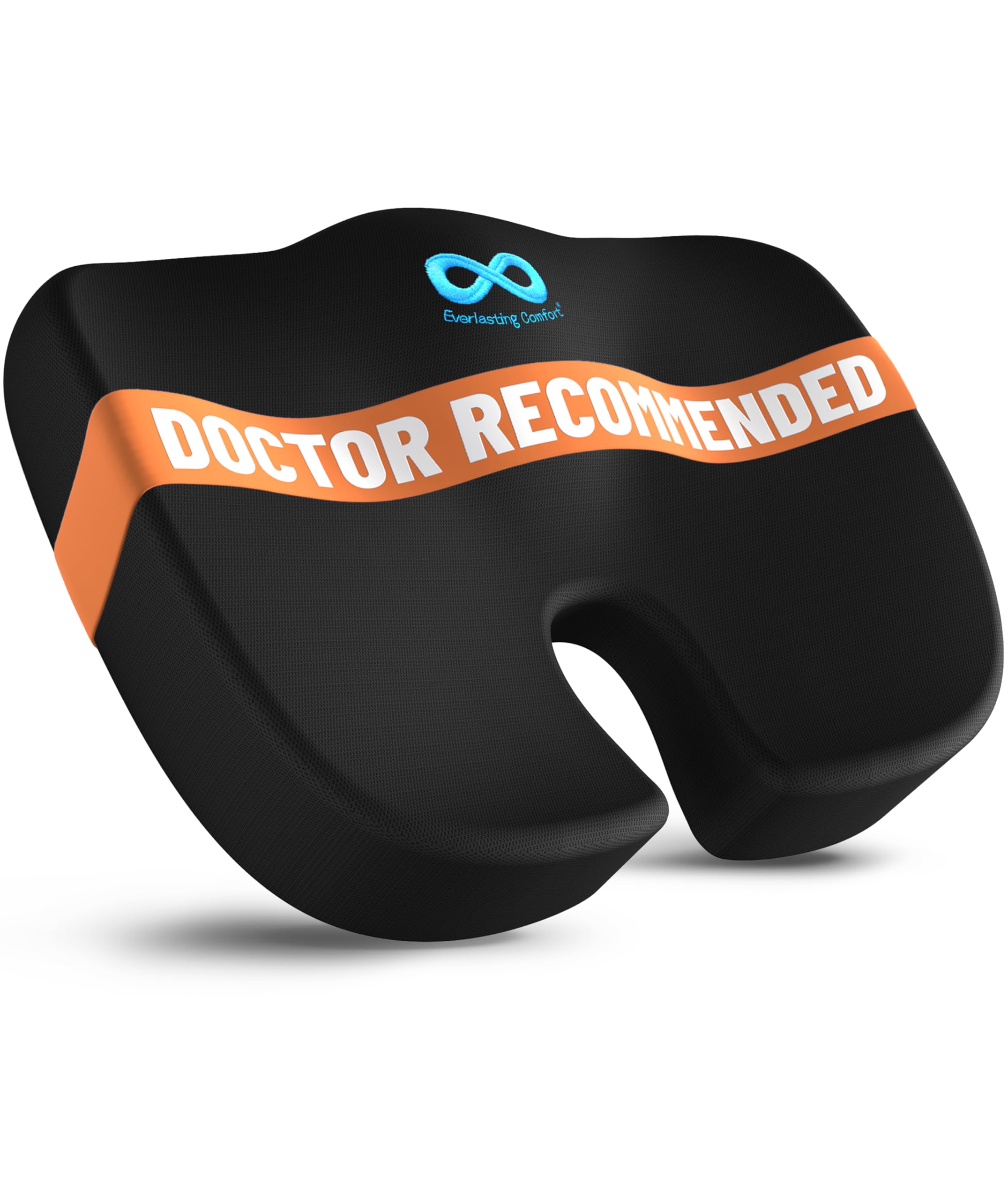
Everlasting Comfort Doctor Recommended Memory Foam Seat Cushion for Office Ch...
$47.98
Check Price on Amazon →
ComfiLife Premium Gel & Memory Foam Seat Cushion – Doctor Recommended Office ...
$41.39
Check Price on Amazon →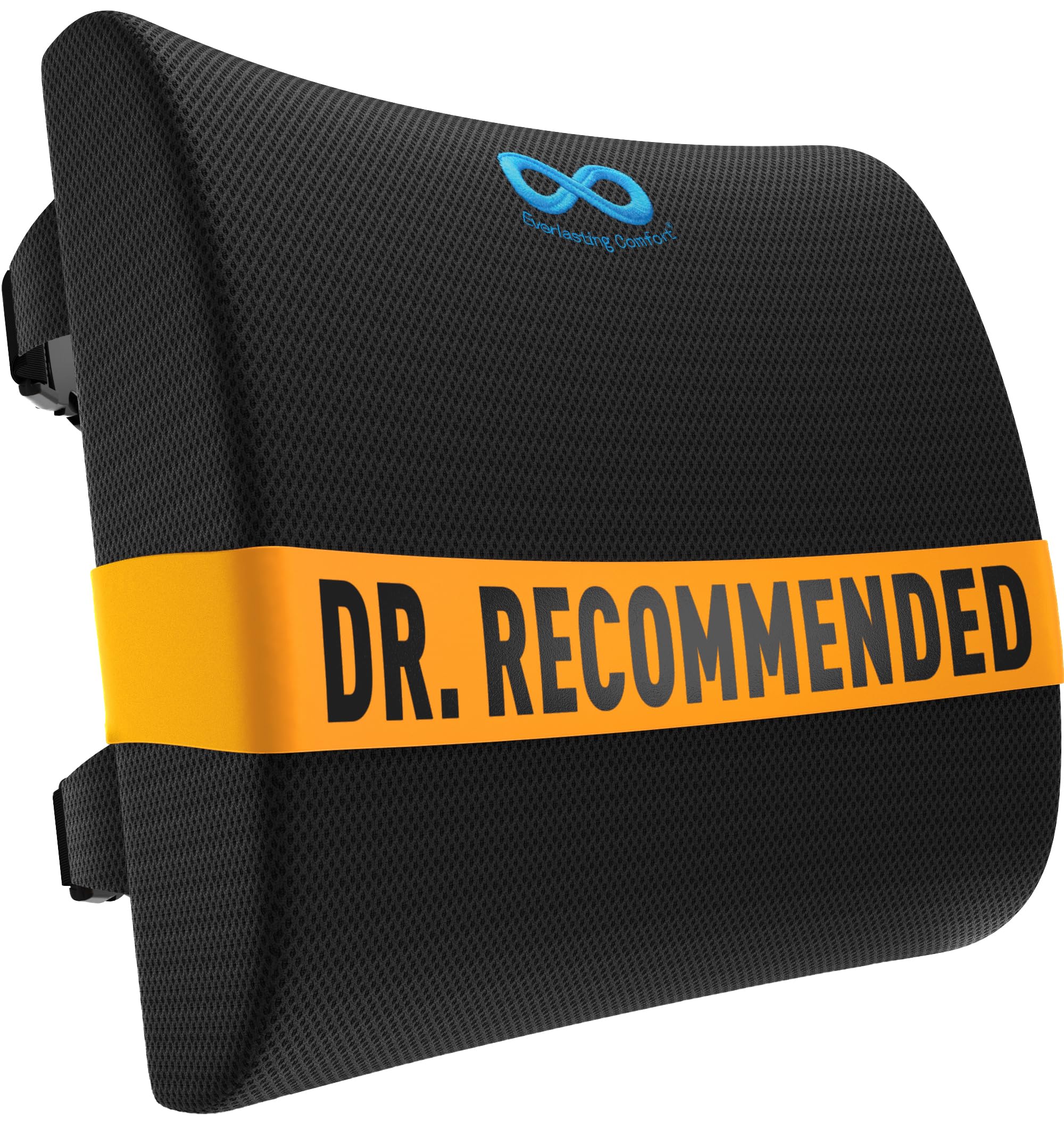
Everlasting Comfort The Original Lumbar Support Pillow for Office Chair - Imp...
$43.99
Check Price on Amazon →Making It Work: Fitting Lumbar Support Into the Federal Evidence Framework
The federal data hierarchy on chronic low-back pain is not ambiguous: movement first, posture correction second, ergonomic aids as adjuncts, clinical evaluation for red flags, and pharmaceutical or surgical intervention only when conservative measures have been exhausted. That hierarchy is consistent across OSHA, NIH, NCCIH, NIAMS, and NINDS guidance — five separate federal agencies with different mandates arriving at the same sequenced recommendation.
What lumbar support cushions do well is address one specific, documented failure mode in the ergonomic environment: the gap between the natural lumbar curve and the flat or miscontoured surface most production chairs provide. What they do not do is replace the disc decompression effect of walking, the muscular stability built by core training, or the postural foundation that only a correctly adjusted chair can provide. Used in that context — as one component of a multi-modal approach — the evidence basis for them is reasonable, the cost is low, and the risk is essentially zero.
For the one in four Americans carrying chronic low-back pain into their workday right now, the message from the federal data is both sobering and practical: this is a common, well-characterized, and substantially modifiable condition. The modifications that matter most don't require a prescription or a major purchase. But if you've made those modifications and you're still spending eight hours a day in a chair that doesn't support your lumbar spine, a $42–$48 foam cushion is a reasonable, evidence-adjacent next step — not a cure, but a legitimate tool in a toolkit that federal health agencies have been building out for decades.