One in Five American Adults Wakes Up in Pain — Federal Data Explains Why
According to CDC NCHS Data Brief 390, approximately 20% of U.S. adults experience chronic pain, and the lower back is the most frequently reported pain location in the country. That figure is not a rounding error. It represents roughly 50 million people navigating daily life — work, sleep, commutes, child care — against a backdrop of persistent lumbar discomfort. If you are one of them, you already know that the advice you receive is often contradictory, expensive, and slow to produce results.
The federal data trail paints an even sharper picture when you layer in occupational context. BLS Musculoskeletal Disorders by Occupation tracking confirms that the back is the most common body part injured across all U.S. occupations with days away from work — not just the heavy trades, but office workers, healthcare staff, and retail employees as well. The condition does not respect industry lines.
The economic weight is staggering. AHRQ HCUP data identifies back pain as one of the most expensive conditions in U.S. healthcare by combined inpatient and outpatient cost. AHRQ's Medical Expenditure Panel Survey (MEPS) reinforces that finding from the patient's perspective: adults with chronic back conditions spend substantially more on personal healthcare annually than adults without such conditions. Meanwhile, CMS drug spending data identifies opioid and non-opioid pain medications among the most expensive Medicare drug categories — a downstream reflection of how heavily the healthcare system leans on pharmaceutical management of a condition that is, in many cases, mechanical and addressable through non-pharmaceutical means.
This article is not a product roundup dressed up as health journalism. It is a structured reading of what federal agencies actually say about chronic back pain — its causes, its occupational drivers, the free interventions that evidence supports most strongly, the clinical red flags that require a provider before anything else, and — after all of that — the evidence base for sleep surface selection and the specific mattresses worth considering if you have already addressed the other variables.
Why Chronic Low Back Pain Happens: The Biomechanical and Occupational Mechanism
Chronic lower back pain is not a single condition. It is a cluster of overlapping mechanical, inflammatory, and degenerative processes that share a common anatomical address: the lumbar spine, specifically the L1–L5 vertebrae and the soft tissue structures — discs, facet joints, ligaments, and the erector spinae and multifidus muscle groups — that surround them.
The most common driver is cumulative mechanical loading. The NIOSH Lifting Equation provides federal documentation of this mechanism: manual material-handling tasks across warehousing, construction, and healthcare routinely exceed safe spinal loading limits. Repeated exposure to loads above the recommended weight limit does not produce a single catastrophic injury in most cases. Instead, it produces a slow accumulation of microtrauma to the intervertebral discs and posterior ligament complex, eventually resulting in disc height loss, annular tears, or facet arthropathy — each of which generates the characteristic dull, persistent lumbar ache that chronic back pain sufferers describe.
Occupational exposure is the largest single modifiable risk factor. BLS Employer Costs for Employee Compensation data shows that industries with high musculoskeletal disorder (MSD) incidence carry workers' compensation insurance rates 3–5x higher than low-MSD industries — a market signal that actuaries use to price the true cost of spinal loading on American workers. Warehousing, long-haul trucking, nursing, construction, and agriculture top the MSD incidence charts year after year.
But sedentary occupations are not exempt. Prolonged sitting compresses the lumbar discs at approximately 1.4 times the load of standing, according to biomechanical research. Office workers who sit for six or more hours per day with poor lumbar support develop posterior disc herniation risk patterns similar to those of moderate manual laborers — they simply accumulate the damage more slowly and with less acute awareness.
The inflammatory pathway matters too. CDC Arthritis Data shows approximately 25% of U.S. adults report doctor-diagnosed arthritis, with prevalence concentrated in occupations involving sustained physical demand. Inflammatory arthropathy of the facet joints — the small paired joints on the posterior lumbar spine — produces a different pain character than disc pathology: stiffness upon waking, pain that improves with movement, and bilateral aching that worsens in cold or damp conditions. This distinction matters for sleep surface selection, as we discuss below.
And then there is the sleep-pain feedback loop. CDC sleep and sleep disorders data shows approximately 35% of U.S. adults report sleeping less than 7 hours per night, the threshold associated with elevated chronic disease risk. Sleep deprivation elevates systemic inflammatory markers — including C-reactive protein and interleukin-6 — which directly amplifies pain sensitivity through central sensitization. In other words, poor sleep makes back pain hurt more, and back pain disrupts sleep. The cycle compounds nightly until interrupted by either effective pain treatment, corrected sleep mechanics, or both.
SSA Disability Insurance data identifies musculoskeletal disorders as the largest single category of new disability claims annually. For a condition that federal agencies have documented as largely mechanical, largely preventable, and largely undertreated, this statistic represents an enormous preventable burden on both individuals and the public system.
Try These First: What Federal Agencies Actually Recommend Before You Spend Anything
The cheapest intervention is the one that does not require buying anything. The federal evidence base for non-pharmacological, non-device management of chronic low back pain is substantial and often undersold in commercial health media. Before any discussion of mattresses or sleep surfaces, the interventions below represent the first-order actions supported by NIH, NIOSH, OSHA, and CDC guidance.
Daily walking is the most evidence-supported active intervention. NIH NCCIH's comprehensive evidence review on low back pain concludes that walking 30 minutes on most days reduces chronic low back pain as effectively as most non-drug clinical treatments. This is not a soft finding: it holds across multiple randomized controlled trials. Walking engages the deep stabilizing musculature of the lumbar spine — the multifidus and transverse abdominis — while promoting disc hydration through cyclic compression and decompression. It is free, requires no equipment, and has a zero-risk adverse event profile for most back pain presentations.
Sleep position is a large, free variable. NIH's National Institute of Arthritis and Musculoskeletal and Skin Diseases back pain guidance specifically recommends side-sleeping with a pillow between the knees or back-sleeping with a pillow under the knees to maintain spinal neutrality. Stomach-sleeping torques the lumbar spine into extension and rotation simultaneously — the worst mechanical combination for both disc and facet pathology. This intervention costs nothing and can be started tonight.
Lifting and movement mechanics matter more than most people realize. OSHA's ergonomics guidance documents the core principle: hinge at the hips rather than the lumbar spine, keep loads close to the body, and avoid twisting under load. The vast majority of acute back episodes are mechanical — triggered by a specific movement pattern — and are therefore rehearsable and preventable. Changing the movement pattern is more durable than any passive treatment.
Knowing when the mattress itself is the problem — versus a symptom of deeper issues — is also essential. CDC sleep hygiene guidance supports mattress replacement when visible sag is present, when you consistently wake stiffer than you went to bed, or when the mattress exceeds 7–10 years of age. Even the most engineered sleep surface will not undo poor sleep hygiene, a sedentary lifestyle, or inadequate movement during the day.
For readers who have already worked through the above — who walk regularly, sleep in a supported position, and have addressed their movement mechanics — the sleep surface itself becomes a legitimate variable. The research here is more nuanced than mattress marketing suggests, but it is real. A 2015 randomized controlled trial published in Sleep Health found that medium-firm mattresses significantly reduced back pain and improved sleep quality compared to both soft and very-firm surfaces. A 2021 systematic review in Journal of Orthopaedic & Sports Physical Therapy concluded that sleep surface firmness influences perceived morning stiffness and overnight pain intensity in adults with chronic lumbar conditions. The mechanism is spinal alignment: a surface that is too soft allows the pelvis to sink, creating a lateral curve; one that is too firm bridges the natural lumbar lordosis without filling the gap, creating a hyperextension load. Medium-firm to firm — with targeted pressure relief at the shoulders and hips — represents the sweet spot for most chronic back pain presentations.
When to See a Clinician Before Doing Anything Else
Not all back pain is mechanical. Some presentations are medical emergencies disguised as ordinary back aches, and no mattress, movement protocol, or sleep position adjustment is the appropriate first response. NIH's National Institute of Neurological Disorders and Stroke back pain guidance is explicit about the red flags that require prompt clinical evaluation.
If your back pain radiates below the knee, particularly with numbness, tingling, or a shooting quality, you may have nerve root compression from a herniated disc or spinal stenosis — conditions that require imaging and clinical management before any other intervention. Similarly, back pain following physical trauma, back pain accompanied by unexplained fever, new-onset bowel or bladder dysfunction in the context of back symptoms, or progressive leg weakness alongside back pain are all clinical emergencies. These are not presentations where sleep surface optimization is relevant. They are presentations where the correct next step is a provider visit, likely with imaging.
For working-age adults with occupational exposure — the warehouse worker with cumulative loading, the nurse with patient transfer duties, the trucker with whole-body vibration exposure — the threshold for evaluation should be lower, not higher. AHRQ HCUP data documents that delayed diagnosis and treatment of serious spinal conditions significantly increases both cost and long-term disability duration. Seeing a clinician early, when red flags appear, is not an overreaction. It is the most cost-effective behavior the evidence supports.
Where Sleep Surfaces Help — and Which Ones Are Built for This
For the reader who has addressed movement, sleep position, and lifting mechanics, and who does not present with clinical red flags, the sleep surface is a legitimate and meaningful variable in chronic back pain management. The mechanism is not mystical: a mattress that fails to maintain lumbar neutrality through the night forces the stabilizing musculature to compensate actively, producing the morning stiffness and aching that so many chronic back pain sufferers describe as worse than their daytime pain.
The three mattresses below were selected based on their construction approach to lumbar zoning, pressure relief at the hip and shoulder, and their relevance to the specific back pain presentations documented in the federal data above.
The Saatva Loom & Leaf Memory Foam Mattress is the premium memory foam pick for serious back pain sufferers, particularly those with inflammatory arthropathy or disc-related pain who benefit most from contouring support. The Loom & Leaf uses a dual-layer memory foam construction — a cooling gel layer over a Spinal Zone gel-embedded memory foam layer — specifically engineered to provide enhanced lumbar support in the center third of the mattress while allowing shoulder and hip pressure relief at the periphery. For adults with facet arthropathy (recall that CDC data puts doctor-diagnosed arthritis at 25% of U.S. adults), the contouring quality of high-density memory foam can meaningfully reduce morning joint stiffness by eliminating the pressure points that trigger defensive muscle guarding overnight. It is available in Relaxed Firm and Firm options, both of which test in the medium-firm to firm range appropriate for most lumbar pain presentations. It is priced at $1,695–$3,295 and ships with Saatva's white-glove delivery and 365-night home trial.
The Saatva HD Mattress is engineered specifically for heavier body weights — up to 500 pounds per individual — a population that is significantly underserved by standard mattress construction and that faces disproportionate lumbar loading both occupationally and during sleep. The BLS and NIOSH data cited earlier is concentrated in physically demanding occupations — warehousing, construction, healthcare — where body weight and occupational load combine to create some of the highest cumulative lumbar stress profiles in the workforce. The Saatva HD uses a triple-tempered steel individually wrapped coil system with a 20% higher coil count than standard models, a high-density foam perimeter, and a Euro pillow top designed to provide pressure relief without the sinkage that causes lateral spinal curvature in heavier sleepers. Standard mattresses in the medium-firm category typically lose effective support for sleepers above 230 pounds because the coil and foam systems compress beyond their design range. The HD was engineered to maintain lumbar zoning through the full weight range it targets. Priced at $2,395–$3,995.
The Purple Hybrid Premier Mattress is the premium pressure-relief pick, and it occupies a distinct position in the firmness-versus-contouring tradeoff that defines mattress selection for back pain. Purple's proprietary GelFlex Grid is a hyperelastic polymer grid that behaves differently from both memory foam and traditional innerspring: it collapses under direct pressure points (hips, shoulders) while remaining firm under distributed load areas (lumbar spine). The practical effect for a side sleeper with lumbar pain is that hip pressure is substantially reduced — eliminating the reactive muscle guarding that compressive hip loading triggers — while the lumbar region maintains alignment without the sinkage associated with soft foam. The Hybrid Premier adds a pocketed coil base for targeted zone support and motion isolation, making it the strongest option for combination sleepers who shift between side and back positions through the night. Priced at $2,499–$4,799.
Mattresses Engineered for Chronic Lumbar Support — Curated from Federal Data
These three mattresses were selected for their specific construction approaches to lumbar zoning and pressure relief, matched to the back pain presentations most heavily documented in CDC, BLS, and NIOSH occupational data.

Saatva Loom & Leaf Memory Foam Mattress
$1,695-$3,295
See Price at Saatva →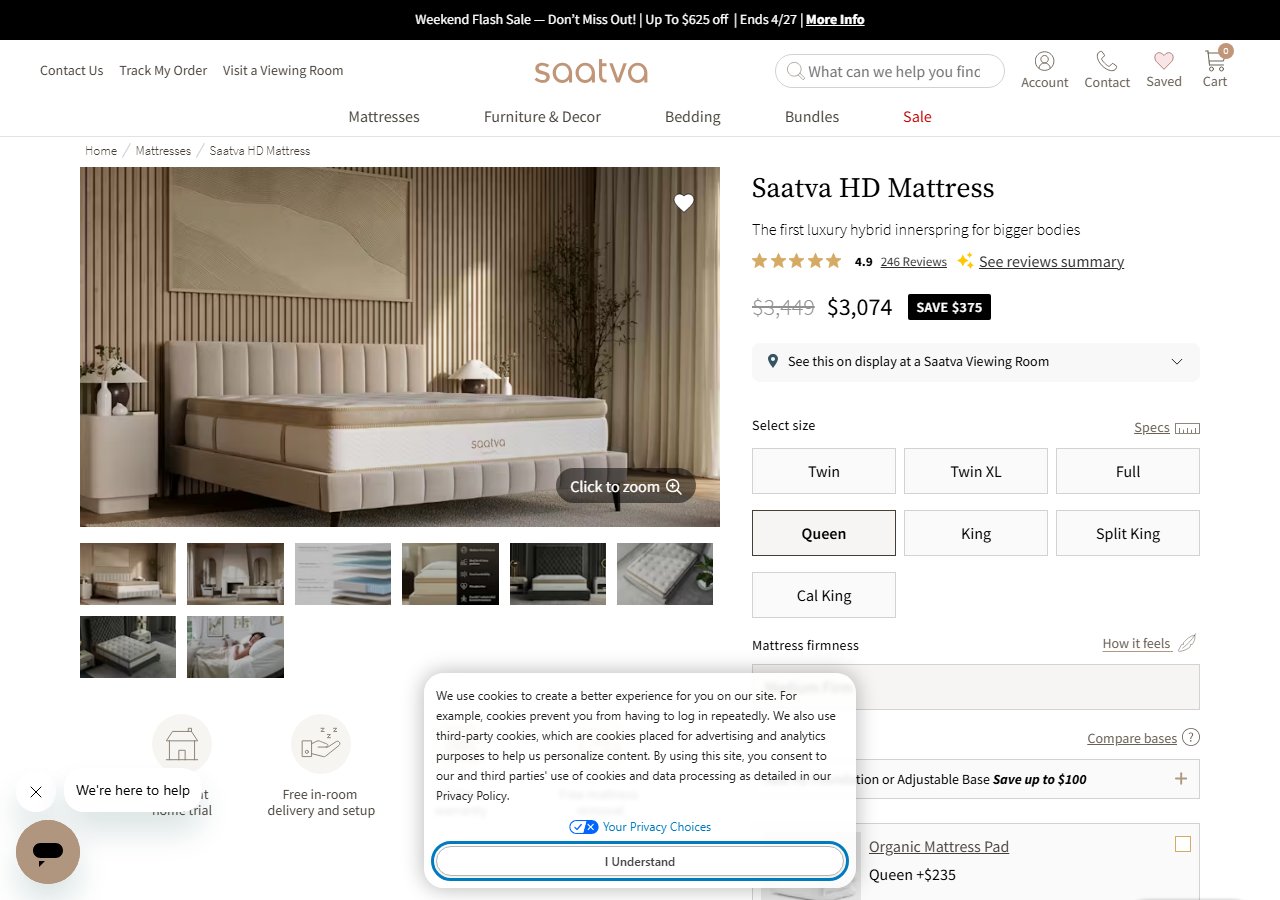
Saatva HD Mattress (Heavy-Duty)
$2,395-$3,995
See Price at Saatva →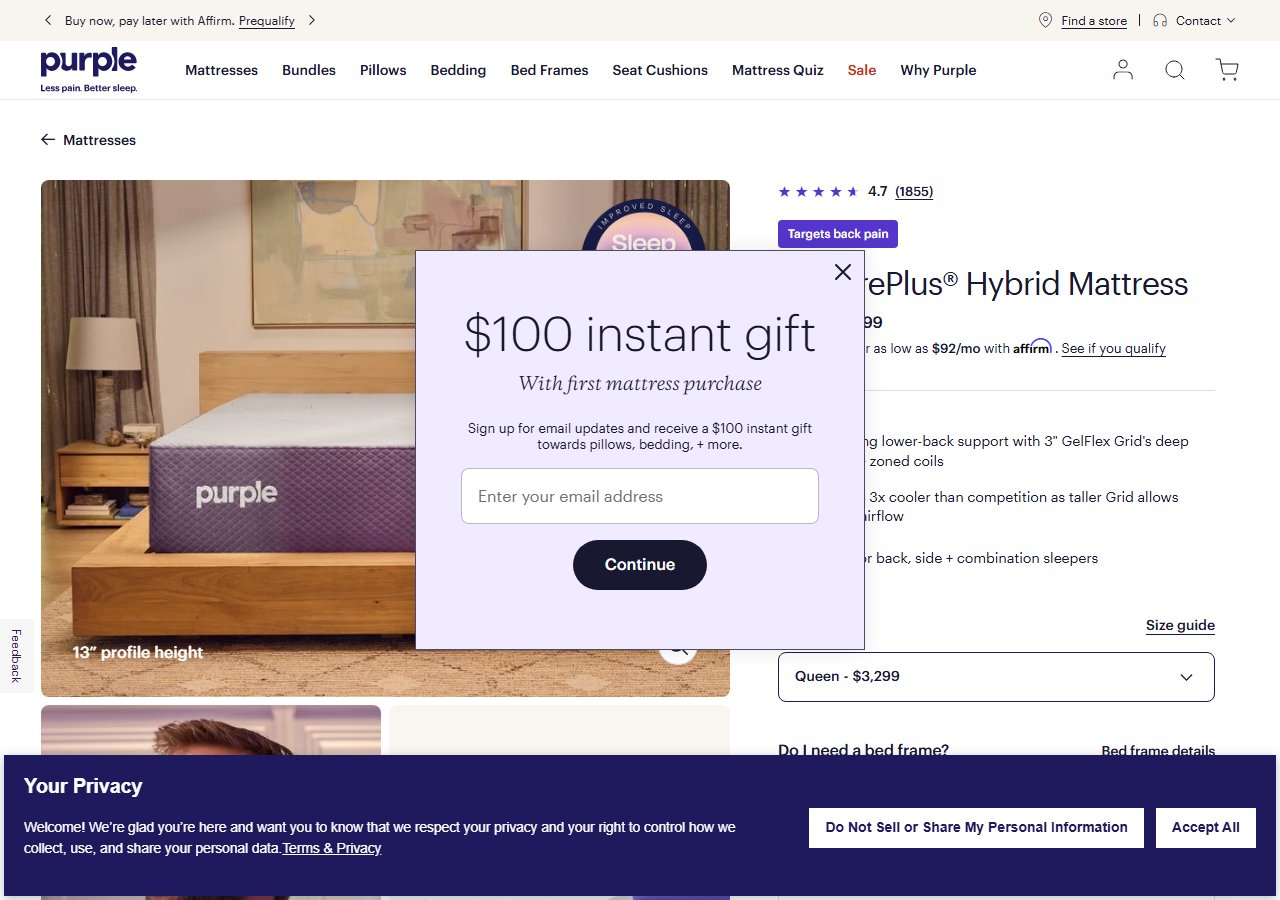
Purple Hybrid Premier Mattress
$2,499-$4,799
See Price at Purple →The Data-to-Intervention Hierarchy: What Federal Evidence Actually Supports
The federal data on chronic back pain tells a consistent story: this is a condition driven by cumulative mechanical loading, amplified by poor sleep and sedentary behavior, and enormously costly when left unaddressed — both to individuals through AHRQ MEPS-documented healthcare expenditure and to the public system through SSA disability claims and CMS pain medication spending.
The evidence-supported hierarchy is clear: movement first, sleep position correction second, lifting mechanics third, clinical evaluation for red flags on a parallel track, and sleep surface optimization as a meaningful but downstream variable for those who have addressed the upstream causes. The three mattresses profiled above — the Saatva Loom & Leaf for disc and inflammatory presentations, the Saatva HD for heavier-body and high-load occupational users, and the Purple Hybrid Premier for pressure-sensitive side sleepers — represent construction approaches that align with the biomechanical demands federal data has documented in chronic back pain populations.
None of them will override a sedentary lifestyle, poor sleep hygiene, or a clinical condition that requires imaging. But for the reader who has done the work upstream, a sleep surface engineered to maintain lumbar neutrality through eight hours of horizontal loading is not a luxury. It is the final piece of a documented intervention stack.