One in Five American Adults Wakes Up with This Problem
CDC NCHS Data Brief 390 is one of the most consequential — and least-read — documents in American public health. It documents that approximately 20% of U.S. adults experience chronic pain, and that the lower back is the single most common pain location in the country. That is not a rounding error or a statistical artifact. It means roughly 50 million people in the United States are navigating daily life with a spine that hurts. Some of them are warehouse pickers whose shifts demand eight hours of repetitive bending. Some are nurses who transfer patients across twelve-hour rotations. Some are office workers whose discs have been quietly compressed by years of poor seated posture. And every single one of them eventually lies down in a bed and either recovers or does not.
The sleep surface question — whether the mattress makes chronic back pain better or worse — is not a marketing question. It is a biomechanical and epidemiological one, and the federal data that illuminates it is both richer and more sobering than most mattress advertising acknowledges. This article works through that data in the order that federal research suggests actually matters: mechanism first, free interventions second, clinical red flags third, and equipment decisions last.
Why the Lower Back Is America's Most Common Injury Site
The lumbar spine — specifically the five vertebrae between the thoracic cage and the pelvis — carries a disproportionate share of every load the human body manages. When you bend, that load multiplies. When you twist under load, the compressive and shear forces on lumbar discs spike further. NIOSH's Lifting Equation documents with engineering precision that manual material-handling tasks across warehousing, construction, and healthcare routinely exceed safe spinal loading limits — meaning the biomechanical threshold for tissue damage is crossed regularly during ordinary workdays across the largest employment sectors in the U.S.
This is why BLS Musculoskeletal Disorder tracking consistently identifies the back as the most common body part injured across all U.S. occupations with days away from work. It is not that American workers are careless. It is that the physics of the lumbar spine, combined with the demands of physical occupations, produce injury at scale. Approximately 25% of U.S. adults report doctor-diagnosed arthritis, with prevalence concentrated precisely in the occupations that involve sustained physical demand — healthcare, warehousing, construction, agriculture.
The downstream costs are enormous. AHRQ HCUP data identifies back pain as one of the most expensive conditions in U.S. healthcare by total inpatient and outpatient cost. AHRQ MEPS data confirms that average annual personal healthcare expenditures for adults with chronic back conditions substantially exceed costs for adults without such conditions — a gap that widens over time as acute episodes become chronic conditions. SSA Disability Insurance data identifies musculoskeletal disorders as the single largest category of new disability claims filed annually in the United States. And CMS drug spending data places opioid and non-opioid pain medication among the most expensive drug categories in Medicare, reflecting a system that too often reaches for chemical palliation because behavioral and environmental interventions were never adequately deployed upstream.
The sleep surface is one of those upstream environmental variables — but it is not the first one, and treating it as the first one is the error that drives unnecessary spending without commensurate benefit.
The Sleep-Pain Feedback Loop Federal Data Confirms
Chronic lower back pain and poor sleep interact as a bidirectional feedback loop. Pain disrupts sleep architecture; fragmented sleep lowers pain thresholds; lowered pain thresholds make the next day more painful; a more painful day produces a worse night. CDC Sleep and Sleep Disorders data documents that approximately 35% of U.S. adults report sleeping less than 7 hours per night — the threshold associated with elevated chronic disease risk. Among adults with chronic pain, that proportion is substantially higher. Poor sleep does not just feel bad. It is physiologically documented to impair tissue repair, elevate inflammatory markers, and reduce the central nervous system's capacity to modulate pain signals — all of which are directly relevant to chronic lumbar conditions.
The sleep surface enters this equation in two ways. First, a surface that fails to maintain spinal neutrality during sleep forces the paravertebral muscles to work isometrically through the night to compensate — producing the morning stiffness that millions of chronic back pain sufferers know as a daily experience. Second, a surface with inadequate pressure relief at the hips and shoulders causes frequent micro-arousals as the body shifts to relieve discomfort, fragmenting sleep architecture even when the sleeper is not consciously aware of waking. Both mechanisms are addressable. Neither requires an expensive mattress if the underlying behavioral issues — sleep position, movement, lifting mechanics — have not already been optimized.
Try These First — The Cheapest Interventions Are the Ones That Don't Cost Anything
The evidence hierarchy for chronic lower back pain is clear: behavioral and movement-based interventions produce effects comparable to or exceeding most passive interventions, including better sleep surfaces, for the majority of sufferers. NIH NCCIH's evidence review concludes that walking 30 minutes most days reduces chronic low back pain as effectively as most non-drug clinical treatments. OSHA's ergonomics guidance identifies improper lifting mechanics — failing to hinge at the hips, allowing the lumbar spine to flex under load, twisting while bearing weight — as the most rehearsable and preventable driver of acute back episodes.
Sleep position is perhaps the most under-utilized free variable in chronic back pain management. NIH back pain guidance is explicit: side-sleeping with a pillow between the knees, or back-sleeping with a pillow under the knees, maintains lumbar neutrality throughout the night. Stomach-sleeping torques the lumbar spine and compounds chronic pain. Most people have never been told this by a clinician. It costs nothing to change. And CDC Sleep Hygiene guidance makes clear that no mattress compensates for a sleep environment that undermines recovery — including one with a visibly sagging surface, insufficient support for the sleeper's body weight, or more than 7 to 10 years of use.
For readers who have already addressed sleep position, daily movement, and lifting mechanics — and who are still waking stiff and in pain — the sleep surface itself becomes a legitimate clinical variable. This is the population for whom mattress selection is not a luxury decision but an environmental health one. The research on firmness is more nuanced than mattress marketing suggests: medium-firm surfaces consistently outperform firm surfaces in randomized controlled trials for chronic lower back pain, likely because firm surfaces create pressure points at the hips and shoulders that force compensatory postures, while medium-firm surfaces allow the spine to achieve closer to neutral alignment without leaving the lumbar region unsupported.
When to See a Clinician Before You Change Anything Else
Some symptoms that present as back pain are not mechanical back pain and cannot be improved by any sleep surface, walking regimen, or postural adjustment. NIH NINDS guidance identifies the following as red flags requiring prompt clinical evaluation rather than self-directed management:
- Back pain that radiates below the knee, particularly with numbness or tingling, suggests possible nerve root compression (radiculopathy) or spinal stenosis that may require imaging and clinical intervention.
- Back pain following acute trauma — a fall, collision, or sudden heavy load — warrants evaluation for fracture before any physical intervention.
- Pain accompanied by leg weakness, foot drop, or difficulty with balance may indicate serious neurological compromise.
- Pain with bowel or bladder changes is a potential sign of cauda equina syndrome, a surgical emergency.
- Back pain with fever or unexplained weight loss may indicate infection or malignancy and requires immediate evaluation, not a new mattress.
For these presentations, the appropriate intervention is a clinician visit — not a product purchase. AHRQ guidelines consistently support early clinical evaluation for red-flag presentations as cost-effective relative to delayed diagnosis and more costly downstream interventions.
For the much larger population with chronic mechanical lower back pain — no neurological symptoms, no trauma, no systemic red flags — the evidence supports a structured self-management approach: daily movement as the primary intervention, sleep position optimization as the secondary, and sleep surface evaluation as the tertiary when the previous two have been addressed and the surface is objectively compromised.
Where Sleep Surface Design Actually Matters for Lumbar Conditions
For chronic lower back pain sufferers who have cleared the red flags, optimized their sleep position, and are evaluating sleep surfaces, three design variables matter most: pressure relief at the hips and shoulders, lumbar zonal support, and firmness level relative to body weight and sleep position. Memory foam, latex, and hybrid constructions each address these variables differently, and the right choice depends on the reader's specific load profile.
For most chronic lumbar sufferers — particularly side and back sleepers — the Saatva Loom & Leaf Memory Foam Mattress is the premium memory foam pick. Loom & Leaf is constructed with a two-layer comfort system using American-made gel memory foam that conforms to lumbar curvature without the deep sink that can destabilize neutral alignment. The Relaxed Firm version — the firmness option most consistently aligned with the medium-firm evidence base — provides a surface that allows the hips and shoulders to contour while preserving lumbar support. At $1,695–$3,295, it is a genuine investment, but for someone carrying $4,000+ in annual back-pain-related healthcare costs (as AHRQ MEPS data suggests is common for chronic sufferers), the math is different than it looks for a healthy adult buying on comfort alone. Saatva also provides white-glove in-home delivery, which matters for sufferers who cannot safely maneuver a compressed mattress-in-a-box.
For workers whose occupational load profile is closer to the heavy end of what NIOSH's Lifting Equation documents — warehouse workers, construction laborers, agricultural workers, and larger-bodied individuals generally — the Saatva HD Mattress addresses a gap that standard mattress construction was not designed for. The Saatva HD is engineered for body weights up to 500 lbs., with a lumbar zone crown of micro-coils that provide targeted spinal support where the load is greatest. Standard mattresses, regardless of their marketing claims, often under-support the lumbar region for heavier sleepers because their coil gauges and foam densities were optimized for median body weights. At $2,395–$3,995, it is the most expensive option in this list, but it is addressing a biomechanical problem that cannot be solved by a mattress built for a 160-lb. median user.
For chronic pain sufferers whose primary complaint is pressure-point pain — the kind that produces the micro-arousals that fragment sleep architecture — the Purple Hybrid Premier Mattress offers a pressure-relief approach that is architecturally different from both memory foam and traditional coil constructions. Purple's GelFlex Grid is a polymer grid system that column-buckles under point loads (hips, shoulders) while remaining rigid under distributed loads (lumbar spine, thighs) — mechanically approximating the pressure-distribution behavior that foam tries to achieve through density gradients, but doing so without the heat retention that many chronic pain sufferers find disruptive to sleep quality. At $2,499–$4,799, it is priced for serious chronic pain sufferers who have identified pressure relief as the limiting variable in their sleep quality.
Sleep Surfaces Evaluated for Chronic Lower Back Pain
These three mattresses were selected based on their construction architecture relative to the lumbar support, pressure relief, and firmness variables most relevant to chronic back pain sufferers — not general comfort ratings.

Saatva Loom & Leaf Memory Foam Mattress
$1,695-$3,295
See Price at Saatva →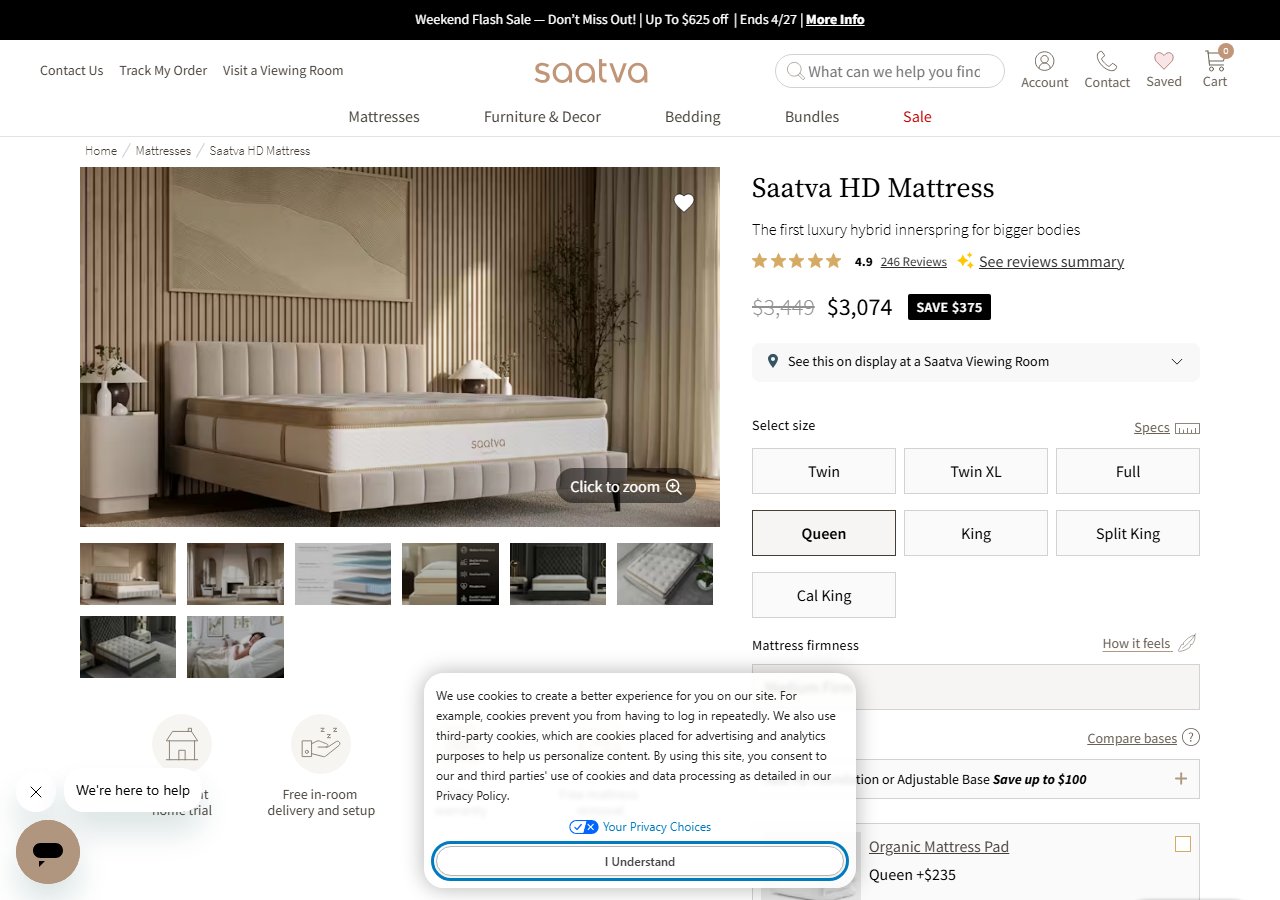
Saatva HD Mattress (Heavy-Duty)
$2,395-$3,995
See Price at Saatva →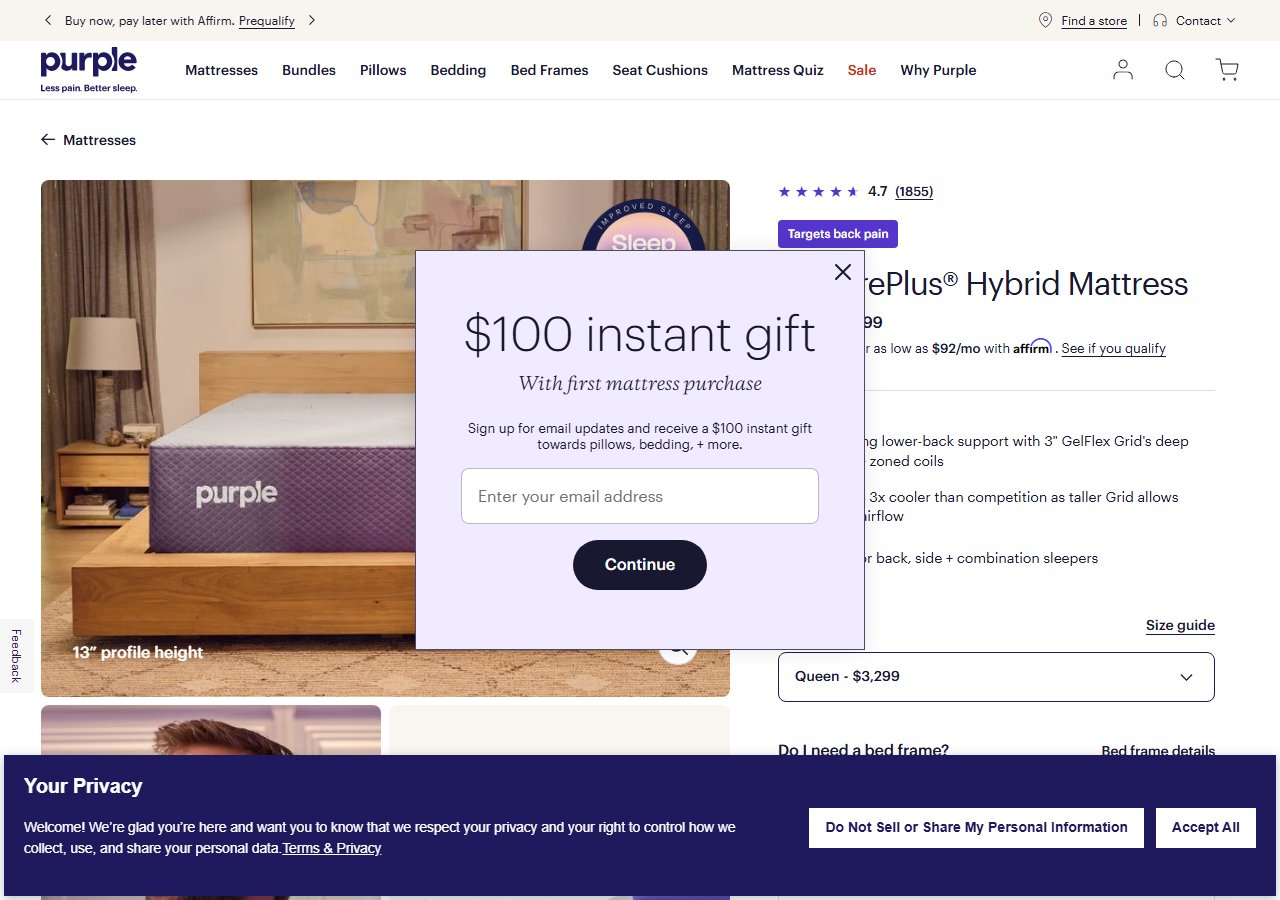
Purple Hybrid Premier Mattress
$2,499-$4,799
See Price at Purple →The Data-to-Intervention Hierarchy in Summary
The federal data on chronic lower back pain points in a consistent direction: this is a population-scale problem driven by occupational load, biomechanical vulnerability, and downstream healthcare cost that dwarfs most preventive spending. BLS workers' compensation data documents that industries with high MSD incidence carry workers' compensation insurance rates 3–5x higher than low-MSD industries — a system-level signal that the current approach to managing musculoskeletal load is inadequate.
For the individual sufferer, the hierarchy is clear: daily walking (NIH NCCIH), sleep position correction (NIH NIAMS), and lifting mechanics (OSHA) are the first-line interventions. Clinical evaluation comes next when red flags are present. Sleep surface evaluation follows when behavioral interventions have been addressed and the existing surface is objectively compromised. The Saatva Loom & Leaf, Saatva HD, and Purple Hybrid Premier represent meaningfully differentiated options within the sleep surface category — each built around different biomechanical priorities for different chronic pain profiles. None of them substitute for movement, position, and mechanics. But for the reader who has done the behavioral work and is still waking stiff, the surface is the next variable to address — and these are the options whose construction is most directly aligned with what the lumbar spine actually needs during eight hours of horizontal load.