One in Five Americans Wakes Up in Pain — Federal Data Explains Why
According to CDC NCHS Data Brief 390, approximately 20% of U.S. adults experience chronic pain, and of all the body regions reported, the lower back ranks as the single most common location. That is roughly 50 million people who go to sleep every night wondering whether they will wake up feeling worse. For many of them, the mattress gets blamed — sometimes correctly, often prematurely.
The federal data picture is more complicated than a mattress advertisement would suggest. AHRQ's Medical Expenditure Panel Survey shows that adults with chronic back conditions carry substantially higher annual personal healthcare expenditures than adults without such conditions. AHRQ's Healthcare Cost and Utilization Project independently confirms that back pain ranks among the most expensive conditions in U.S. healthcare by total inpatient and outpatient spending. And the SSA Disability Insurance program identifies musculoskeletal disorders — the category that includes chronic lumbar conditions — as the single largest source of new disability claims filed each year.
This is not a wellness trend. This is a documented public health and economic burden, and understanding its mechanics is the first step toward intervening effectively.
Why Back Pain and Poor Sleep Amplify Each Other
The relationship between chronic back pain and disrupted sleep is bidirectional, and the federal data illustrates both directions clearly. The CDC's sleep surveillance data shows that approximately 35% of U.S. adults already sleep fewer than 7 hours per night, the threshold the CDC associates with elevated risk for chronic disease, including musculoskeletal deterioration. When you overlay that statistic on the 20% chronic pain prevalence, you get a substantial population of people whose pain disrupts their sleep and whose sleep deprivation then lowers their pain threshold — a clinically well-documented cycle.
The biomechanics explain the mechanism. During sleep, the intervertebral discs in the lumbar spine rehydrate. These discs act as hydraulic shock absorbers between vertebrae, and they lose fluid volume across a full day of axial loading — sitting, standing, carrying. The roughly six to eight hours of horizontal rest a person gets at night is, under normal circumstances, a rehydration window. When sleep is cut short, fragmented by pain, or spent in a posture that maintains lumbar compression (such as stomach-sleeping), that rehydration is incomplete. The person wakes stiffer than they went to bed and enters the next day with already-compressed discs.
BLS Musculoskeletal Disorders by Occupation data confirms that the back is the most common body part injured across all U.S. occupations that result in days away from work. This is not coincidental — it reflects the cumulative spinal loading that workers in physically demanding industries experience across their careers. The NIOSH Lifting Equation documents that manual material-handling tasks in warehousing, construction, and healthcare routinely exceed safe spinal compressive force limits. Workers in those sectors arrive at the end of each shift with spines that have absorbed more compressive force than the NIOSH threshold recommends. When those workers lie down on a mattress that sags or provides inadequate lumbar support, they are denying their most mechanically stressed joints the one daily recovery window available to them without medical intervention.
The picture is further complicated by arthritis. CDC Arthritis Data shows that approximately 25% of U.S. adults report doctor-diagnosed arthritis, with prevalence skewing toward occupations with sustained physical demand. Lumbar osteoarthritis and facet joint arthritis produce a specific pain pattern that is worst in the morning — the so-called "gelling phenomenon" — which makes the quality of overnight positioning particularly consequential. A sleep surface that places arthritic lumbar joints in a flexed, compressed, or laterally torqued position for six to eight hours will reliably worsen morning pain scores.
And then there is the cost burden of treating this pain pharmacologically. CMS Drug Spending Dashboard data identifies opioid and non-opioid pain medications among the most expensive drug categories in Medicare — a reflection of how many older Americans are managing chronic pain with prescription drugs. The BLS Employer Costs for Employee Compensation data shows that industries with high musculoskeletal disorder incidence carry workers' compensation insurance rates that are 3 to 5 times higher than low-MSD industries. The financial argument for preventing and managing chronic back pain through non-pharmacological means — including optimized sleep — is substantial.
The Mechanism: What a Bad Sleep Surface Actually Does
Understanding why sleep surface matters for chronic lumbar pain requires moving past the mattress marketing vocabulary of "support" and "comfort" and into the actual biomechanics of spinal alignment during sleep.
When a person lies on their side on a surface that is too firm, the shoulders and hips — the widest points of the body — bear disproportionate load. The waist, which is narrower, is not supported and sags into a lateral curve. This lateral sag places the lumbar vertebrae in a sustained side-bent position for hours. The spinal ligaments on the compressed side are chronically shortened; the ligaments on the stretched side are chronically elongated. Both directions produce pain. The facet joints — small paired joints at the back of each vertebral level — are loaded asymmetrically, which is particularly provocative for someone with lumbar facet arthritis.
Conversely, when a person lies on a surface that is too soft, both the shoulders and hips sink. The lumbar spine assumes an exaggerated lordosis — an inward curve — that compresses the posterior elements of the spine. For people with lumbar spinal stenosis (a narrowing of the spinal canal, more common in older adults), extension-biased positioning is the primary pain driver. A mattress that is too soft pushes them into exactly the posture that provokes their worst symptoms.
The research on firmness is not as clean as the marketing suggests. A 2003 study published in The Lancet (Kovacs et al.) found that medium-firm mattresses produced better pain and disability outcomes than firm mattresses for nonspecific chronic low back pain — but that study has specific population parameters, and individual anatomy, body mass, and pain etiology all modify the optimal firmness. What the federal data and clinical literature agree on is the principle: the ideal sleep surface is one that keeps the lumbar spine in a neutral position throughout the night, neither forcing it into flexion nor extension, and without lateral deviation.
Try These First — Free Interventions That Federal Evidence Supports
The cheapest intervention is the one that does not require buying anything. Before attributing your chronic back pain to your mattress, federal health agencies have identified several behavioral and positional changes that carry strong evidence and zero cost. Each of the following is supported by a .gov source, and each addresses a distinct mechanism in the chronic pain cycle described above.
Sleep position is the most immediately actionable variable. NIH's National Institute of Arthritis and Musculoskeletal and Skin Diseases recommends side-sleeping with a pillow between the knees, or back-sleeping with a pillow under the knees. Both positions reduce the compressive and torsional forces on the lumbar spine by keeping the pelvis and lower spine in neutral alignment. Stomach-sleeping does the opposite — it requires the neck to rotate to one side and forces the lumbar spine into sustained extension, worsening chronic pain in virtually every lumbar condition. If you currently sleep on your stomach, correcting that single variable costs nothing and may produce measurable relief within days.
Daily walking is underrated as a therapeutic tool. NIH's National Center for Complementary and Integrative Health rates walking 30 minutes most days as effective for reducing chronic low back pain as most non-drug clinical treatments. This is not a minor footnote — it means that a free, low-barrier activity matches the efficacy of interventions that cost hundreds or thousands of dollars per year. The mechanism involves both the pumping action that promotes disc nutrition and the neurological benefits of sustained moderate-intensity movement on central pain sensitization.
Lifting and bending mechanics address the occupational loading that degrades the lumbar spine during waking hours. OSHA's ergonomics guidance recommends hinging at the hips rather than the lumbar spine, keeping loads close to the body, and avoiding twisting under load. Most acute back episodes in physically demanding work are mechanical and preventable with proper movement mechanics — and those mechanics, once learned, carry over to every activity of daily living, not just the workplace.
Mattress replacement criteria are worth knowing before you shop. The CDC's sleep hygiene guidance and sleep medicine clinicians generally agree: replace a mattress if it has visible sag, if you consistently wake stiffer than you went to bed, or if it is older than 7 to 10 years. Even the highest-performing mattress on the market cannot compensate for poor sleep hygiene, sedentary days, or a sleep position that places the lumbar spine in a mechanically provocative posture.
For readers who have already worked through the positional and behavioral changes above — who sleep on their side with a pillow between their knees, walk daily, have replaced a sagging mattress within the last decade, and are still waking with significant lumbar pain — the sleep surface itself becomes a legitimate variable to optimize. This is where material science and construction engineering become relevant clinical tools, not just consumer preferences.
When to See a Clinician — Red Flags That Require More Than a Mattress
A new sleep surface is an appropriate intervention for mechanical chronic low back pain. It is not appropriate — and may actively delay necessary care — for several categories of back pain that require clinical evaluation. NIH's National Institute of Neurological Disorders and Stroke identifies specific red flags that warrant prompt medical attention rather than a home intervention.
If your back pain radiates below the knee — particularly if it follows the path of the sciatic nerve (from the buttock down the back of the thigh, through the calf, to the foot) — you may have lumbar disc herniation with nerve root compression or lumbar spinal stenosis. A firmer or softer mattress will not decompress a nerve. If back pain follows a significant trauma such as a fall or vehicle collision, imaging should precede any other intervention. Back pain accompanied by leg weakness, foot drop, or difficulty walking requires urgent neurological evaluation. Most critically: back pain that comes with bowel or bladder changes — inability to urinate, loss of bladder or bowel control, or saddle-area numbness — is a medical emergency called cauda equina syndrome that requires emergency surgical evaluation within hours, not days.
Back pain accompanied by unexplained fever, significant unintentional weight loss, or pain that is worst at night and does not improve with any position may indicate spinal infection or malignancy. These presentations are uncommon but are specifically called out in federal clinical guidance because they are frequently missed. Do not buy a mattress for these symptoms. See a clinician.
Where Sleep Surface Engineering Becomes a Legitimate Clinical Variable
For the large majority of chronic back pain sufferers — those with mechanical lumbar pain, lumbar disc disease without active nerve compression, lumbar facet arthritis, or lumbar spinal stenosis in its non-emergency presentation — a firmness-matched, well-constructed sleep surface is a legitimate non-pharmacological adjunct to clinical care. The three products below were selected specifically for their construction approaches relative to the biomechanical needs described in this article.
For individuals with chronic lumbar pain who are primarily side or back sleepers, the Saatva Loom & Leaf Memory Foam Mattress addresses the pressure-mapping problem directly. Memory foam's viscoelastic properties allow it to conform to the body's contours in a way that innerspring coil systems cannot, distributing load across a larger surface area and reducing peak pressure at the hip and shoulder contact points that drive lateral spinal deviation in side sleepers. Saatva's Loom & Leaf uses gel-infused memory foam in a layered construction designed to slow the heat retention that has historically been the primary complaint about memory foam — a meaningful consideration for back pain patients who already sleep more fitfully and cannot afford further sleep fragmentation from thermal discomfort. Available in Relaxed Firm and Firm profiles, it targets the medium-to-firm range that the clinical literature identifies as most beneficial for nonspecific chronic low back pain.
For workers in physically demanding occupations — the warehouse associates, construction laborers, and healthcare workers who appear repeatedly in the BLS and NIOSH data cited above — the Saatva HD Mattress is engineered for a different set of mechanical demands. The HD designation reflects a construction approach designed for body weights that exceed the typical design parameters of standard mattresses: reinforced coil systems with higher gauge steel, enhanced edge support, and a comfort layer calibrated to provide lumbar support at higher compressive loads. Standard mattresses compress more rapidly under sustained higher-weight use, which means a worker who is 240 or 280 pounds will experience effective firmness that degrades faster than the label suggests. The Saatva HD is specifically built to resist that compression progression — a directly relevant consideration for the heavier-framed workers whose occupational loading data appears most prominently in the BLS MSD statistics.
For sleepers whose primary complaint is pressure-point pain rather than global lumbar stiffness — particularly those who experience burning or aching at the hips and sacral area after prolonged side-sleeping — the Purple Hybrid Premier Mattress offers a materially different engineering approach. Purple's GelFlex Grid is a hyper-elastic polymer matrix that behaves unlike either memory foam or traditional innerspring systems: it buckles and collapses under concentrated high-pressure points (hips, shoulders) while remaining supportive under distributed lower-pressure areas (waist, lumbar region). This dual-response behavior directly addresses the side-sleeping biomechanical problem described earlier — the mattress actively supports the lumbar waist region rather than allowing it to sag, while simultaneously relieving pressure at the contact points. The Hybrid Premier adds a pocketed coil base layer that provides full-body support and edge stability.
Sleep Surfaces Engineered for Chronic Lumbar Pain
Each mattress below was selected for a specific biomechanical reason relevant to chronic lower back pain sufferers, not for general comfort scores or marketing claims.

Saatva Loom & Leaf Memory Foam Mattress
$1,695-$3,295
See Price at Saatva →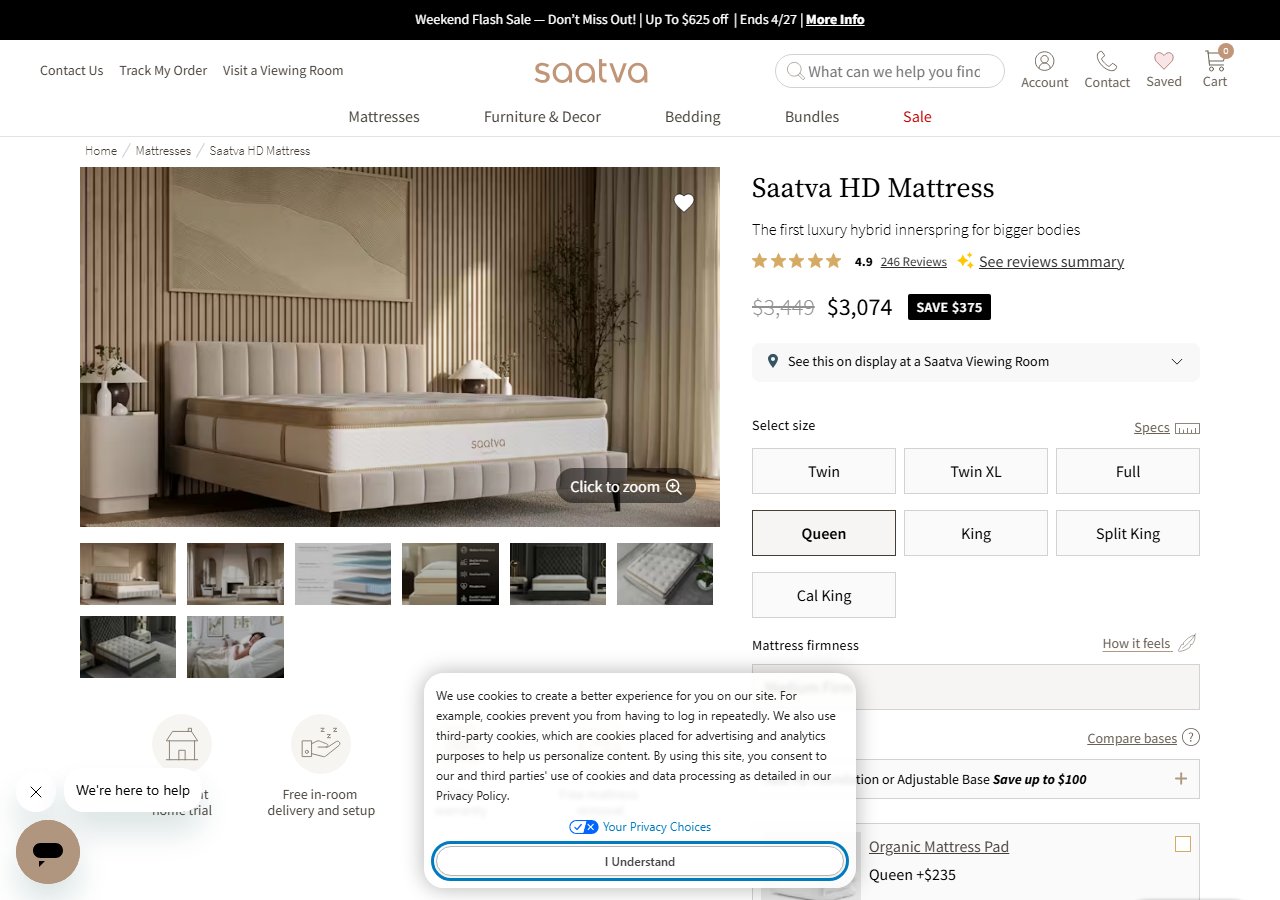
Saatva HD Mattress (Heavy-Duty)
$2,395-$3,995
See Price at Saatva →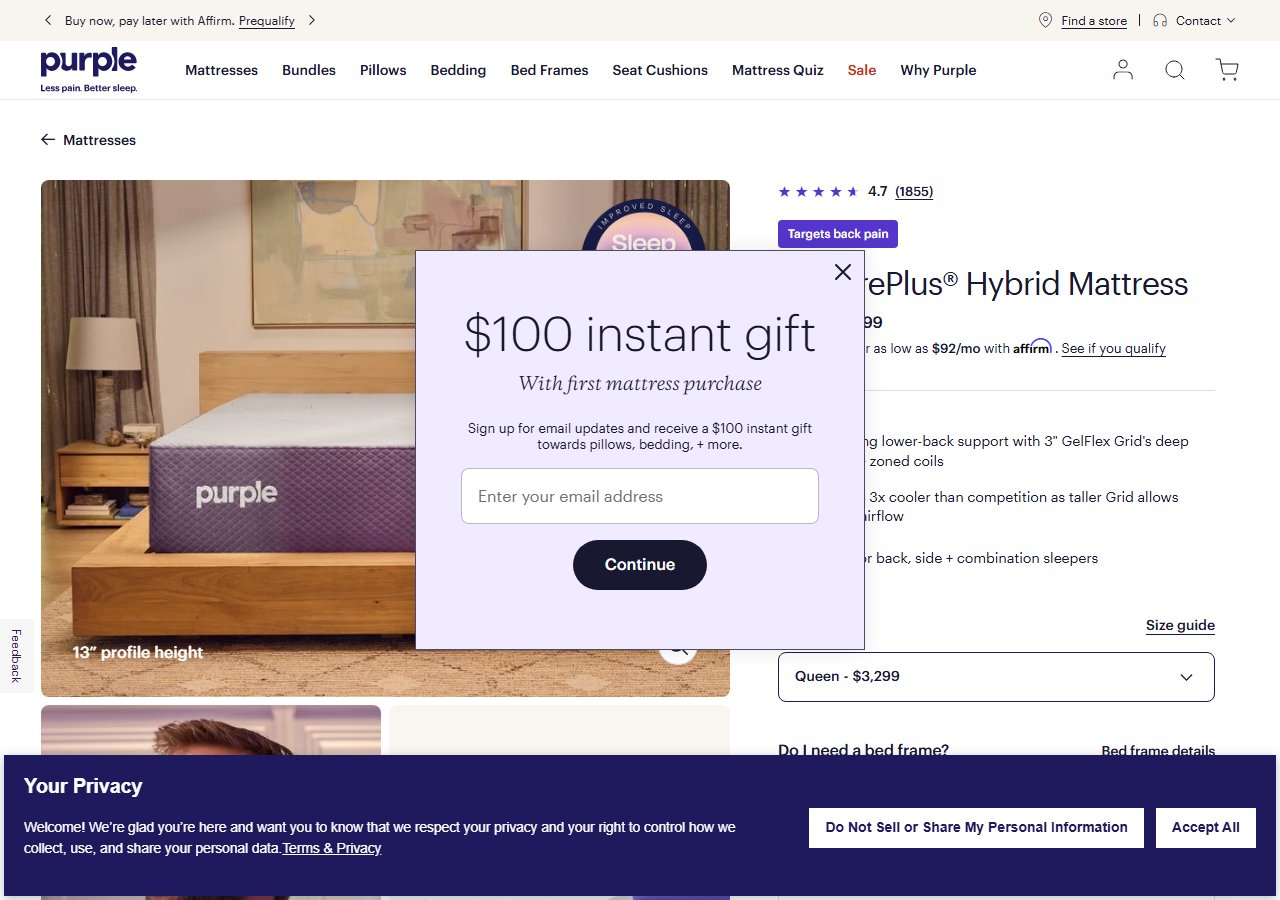
Purple Hybrid Premier Mattress
$2,499-$4,799
See Price at Purple →Matching the Product to the Mechanism
The federal data in this article tells a consistent story: chronic back pain is a mechanically driven, occupationally exacerbated, sleep-disrupted condition that carries enormous personal and systemic costs. The AHRQ MEPS data on elevated healthcare costs, the SSA disability data on musculoskeletal disorder claims, and the CMS drug spending data on pain medication costs all point toward the same conclusion: downstream treatment of chronic back pain is expensive. Upstream management — through movement, position, occupational mechanics, and sleep surface optimization — is not a luxury. It is a cost-effective investment in avoiding much larger expenditures.
The right product is not the most expensive product or the most heavily marketed one. It is the product whose construction addresses the specific biomechanical failure mode your back pain exhibits. Pressure-dominant side-sleepers and the Purple Hybrid Premier's grid system are a biomechanical match. High-BMI or physically demanding-occupation workers and the Saatva HD's reinforced construction are a biomechanical match. Chronic lumbar pain sufferers looking for conforming medium-firm support without the thermal penalties of traditional memory foam and the Loom & Leaf are a biomechanical match.
None of these products replaces the interventions that come before them in this article. The NIH NCCIH evidence on walking is unambiguous: thirty minutes of daily walking performs as well as most non-drug treatments for chronic low back pain. The NIH sleep position guidance on knee pillow placement costs nothing and may produce immediate relief. The OSHA lifting mechanics guidance reduces the daily spinal loading that makes recovery during sleep so critical in the first place.
But for the one in five Americans living with chronic pain, for the workers in the BLS data who are missing days from work because of back injuries, and for the older adults with arthritis whose morning pain is shaped by eight hours of overnight positioning — the sleep surface is not a trivial variable. It is a modifiable one. And for this population, modifying it thoughtfully, using the mechanisms described above, is exactly the kind of evidence-based non-pharmacological intervention that federal health agencies are increasingly emphasizing as an alternative to the drug spending burden documented in the CMS data.
Start with position. Add movement. Evaluate your current surface against objective criteria. If the surface fails those criteria, replace it with something engineered for your specific pain pattern — not the one with the best commercial or the highest thread count in the marketing materials.