The gap between what FDA clears and what marketers claim
If you have spent any time researching skin-aging solutions as an office worker — staring at screens for eight to ten hours a day, absorbing indoor fluorescent or LED overhead lighting, and watching fine lines deepen through another video call — you have almost certainly encountered a red or near-infrared light panel advertised as a clinical-grade device. The marketing language is deliberate: phrases like "FDA-cleared," "clinically proven," and "medical-grade wavelengths" appear on product pages with enough frequency that they start to feel interchangeable. They are not.
According to the CDC NCHS Data Brief 390, approximately 20% of U.S. adults experience chronic pain, and a substantial subset of those individuals — along with millions more who are not in chronic pain but are concerned about skin aging, acne, and inflammation — are now considering photobiomodulation as a non-pharmacologic option. The AHRQ MEPS data documents substantial annual healthcare expenditures for adults with chronic pain conditions, a fiscal pressure that drives both patients and their providers toward exploring non-pharmacologic adjuncts. Meanwhile, CMS drug spending data shows opioid and non-opioid pain medication spending among the most expensive Medicare drug categories, underscoring why federal agencies and occupational health researchers are actively interested in alternatives.
But financial motivation to find alternatives does not make every device legitimate. Understanding the federal regulatory landscape — and the genuine evidence that underlies it — is the only way for an informed consumer to navigate a market flooded with overclaimed products.
What FDA clearance actually means — and what it does not
The phrase "FDA-cleared" is one of the most misunderstood terms in the consumer device market. The FDA 510(k) clearance database indexes medical devices that have been reviewed under the 510(k) pathway, a process by which manufacturers demonstrate that their device is substantially equivalent to a legally marketed predicate device. Class II devices — the category most photobiomodulation panels fall into — require this clearance before entering the market.
What 510(k) clearance confirms: the device is substantially equivalent in design, intended use, and safety profile to a predicate device that was already on the market. What it does not confirm: that the device is definitively effective for every condition its marketing mentions, or that it has undergone the same rigorous randomized controlled trial process required for drug approval. The Federal Register FDA Updates track rule changes and device classification decisions that shape which devices can reach consumers and under what conditions — providing a layer of transparency that consumers can actually access, if they know where to look.
Post-market, the FDA MAUDE database aggregates adverse-event reports submitted by manufacturers, device-user facilities, and voluntary consumer reports. For photobiomodulation devices, MAUDE reports are relatively sparse compared to drug categories, but the database is the correct place to check before investing in any cleared medical device — and the FDA FAERS system provides additional federal-level safety context for therapy devices and complementary interventions. The FDA Drug Recalls Database tracks pharmaceutical recall actions, and reviewing it alongside device safety data underscores the comparative risk profile: non-pharmacologic modalities like red light therapy carry a different (generally lower) acute-risk signature than recalled pharmaceuticals, but they are not risk-free — particularly for users with photosensitive conditions or those on photosensitizing medications.
The biomechanics of skin aging in office workers: why this population is distinct
Office workers present a specific skin-aging profile that differs meaningfully from outdoor workers or athletes. The primary drivers are cumulative indoor blue-light and UV-adjacent exposure from screens and overhead lighting, chronic psychological stress (which elevates cortisol and accelerates collagen degradation), disrupted sleep architecture from screen-induced circadian misalignment, and a sedentary posture that impairs lymphatic drainage and reduces local circulation to facial tissue.
Collagen loss begins measurably in the mid-twenties, accelerating around the late thirties and into the forties — precisely the demographic most heavily represented in long-tenure office roles. The mechanism is well-characterized: ultraviolet exposure (even through office windows) triggers matrix metalloproteinases (MMPs), enzymes that break down collagen and elastin. Chronic low-grade inflammation — elevated in sedentary workers with high psychological stress load — compounds this degradation. Acne in adult office workers is frequently driven not by adolescent hormonal surges but by stress-triggered sebum overproduction and disrupted skin-barrier function, patterns that are more chronic and harder to treat with conventional topicals alone.
This is precisely the biomechanical niche that photobiomodulation research has focused on most productively. Red wavelengths (approximately 630–660 nm) penetrate to the dermal layer, where they interact with mitochondrial chromophores — specifically cytochrome c oxidase — to stimulate ATP production and reduce oxidative stress in fibroblasts, the cells responsible for collagen synthesis. Near-infrared wavelengths (approximately 810–850 nm) penetrate deeper, reaching subcutaneous tissue and potentially modulating local inflammatory mediators. This mechanism is biologically plausible and increasingly supported by peer-reviewed literature, which is why the NIH NCCIH evidence review on light therapy finds the strongest clinical evidence for acne, mild-to-moderate skin aging, and some wound-healing applications.
Where the evidence thins rapidly: systemic recovery acceleration, weight loss, testosterone optimization, and the broad "anti-inflammatory" claims that appear on many consumer panel pages. The federal evidence base does not support those applications at the same level as the dermatological indications.
Try these interventions before spending $300–$1,600 on a panel
The least expensive intervention is the one that requires no equipment purchase at all. Federal guidance from multiple agencies provides a clear hierarchy of non-pharmacologic approaches that office workers with skin-aging concerns should exhaust — or at least seriously attempt — before investing in a photobiomodulation panel.
First, sun exposure timing matters more than any indoor panel for circadian health. If part of your motivation is mood regulation, energy, or sleep quality (all of which affect skin health indirectly through cortisol and growth hormone dynamics), NIH guidance on circadian rhythms recommends 10 to 30 minutes of natural morning sunlight. Indoor red-light panels do not replicate the full spectrum that natural light delivers for circadian entrainment — this is a fundamental limitation that no manufacturer can engineer around.
Second, active recovery and movement remain the foundation of any non-pharmacologic health protocol. CDC Adult Physical Activity Guidelines and ACSM guidance place active recovery, adequate sleep, and protein timing well ahead of any modality device. Red light is a candidate adjunct for office workers who have already established those foundations — not a substitute for them. For skin health specifically, aerobic exercise improves dermal circulation, and sleep quality directly governs the growth hormone pulses responsible for overnight collagen repair.
Third, know the contraindications before you power anything on. NIH guidance via MedlinePlus is explicit: avoid red and infrared light therapy if you have photosensitive conditions (lupus, porphyria), are taking photosensitizing medications (certain antibiotics, retinoids like tretinoin), or have a history of melanoma. Office workers who use prescription retinoids for anti-aging — a very common combination — need to clear panel use with their dermatologist before starting, as the interaction between retinoid-sensitized skin and high-intensity LED exposure is not trivial.
Fourth, match your expectations to the actual evidence tier. The NIH NCCIH evidence review is the most credible federal source for evaluating photobiomodulation claims. Its current summary supports acne and mild-to-moderate photoaging as the best-evidenced indications. If a panel's marketing emphasizes those two indications and does not overclaim on systemic recovery or weight loss, that is a signal the brand is operating closer to the evidence. If the homepage leads with "full-body recovery" and "mitochondrial optimization" without linking to clinical citations, that is a signal to apply more skepticism.
Fifth, eye protection is non-negotiable and not optional. FDA guidance on at-home photobiomodulation devices is unambiguous: wear the supplied eye protection or close your eyes for the full session. Direct retinal exposure to high-intensity LEDs — even red and near-infrared wavelengths that feel low-risk because they are not UV — can cause retinal injury with cumulative exposure. This is not a theoretical risk; it appears in the MAUDE adverse-event record.
For office workers who have worked through those foundations — established consistent morning sunlight exposure, optimized sleep and exercise, confirmed no contraindications with a clinician, and calibrated their expectations to the acne and skin-aging indications — equipment becomes the next reasonable conversation. The panels worth considering are not interchangeable, and the price range ($300–$1,600) reflects genuine differences in LED density, modular design, wavelength accuracy, and manufacturer transparency about clearance status.
When to see a clinician before using any photobiomodulation device
The federal safety record for Class II photobiomodulation devices is relatively favorable compared to pharmacologic alternatives — the FDA Drug Recalls Database and FAERS system both reflect higher adverse-event volumes for drug categories than for cleared therapy devices. But "relatively favorable" is not the same as "no contraindications," and office workers in particular face specific clinical scenarios that warrant a dermatologist consultation before starting a panel protocol.
The NIOSH Total Worker Health program frames non-pharmacologic recovery interventions as part of a broader occupational health strategy — one that works best when coordinated with a clinician rather than pursued in isolation. And with approximately 25% of U.S. adults reporting doctor-diagnosed arthritis — a condition frequently managed with medications that include photosensitizing agents — the intersection of device use and medication management is not hypothetical. It is common.
See a clinician before using a photobiomodulation panel if any of the following apply to you:
- You are currently using prescription retinoids (tretinoin, adapalene, tazarotene) for anti-aging or acne. These medications substantially increase photosensitivity, and the interaction with high-intensity LED panels is understudied in the consumer-device context. Your dermatologist can advise on timing protocols and session intensity.
- You have a personal or family history of melanoma or other skin cancers. NIH guidance is explicit that photobiomodulation is contraindicated in active melanoma, and the prudent approach for individuals with elevated skin-cancer risk is clinician clearance before any light-based skin protocol.
- You have an autoimmune condition with photosensitive features, including lupus (systemic or cutaneous) or porphyria. These conditions can be significantly aggravated by light exposure in wavelength ranges that overlap with photobiomodulation devices.
- You take any medication listed as a photosensitizer, including certain antibiotics (fluoroquinolones, tetracyclines), some NSAIDs, diuretics, and antifungals. The NIH MedlinePlus skin conditions resource provides a starting reference, but your pharmacist is the most reliable source for your specific medication list.
- You notice new or changing moles, persistent skin lesions, or unusual pigmentation changes after beginning panel use. These warrant dermatological evaluation regardless of whether you attribute them to the device.
Where equipment enters the picture — and how to evaluate it against federal evidence
Once you have cleared the clinical checklist and established realistic expectations anchored to federal evidence, the question shifts to which devices are worth the investment. The evaluation framework follows directly from the regulatory and evidence landscape described above: look for 510(k) clearance for a skin-relevant indication, dual-wavelength output in the evidence-supported ranges (660 nm and 850 nm are the most studied), LED density sufficient for the treatment area, and a manufacturer that links to clinical evidence rather than hiding behind vague "clinically proven" language.
The Joovv Solo 3.0 is the most thoroughly documented modular panel in the consumer market and the first device worth examining for office workers who want a system they can expand over time. At $1,599, it sits at the premium end of this category, but the price reflects a specific value proposition: the Solo 3.0 uses a modular design that allows panels to be combined into larger treatment arrays as needs expand, delivers both 660 nm red and 850 nm near-infrared wavelengths simultaneously, and Joovv publishes its 510(k) clearance status with specificity about indications. For an office worker who wants a panel that can cover both facial skin-aging protocols and broader body applications — and who values the ability to verify regulatory claims independently in the FDA 510(k) database — the Solo 3.0 is the reference point against which other panels are compared. The modular architecture is particularly relevant for workers in apartment environments: you can start with a single panel for facial and upper-body use and add coverage later without replacing the entire system.
At a substantially lower price point, the LifePro Red Light Therapy Panel (120 LEDs, 660nm and 850nm) delivers dual-wavelength output with 90 and 120 dual-chip LEDs at a price point ($329.99) that makes it accessible for office workers who want to test whether a consistent panel protocol produces the skin improvements the NCCIH evidence review describes before committing to a four-figure system. It ships with a hanging kit and eye protection — the inclusion of eye protection as a standard accessory is a meaningful positive signal, given the FDA guidance on retinal exposure risk. The LifePro is an Amazon-available option for readers who prefer the familiar purchase and return infrastructure of that marketplace.
The BestQool Red Light Therapy Panel at $303.05 is the entry-level option for face and body use, and it occupies a specific niche: office workers who primarily want a facial skin-aging protocol and are not yet ready to invest in a full-body panel. The BestQool's smaller form factor makes it practical for a home office desk setup — which is directly relevant to the office worker use case — and the 660 nm and 850 nm wavelength configuration aligns with the NCCIH-supported evidence tier. As with any panel in this price range, independent verification of 510(k) clearance status in the FDA database is the appropriate due-diligence step before purchase.
FDA-Reviewed Panels for Office-Worker Skin Aging and Acne
These three panels were selected for office workers whose primary goals are acne management and mild-to-moderate skin aging — the two indications with the strongest federal evidence support — across a range of price points from $303 to $1,599.
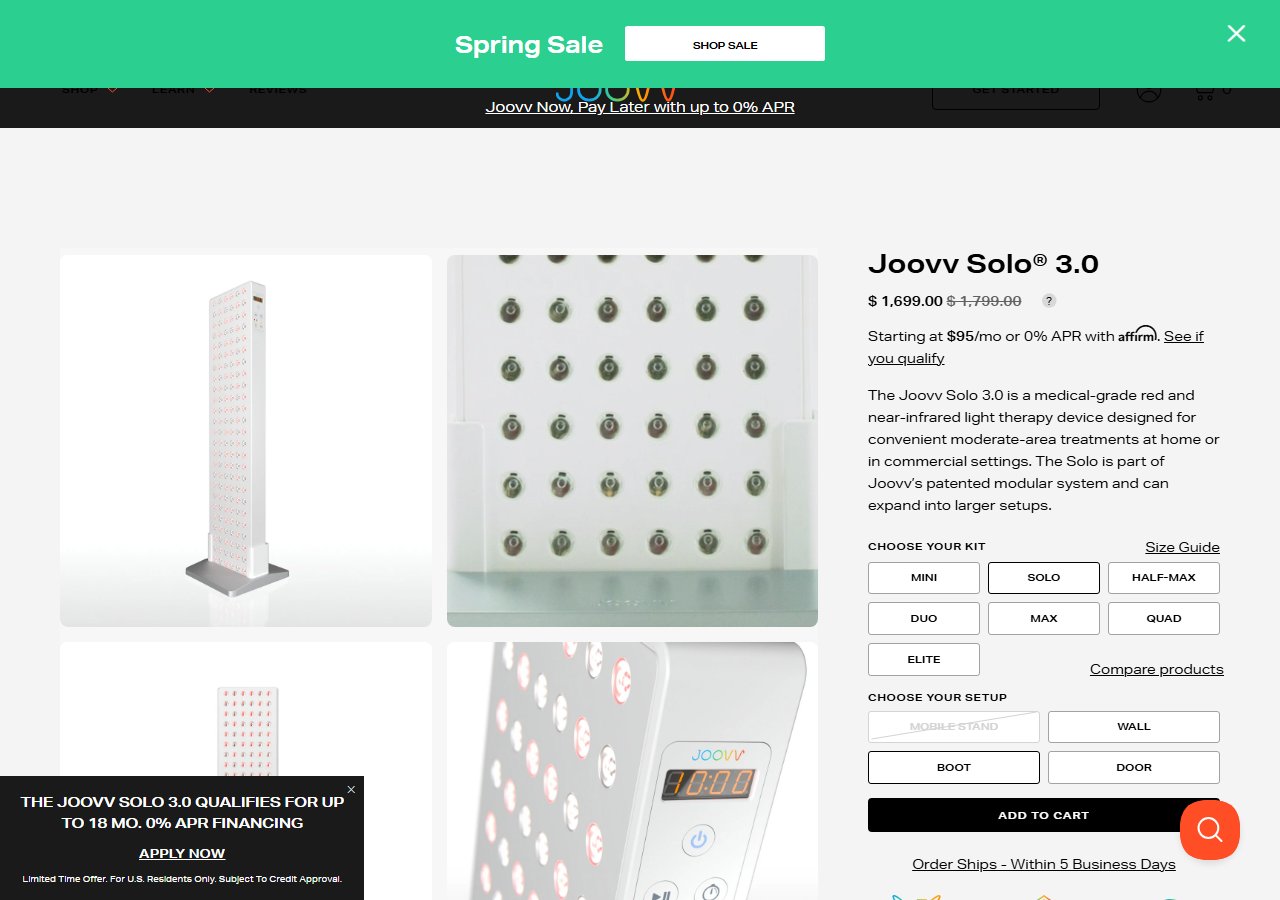
Joovv Solo 3.0 Red Light Therapy Device
$1,599
See Price at Joovv →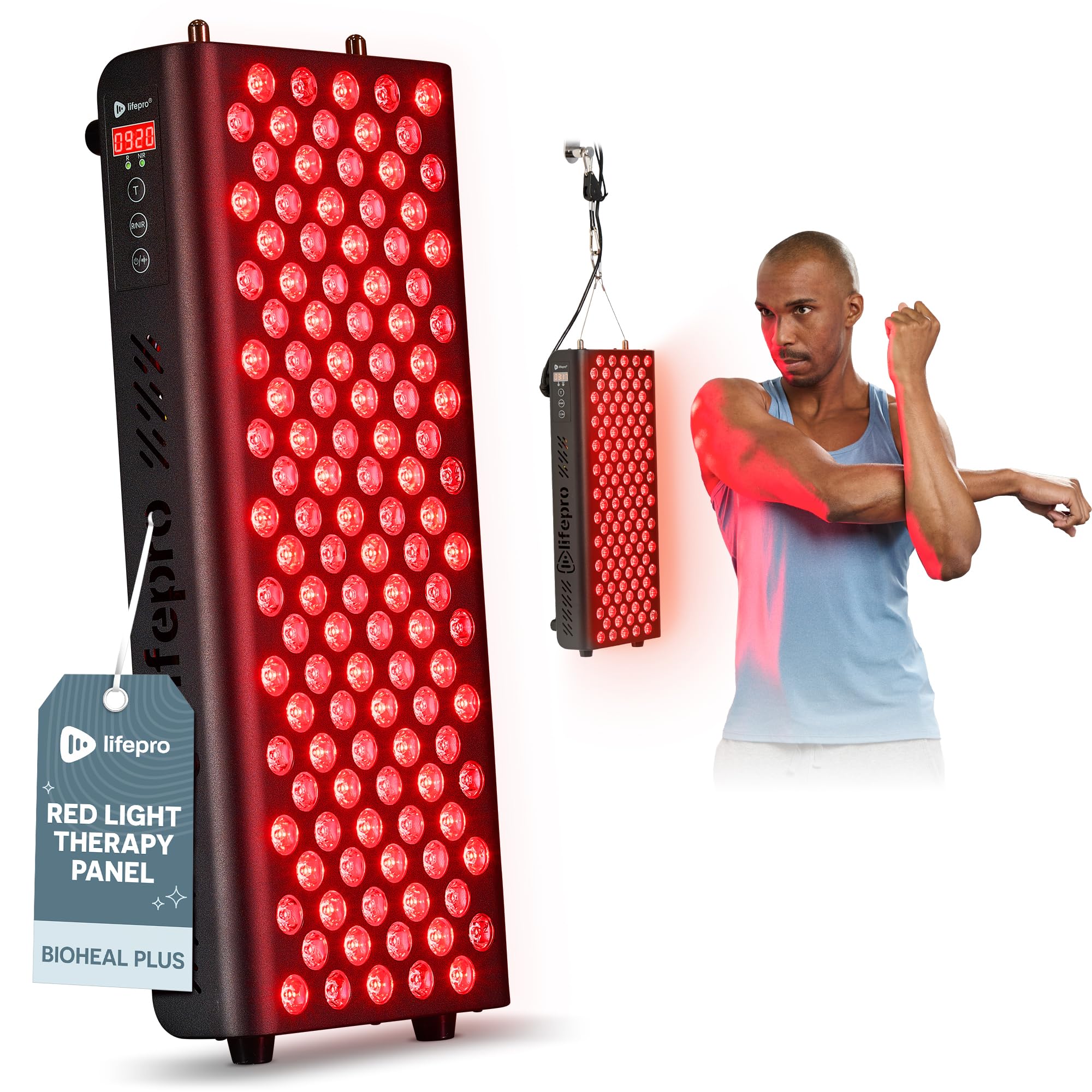
LifePro Red Light Therapy for Body Panel - 90 & 120 Dual Chip LEDs - 660nm & ...
$329.99
Check Price on Amazon →
BestQool Red Light Therapy for face Body, 4 Wavelengths Infrared Red Light Th...
$303.05
Check Price on Amazon →The evidence hierarchy you should apply to every panel claim
The federal data on photobiomodulation for skin aging and acne tells a more measured story than the consumer device market does. The FDA 510(k) clearance process provides meaningful federal review of safety and substantial equivalence — but it is not a clinical-efficacy stamp for every indication a marketing team decides to list. The NIH NCCIH evidence review is the most credible federal synthesis of what the clinical literature actually supports: acne, mild-to-moderate skin aging, and some wound healing are the best-evidenced indications; systemic recovery and body-composition claims are not at the same evidence level.
For office workers specifically — a population whose skin-aging concerns are real, whose exposure to screen-mediated blue light and chronic stress is well-documented, and whose healthcare expenditures for skin and chronic-pain conditions are tracked by AHRQ MEPS — photobiomodulation represents a plausible adjunct when used correctly. That means 510(k)-cleared hardware, wavelengths in the evidence-supported range, eye protection worn for every session, clinical clearance if contraindications apply, and realistic expectations calibrated to the NCCIH evidence tier rather than the panel manufacturer's homepage.
The NIOSH Total Worker Health framework is useful here as an organizational principle: non-pharmacologic recovery and health maintenance interventions work best as part of a coordinated protocol — morning sunlight for circadian regulation, consistent exercise and sleep, appropriate clinical oversight, and then adjunct devices where the evidence supports them. The panels described in this article meet that adjunct standard for the skin indications the federal evidence supports. They do not replace the foundations that come first.
The federal record also provides a comparative safety anchor. The FDA Drug Recalls Database and CMS drug spending data document the scale of pharmacologic intervention risk and cost in the U.S. healthcare system. Against that backdrop, a well-chosen, correctly used, 510(k)-cleared photobiomodulation panel represents a low-adverse-event, low-cost-over-time option for the specific indications the evidence supports — provided the buyer understands the regulatory language, checks the contraindications, and does not expect the panel to do more than the federal science says it can.
That is the framework. The devices are the last step, not the first.