One in Four Americans Has Chronic Low-Back Pain — and Most of Them Sleep on the Same Mattress Anyway
CDC chronic disease surveillance puts the number starkly: approximately 1 in 4 U.S. adults lives with chronic low-back pain. At the same time, CDC sleep data reports that roughly 1 in 3 adults fails to hit the agency's own 7-hour nightly minimum. These two statistics are not independent. A body that spends 6 to 8 hours on a surface that creates pressure points, flexes the lumbar spine out of neutral, or transfers movement every time a partner shifts is a body that wakes up more inflamed, less recovered, and more likely to report pain before the first cup of coffee. For renters who cannot choose their bed frame, or for budget sleepers who cannot swing a $1,200 mattress replacement this year, that intersection is daily lived reality.
The federal clinical literature does not dismiss this problem as unsolvable. AHRQ's evidence review on chronic low-back pain explicitly lists sleep-surface modification among first-line, non-pharmacologic management strategies — the same tier as physical therapy and exercise. NIH NHLBI guidance anchors a "comfortable, supportive sleep surface" as a structural piece of sleep hygiene, not a luxury variable. And NIH NCCIH calls sleep posture and surface support "modifiable factors" in chronic low-back pain self-management — clinical language for things you can actually change without a prescription.
This article is for readers who already know they cannot replace the full mattress right now and want to understand what the evidence says about the next-best option, what to try before spending anything, and when even a topper will not be enough.
Why a Degraded Sleep Surface Drives Back Pain: The Biomechanical Mechanism
Understanding why your sleep surface matters starts with the lumbar spine's natural curvature. In standing, a healthy lumbar spine maintains a mild inward curve — lordosis — that distributes compressive load across the intervertebral discs. During sleep, the goal is to maintain that same neutral position while the paraspinal muscles are fully relaxed. A surface that is too firm creates excessive pressure at the hips and shoulders for side sleepers, which causes the torso to sag toward the mattress and flexes the lumbar spine laterally. A surface that is too soft allows the heavier midline structures — hips and pelvis — to sink disproportionately, forcing the lumbar spine into hyperextension for back sleepers or lateral flexion for side sleepers.
Over the course of 7 to 8 hours, that sustained off-neutral position is not merely uncomfortable. It places asymmetric compressive load on the facet joints, increases tension in the posterior longitudinal ligament, and can aggravate existing disc pathology. The morning stiffness that back-pain sufferers describe as "waking up worse than I went to bed" is largely the physiological consequence of spending a full sleep cycle with loaded joints in a non-neutral position — combined with overnight intervertebral disc re-hydration that temporarily increases disc volume and sensitivity.
NIH NIAMS back pain guidance explicitly recommends side-sleeping with a pillow between the knees or back-sleeping with a pillow under the knees to maintain lumbar neutrality — which confirms that even federal clinical guidance treats sleep position and surface as biomechanically linked variables, not independent choices.
For renters, the additional wrinkle is that the base mattress is not under their control. A landlord-supplied or building-standard mattress that is 8 or 10 years old and visibly sagging creates a foundation that no topper can fully compensate for — but a topper that adds firmness or redistributes pressure can meaningfully shift the sleep surface closer to neutral, especially on a mattress that has lost surface conformity rather than structural support.
Pressure-point loading is not uniform across body types. CDC NHANES data puts adult obesity prevalence near 40%. At higher body mass, the pressure concentrated at bony prominences — greater trochanters, sacrum, acromion — during side sleeping increases substantially. This population needs a topper with sufficient density to distribute that pressure laterally rather than simply compressing fully and providing no relief. A 1.5-inch, low-density foam topper that works adequately for a 140-pound person may fully compress under a 220-pound person within weeks, reverting the surface to the same profile as the base mattress alone.
NIOSH Total Worker Health goes further, framing sleep recovery — including sleep environment quality — as occupationally relevant for workers in physically demanding roles. That framing matters for the target reader here: if you spend your workday on your feet, lifting, bending, or in prolonged static posture, your lumbar spine arrives at bedtime already loaded. The sleep surface is not a passive backdrop; it is an active part of the recovery sequence.
BLS Workers' Compensation data consistently ranks back injuries among the most common and most expensive workers' compensation claims. The cumulative cost — in lost productivity, medical treatment, and quality of life — that flows from undertreated back pain reinforces why federal agencies spend research dollars studying sleep-surface modification as a management variable.
Try These First: Free and Low-Cost Interventions Before You Spend Anything
The cheapest intervention is the one that does not require buying anything. Before reaching for a credit card, the following evidence-backed, no-cost adjustments address the same biomechanical variables that a topper addresses — and for some readers, they will resolve the problem entirely. The federal data is clear: sleep-surface modification is a complement to behavioral and positional interventions, not a substitute for them.
If you have genuinely worked through the positional corrections, addressed your pillow geometry, added daily walking, and you are still waking with pain — and your mattress is not visibly sagging or structurally failed — then a topper becomes a rational next step. The evidence does not say toppers do not work; it says they work best when the free variables are already optimized. A topper that adds 2 to 3 inches of pressure-distributing foam on top of a properly positioned body with a neutral-aligned pillow stack is a genuinely different intervention than the same topper on a stomach-sleeping body with a too-thick pillow.
When to See a Clinician: Red Flags That a Topper Cannot Fix
Most low-back pain is mechanical and self-limiting. NIH guidance on back pain notes that most episodes resolve within 4 to 6 weeks without imaging. The sleep surface is a legitimate variable to address during that window. But certain presentations indicate pathology that no consumer product will resolve, and delaying clinical evaluation in those cases carries real risk.
The following red flags require a clinician, not a new topper. Pain that radiates down one or both legs, especially past the knee, suggests nerve root compression or disc herniation that needs clinical diagnosis. Numbness, tingling, or weakness in the lower extremities changes the differential entirely — these are neurological signs that need evaluation, not surface support. Pain that follows trauma — a fall, a car accident, a lifting injury — should be assessed before attributing symptoms to the sleep surface. Pain that wakes you from sleep or is worse at rest than with movement can indicate inflammatory or systemic causes that are distinct from mechanical low-back pain. And pain that does not improve after 4 to 6 weeks of conservative management, including sleep-position correction and appropriate surface support, warrants clinical evaluation before additional spending.
NIH NIAMS back pain guidance and NIH NINDS both provide free, authoritative guidance on these thresholds. The clinical framing is consistent: most mechanical low-back pain is amenable to non-pharmacologic interventions including sleep-surface modification, but the minority of cases with systemic, neurological, or traumatic etiology need professional assessment that self-treatment will not address.
Where Products Help: Matching Topper Type to Back-Pain Profile
For readers who have worked through the positional interventions, confirmed the mattress is structurally intact, and ruled out clinical red flags, a topper is a legitimate, evidence-adjacent tool. The AHRQ first-line framing for sleep-surface modification means you are not rationalizing a purchase — you are implementing a recommended management strategy at the lowest viable cost tier.
The three products below were selected for renters and budget sleepers specifically. The selection criteria: price under $340, availability through a single purchase channel, and construction attributes that match the pressure-distribution and support needs described in the biomechanics section above. None of them require a subscription, a showroom visit, or a truck delivery window.
For most budget sleepers and hot sleepers: The bamboo-cover topper options
The Niagara Sleep Solution Ultra Soft Bamboo Mattress Topper is priced at $39.99 for a queen — the lowest entry point in this group. Its viscose-from-bamboo pillow-top cover addresses the thermoregulation variable that the CDC sleep hygiene guidance flags: CDC recommendations list a cool sleep environment as one of the core modifiable inputs to sleep quality. Bamboo-derived fabric wicks moisture and breathes better than standard polyester covers, which matters for sleepers who run warm or live in non-climate-controlled rentals. The pillow-top fill adds a conforming layer over a firm or worn mattress surface, redistributing pressure at the hips and shoulders for side sleepers. At this price point, this is the appropriate starting experiment for a renter whose base mattress is structurally sound but surface-firm.
For king-size sleepers looking for a similar bamboo-cover construction with slightly more structural coverage, the BEDLORE King Mattress Topper comes in at $51.28 — still well under $60 for a king size, which is a meaningful value proposition given that king toppers in retail environments often run $100 to $200. The BEDLORE uses viscose derived from bamboo in a similar pillow-top configuration, making it a strong parallel option for larger beds or couples where one partner is a back-pain sufferer and the other is a hot sleeper.
When the mattress itself is the problem: The budget mattress alternative
There is a scenario where honest analysis says: the mattress is the problem, and a topper is not a sufficient fix. For renters who own their bed but simply bought a poor mattress — or whose landlord-supplied mattress has been replaced with a budget option that is structurally inadequate — the EGOHOME 12 Inch Queen Memory Foam Mattress at $332.99 represents the full-replacement option at a price point competitive with mid-tier toppers. A 12-inch memory foam profile provides zoned support across the lumbar region in a way that no topper added to a failing mattress can replicate. If your current mattress visibly sags, transfers motion heavily, or is older than 7 to 10 years, this is the more honest recommendation — a topper on a structurally compromised mattress is compounding a flawed foundation. The CDC sleep hygiene guidance is clear that a "comfortable, supportive surface" is foundational; a surface that is actively counterproductive does not become supportive with a topper on top.
Budget Sleep-Surface Fixes for Back Pain: Three Options for Renters
These three products were curated specifically for renters and budget sleepers who need a lower-cost, evidence-adjacent sleep-surface intervention for chronic low-back pain — no showroom visit, no truck delivery, and no multi-hundred-dollar commitment required.
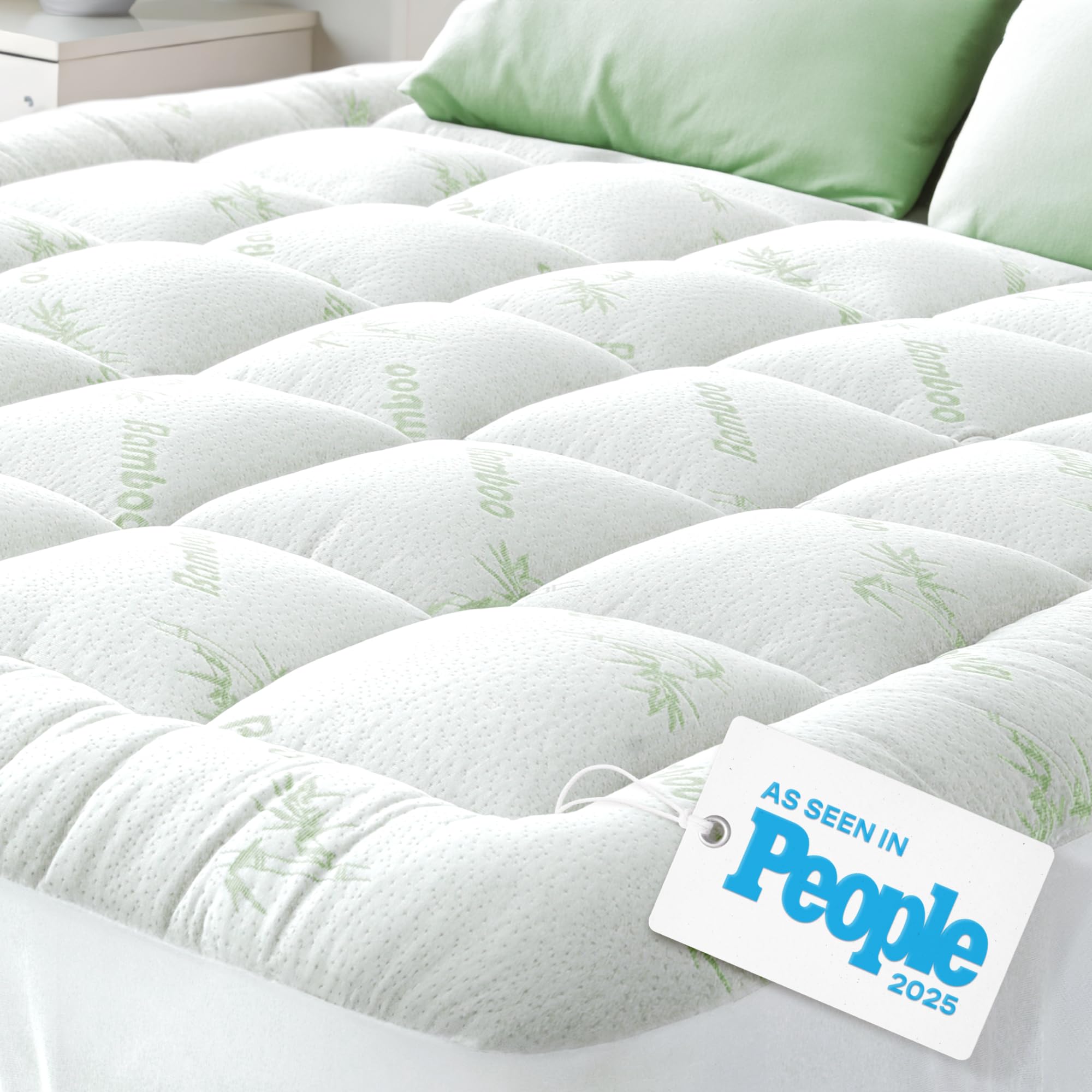
Niagara Sleep Solution Ultra Soft Queen Size Mattress Topper - Viscose Made f...
$39.99
Check Price on Amazon →
EGOHOME 12 Inch Queen Memory Foam Mattress for Back Pain, Cooling Copper Gel ...
$332.99
Check Price on Amazon →
BEDLORE King Mattress Topper Viscose Derived from Bamboo, Thick Pillow Top Ma...
$51.28
Check Price on Amazon →The Hierarchy That Actually Works
The federal data draws a clear line. CDC sleep hygiene guidance establishes the sleep surface as one of three core modifiable variables in sleep quality, alongside timing consistency and environment temperature. AHRQ places sleep-surface modification in the first-line tier for chronic low-back pain management. NIH NCCIH and NIH NIAMS both point to sleep posture and surface as co-equal modifiable factors, which means the product and the behavior are both necessary — neither replaces the other.
For the renter or budget sleeper, that hierarchy looks like this in practice: optimize sleep position first (free), fix pillow geometry second (low-cost), add daily walking (free), and then, if the surface is still the binding constraint, add the lowest-cost topper that addresses your specific pressure-distribution profile. If the mattress is visibly failing, the topper tier is the wrong tier — go to full replacement at the lowest viable price.
What this analysis does not support is the common pattern of buying a topper without fixing position, keeping a mattress that is structurally failed, or ignoring clinical red flags because a new product seems easier than a medical appointment. The NIH NINDS guidance is explicit: most low-back pain resolves conservatively; what does not resolve in 4 to 6 weeks needs a clinician. No consumer product is a substitute for that threshold.
The goal is sleeping without waking up worse. The federal evidence says that is achievable with behavioral changes, position corrections, and — where the surface is genuinely the constraint — an appropriately matched topper or mattress replacement. That is not a product recommendation. That is what the data says.