One in Five Americans Lives With Chronic Pain — And the Recovery Tool Market Is Capitalizing on That
CDC chronic pain surveillance data puts the number of U.S. adults living with chronic pain at approximately 20% — around 51 million people. That is not a statistic about elite athletes nursing hamstrings. It is a statistic about office workers whose hip flexors have been shortened for years, warehouse employees who deadlift boxes for eight-hour shifts, nurses whose lower backs accumulate microtrauma across twelve-hour rotations, and weekend warriors who push hard on Saturday and can barely sit down on Tuesday. The post-workout recovery market — percussive devices, foam rollers, compression boots, ice baths — exists in large part because this population is enormous, underserved by the healthcare system, and looking for something that actually works.
The question this article tries to answer honestly: does percussive therapy, specifically the handheld massage gun category that has exploded in the consumer market since roughly 2018, have a legitimate evidence base for post-workout recovery and trigger-point release? And if so, who benefits most, how should it be used, and where do the products fit in a hierarchy that begins with free interventions and ends with clinical care?
The data says the answer is yes — with important caveats.
Why Muscles Stay Sore and Tight After Hard Work — The Biomechanical Mechanism
Delayed-onset muscle soreness (DOMS) is the soreness that peaks 24 to 72 hours after unaccustomed or intense exercise. The mechanism involves microscopic tears in muscle fibers, an inflammatory response, and sensitization of the nociceptors (pain-sensing nerve endings) in the damaged tissue. That sensitization is why even light touch or normal movement hurts two days after a hard leg session — the threshold for pain signaling has dropped.
Trigger points are a related but distinct phenomenon. They are hyperirritable spots within taut bands of skeletal muscle: localized areas where motor end-plate dysfunction creates sustained sarcomere contraction in a small zone of muscle fibers, leading to a knot-like nodule that refers pain to predictable distant locations. The upper trapezius trigger point, for example, refers pain into the temple and behind the eye. The piriformis trigger point mimics sciatic pain down the leg. These are not metaphorical knots — cadaveric and electromyographic research has identified the electrophysiological signature of trigger points, and their referral patterns are reproducible across subjects.
BLS data shows musculoskeletal disorders account for approximately 30% of all nonfatal occupational injuries with days away from work across U.S. private industry. For transportation and warehousing workers specifically, median time away from work for musculoskeletal injuries exceeds 14 days. These numbers contextualize why recovery tooling matters: missed work from an undertreated muscle strain compounds into chronic conditions, reduced work capacity, and ultimately workers' compensation claims. BLS workers' compensation data shows back, neck, and shoulder claims among the most expensive musculoskeletal claim categories across all industries.
Percussive therapy addresses both DOMS and trigger points through three proposed mechanisms. First, the rapid reciprocating force of the device head against soft tissue increases local blood flow, which accelerates clearance of inflammatory metabolites. Second, percussion appears to activate mechanoreceptors in the muscle and fascia — Golgi tendon organs and Ruffini endings — in a way that reflexively reduces motor neuron excitability, essentially telling the taut muscle band to let go. Third, the rhythmic input may engage the gate-control mechanism of pain: competing sensory input from the percussion signal competes with the pain signal at the spinal cord level, reducing perceived soreness. NIH NCCIH evidence reviews confirm short-term reductions in DOMS and improvements in range of motion — the evidence on trigger-point-specific relief is more preliminary but mechanistically plausible.
The NIH Pain Consortium catalogues mechanical and physical interventions, including percussive therapy, as adjuncts to standard rehabilitation for soft-tissue conditions. The word "adjunct" is important. Percussive therapy works alongside a recovery protocol — it is not a standalone treatment for chronic pain, and it is certainly not a substitute for addressing the root postural, movement, or loading cause of the tightness.
The Non-Pharmacologic Case Is a Public Health Argument, Not Just a Fitness One
CMS drug spending data shows opioid and pain-medication spending ranks among the highest-cost Medicare drug categories in the United States. The financial and public health cost of the opioid epidemic has made non-pharmacologic recovery tools a policy-relevant topic, not just a consumer wellness trend. Clinicians, occupational health programs, and payers are actively looking for evidence-based alternatives to analgesics for musculoskeletal pain.
The NIOSH Total Worker Health framework — a federal program that integrates worker safety and health — explicitly endorses non-pharmacologic recovery modalities as part of occupational health management for physically demanding work. NIOSH recommends that employers and workers invest in recovery strategies that reduce cumulative tissue load, a category that includes both active recovery (movement, stretching) and passive modalities (massage, heat, cold). Percussive therapy fits cleanly within the passive modality tier when used correctly.
OSHA ergonomics guidance for repetitive-motion workers reinforces this framework: recovery and stretching protocols between work cycles reduce cumulative tissue load and the probability of developing a diagnosable musculoskeletal disorder. Workers in physically demanding roles — construction, manufacturing, healthcare, logistics — who are also post-workout recovery seekers are dealing with a double tissue-load problem: occupational cumulative load on top of exercise-induced load. For that reader, a percussive device is not a luxury item; it is a risk-reduction tool.
Try These First — Free Interventions That Outperform Any Device
The cheapest intervention is the one that does not require buying anything. Before spending $100 to $329 on a percussive device, the evidence hierarchy favors these approaches — not because devices do not work, but because devices work best when built on a foundation of correct movement habits, adequate active recovery, and appropriate stretching.
For the post-workout recovery reader specifically, the most common failure mode is skipping active recovery entirely and reaching for a passive tool. Light cardio flushes metabolic byproducts faster than percussion, and targeted static stretching addresses the postural shortening that underlies most chronic muscle tightness. A percussive device used on a hip flexor that is tight because you sit for nine hours a day and never stretch it is treating the symptom while ignoring the cause.
For readers who have already tried the free interventions and are managing a volume of training or occupational load that warrants equipment, percussive devices are a well-supported adjunct. The FDA classifies most consumer percussive massage devices as low-risk Class I or unregulated wellness devices, meaning they are not prescription medical devices and are designed for consumer self-use. That regulatory framing matters: these devices are safe for general use within manufacturer guidelines, but they are not medical treatments.
When to See a Clinician — Red Flags for This Reader
Percussive therapy is for post-workout recovery and soft-tissue maintenance, not for diagnosing or treating clinical conditions. The post-workout recovery reader is often someone who has learned to manage mild-to-moderate muscle soreness with self-care tools, and that is appropriate for typical DOMS and muscular tension. But there are signals that a massage gun will not help — and might delay care.
NIH guidance on back pain is explicit: pain lasting more than two weeks, pain that radiates down a limb, pain accompanied by numbness, tingling, or weakness, and pain following acute trauma all require evaluation by a licensed clinician. These presentations suggest nerve involvement, disc pathology, or structural injury that no percussive device can address. Using a massage gun on an acute disc herniation, for example, can worsen nerve compression by increasing local inflammation.
NIH NCCIH guidance on massage contraindications adds the following: avoid percussion over bone, fresh injuries (acute sprains, strains, or fractures within 48 to 72 hours), the anterior neck (carotid arteries and vagal nerve are superficial there), varicose veins, any area with a history of deep vein thrombosis, areas with reduced sensation (peripheral neuropathy patients), and zones of active inflammation with heat and swelling. If you have a specific medical condition, get clinical clearance before using any percussive device.
The 20% of American adults with chronic pain deserve particular emphasis here: CDC's chronic pain surveillance distinguishes between high-impact chronic pain (pain limiting life or work activities on most days) and lower-impact chronic pain. High-impact chronic pain has almost certainly crossed into territory that requires clinical co-management. A percussive device may be a useful adjunct in a clinician-supervised recovery program, but it is not a first-line standalone treatment for high-impact chronic pain.
Where Percussive Devices Earn a Place in Your Recovery Stack
Once you have established active recovery habits, targeted your specific tight muscles with daily stretching, and confirmed that your symptoms do not meet any of the red-flag criteria above, a percussive device earns its spot. The evidence is clearest for three use cases: pre-workout tissue activation (increasing local blood flow and reducing pre-existing tightness before training), immediate post-workout DOMS prevention (used within 30 minutes of exercise), and chronic muscular tension management in muscles under repetitive occupational load.
For post-workout recovery readers, the practical protocol — grounded in NIOSH Total Worker Health principles — is: 1 to 2 minutes per muscle group, light to moderate pressure, never directly on bone or joint. Moving slowly across the muscle belly, pausing on areas that refer sensation (the clinical correlate of a trigger point), and allowing the percussion to do the work rather than pressing harder. More pressure does not produce more recovery. It produces bruising and delayed soreness of a different kind.
The Hyperice Hypervolt 2 Pro is the first device we evaluated for this article — and the one we recommend most confidently for readers who train regularly and need a device built to handle daily use across multiple muscle groups. At $329, it commands a premium price, but the build quality, motor consistency, and accessory head ecosystem justify that premium for users who will actually reach for it daily. The Hypervolt 2 Pro's five-speed range and Quiet Glide motor technology mean you can use it at a lower amplitude setting for trigger-point work (where you want the device to dwell, not hammer) and step up to higher amplitude for large-muscle post-workout flushing. The Hyperice ecosystem also includes a companion app with guided recovery routines — a useful scaffold for readers who are new to structured percussive therapy protocols.
For readers who want a mid-market option with proven performance without the Hyperice price tag, the Opove M3 Pro 2 Massage Gun at $129.99 delivers a solid motor, five-speed range, and a quiet operation profile that holds up to the device's clinical-adjacent marketing. The Opove is particularly well-suited to readers who train three to four days per week and want a reliable post-workout flushing tool without paying for advanced features they will not use.
At the entry tier, the Mebak 3 Massage Gun at $99.99 is the most accessible option for readers testing whether percussive therapy belongs in their recovery routine. It handles basic DOMS management and light trigger-point work competently. The trade-off is motor durability under daily heavy use — if you are training six days per week and working a physically demanding job, this device will likely need replacement within 18 months. For three-days-per-week recreational training, it is a sound investment.
Percussive Recovery Devices Vetted Against Post-Workout and Occupational Injury Data
These three devices were selected for post-workout recovery readers managing DOMS, trigger points, and cumulative musculoskeletal load — evaluated against the NIH NCCIH evidence base and NIOSH recovery guidance.
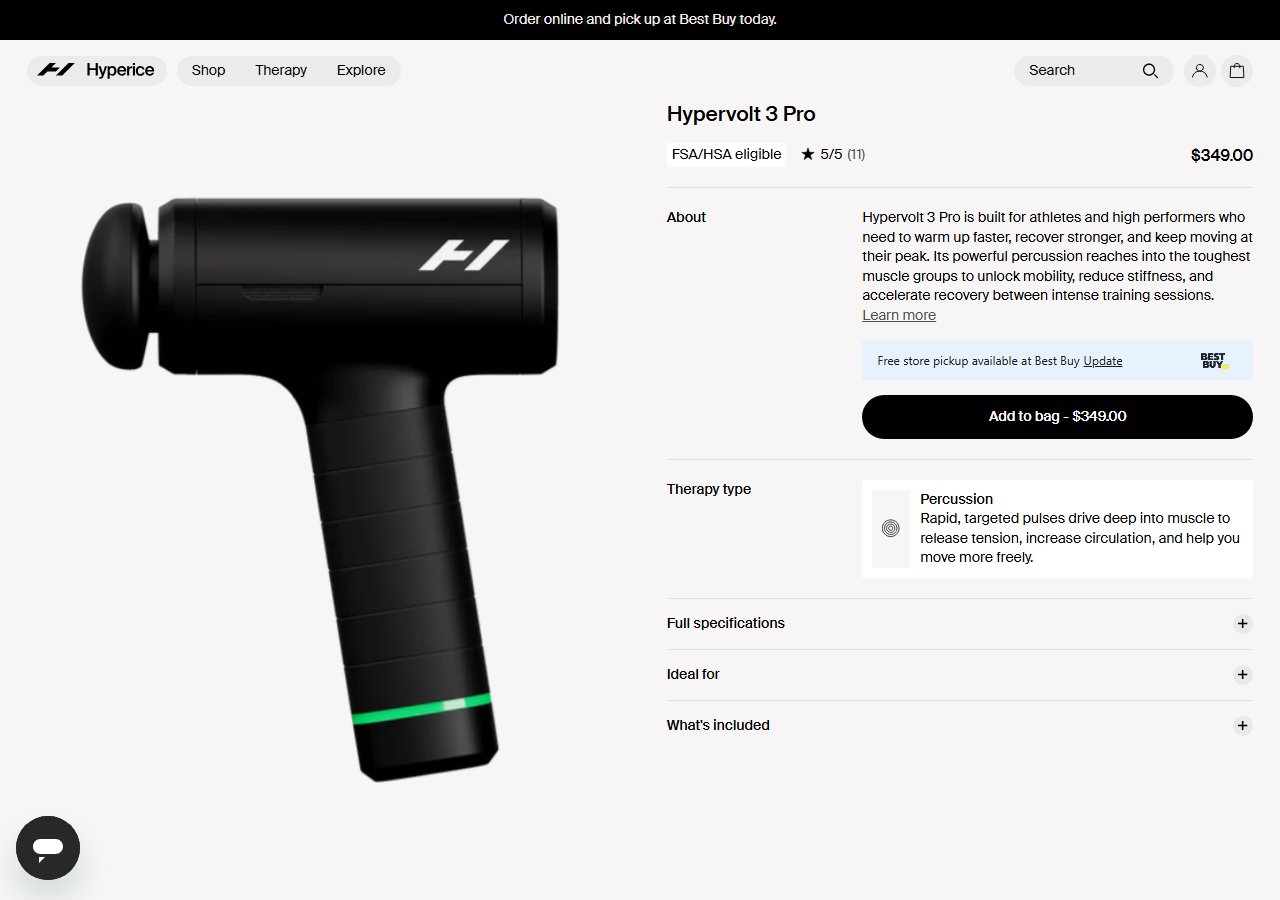
Hyperice Hypervolt 2 Pro
$329
See Price at Hyperice →
Opove M3 Pro 2 Massage Gun Deep Tissue Percussion Muscle Massager for Workout...
$129.99
Check Price on Amazon →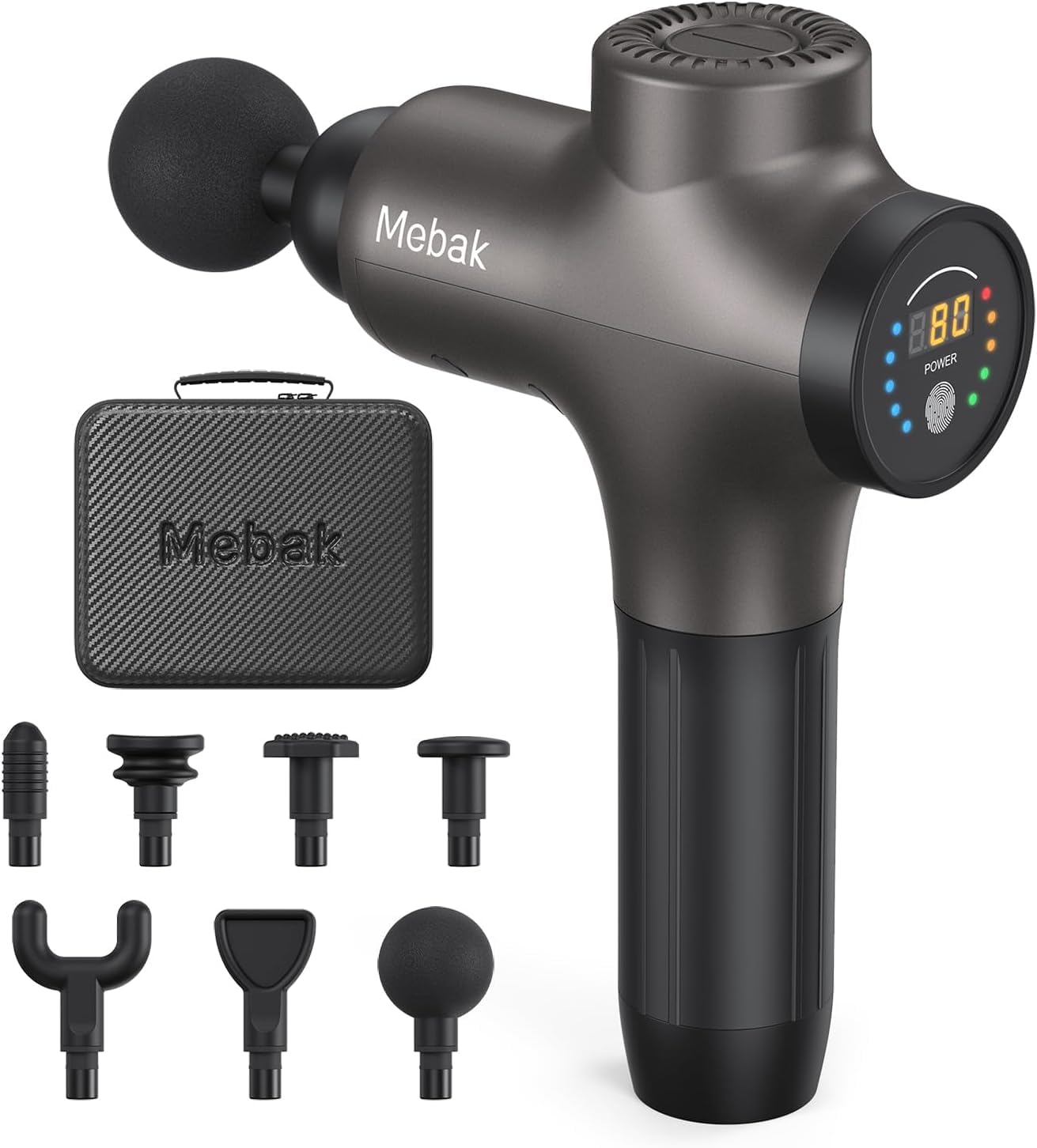
Mebak 3 Massage Gun, Massage Gun Deep Tissue for Athletes, Professional Muscl...
$99.99
Check Price on Amazon →Matching Device to Recovery Load — The Practical Framework
The question of which device fits which reader comes down to training volume, occupational load, and whether you are using the device for daily maintenance or acute post-workout recovery. Here is the practical breakdown:
High-volume trainers and physically demanding workers (5+ active days per week): The Hyperice Hypervolt 2 Pro is built for this load profile. The motor is rated for extended sessions, the speed range handles both pre-workout activation work (low amplitude, short bursts) and post-workout flushing (higher amplitude, full muscle sweeps), and the accessory head selection includes specialized heads for trigger-point work (bullet head), large-muscle group flushing (ball head), and bony-prominence-adjacent work (fork head for paraspinals).
Moderate trainers with occupational cumulative load (3-4 active days per week, desk job or moderate physical work): The Opove M3 Pro 2 hits the right price-to-performance ratio. Reliable motor, sufficient speed range for most use cases, and a form factor that is easy to use on the back, shoulders, and legs without a second person.
Entry-level or infrequent users (1-3 days per week, testing the modality): The Mebak 3 provides a low-risk on-ramp. If percussive therapy does not improve your DOMS or muscle tension after four weeks of consistent use, you have not spent $329 to find out.
The Evidence Hierarchy, Summarized
Federal data builds a coherent case for percussive therapy as a legitimate non-pharmacologic recovery adjunct — not a cure, not a standalone treatment, but a useful tool in the right hands at the right dose. CDC data tells us the population living with chronic pain is enormous and underserved. CMS data tells us the pharmacologic alternative is expensive and carries significant systemic risk. NIH NCCIH evidence reviews confirm that percussive massage produces measurable short-term improvements in DOMS and range of motion. NIOSH Total Worker Health guidance endorses non-pharmacologic recovery modalities for physically demanding workers.
The hierarchy is: active recovery first, targeted stretching second, percussive therapy as a supported adjunct third, clinical care when red flags appear. Products are one layer in that stack — a well-designed percussive device accelerates recovery outcomes that good movement habits make possible. It does not replace those habits, and it does not replace clinical evaluation when clinical evaluation is warranted.
For readers who have worked through the free intervention tier and are ready to invest in equipment, the Hyperice Hypervolt 2 Pro represents the strongest build-quality-to-evidence ratio in this category. The Opove and Mebak options serve readers whose training volume or budget calls for a less intensive entry point. None of these devices are medical treatments. All three are legitimate tools — when used correctly, on the right tissue, for the right duration, by someone who has ruled out the clinical red flags.