The Federal Data Behind America's Sleep Crisis
CDC surveillance data shows approximately 35% of U.S. adults sleep fewer than seven hours per night — the threshold below which chronic disease risk measurably rises. That statistic, drawn from the Behavioral Risk Factor Surveillance System, represents tens of millions of people waking up exhausted, cognitively impaired, and physiologically stressed. For a meaningful subset of those people, the culprit is not poor discipline or too much screen time. It is obstructive sleep apnea (OSA): a mechanical failure of the upper airway during sleep that interrupts breathing dozens or even hundreds of times per night, triggering micro-arousals that shatter sleep architecture even when the sufferer has no memory of waking.
The downstream consequences of untreated or undertreated sleep apnea extend well beyond grogginess. FMCSA motor carrier safety data documents elevated fatigue and sleep-disorder rates among long-haul commercial vehicle operators, identifying disrupted sleep as a direct contributor to crash risk. BLS Census of Fatal Occupational Injuries data reinforces this finding: transportation and material-moving occupations consistently report among the highest absolute fatality counts in the U.S. workforce, with sleep deprivation and fatigue listed as contributing factors. These are not abstract statistics. They describe real workers who drive freight through the night, operate heavy equipment at 4 a.m., or staff emergency departments on 12-hour rotating shifts — all of whom are at elevated risk when their sleep is fractured by disordered breathing.
This article is for the reader who snores loudly, who wakes with a dry mouth or headache, whose partner has described witnessed gasping, or who has already been diagnosed with OSA and is looking for evidence-based adjuncts to CPAP therapy. We will explain exactly why positional elevation helps, what the federal data says about the risks of doing nothing, and — after working through free interventions and clinical screening criteria — where a motorized adjustable bed base fits as a practical tool.
Why This Happens: The Biomechanics of Positional Sleep Apnea
Obstructive sleep apnea occurs when the muscles of the soft palate, tongue, and pharyngeal walls relax during sleep and allow the upper airway to narrow or fully collapse. The result is reduced or zero airflow despite continued respiratory effort. Gravity is the enemy here: when a person sleeps flat on their back, the tongue and soft palate fall directly posteriorly into the airway, dramatically increasing the likelihood of collapse. The supine (flat-back) position is consistently associated with higher apnea-hypopnea index (AHI) scores than lateral or inclined positions in clinical sleep studies.
Head-of-bed elevation works through a simple gravitational principle. When the upper body is inclined at roughly 30 to 45 degrees — the range most commonly cited in positional therapy literature — soft tissues shift anteriorly away from the posterior pharyngeal wall, increasing the cross-sectional area of the airway. Tongue base prolapse, which is the proximate cause of many obstructive events, is partially counteracted by the incline. This is why NHLBI guidance on sleep apnea consistently includes positional therapy alongside CPAP as a recognized management strategy, particularly for patients with positional or mild-to-moderate OSA.
For CPAP users, the mechanism compounds beneficially. CPAP delivers a continuous stream of pressurized air that acts as a pneumatic splint for the airway. Elevation reduces the gravitational load on that splint, meaning the same therapeutic pressure achieves better airway patency — a fact that has led some sleep medicine clinicians to recommend adjustable bases as adjuncts for patients who experience residual events despite CPAP compliance. Additionally, elevation reduces nocturnal gastroesophageal reflux disease (GERD), which is strongly comorbid with OSA and independently disrupts sleep quality.
The back-pain connection matters here too, because it affects the same population. CDC NCHS Data Brief 390 documents that approximately 20% of U.S. adults experience chronic pain, with the lower back as the most common pain location. Sleep apnea and chronic back pain frequently co-occur, both because obesity is a shared risk factor and because poor sleep quality amplifies pain perception through well-established neurological pathways. AHRQ Healthcare Cost and Utilization Project data confirms that back pain is among the most expensive conditions in U.S. healthcare by total inpatient and outpatient cost. An adjustable base that addresses both conditions simultaneously is not a luxury — for the right patient, it is a clinically sensible investment.
SSA Disability Insurance Statistical Reports consistently identify musculoskeletal disorders as the single largest category of new disability claims annually in the U.S., underscoring that the consequences of undertreated spinal and sleep problems accumulate into workforce-level economic damage. The back-pain and sleep-apnea reader is not a niche — they represent a substantial fraction of the adult workforce.
A Note on Sleep Medications Before You Buy Anything
Many apnea sufferers cycle through sedative sleep aids before arriving at a structural solution. This is worth addressing directly with federal data. The FDA Adverse Event Reporting System (FAERS) provides federal-level visibility into reported adverse events for sleep medications — and the cumulative signal is substantial. Sedatives and hypnotics suppress respiratory drive, which means they can worsen OSA severity even as they make patients feel like they are sleeping better. Positional and mechanical interventions carry none of that pharmacological risk, which is one reason sleep medicine guidelines increasingly emphasize them. This article is not medical advice, but the FAERS data provides important federal context for why physical and behavioral interventions deserve serious consideration alongside or before pharmacological ones.
Try These First: Free and Low-Cost Interventions
The cheapest intervention is the one that does not require buying anything. Before recommending any product, this section surfaces the evidence-based, zero-cost or low-cost changes that address the root mechanisms of snoring and sleep apnea. Federal health agencies have published explicit guidance on each of these. Skipping them to go straight to equipment is a clinical mistake — and an expensive one, since no adjustable base compensates for undiagnosed severe OSA or a bedroom environment that actively undermines sleep quality.
First, get screened if you have not been screened. The NHLBI's sleep apnea guidance is unambiguous: loud snoring, witnessed gasping or choking, and excessive daytime sleepiness are indications for a formal sleep study. Adjustable beds help with positional snoring and mild GERD, but they are not a treatment for moderate-to-severe OSA. Second, fix the sleep environment before buying hardware. CDC sleep hygiene guidance recommends a bedroom temperature of 65 to 68 degrees Fahrenheit, blackout darkness, and no screens in the hour before bed — changes that cost nothing and that outperform most equipment upgrades in head-to-head sleep quality studies. Third, examine your sleep posture. NIH guidance from NIAMS identifies sleep posture as a primary modifiable factor in back pain: side-sleeping with a pillow between the knees maintains pelvic neutrality and reduces lumbar load. Stomach sleeping is the worst position for both neck and back pain. Fourth, move daily. NIH NCCIH evidence reviews list moderate daily walking as a first-line non-drug intervention for chronic low back pain — 30 minutes most days outperforms most passive treatments in meta-analyses, and improved physical conditioning also reduces OSA severity through weight and tone mechanisms.
Many readers will have already tried the above. Some will have a CPAP prescription and be looking for a way to improve compliance and residual event counts. Some will have chronic back pain that makes flat sleeping genuinely painful and are looking for a structural solution. For those readers, a motorized adjustable base is a well-supported adjunct — but it belongs in that sentence: adjunct, not replacement. With that framing established, here is what to look for in a base, and which specific products deliver it.
When to See a Clinician
Before investing in any sleep equipment, certain symptoms should trigger a clinical evaluation rather than a product purchase. The NHLBI is explicit that witnessed apneas — moments when a bed partner observes breathing stop completely — require formal polysomnography or a validated home sleep apnea test, not a positional workaround. An adjustable base will not prevent a severe apneic event; only continuous positive airway pressure, oral appliances, or surgical intervention can do that for moderate-to-severe OSA.
Back pain warning signs are equally important. NIH's National Institute of Neurological Disorders and Stroke guidance on back pain states that most low back pain resolves within four to six weeks without imaging — but the following symptoms require prompt clinical evaluation: pain that radiates down a leg (suggesting nerve root compression), any change in bowel or bladder function (suggesting cauda equina involvement), pain following significant trauma, and pain accompanied by fever (suggesting infectious etiology). None of these presentations should be managed with a mattress adjustment.
The Federal Engineering Standard for Adjustable Bases
Not all adjustable bases are built to the same engineering standard, and federal data provides a relevant quality floor. FDA 510(k) Class II clearance data covers many adjustable bed mechanism patents and motorized base designs, providing federal-level engineering review of motor durability and pinch-point safety. When evaluating a base for long-term daily use — particularly for a CPAP user who will be repositioning every single night — motor longevity, whisper-quiet operation (to avoid disturbing CPAP pressure dynamics), and anti-entrapment safety features are non-negotiable specifications. The three Sven & Son bases reviewed here have all been built with these use-case requirements in mind.
Where Products Help: Three Adjustable Bases for Sleep Apnea and Snoring
For the CPAP user or positional snorer who has completed the intervention checklist above, a motorized adjustable base delivers what wedge pillows and foam risers cannot: precise, repeatable, programmable head-of-bed elevation that can be dialed in to the exact angle where snoring stops and CPAP mask seal is maintained. The three bases below represent a tiered selection from Sven & Son — a brand whose bases are specifically engineered for therapeutic use, not just convenience features.
Sven & Son Bliss: The Full-System Solution
The Sven & Son Bliss Adjustable Bed Base-Frame with 14-inch Hybrid Spring Mattress (Medium Soft) is the complete system for the reader who wants to solve the sleep environment in a single purchase. The 14-inch hybrid mattress included in this bundle is constructed with individually wrapped coils beneath a comfort foam layer — a configuration that provides the point elasticity needed for side-sleeping (which remains the preferred secondary position even for CPAP users) while delivering enough underlying support for the inclined positions used in positional apnea therapy. At $2,749.95 for the base-plus-mattress bundle, it is the most comprehensive entry in this list. For the OSA sufferer who is also managing chronic back pain — the comorbid pattern supported by CDC and AHRQ data cited above — having the mattress engineered specifically for the base's articulation range eliminates the compatibility guesswork that plagues mix-and-match setups. The base includes independent head and foot adjustment, allowing zero-gravity positioning that simultaneously elevates the upper body and slightly bends the knees — a posture that decompresses the lumbar spine while maintaining the incline that keeps the airway open.
Sven & Son Harmony: Programmable Precision Without the Mattress Bundle
For readers who already own a compatible mattress, the Sven & Son Harmony Adjustable Bed Base at $2,194.95 is the flagship base-only option. The Harmony's engineering centers on programmable position memory — a feature that matters far more for CPAP users than for general comfort shoppers. A CPAP user needs to find the exact elevation angle where their mask maintains seal, their residual events drop, and their back pain does not increase. That angle is individual and specific. Once found through a week or two of trial, the ability to return to that exact position every night with a single button press is clinically meaningful: it removes a nightly variable from an already complex therapy protocol. The Harmony also operates with low motor noise, which is relevant for CPAP users whose therapy relies on ambient quiet and consistent pressure delivery.
Sven & Son Classic: The Entry-Point for First-Time Adjustable Base Buyers
The Sven & Son Classic Adjustable Bed Base at $1,994.95 is the right starting point for readers who are new to adjustable bases and want to verify that elevated sleeping works for their specific apnea pattern before committing to a higher-spec platform. The Classic delivers the core therapeutic feature — programmable head and foot elevation — without the premium additions of the Harmony. For a first-time buyer who has been told by their sleep physician to try positional therapy as a CPAP adjunct, the Classic offers the full mechanism at the lowest price point in the Sven & Son lineup. It is not a budget-cut product; it is a stripped-to-essentials therapeutic tool.
Adjustable Bases for CPAP Users and Positional Snorers
These three Sven & Son bases were selected for readers managing snoring or sleep apnea who need programmable, precise head-of-bed elevation as an adjunct to CPAP therapy or as a standalone positional intervention.
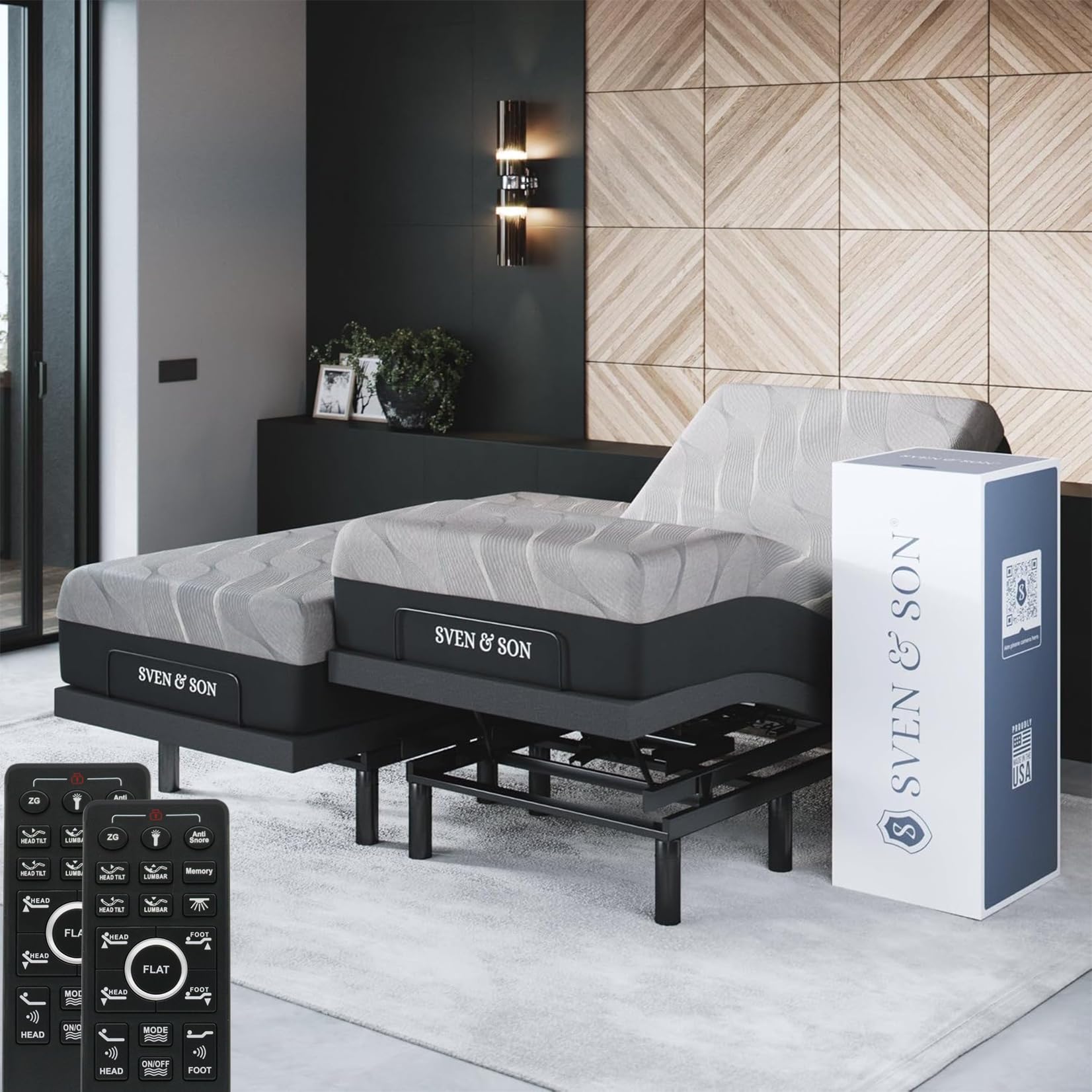
Sven & Son Bliss Adjustable Bed Base-Frame + 14 inch Hybrid Spring Matt (Medi...
$2,749.95
Check Price on Amazon →
Sven & Son Harmony Adjustable Bed Base, Head and Foot Lift, Massage, Under-Be...
$2,194.95
Check Price on Amazon →
Sven & Son Classic Adjustable Bed Base, Head and Foot Lift, Massage, Under-Be...
$1,994.95
Check Price on Amazon →The Data-to-Intervention-to-Product Hierarchy in Practice
The structure of this article reflects a deliberate clinical hierarchy, and that hierarchy is grounded in federal data rather than product enthusiasm. CDC surveillance data establishes that the scale of America's sleep crisis is enormous — 35% of adults chronically under-sleeping. FMCSA data and BLS fatality data establish that the consequences of untreated sleep disorders include fatal occupational incidents, not just personal health costs. FDA FAERS data contextualizes why pharmaceutical sleep interventions carry risks that mechanical and positional interventions do not. And FDA 510(k) clearance data provides the quality floor that separates well-engineered bases from commodity hardware.
For the snoring or sleep apnea reader, the correct sequence is: screen first (NHLBI criteria), fix the environment (CDC sleep hygiene), examine posture and daily movement (NIH NIAMS and NCCIH guidance), then — if you are a CPAP user seeking an adjunct or a positional snorer looking for structural help — evaluate a motorized adjustable base against the specifications that matter for therapeutic use. The three Sven & Son bases above were selected because they deliver programmable elevation control, whisper-quiet motors, and mattress-compatibility ranges that serve this specific clinical context. They are not magic. But for the right reader, positioned correctly in this evidence hierarchy, they are genuinely useful tools.
If you take one thing from this article, let it be the intervention sequence: free behavioral changes first, clinical screening where indicated, then equipment as a targeted adjunct. That sequence is what the federal data supports, and it is the only sequence that produces durable results.