One in Five American Adults Wakes Up in Pain — Federal Data Explains Why
According to CDC NHANES survey data, approximately 20% of U.S. adults experience chronic pain, and the lower back is the single most common pain location in that population. That is roughly 50 million people who manage lumbar discomfort as a persistent, daily reality — not an occasional inconvenience, but a condition that shapes how they sit, stand, move, and, critically, how they sleep. At the same time, CDC sleep surveillance data shows that approximately 35% of U.S. adults report sleeping fewer than seven hours per night, the threshold the CDC associates with elevated risk for chronic disease. Put those two numbers together and you begin to understand the scope of what is happening in American bedrooms every night: tens of millions of people with already-inflamed lumbar structures are losing the sleep hours that would allow those tissues to recover.
The financial picture amplifies the urgency. AHRQ HCUP data identifies back pain as one of the most expensive conditions in U.S. healthcare by total inpatient and outpatient cost. AHRQ's Medical Expenditure Panel Survey (MEPS) reinforces this: adults with chronic back conditions carry substantially higher average annual personal healthcare expenditures than adults without such conditions. Meanwhile, CMS drug spending dashboards show opioid and non-opioid pain medications ranking among the most expensive Medicare drug categories — a direct reflection of how inadequately managed chronic pain becomes pharmacologically expensive over time. And SSA Disability Insurance reports confirm that musculoskeletal disorders are the largest single category of new disability claims filed annually in the United States. This is not a niche health issue. It is the defining occupational and personal health crisis of working-age America.
Why Your Back Pain Gets Worse at Night — and Why That Is Not Random
To understand why sleep surfaces matter for chronic lumbar conditions, you need to understand what happens to the spine when a person is horizontal for seven or eight hours. During waking hours, the lumbar spine operates under axial compressive load — the weight of the torso, transferred through the vertebral column. The intervertebral discs act as hydraulic shock absorbers, and the paraspinal muscles provide dynamic stabilization. When you lie down, axial compression is relieved, and the discs actually rehydrate slightly through osmotic pressure — this is one reason people are measurably taller in the morning than in the evening.
Here is where sleep surface matters: if the mattress is too soft, the hips sink, the lumbar spine flexes laterally, and the paraspinal muscles on the sinking side contract asymmetrically throughout the night to compensate. If the mattress is too firm, pressure concentrates at the bony prominences — the iliac crests, the greater trochanters — and the lumbar spine hangs unsupported in a slight extension, pulling on the posterior spinal ligaments. Neither scenario allows full muscular relaxation, and neither allows the discs to rehydrate optimally. The result is a person who wakes stiffer, more inflamed, and with pain that has not recovered from the previous day — a compounding deficit that BLS tracking of musculoskeletal disorders by occupation makes plain: the back is the most common body part injured across all U.S. occupations with days away from work, and a significant portion of that burden is the cumulative consequence of inadequate overnight recovery.
For the roughly 25% of U.S. adults with doctor-diagnosed arthritis, per CDC arthritis surveillance data, the stakes are even higher. Facet joint arthritis — the most common form of spinal arthritis in adults over 50 — involves cartilage degradation at the small joints that guide vertebral motion. These joints are exquisitely sensitive to the positional loading patterns that occur during sleep. A mattress that holds the lumbar spine in an asymmetric or unsupported posture for eight hours is not a neutral variable; it is an active contributor to next-morning pain severity.
Manual labor workers face an additional layer of risk. The NIOSH Lifting Equation documents that manual material-handling tasks in warehousing, construction, and healthcare routinely exceed safe spinal loading limits. Workers in these sectors arrive at bedtime with spinal structures that have already been stressed beyond design parameters during the workday. Their overnight recovery window is not just restorative — it is the primary physiological mechanism that prevents cumulative spinal damage from compounding into disability. BLS Employer Costs for Employee Compensation data shows that industries with high musculoskeletal disorder incidence carry workers' compensation insurance rates 3 to 5 times higher than low-MSD industries — a direct economic signal that cumulative spinal loading is being inadequately managed at the population level.
The Free Variables: What Federal Health Agencies Recommend Before Any Product Purchase
The cheapest intervention is the one that does not require buying anything. Before this article discusses a single mattress, it is worth being direct about what the federal health evidence actually prioritizes for chronic lower back pain. The interventions below are drawn from NIH, NIOSH, OSHA, and CDC guidance — agencies with no financial interest in what you purchase. They reflect the best available non-pharmacological, non-surgical evidence for managing chronic lumbar conditions. Most people with chronic back pain have not fully optimized all of them.
Sleep position is the most underutilized free variable available to a chronic back pain sufferer. NIH National Institute of Arthritis and Musculoskeletal and Skin Diseases guidance is explicit: side-sleeping with a pillow between the knees keeps the pelvis level and the lumbar spine neutral. Back-sleeping with a pillow under the knees achieves a similar result by reducing lumbar extension. Stomach-sleeping torques the lumbar spine into rotation for the entire sleep duration — a mechanical insult that no mattress, regardless of price, can fully offset. If you are a chronic stomach sleeper with lower back pain, changing that habit is the single highest-leverage intervention available to you tonight, at zero cost.
Movement is the other underused lever. NIH's National Center for Complementary and Integrative Health evidence review concludes that walking 30 minutes most days reduces chronic low back pain as effectively as most non-drug clinical treatments. The mechanism is well understood: walking engages the paraspinal stabilizers rhythmically, promotes disc hydration through cyclical loading, and reduces the inflammatory cytokine load associated with prolonged sedentary posture. People managing chronic back pain who are not yet walking daily are leaving their most powerful free tool unused.
For workers in physical occupations, OSHA ergonomics guidance on lifting mechanics deserves consistent attention: hinge at the hips rather than the lumbar spine, keep loads close to the body's center of gravity, and avoid twisting under load. Most acute back episodes are mechanical and rehearsable — meaning the injury pattern is predictable and the behavior that causes it can be retrained. This is particularly relevant for the warehouse and construction workers for whom NIOSH has documented routine exceedance of safe spinal loading limits.
Finally, CDC sleep hygiene guidance is worth taking seriously before attributing all sleep-quality problems to the mattress: a mattress older than 7 to 10 years with visible sag, or one that consistently leaves you stiffer in the morning than when you went to bed, is a legitimate clinical variable. But even the most expensive mattress in this article does not compensate for irregular sleep schedules, screen exposure before bed, or excessive alcohol — all of which fragment sleep architecture and prevent the deep-sleep stages during which tissue repair is most active.
For readers who have already addressed their sleep position, movement routine, lifting mechanics, and sleep hygiene — and who are still waking with unresolved lumbar pain — the sleep surface itself becomes the next variable to examine. This is where mattress construction, firmness calibration, and pressure-relief engineering move from luxury considerations to functional clinical ones.
When to See a Clinician Before Changing Anything Else
No sleep surface, regardless of construction or price, is appropriate as a primary intervention for back pain that involves neurological symptoms. NIH National Institute of Neurological Disorders and Stroke guidance is clear about the red flags that require medical evaluation before any lifestyle or product change: back pain that radiates below the knee, pain following direct trauma, leg weakness or numbness, changes in bowel or bladder function, or back pain accompanied by fever. These symptom patterns suggest structural pathology — disc herniation with nerve impingement, spinal stenosis, cauda equina syndrome, or spinal infection — that requires imaging, clinical diagnosis, and potentially surgical evaluation. A new mattress is not the answer for these presentations.
For readers without red-flag symptoms, the clinical picture is more nuanced. AHRQ HCUP data documents the extraordinary cost of back pain in the U.S. healthcare system, but much of that cost reflects overuse of imaging and procedural interventions for non-specific low back pain — a condition that, in the absence of red flags, is typically best managed through conservative measures: movement, position optimization, manual therapy, and, yes, attention to the sleep environment. If your pain is non-radiating, non-traumatic, and does not involve neurological symptoms, the following product guidance is relevant to you.
What Mattress Construction Research Actually Supports for Chronic Lumbar Conditions
The evidence on mattress firmness and chronic back pain has matured significantly over the past two decades. Early clinical folklore recommended very firm mattresses — a recommendation that has not held up in controlled trials. A frequently cited randomized controlled trial published in The Lancet found that medium-firm mattresses produced significantly better outcomes for chronic non-specific low back pain than firm mattresses, with less disability and less medication use at 90 days. The mechanism aligns with the biomechanics described earlier: medium-firm surfaces allow enough contouring to keep the lumbar spine in neutral alignment without the hip-sinking that occurs on very soft surfaces.
For chronic lumbar pain sufferers specifically, three construction features matter most: zoned support (firmer under the hips and lumbar region, softer under the shoulders), pressure-point relief at the iliac crest and greater trochanter (to prevent the muscle bracing that occurs when bony prominences are compressed), and motion isolation (relevant for couples, since partner movement that disrupts sleep architecture fragments the deep-sleep stages when tissue repair is most active).
For serious chronic back pain, the Saatva Loom & Leaf Memory Foam Mattress is the premium memory foam pick in this analysis. Loom & Leaf uses a dual-layer memory foam system — an 5-inch base support layer topped by a convoluted air-flow layer and a layer of cooling gel memory foam — that achieves the medium-firm to firm feel range that research supports for lumbar conditions. Memory foam's conforming properties allow it to distribute lumbar pressure across a wider surface area than innerspring constructions, reducing the concentrated loading at bony prominences that triggers overnight muscle bracing. Priced from $1,695 for a Twin, Loom & Leaf is an investment — but set against AHRQ MEPS data showing substantially higher annual healthcare expenditures for adults with chronic back conditions, a mattress that meaningfully improves overnight recovery has a legitimate financial as well as clinical rationale.
For workers in physically demanding occupations — warehouse workers, construction tradespeople, healthcare workers whose bodies have absorbed the cumulative spinal loading that NIOSH documents routinely exceeds safe limits — the Saatva HD Mattress is engineered specifically for higher body weights and greater spinal loading patterns. The HD is built with a dual steel coil system — individually wrapped coils over tempered steel foundation coils — that maintains consistent support under higher compressive loads than standard innerspring or hybrid constructions. Standard mattresses are typically engineered for body weights up to approximately 250 pounds; beyond that threshold, most foam and hybrid constructions begin to develop micro-deformations that progressively misalign spinal support. The Saatva HD addresses this directly. For the warehouse or construction worker whose workday already pushes past safe spinal loading limits, a mattress that fails to maintain consistent overnight support compounds cumulative damage rather than reversing it.
For sleepers whose primary complaint is pressure sensitivity — particularly those with facet joint arthritis or disc disease who experience pain at specific lumbar contact points — the Purple Hybrid Premier Mattress offers a materially different engineering approach. Purple's GelFlex Grid — a hyper-elastic polymer grid structure — behaves differently from both memory foam and traditional innerspring: it collapses under direct bony-prominence pressure (reducing concentrated load) while remaining firm under distributed load (maintaining lumbar support). This dual-response behavior is well-suited to the facet joint arthritis population, for whom the roughly 25% of U.S. adults with doctor-diagnosed arthritis CDC data represent. The Purple Hybrid Premier pairs the GelFlex Grid with individually wrapped coils, adding the motion isolation and edge support that side-sleepers with lumbar conditions particularly benefit from.
Mattresses Engineered for Chronic Lumbar Conditions — Not Just General Back Pain
These three mattresses were selected for chronic lower back pain sufferers specifically: each addresses a distinct biomechanical need documented in federal occupational health data, from high-load spinal recovery to pressure-sensitive arthritis relief.

Saatva Loom & Leaf Memory Foam Mattress
$1,695-$3,295
See Price at Saatva →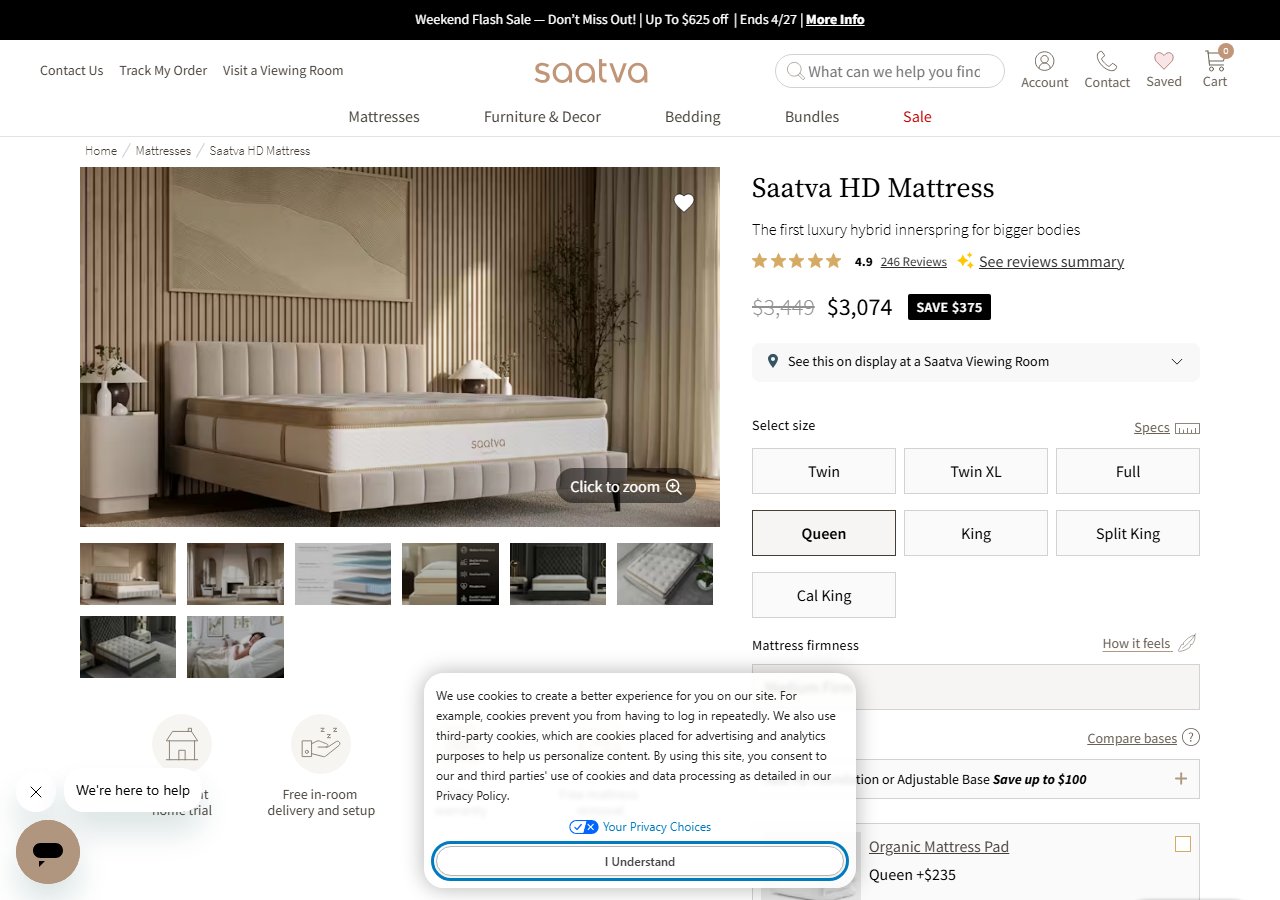
Saatva HD Mattress (Heavy-Duty)
$2,395-$3,995
See Price at Saatva →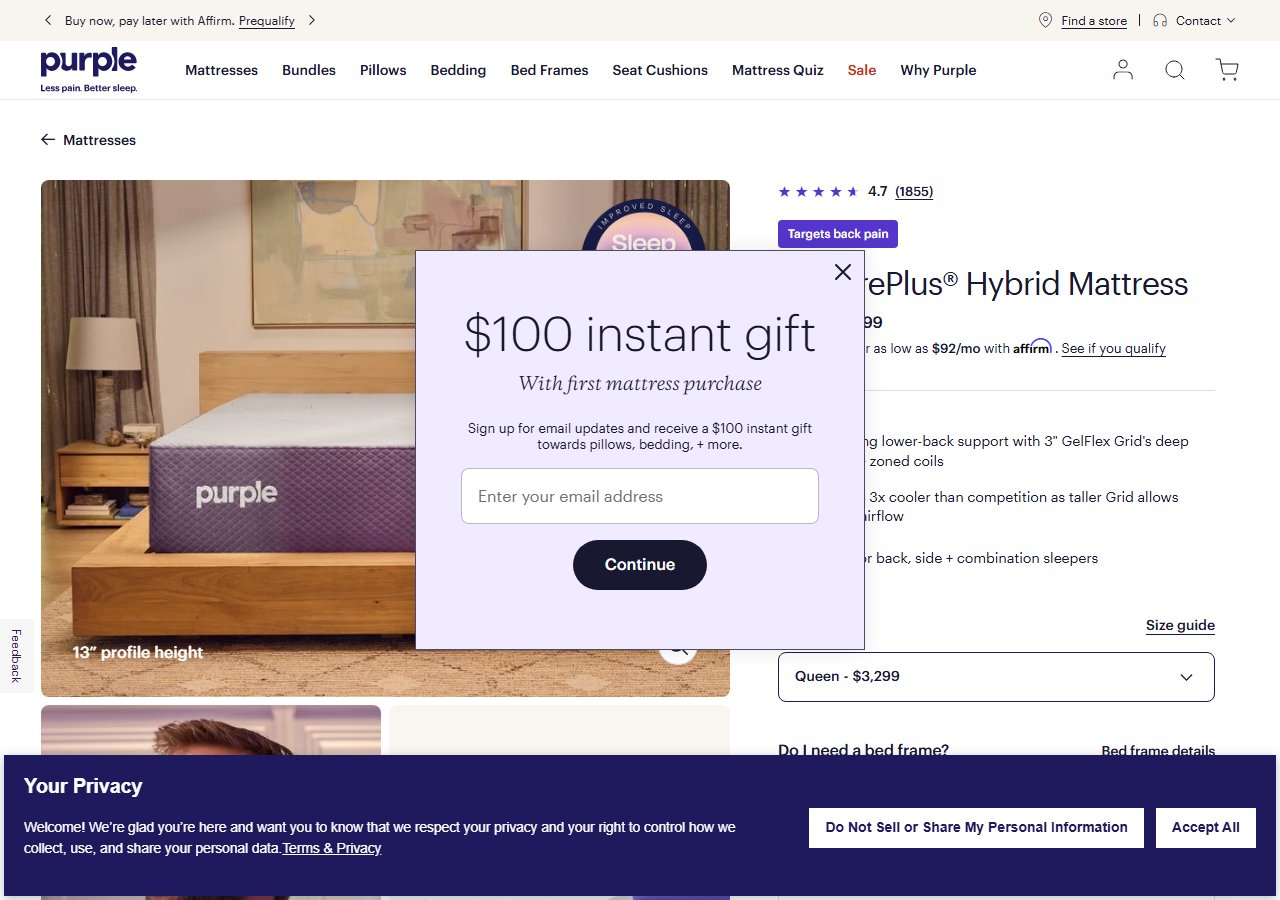
Purple Hybrid Premier Mattress
$2,499-$4,799
See Price at Purple →The Hierarchy That Federal Data Supports
It is worth being direct about what the federal evidence actually establishes — and what it does not. CDC, NIH, AHRQ, BLS, and SSA data collectively document that chronic back pain is one of the most prevalent, most expensive, and most disabling conditions in the United States. That evidence does not, by itself, establish that purchasing a specific mattress will resolve your back pain. What it does establish is the mechanism by which inadequate overnight recovery compounds chronic lumbar conditions, and the construction features that research supports for interrupting that compounding.
The hierarchy is this: sleep position first (free, high-leverage, tonight), daily walking second (free, evidence-grade, NIH-endorsed), lifting and movement mechanics third (free, OSHA-codified), sleep hygiene fourth (free, CDC-endorsed). If you have genuinely optimized all four and are still waking with unresolved lumbar pain from a mattress that is visibly sagging or more than a decade old, then a mattress with medium-firm zoned support, adequate pressure relief, and motion isolation is a clinically rational next step — not a luxury, but an occupational health decision with a computable cost-benefit given what AHRQ MEPS shows about the annual expenditure differential for adults with chronic back conditions.
The Saatva Loom & Leaf fits that profile for most chronic lumbar pain sufferers. The Saatva HD is the right call for physically demanding workers or heavier body frames where standard constructions fail to maintain consistent support. The Purple Hybrid Premier is the targeted pick for pressure-sensitive sleepers with arthritis or disc-related pain. None of them replaces movement, position discipline, or clinical evaluation where red flags exist. All of them are materially better than a decade-old sagging mattress for a person who has done the work on the free variables first.