One in Five American Adults Is Living With This Problem Right Now
Let's start with the number that frames everything: approximately 20% of U.S. adults experience chronic pain, with the lower back identified as the most common pain location, according to CDC NCHS Data Brief 390. That's roughly 50 million people who wake up every morning — and, critically, go to sleep every night — managing a condition that shapes every hour of their day. For a meaningful fraction of that population, the eight hours spent horizontal on a sleep surface represent either the best recovery window of the day or the worst aggravating factor. The data suggests the stakes are higher than most people realize.
AHRQ HCUP data places back pain among the most expensive conditions in all of U.S. healthcare measured by combined inpatient and outpatient cost — not just expensive in the aggregate, but expensive per individual. AHRQ's Medical Expenditure Panel Survey (MEPS) goes further, showing that adults with chronic back conditions carry annual personal healthcare expenditures that substantially exceed those of adults without such conditions. The financial burden alone makes this a public health priority, not a lifestyle preference issue.
And it doesn't stop at healthcare costs. SSA Disability Insurance data identifies musculoskeletal disorders — the category that includes chronic back conditions — as the single largest source of new disability claims filed every year in the United States. BLS tracking of musculoskeletal disorders by occupation confirms that the back is the most frequently injured body part across all U.S. occupations with days away from work. This is a population-scale problem with an occupational spine to it: the people most likely to be reading this article are also among those most likely to have jobs that contributed to the injury in the first place.
Why Chronic Back Pain Persists: The Biomechanical and Occupational Mechanism
Chronic lower back pain does not arise from a single dramatic injury in most cases. The mechanism is accumulative. NIOSH's Lifting Equation documentation establishes that manual material-handling tasks in warehousing, construction, and healthcare routinely exceed safe spinal compressive loading limits — not by dramatic margins in isolated incidents, but persistently across thousands of repetitions over months and years. The intervertebral discs, facet joints, and paraspinal musculature absorb loads that exceed their recovery capacity, and the deficit compounds.
The spinal loading problem doesn't end when the workday does. Horizontal rest should be the period when compressed discs re-hydrate, inflamed soft tissues cool, and fatigued erector muscles recover. But the position and surface a person sleeps on determines whether those eight hours are restorative or an extension of the insult. Stomach sleeping, for example, forces the lumbar spine into hyperextension and rotates the cervical spine to one side — a sustained mechanical stress during the very period that should be zero-load recovery. Side sleeping on a surface that is too firm creates lateral spinal curvature by failing to accommodate the shoulder and hip. Back sleeping on a surface that is too soft allows the heavier pelvis to sink disproportionately, reversing the lumbar curve.
There is also the sleep deprivation amplifier to account for. CDC sleep data shows that approximately 35% of U.S. adults sleep fewer than 7 hours per night, the threshold below which chronic disease risk — including pain sensitization — escalates. Pain disrupts sleep; inadequate sleep lowers pain thresholds; lower pain thresholds intensify perceived pain. For back pain sufferers, this feedback loop is a clinical reality, not a metaphor. Interrupting it anywhere — better sleep position, better sleep surface, better sleep duration — creates measurable downstream benefit.
Approximately 25% of U.S. adults have doctor-diagnosed arthritis, with the highest concentration in physically demanding occupations. For back pain sufferers who also carry an arthritis diagnosis, the sleep surface question becomes even more specific: they need pressure relief at the hip and shoulder contact points simultaneously with lumbar support — a combination that entry-level mattresses rarely deliver well.
CMS drug spending data identifies opioid and non-opioid pain medications among the most expensive Medicare drug categories, which speaks to how heavily this country leans on pharmacological management of chronic pain. Medication manages perception; it does not address the biomechanical loading patterns or sleep surface deficits that keep the underlying condition active. And industries with high MSD incidence carry workers' compensation insurance rates 3–5 times higher than low-MSD industries per BLS employer cost data — a figure that reflects the downstream cost of not addressing the root mechanical inputs.
The Cheapest Intervention Is the One That Doesn't Require Buying Anything
Before discussing any product, this section covers the evidence-backed interventions that cost nothing or close to it. The data is unambiguous: the majority of chronic low back pain sufferers will see more improvement from behavioral and positional changes than from any single product purchase. A new mattress on top of poor sleep hygiene, a sedentary lifestyle, and continued unsafe lifting is a marginal investment at best.
Sleep position is the most powerful free variable available to a chronic back pain sufferer. NIH National Institute of Arthritis and Musculoskeletal and Skin Diseases guidance recommends side-sleeping with a pillow between the knees, or back-sleeping with a pillow under the knees — both of which maintain spinal neutrality without any equipment cost beyond a spare pillow. Stomach sleeping, the same NIH guidance notes, places the lumbar spine in sustained hyperextension that worsens chronic pain. Position change alone, before any product purchase, is the first intervention to test.
Daily walking is likely the most underutilized clinical intervention for chronic low back pain. An NIH NCCIH evidence review finds that 30 minutes of walking on most days reduces chronic low back pain as effectively as most non-drug clinical treatments. The mechanism involves disc nutrition (discs receive nutrients via movement-driven fluid exchange, not vascular supply), paraspinal muscle activation, and systemic anti-inflammatory signaling. A new sleep surface can reduce nightly aggravation; walking addresses the underlying tissue health.
Lifting and bending mechanics are the most direct occupational intervention for back pain sufferers in physical roles. OSHA's ergonomics guidance emphasizes hinging at the hips rather than the lumbar spine, keeping loads close to the body's center of mass, and eliminating twisting under load. The NIOSH Lifting Equation establishes the biomechanical basis for these recommendations: lumbar shear and compressive forces drop dramatically when load is kept within the functional reach envelope and the spine is kept neutral. Most acute back episodes are mechanical in origin and preventable through technique correction — which costs nothing.
Mattress replacement criteria deserve a clear-eyed look before any purchase. CDC sleep hygiene guidance and clinical consensus converge on three replacement indicators: visible sag or body impression in the sleep surface, waking consistently stiffer than when going to bed (which suggests the surface is aggravating rather than relieving), and mattress age exceeding 7–10 years. If none of these apply, the problem may be positional, activity-based, or clinical rather than surface-related.
For readers who have worked through these interventions — who already sleep on their side with a pillow between their knees, walk daily, have optimized their lifting mechanics, and are still waking with significant stiffness on a visibly sagging or aging mattress — the evidence does support that sleep surface characteristics affect pain outcomes. At that point, the question shifts from "should I buy a mattress?" to "what mattress characteristics does my specific back condition require?"
When to See a Clinician Before You Buy Anything
Some back pain presentations are not sleep surface problems. They are medical problems, and addressing them with a mattress purchase delays necessary care. The following red flags, drawn from NIH NINDS back pain guidance, indicate that imaging or clinical referral should precede any product decision:
- Pain that radiates below the knee, particularly with numbness, tingling, or a burning quality, suggests nerve root involvement — a herniated disc, spinal stenosis, or foraminal impingement that no sleep surface will resolve.
- Back pain following any trauma — a fall, vehicle accident, or impact — requires imaging to rule out fracture before assuming the issue is soft tissue.
- Leg weakness or changes in gait associated with back pain may signal spinal cord or cauda equina involvement and warrant urgent evaluation.
- Bowel or bladder dysfunction in the context of back pain is a red flag for cauda equina syndrome, a surgical emergency. Do not order a mattress.
- Back pain accompanied by unexplained fever, weight loss, or night sweats raises concern for infection or malignancy and requires immediate physician evaluation.
These criteria are not obscure edge cases — they represent a meaningful fraction of back pain presentations, particularly in older adults and in workers who have sustained cumulative spinal loading over careers. The default response to any of the above is a clinician visit, not a product search.
Where a Sleep Surface Actually Moves the Needle
For the reader who has cleared the clinical threshold, worked through the free interventions, and established that their sleep surface is contributing to their pain — here is what the evidence and construction specifics support.
Firmness and spinal alignment are the two primary variables. Research consistently shows that medium-firm mattresses — those that maintain lumbar support while accommodating the shoulder and hip — outperform both very firm and very soft surfaces for chronic low back pain. Very firm surfaces create pressure point loading at the hip and shoulder in side sleepers, forcing spinal lateral flexion. Very soft surfaces allow the pelvis to sink into a hammock position that hyperextends the lumbar spine in back sleepers. Medium-firm hits the window where the hip and shoulder are accommodated but the lumbar curve is maintained.
Memory foam versus coil systems each have biomechanical trade-offs. Memory foam distributes load broadly, eliminating pressure points — a significant advantage for arthritis sufferers and side sleepers. Its limitations include heat retention and a "sink" characteristic that can limit ease of repositioning for those with mobility restrictions. Hybrid systems that combine foam comfort layers with individually wrapped coils address the repositioning limitation while maintaining pressure relief at contact points, though they require careful attention to the transition between foam and coil layers to avoid the "falling through" sensation that many back pain sufferers report.
For readers with serious lumbar conditions — especially those in physically demanding occupations who carry higher body weight from muscle mass — the Saatva HD Mattress is the most directly engineered option in this analysis. It is built specifically for individuals up to 500 lbs with a dual-coil architecture that prevents the edge collapse and center sag that standard mattresses develop under higher loading — precisely the failure mode that creates the hammock effect described above. For warehouse workers, construction laborers, and others whose occupational loading is documented by the NIOSH Lifting Equation to routinely exceed safe spinal limits, a mattress that maintains its support geometry across a full decade of use is not a luxury specification.
For chronic back pain sufferers who need superior pressure relief — particularly those who have been diagnosed with arthritis, or those who have tried firmer options and still wake with hip and shoulder pain — the Saatva Loom & Leaf Memory Foam Mattress addresses the pressure distribution problem directly. Its gel-infused memory foam layers manage the heat retention issue that plagues standard memory foam while delivering the broad load distribution that eliminates pressure-point pain. It comes in Relaxed Firm and Firm configurations — the Relaxed Firm being the evidence-aligned choice for most chronic low back pain presentations.
For those who want a distinctly different pressure relief mechanism — one that doesn't rely on foam conformity — the Purple Hybrid Premier Mattress uses a proprietary polymer grid that yields under pressure points (shoulders and hips) while remaining firm under lower-pressure areas like the lumbar region. This is a biomechanically interesting design for back pain sufferers because it attempts to solve the simultaneous-support-and-relief problem without asking the sleeper to find the "right" firmness tier — the grid self-adjusts by location. It is the highest-cost option in this group, and the feel is unfamiliar to those accustomed to foam or traditional innerspring, but for persistent pressure-point sleepers who have found foam options unsatisfying, it warrants direct consideration.
Sleep Surfaces Built for Chronic Lumbar Conditions
These three mattresses were selected specifically for back pain sufferers who have worked through positional and behavioral interventions and need a sleep surface matched to their specific lumbar presentation, body type, or pressure relief requirements.

Saatva Loom & Leaf Memory Foam Mattress
$1,695-$3,295
See Price at Saatva →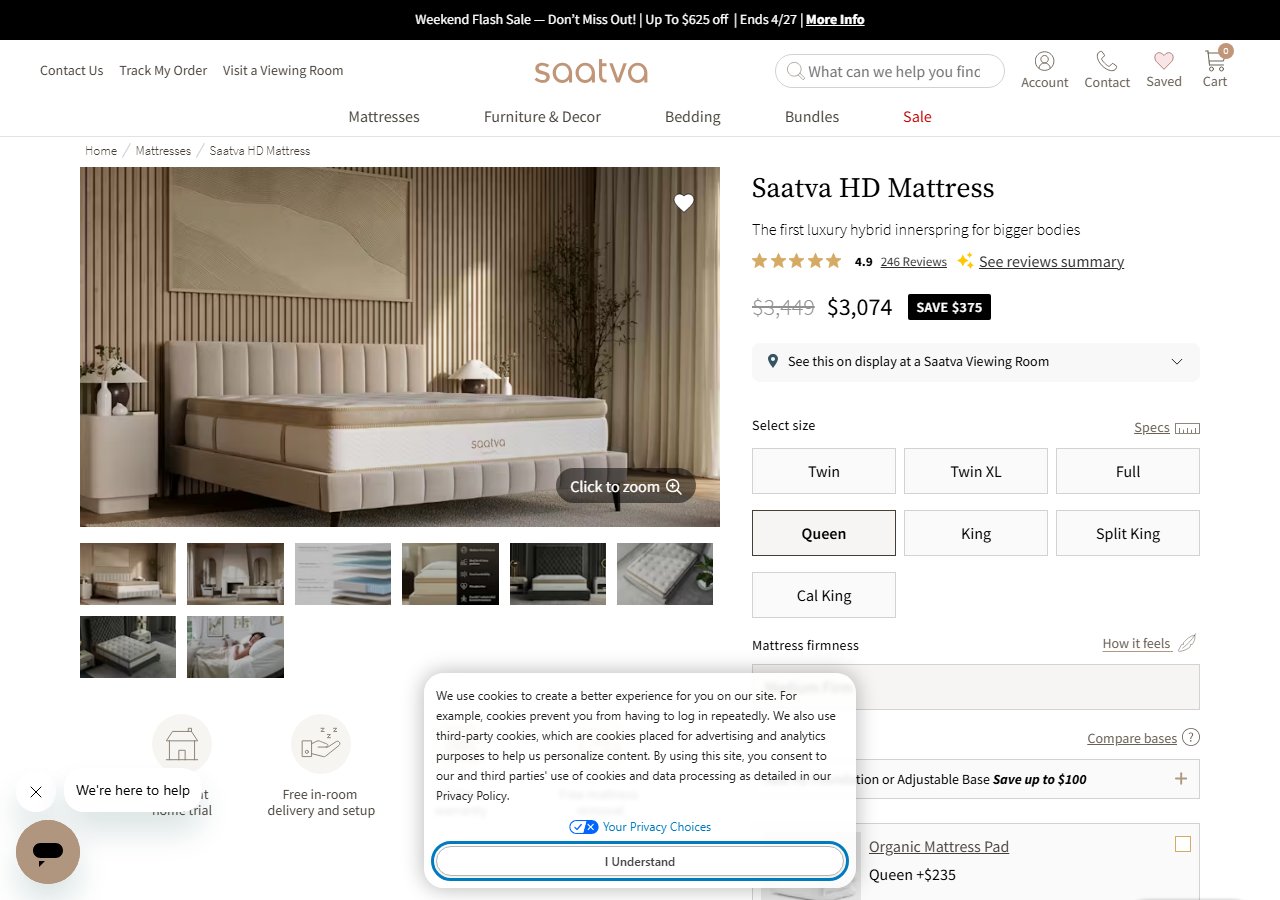
Saatva HD Mattress (Heavy-Duty)
$2,395-$3,995
See Price at Saatva →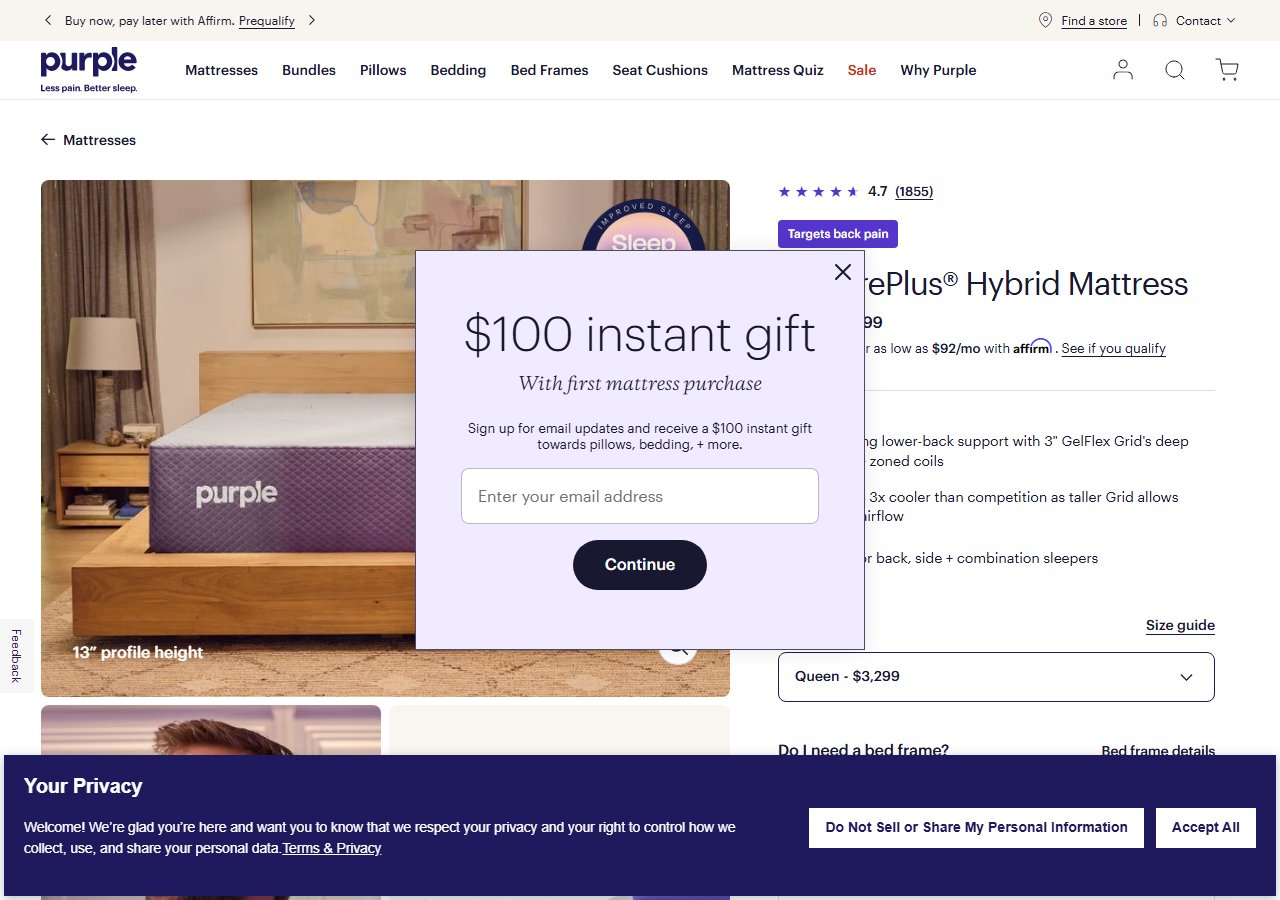
Purple Hybrid Premier Mattress
$2,499-$4,799
See Price at Purple →Pulling the Data Together: The Right Sequence for Back Pain Sufferers
The federal data creates a clear hierarchy for chronic back pain sufferers trying to manage their condition. The CDC puts the prevalence at one in five American adults. AHRQ documents the catastrophic healthcare cost. SSA tracks the disability burden. BLS confirms the occupational source. NIOSH quantifies the daily loading that creates the problem. CDC sleep data shows the amplifying effect of inadequate rest.
None of that data points to a mattress as the primary intervention. It points to a system: reduce occupational loading where possible, correct movement mechanics, optimize sleep position with the materials already in the bedroom, walk daily, and address clinical red flags with a physician. After that system is in place — and after the mattress itself shows the objective replacement indicators of sag, age, or consistent morning stiffness — then the sleep surface becomes a meaningful variable to address.
When that point arrives, the evidence supports medium-firm constructions with genuine pressure relief at shoulder and hip, coil systems that resist sag under sustained load, and foam layers thick enough to buffer contact pressure for arthritis-affected joints. The three options identified above — the Saatva HD for high-load users, the Loom & Leaf for foam-preferred pressure relief, and the Purple Hybrid Premier for those who want adaptive zonal support — each address a specific back pain presentation rather than claiming to solve all of them.
The reader who works through this sequence — federal data to mechanism to free interventions to clinical screening to informed product selection — will spend less, recover better, and be less likely to be one of the millions contributing to AHRQ's back-pain cost burden year after year.