The Scale of the Problem: Federal Data on Chronic Back Pain
One in five. That is the share of U.S. adults currently living with chronic pain, according to CDC NCHS Data Brief 390, and the lower back is the single most common pain location in that group. If you are reading this article, you are almost certainly part of that statistic — and the federal data confirms that your experience is neither rare nor trivial. The Bureau of Labor Statistics tracks which body part gets injured most often in American workplaces with enough severity to cause days away from work. The answer, year after year, is the back. Not the hands, not the knees — the back.
The downstream consequences are staggering. The Social Security Administration's Disability Insurance data consistently identifies musculoskeletal disorders — back conditions chief among them — as the largest single category of new disability claims filed annually in the United States. AHRQ's Healthcare Cost and Utilization Project ranks back pain among the most expensive conditions in U.S. healthcare by combined inpatient and outpatient cost. And CMS drug spending data shows that opioid and non-opioid pain medications — driven substantially by chronic musculoskeletal pain — rank among the costliest drug categories in the Medicare program.
This is not a niche wellness problem. It is a public health and economic crisis playing out inside millions of American bedrooms, workplaces, and doctors' offices every single day.
For the adults caught in this crisis, nighttime is often when the pain speaks loudest. Poor sleep degrades pain tolerance, and pain disrupts sleep — a bidirectional spiral that federal sleep data makes visible. The CDC reports that approximately 35% of U.S. adults already sleep fewer than the 7-hour minimum associated with reduced chronic disease risk. Among people with chronic lower-back pain, sleep disruption rates are measurably higher still. The night surface you sleep on — its firmness, its pressure distribution, its ability to keep your spine aligned — is not a luxury variable. It is a clinical one.
Why Your Back Hurts at Night: The Biomechanics Behind Sleep-Position Pain
To understand why sleep surface and position matter so much for lumbar pain, you need to understand what is happening to your spine when you lie down. During the day, the intervertebral discs in your lumbar spine absorb compressive load with every step, lift, and seated hour. Those discs are largely avascular — they receive nutrients and hydration through a process called imbibition, which requires alternating loading and unloading cycles. When you sleep, the theory goes, the discs rehydrate. But that process depends on the spine being in a mechanically neutral position. A mattress that is too soft allows the lumbar region to sag, placing the spine in sustained flexion throughout the night. A mattress that is too firm forces the spine into extension if the sleeper's hips and shoulders cannot sink adequately to find neutral alignment.
The NIOSH Lifting Equation documents that manual material-handling tasks across warehousing, construction, and healthcare routinely exceed safe spinal loading limits — meaning millions of Americans arrive at bedtime with discs and facet joints that have already been mechanically stressed beyond recommended thresholds. Their sleep surface is not a neutral starting point; it is either a recovery tool or a continuation of the problem.
For workers in physically demanding industries, the compounding effect is measurable in compensation data. BLS Employer Costs for Employee Compensation data shows that industries with high musculoskeletal disorder incidence carry workers' compensation insurance rates 3–5 times higher than low-MSD industries. The 25% of U.S. adults with doctor-diagnosed arthritis — a group disproportionately represented in physically demanding occupations — face an additional layer of overnight joint inflammation that proper sleep surface support can either moderate or worsen.
Stomach sleeping is the position most consistently associated with lumbar pain aggravation. It forces the cervical spine into rotation and flattens the lumbar lordosis, placing sustained torsional stress on facet joints and posterior disc structures. Side sleeping with no pillow between the knees allows the upper leg to drop, rotating the pelvis and creating asymmetrical lumbar loading. Back sleeping on a surface that is too firm leaves the lumbar curve unsupported. These are not hypothetical concerns — they are the mechanical explanations for why so many people with chronic back pain wake up feeling worse than when they went to bed.
Before we talk about what to buy, let's talk about what you can change for free.
Try These First: Free and Low-Cost Interventions That Federal Evidence Supports
The cheapest intervention is the one that does not require buying anything. The AHRQ Medical Expenditure Panel Survey documents that adults with chronic back conditions spend substantially more on personal healthcare annually than adults without such conditions. That spending gap makes it all the more important to exhaust the evidence-based, no-cost interventions before adding another line item. The following four interventions are grounded in federal clinical guidance and should be your starting point.
Sleep position correction is the single most impactful zero-cost change for most lumbar pain sufferers. NIH's National Institute of Arthritis and Musculoskeletal and Skin Diseases recommends side sleeping with a pillow placed between the knees — this keeps the pelvis level and prevents the rotational stress that aggravates facet joints and SI joints overnight. Back sleeping with a firm pillow placed under the knees is an equally valid position: it reduces lumbar lordosis and decompresses the posterior disc structures. Stomach sleeping should be avoided entirely if you have chronic lumbar pain. This costs nothing and should be implemented tonight.
Daily walking is, according to the NIH National Center for Complementary and Integrative Health's evidence review, as effective as most non-drug clinical treatments for chronic low back pain when performed consistently — approximately 30 minutes on most days. Walking activates the deep stabilizing musculature of the lumbar spine, promotes disc nutrition through movement, and reduces the central sensitization that amplifies pain signals in chronic sufferers. No prescription required.
Mattress replacement timing matters more than most people realize. CDC sleep hygiene guidance and sleep medicine consensus hold that a mattress older than 7–10 years, visibly sagging, or consistently leaving you stiffer in the morning than when you went to bed is a legitimate contributor to your pain — and replacing it is a reasonable clinical intervention, not a luxury purchase. But no mattress corrects poor sleep hygiene, sedentary days, or inadequate pain management. The product is one tool.
Proper lifting and bending mechanics are worth rehearsing even if your back pain feels unrelated to lifting. OSHA's ergonomics guidance recommends hinging at the hips rather than the lumbar spine, keeping loads close to the body's center of mass, and avoiding twisting under load. The majority of acute lumbar episodes in working-age adults are mechanical in origin and are largely preventable with consistent technique. If you are reinjuring yourself during the day, no sleep surface will provide enough overnight recovery to overcome it.
If you have been practicing correct sleep positions for several weeks, walking consistently, and sleeping on a mattress that is less than 8 years old without visible sag — and you are still waking with significant lumbar pain — then your sleep surface's material properties become a legitimate clinical variable worth addressing. The research on mattress firmness for chronic back pain, while still maturing, consistently points toward medium-firm constructions as preferable over either very soft or very firm options for most back-pain presentations. Let's discuss what to look for, and when a clinician needs to be involved first.
When to See a Clinician Before Changing Anything Else
Some presentations of back pain are not sleep-surface problems. They are medical emergencies or serious pathologies that require imaging, referral, or urgent intervention — and buying a new mattress is not the appropriate response. The NIH National Institute of Neurological Disorders and Stroke identifies several red flags that should prompt prompt clinical evaluation rather than self-management:
Back pain that radiates below the knee — particularly into the foot or with associated numbness or tingling — may indicate nerve root compression or disc herniation significant enough to require imaging. Pain following a fall, motor vehicle accident, or direct trauma needs structural evaluation before any other intervention. New-onset back pain accompanied by leg weakness, difficulty walking, or changes in bladder or bowel function is a potential cauda equina syndrome emergency and requires same-day emergency evaluation. Back pain accompanied by unexplained weight loss, fever, or a history of cancer warrants urgent workup to rule out systemic or oncological cause.
If none of these red flags apply and your back pain is the familiar, chronic, mechanical lower-back ache that worsens with prolonged sitting or poor sleep, then the evidence supports progressive self-management — starting with the free interventions above, adding a properly chosen sleep surface when indicated, and layering in clinical support such as physical therapy if needed. The AHRQ MEPS data makes clear that chronic back pain generates enormous downstream healthcare costs. Early, evidence-based self-management — including sleep surface optimization — is one of the few levers that can bend that cost curve at the individual level.
Where Sleep Surface Quality Actually Matters
Once red flags are ruled out and conservative interventions have been genuinely attempted, the biomechanical properties of your sleep surface become a legitimate clinical variable. Here is what the evidence supports:
Firmness level is the most studied mattress variable for back pain. A frequently cited randomized controlled trial published in The Lancet found that medium-firm mattresses produced significantly better outcomes for chronic nonspecific low-back pain than firm mattresses — including reduced pain in bed, pain on rising, and disability scores. For most adult back-pain sufferers sleeping in a side or back position, a medium-firm surface (roughly 5–6 on a 1–10 firmness scale) is the evidence-supported starting point. Very soft mattresses that allow the lumbar spine to sag into flexion are consistently associated with worse outcomes. Very firm mattresses that cannot accommodate hip and shoulder contour force spinal deviation in side sleepers.
Pressure relief is the second critical variable, particularly for side sleepers. When the hip and shoulder cannot sink adequately into the sleep surface, the lumbar spine cannot reach neutral alignment — creating the lateral flexion and pelvic tilt that aggravate SI joints and lumbar facets overnight. Materials with high conformability — quality memory foam, latex, and advanced polymer grid constructions — distribute pressure more evenly than traditional innerspring surfaces, reducing the peak loading at bony prominences and allowing the spine to settle into alignment.
Edge support and ease of position change matter more than most people anticipate for chronic back-pain sufferers. Getting out of bed — rotating, pushing up — creates high transient lumbar loads. A mattress with strong edge support and a responsive surface reduces the mechanical demand of that transition.
With those criteria established, three sleep surfaces stand out as the most evidence-aligned options for chronic lumbar conditions:
The Saatva Loom & Leaf Memory Foam Mattress is the premium memory foam pick for serious back-pain sufferers. Its gel-enhanced memory foam construction delivers the high conformability that pressure-relief research supports, while its dual-layer foam architecture maintains enough foundational firmness to prevent the lumbar sag that soft mattresses produce. It is available in Relaxed Firm and Firm options — the Relaxed Firm maps closely to the medium-firm target that the clinical literature supports. White-glove delivery and old-mattress removal make the transition easier for people whose back pain makes heavy lifting a problem.
For readers who are larger-framed or whose back pain is partly a function of occupational loading — warehouse workers, construction workers, healthcare workers who transfer patients — the Saatva HD Mattress is the specifically engineered option. The HD is designed for body weights up to 500 pounds per side and uses a dual steel coil system with high-density foam encasement to prevent the progressive sag that standard mattresses develop under sustained heavy use. For workers whose spines are already stressed by NIOSH-documented loading beyond safe limits, a sleep surface that maintains its structural properties over time is not a preference — it is a requirement.
For sleepers whose primary complaint is pressure-point pain — hip pain in side sleepers, shoulder pain that drives compensatory position changes that then strain the lumbar region — the Purple Hybrid Premier Mattress offers a structurally distinct solution. Purple's GelFlex Grid is a polymer grid that behaves differently from both foam and coil: it collapses under bony prominences to relieve pressure while remaining firm under the broader lumbar region to maintain spinal alignment. For back-pain sufferers who have tried medium-firm foam and found it too unforgiving at the hips, the Purple Hybrid Premier is the pressure-relief-first alternative.
Mattresses Evaluated Against Federal Back-Pain and Sleep Data
Each mattress below was selected based on its alignment with clinical firmness research, pressure-relief evidence, and the specific loading patterns documented in NIOSH and BLS data for U.S. back-pain sufferers.

Saatva Loom & Leaf Memory Foam Mattress
$1,695-$3,295
See Price at Saatva →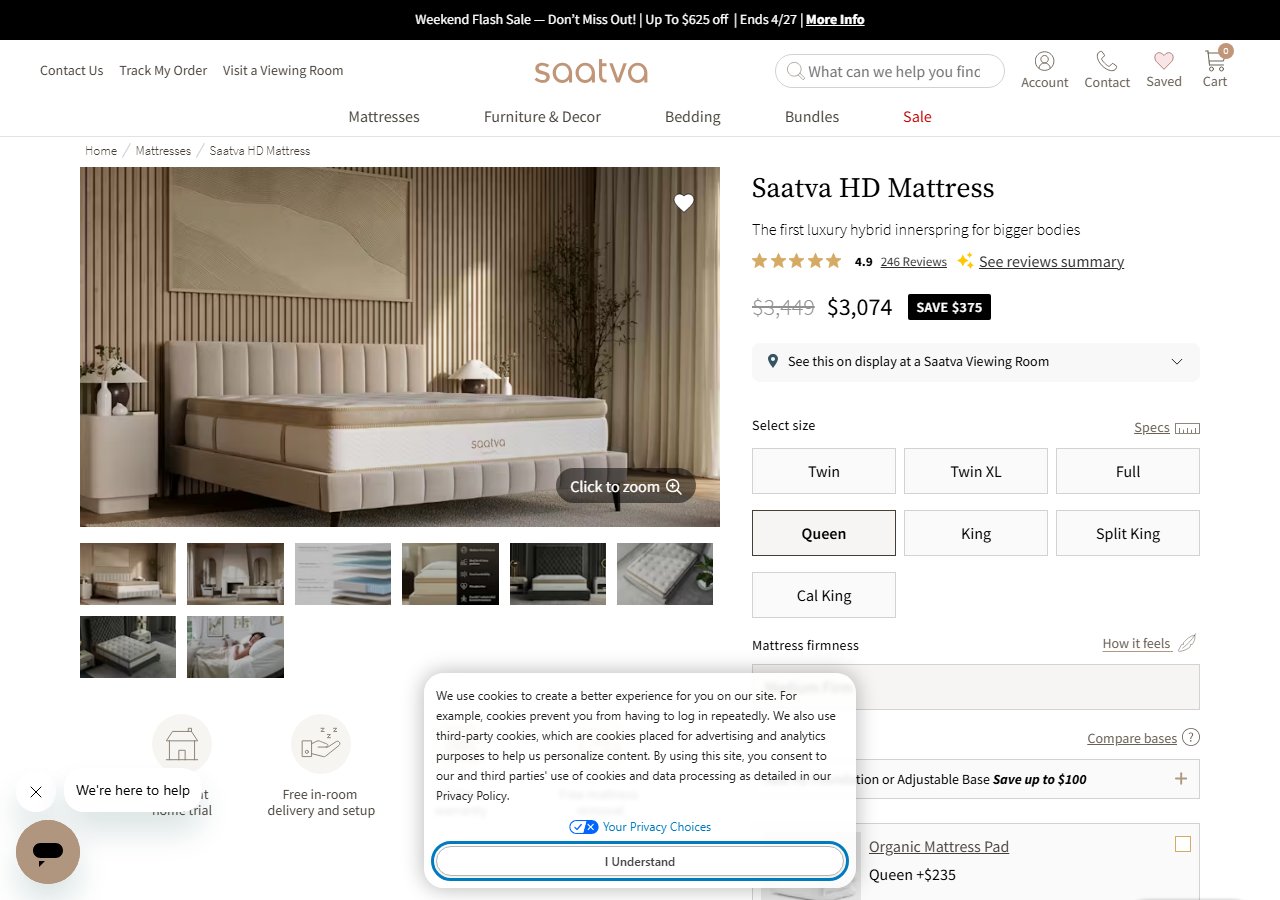
Saatva HD Mattress (Heavy-Duty)
$2,395-$3,995
See Price at Saatva →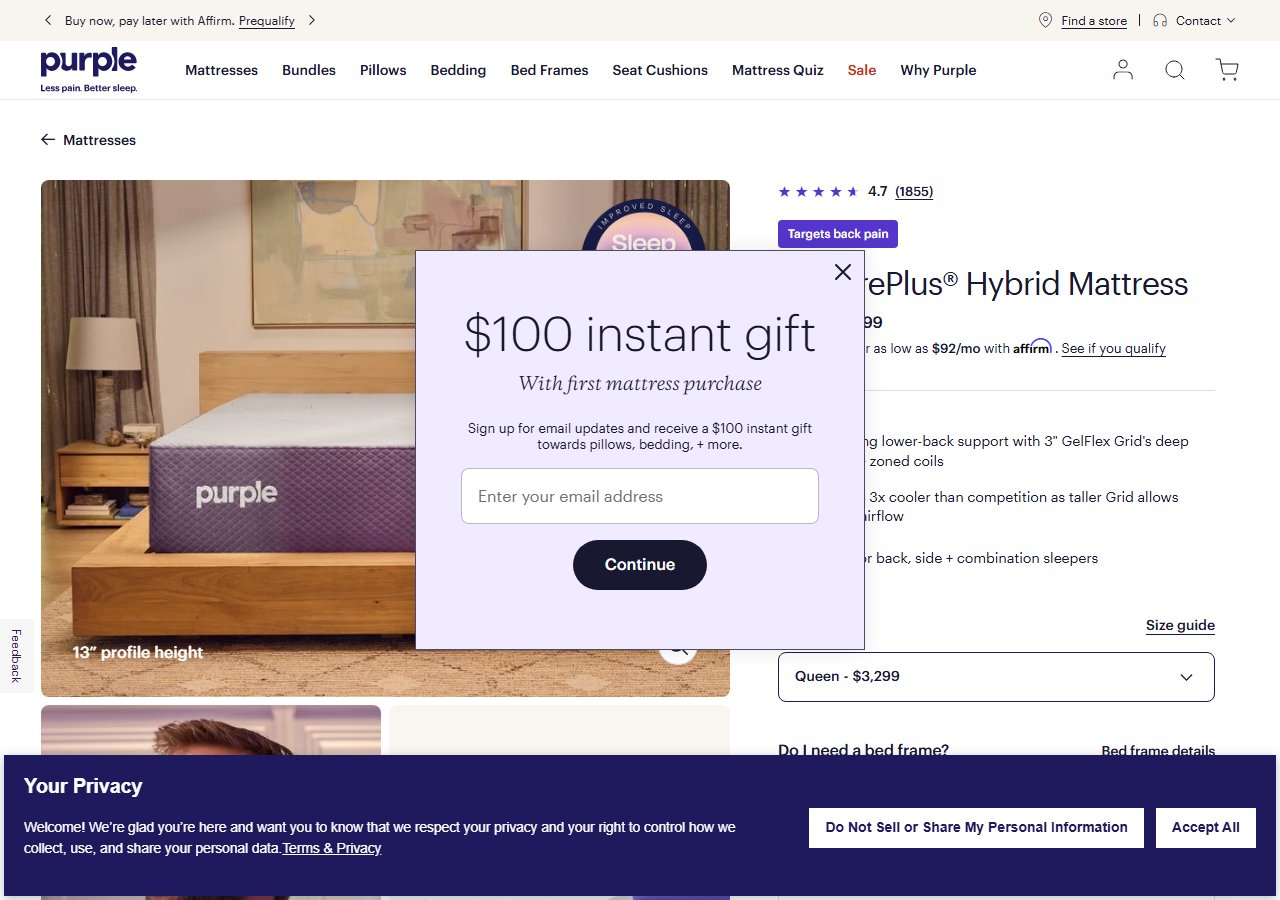
Purple Hybrid Premier Mattress
$2,499-$4,799
See Price at Purple →Putting the Data Together: A Framework for Back-Pain Sleepers
The federal data assembled in this article tells a coherent story. One in five Americans lives with chronic pain, with lower back as the most common site. Back injuries lead all body parts in workplace days-away-from-work data. Musculoskeletal disorders are the largest category of new SSA disability claims. AHRQ's cost data and CMS drug spending figures confirm the downstream financial burden. And 35% of American adults are already sleeping below the minimum threshold for chronic disease protection.
The intervention hierarchy is clear: position first, movement second, surface quality third, clinical care when red flags appear. A medium-firm mattress with adequate pressure relief and durable edge support is a legitimate clinical tool — but only after the free interventions have been genuinely applied. The 25% of adults with diagnosed arthritis and the millions whose backs bear the compounding load of industries with 3–5x elevated workers' compensation rates deserve evidence-based guidance, not affiliate-driven product rankings.
Use the interventions. Rule out red flags with a clinician. Then, if a sleep surface upgrade is genuinely indicated, choose based on your specific presentation: medium-firm memory foam for most chronic lumbar pain, heavy-duty construction for larger frames and occupationally loaded spines, pressure-grid technology for hip-and-shoulder-driven position compensations that pull the lumbar region out of alignment. The federal data points the way. The rest is application.
Frequently Asked Questions
Readers with chronic back pain ask sharply specific questions. The answers below are grounded in federal data and clinical evidence.