One in Five Americans Wakes Up in Pain — and Sleep Position Is Part of Why
Start with a number that federal health surveillance has been quietly tracking for years: approximately 20% of U.S. adults experience chronic pain, and within that group the lower back is the single most common site of persistent symptoms, according to CDC NCHS Data Brief 390. That is roughly 50 million people who go to bed every night with a spine that has already logged a full day of biomechanical insult — and then spend six to nine hours in a position that may be making things worse.
The problem is not simply that their backs hurt. It is that the relationship between sleep posture and spinal load is poorly understood by most patients and underemphasized in most clinical conversations. Lying flat is culturally treated as the neutral, restful default. The biomechanics say otherwise — particularly for anyone whose lumbar spine has been subjected to the kinds of occupational loading that federal data has been documenting for decades.
BLS Musculoskeletal Disorders data identifies the back as the most common body part injured across every major occupational category tracked — warehousing, healthcare, construction, transportation — measured by days away from work. These are not paper cuts. Musculoskeletal injuries to the back cost workers median recovery times of days or weeks, and for a significant portion they become chronic. The SSA Disability Insurance statistical reports show that musculoskeletal disorders represent the single largest category of new disability claims filed each year in the United States. And AHRQ's Healthcare Cost and Utilization Project consistently ranks back pain among the most expensive conditions in U.S. healthcare when total inpatient and outpatient costs are tallied.
The population most affected is not random. It clusters heavily around physically demanding occupations. The NIOSH Lifting Equation formally documents that manual material-handling tasks across warehousing, construction, and healthcare routinely exceed safe spinal loading thresholds. These are workers who spend eight to twelve hours per day compressing, shearing, and torquing lumbar structures — and then go home to sleep in whatever position their mattress and habits have trained them into.
For long-haul truck drivers, the calculus is even more precarious. FMCSA motor carrier safety data documents elevated rates of sleep disorders and fatigue-related impairment among commercial vehicle operators. The BLS Census of Fatal Occupational Injuries shows transportation and material-moving workers among the highest absolute fatality counts year after year, with fatigue cited as a contributing factor. These workers are not getting restorative sleep — and back pain is frequently part of why.
The Biomechanics of Why Lying Flat Loads a Damaged Lumbar Spine
To understand why sleep posture matters for back pain sufferers, it helps to understand what happens structurally when a compromised lumbar spine meets a mattress.
In healthy individuals, the lumbar spine maintains a natural lordotic curve — a gentle inward arch — that distributes compressive and shear forces across vertebral endplates and intervertebral discs. When you lie supine (flat on your back) on a moderately firm surface, that curve is partially preserved. But in individuals with disc degeneration, facet joint arthropathy, or paraspinal muscle inhibition from years of overloading, the story changes. The muscles that would normally support lumbar lordosis are either hypertrophied and tight or atrophied and weak. The discs may be desiccated, reducing their capacity to redistribute load. The posterior ligamentous system may be chronically strained.
In this context, lying completely flat can allow the lumbar spine to either hyper-extend (increasing posterior element compression on facet joints) or flatten excessively (increasing anterior disc pressure), depending on which failure mode dominates for that individual. Neither outcome is restorative.
The head-elevated, knee-elevated sleep posture — sometimes called the zero-gravity position in consumer adjustable bed marketing, more precisely described in clinical literature as a semi-Fowler variant — changes that equation. Elevating the head to roughly 20 to 30 degrees reduces the gravitational pull on thoracic and lumbar structures. Raising the knees simultaneously to approximately 15 to 20 degrees reduces hip flexor tension on the anterior lumbar spine and flattens the exaggerated lumbar curve that many chronic back pain sufferers develop as a compensatory pattern. The combined effect is a reduction in lumbar compressive load and a decrease in posterior element stress — which is why orthopedic and physiatry practices have recommended variations of this posture for decades.
For individuals who experience concurrent gastroesophageal reflux disease (GERD) — which is disproportionately common among people with chronic pain due to heavy NSAID use — head elevation above 30 degrees also reduces nocturnal acid exposure, a separate driver of sleep fragmentation that compounds pain-related insomnia.
Who Is Most Affected: The Occupational Overlap
Federal surveillance data makes the at-risk population unusually legible. If you are in one of the following occupational categories, the combination of daytime spinal loading and poor nighttime recovery is not a hypothetical — it is a well-documented pattern.
Warehouse and distribution workers face the most direct exposure. The NIOSH Lifting Equation was developed precisely because this population routinely lifts loads at frequencies and weights that exceed what the human lumbar spine can safely sustain indefinitely. Workers in this sector frequently report lower back pain as their primary musculoskeletal complaint, and the BLS MSD data confirms it by occupational category.
Healthcare workers — particularly nurses, nursing assistants, and surgical technicians — represent the second major cluster. Patient handling tasks (turning, transferring, repositioning) generate high lumbar torque and shear forces. HRSA Health Professional Shortage Area data shows that rural and shift-work-dominant healthcare employment zones overlap with elevated MSD rates, meaning the workers least able to access physical therapy or specialist care are also among the most exposed.
Long-haul truckers and commercial drivers carry a dual burden: extended seated posture with vibration exposure during the day, followed by sleep in cab bunks that are rarely optimized for lumbar support. The FMCSA fatigue data captures the sleep-disorder end of this equation; the BLS MSD data captures the injury end.
Construction workers experience both acute traumatic back injuries and cumulative overuse. The BLS Census of Fatal Occupational Injuries data shows this sector's disproportionate injury and fatality burden.
Across all these groups, CDC data shows approximately 35% of U.S. adults sleep fewer than 7 hours per night, a threshold linked to elevated chronic disease risk. Among manual laborers, that sleep deprivation is often driven by pain — creating a feedback loop in which inadequate sleep reduces pain tolerance, which worsens perceived pain, which further disrupts sleep.
Try These First: Free and Low-Cost Interventions Before Any Equipment Purchase
The cheapest intervention is the one that does not require buying anything. Evidence consistently shows that behavioral and positional changes can substantially reduce chronic back pain and improve sleep quality before any equipment purchase is justified. The following interventions are drawn from federal health agency guidance and should be attempted — honestly, with consistency — before evaluating any product.
Correct your sleep position first. The NIH National Institute of Arthritis and Musculoskeletal and Skin Diseases lists sleep posture as a primary modifiable factor in back pain management. Side-sleeping with a pillow positioned between the knees keeps the pelvis in a neutral position and reduces lumbar rotational load. Stomach-sleeping is the worst position for both back and neck pain and should be actively avoided. If you are a confirmed supine sleeper, placing a rolled towel or small pillow under the knees — mimicking the elevated knee posture that an adjustable base creates — is a zero-cost simulation.
Walk daily. AHRQ evidence reviews and NIH NCCIH low-back pain guidance consistently list walking as a first-line non-pharmacologic intervention for chronic low back pain. Thirty minutes of moderate-intensity walking on most days outperforms most passive interventions in meta-analyses, including many physical modalities. Walking maintains disc hydration via cyclic loading, reduces paraspinal muscle inhibition, and improves systemic inflammation markers. This is free and available to most chronic back pain sufferers.
Optimize your sleep environment. CDC sleep hygiene guidance recommends a bedroom temperature of 65 to 68 degrees Fahrenheit, blackout darkness, and no screens in the hour before bed. Sleep environment changes are free and have demonstrated effects on sleep efficiency that frequently outperform equipment upgrades. A person sleeping poorly in a hot, bright, screen-lit room at 72 degrees will not fully benefit from a $2,000 adjustable base.
Screen for sleep apnea before purchasing gear. Adjustable bases help with positional snoring and mild GERD-related sleep disruption, but they do not treat moderate-to-severe obstructive sleep apnea. NHLBI guidance is clear: anyone with loud snoring, witnessed apneic episodes, or significant daytime sleepiness should be evaluated with a sleep study before attributing all sleep problems to back pain or sleep position. An undiagnosed AHI of 25 will not be solved by a zero-gravity preset.
For readers who have genuinely worked through the above — who walk consistently, have corrected their sleep position, optimized their environment, and confirmed their sleep disruption is not primarily apnea-driven — and who still wake with worsened back pain or find that lying flat is simply not tolerable, equipment becomes a legitimate conversation. An adjustable base changes the ergonomic calculus of sleep in ways that a pillow under the knees only partially replicates. Motorized articulation allows precise, repeatable positioning that passive workarounds cannot match, particularly for individuals who shift positions during sleep and lose the benefit of any manual setup.
When to See a Clinician First
Before any sleep-position modification or equipment investment, certain presentations of back pain require professional evaluation. Not all back pain is mechanical, and some causes are time-sensitive.
NIH National Institute of Neurological Disorders and Stroke back pain guidance notes that most low back pain resolves in four to six weeks without imaging. However, the same guidance specifies that earlier clinical evaluation is warranted when pain radiates into a leg (suggesting nerve root compression or disc herniation), when back pain is accompanied by bowel or bladder dysfunction (a potential cauda equina emergency), when pain follows significant trauma, or when systemic symptoms like fever or unexplained weight loss are present. These are not situations where adjusting sleep position is an appropriate first response.
Chest pain or shortness of breath accompanying back pain should prompt immediate emergency evaluation, as these can signal aortic dissection or other vascular emergencies that present with back pain. Individuals over 50 with new-onset back pain and no prior history of injury warrant imaging earlier than younger adults, given elevated risk of vertebral fracture or malignancy. A motivated reader who has had back pain for years and knows exactly what it feels like can reasonably manage it with the interventions described here. A reader with a new, different, or rapidly worsening presentation should see a clinician before adjusting their sleep setup.
Where an Adjustable Base Actually Helps — and How to Choose One
For chronic mechanical back pain in individuals who have completed the free intervention sequence, an adjustable base can provide genuine therapeutic value through two primary mechanisms. First, the zero-gravity or semi-Fowler position (head elevated 20 to 30 degrees, knees elevated 15 to 20 degrees) distributes body weight across a larger surface area and reduces lumbar disc pressure compared to flat supine positioning. Second, head elevation above 30 degrees provides clinically meaningful reduction in nocturnal acid exposure for GERD patients, who represent a disproportionate share of chronic back pain sufferers given NSAID use patterns.
What distinguishes a functional adjustable base from a features-laden novelty is the quality of the motor system, the range of articulation, and long-term durability. FDA 510(k) Class II clearance data covers many adjustable bed mechanism patents and motorized base designs, providing federal-level engineering review of motor durability and pinch-point safety — a minimum baseline for any base under serious consideration.
For chronic back pain sufferers who want the most complete system — integrated mattress paired with an articulating base that is purpose-built for zero-gravity positioning — the Sven & Son Bliss Adjustable Bed Base-Frame with 14-inch Hybrid Spring Mattress is the flagship option in this category. The hybrid spring construction with medium-soft feel is specifically calibrated for the pressure-distribution requirements of zero-gravity posture — a mattress that is too firm will bridge across articulation points and defeat the purpose of the base, while one that is too soft will not provide adequate lumbar support in the elevated knee position. At $2,749.95, this is the combination purchase for someone who has confirmed that positional sleep modification is their primary management strategy.
For readers who already have or prefer to choose their own mattress separately, the Sven & Son Harmony Adjustable Bed Base at $2,194.95 provides the same articulation range and zero-gravity preset capability as the Bliss system in a standalone base format. The Harmony is the better choice for buyers who want precise positional control without committing to a bundled mattress, particularly useful for couples where one partner requires a specific mattress firmness for their own condition.
For readers who are earlier in their decision process or working with tighter budget constraints, the Sven & Son Classic Adjustable Bed Base at $1,994.95 provides the core functionality — head and foot articulation with zero-gravity positioning — without the additional features of the Harmony tier. It is the right entry point for someone who wants to validate whether positional sleep modification helps their specific back pain pattern before investing further.
All three Sven & Son options are available through Amazon, offering the familiar purchase and return infrastructure that direct purchases sometimes lack. Given that back pain presentations vary enough that what resolves one person's symptoms may not resolve another's, the ability to return a base that does not produce measurable improvement within a trial window matters.
Adjustable Bases for Chronic Back Pain Sufferers: Three Tiers Built for Lumbar Relief
These three Sven & Son adjustable bases were selected specifically for their zero-gravity articulation range, motor durability, and compatibility with the semi-Fowler sleep positioning that orthopedic and physiatry literature supports for chronic lumbar pain management.
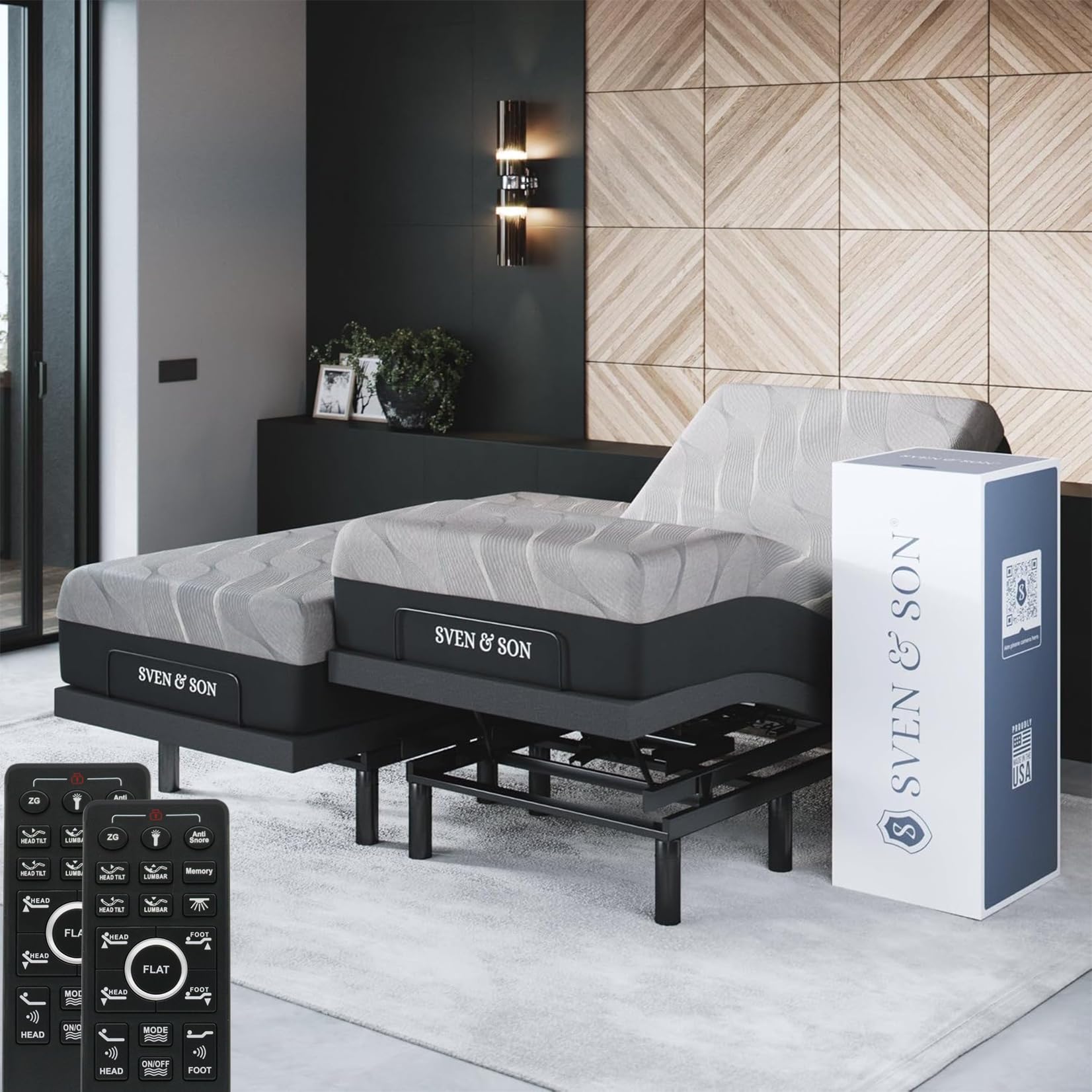
Sven & Son Bliss Adjustable Bed Base-Frame + 14 inch Hybrid Spring Matt (Medi...
$2,749.95
Check Price on Amazon →
Sven & Son Harmony Adjustable Bed Base, Head and Foot Lift, Massage, Under-Be...
$2,194.95
Check Price on Amazon →
Sven & Son Classic Adjustable Bed Base, Head and Foot Lift, Massage, Under-Be...
$1,994.95
Check Price on Amazon →Making the Decision: Data, Mechanism, and Honest Expectations
The federal data reviewed here tells a consistent story. Back pain is the most prevalent chronic pain condition in the United States. It is the leading cause of occupational injury by days away from work. It is the leading diagnostic category for new disability claims. It costs the U.S. healthcare system more by total expenditure than almost any other condition. And approximately one in three U.S. adults is not sleeping the seven hours per night that the evidence associates with chronic disease risk management — with back pain-related sleep disruption a significant driver of that deficit.
Sleep position is a legitimate, evidence-supported variable in managing chronic mechanical back pain. The zero-gravity posture that adjustable bases enable is not a marketing invention — it reflects real biomechanics, and orthopedic and physiatry literature has supported positional intervention for lumbar pain for decades. What that literature also supports is that positional intervention works best in combination with active rehabilitation, not as a replacement for it.
The honest framework is this: walk every day, fix your sleep environment, correct your sleep position with free tools first, rule out apnea, and see a clinician if any red flags are present. If you have done all of that and still wake with worse back pain than you went to bed with, an adjustable base is a legitimate next step — not a cure, but a meaningful mechanical intervention that federal engineering review standards have validated for safety, and that the biomechanical literature supports for lumbar load reduction. The Sven & Son lineup across its three tiers represents a reasonable entry point for that investment, with the Bliss combination system for buyers who want a complete integrated solution, the Harmony for those with existing mattresses, and the Classic for those validating the concept before committing at a higher price point.