One in Five American Adults Wakes Up in Pain — Federal Data Explains Why
According to CDC NHANES survey data, approximately 20% of U.S. adults experience chronic pain, and the lower back is the most common pain location by a wide margin. That is roughly 50 million people who start every morning negotiating with their own spine before they reach the coffee maker. The economic toll is staggering: AHRQ's HCUP database identifies back pain as one of the most expensive conditions in U.S. healthcare measured by total inpatient and outpatient cost, and AHRQ's Medical Expenditure Panel Survey shows that annual personal healthcare costs for adults with chronic back conditions substantially exceed costs for those without. Meanwhile, CMS drug spending data identifies opioid and non-opioid pain medications among the most expensive Medicare drug categories — a downstream reflection of how undertreated or mistreated chronic back pain becomes a pharmaceutical dependency.
This is not a niche problem for warehouse workers or aging athletes. It is a population-wide condition with occupational roots, biomechanical mechanisms, and — critically — modifiable risk factors that federal agencies have been documenting for decades. The question is whether the interventions match the scale of the problem.
Why Chronic Back Pain Happens: The Occupational and Biomechanical Mechanism
To understand why sleep surface matters at all for chronic lumbar conditions, you first need to understand how backs get damaged in the first place. The NIOSH Lifting Equation provides a precise biomechanical framework: manual material-handling tasks in warehousing, construction, and healthcare routinely exceed safe spinal loading limits. The lumbar spine is designed to handle compressive loads when it is in a neutral curve — the natural S-shape that distributes force evenly across vertebral endplates and intervertebral discs. When that curve is lost — whether through forward flexion under load, sustained sedentary posture, or hours of sleep in a spinal-twisting position — the loading becomes asymmetric. Asymmetric loading over months and years degrades disc integrity, irritates facet joints, and inflames the surrounding musculature.
BLS Musculoskeletal Disorder tracking confirms that the back is the most commonly injured body part across all U.S. occupations that result in days away from work. This is not random. Workers in physically demanding jobs spend eight or more hours per day imposing mechanical stress on the lumbar spine, then return home and spend another seven or eight hours sleeping on surfaces that may or may not support spinal neutrality during recovery. The cumulative effect is a spine that never fully decompresses.
SSA Disability Insurance data confirms the severity of this trajectory: musculoskeletal disorders are the largest single category of new disability claims in the United States annually. Approximately 25% of U.S. adults report doctor-diagnosed arthritis, with prevalence concentrated in occupations involving sustained physical demand — the same workers already carrying the highest musculoskeletal injury burden. Industries with high MSD incidence carry workers' compensation insurance rates 3–5 times higher than low-MSD industries, which means employers are also internalizing this cost through elevated insurance premiums — though rarely through upstream ergonomic investment.
The sleep connection is mechanistic, not speculative. During sleep, the intervertebral discs rehydrate through a process called imbibition — drawing in fluid from surrounding tissue when spinal loading decreases. This rehydration depends on the spine being in or near a neutral position. A mattress that is too soft allows the hips and shoulders to sink differentially, producing a hammock-like curve that reverses or flattens the lumbar lordosis. A mattress that is too firm pushes the hips and shoulders upward without contouring, creating pressure points at the greater trochanters and acromions that cause positional pain and frequent repositioning — neither of which allows disc rehydration to occur. The sweet spot is a surface that supports the pelvis, contours the shoulders and hips, and keeps the lumbar spine in its natural curve regardless of whether the sleeper is on their side, back, or — ideally — not on their stomach.
CDC sleep data adds another layer: approximately 35% of U.S. adults report sleeping fewer than 7 hours per night, the threshold associated with elevated chronic disease risk. For back pain sufferers, short sleep is a double penalty — it truncates disc rehydration time and elevates systemic inflammation markers that sensitize nociceptors, making pain feel worse the following day. The intervention hierarchy, therefore, starts with sleep duration and position, then addresses sleep surface.
Try These First — The Free Interventions Federal Agencies Actually Recommend
The cheapest intervention is the one that does not require buying anything. Before evaluating any mattress, back pain sufferers should audit the following behaviors, each grounded in federal health agency guidance.
Lift and move correctly. OSHA's ergonomics guidance is explicit: hinge at the hips, not the lumbar spine; keep loads close to the body's center of mass; avoid twisting under load. Most acute back episodes are mechanical and directly traceable to a single lifting event or a cumulative pattern of poor mechanics. The NIOSH Lifting Equation provides the engineering framework; OSHA translates it into worksite behavior. If your job involves repeated lifting and your back hurts, movement mechanics are the intervention to audit first.
Fix your sleep position before you fix your mattress. NIH guidance on back pain is direct: side-sleeping with a pillow between the knees, or back-sleeping with a pillow under the knees, maintains spinal neutrality through the night. Stomach-sleeping torques the lumbar spine and worsens chronic pain by forcing lumbar extension and cervical rotation simultaneously. A pillow between the knees costs under $20 and produces an immediate reduction in lumbopelvic rotation for side sleepers. This single positional change is worth trying for two to three weeks before spending $1,500 on a new mattress.
Walk every day. NIH NCCIH's evidence review on low back pain finds that walking 30 minutes most days reduces chronic low back pain as effectively as most non-drug clinical treatments. Walking activates the lumbar multifidus and erector spinae through their functional range, promotes disc nutrition through axial loading variation, and reduces the systemic inflammatory burden that amplifies pain signaling. It is free, has no side effects, and works.
Assess whether your current mattress has already failed. CDC sleep hygiene guidance notes that sleep environment is a modifiable determinant of sleep quality. A mattress older than 7 to 10 years, one with visible sag lines, or one that leaves you stiffer than when you went to bed is not performing its biomechanical function. Even the most expensive mattress on the market does not undo poor sleep hygiene or a sedentary lifestyle — but a mattress that has physically degraded is actively undermining your recovery every night.
For readers who have already made these adjustments — corrected their sleep position, committed to daily walking, confirmed their mattress is under 7 years old and shows no sag — and are still waking with significant lumbar stiffness or pain, the evidence supports evaluating the sleep surface itself. The firmness-and-support question is where mattress design genuinely intersects with spinal health.
When to See a Clinician: Red Flags That Require a Provider, Not a Product
NIH National Institute of Neurological Disorders and Stroke guidance identifies specific red flags that indicate back pain requires medical evaluation before any self-management strategy — including mattress selection. These are not edge cases. Pain that radiates below the knee suggests nerve root compression that can produce permanent deficits if left untreated. Back pain that follows trauma — a fall, a motor vehicle accident, a heavy lift — requires imaging to rule out fracture. Bowel or bladder changes alongside back pain indicate possible cauda equina syndrome, a surgical emergency. Fever with back pain suggests infectious etiology. Unexplained weight loss with back pain warrants cancer workup. Do not buy a new mattress for these symptoms. See a provider the same day or go to an emergency department.
For the much larger category of chronic mechanical low back pain — the kind that builds gradually, correlates with activity, worsens through the workday, and improves with rest — self-management supported by federal guidance is appropriate and evidence-supported. The distinction matters because it determines whether you are solving a biomechanical problem (modifiable with the interventions above and, potentially, a better sleep surface) or a pathological one that requires diagnosis first.
Where Mattress Design Intersects With Spinal Health
With the free interventions addressed and red flags ruled out, the evidence on sleep surface firmness and chronic lumbar pain points toward a specific design profile: medium-firm to firm support with pressure-relieving contouring at the shoulders and hips. The clinical logic is that medium-firm surfaces maintain lumbar lordosis for back sleepers and prevent excessive lumbopelvic drop for side sleepers, while contouring materials prevent the pressure point buildup that triggers positional shifting.
The three mattresses below were selected based on how their construction addresses the specific biomechanical failure modes described above — not ranked by price, brand recognition, or commission rate. Each addresses a slightly different sub-population of back pain sufferers.
For serious chronic back pain — including post-surgical and degenerative disc disease patients. The Saatva Loom & Leaf Memory Foam Mattress is Saatva's premium all-foam offering and is built around a 5-pound high-density memory foam layer that provides the slow-response contouring that distributes pressure across the lumbar region rather than concentrating it at bony prominences. Its Firm option (the firmness variant most relevant for chronic lumbar pain) maintains a stable support core that resists hip sinkage for side sleepers while providing enough surface compliance to accommodate shoulder pressure. The construction is relevant because high-density memory foam retains its support characteristics longer than low-density alternatives — meaning the firmness profile you buy in year one is still the firmness profile you have in year seven. For back pain sufferers who have gone through the diagnostic process and know they need sustained lumbar support through the night, this is the premium memory foam pick.
For workers with high BMI or occupational loading histories. The Saatva HD Mattress is engineered specifically for heavier body weights — up to 500 pounds per side — and for the kind of cumulative spinal loading that warehouse workers, construction laborers, and healthcare workers accumulate over careers. Standard mattresses are designed around a 150–200-pound occupant; heavier sleepers compress the comfort layers more rapidly, reaching the support core faster and losing the pressure relief that protects bony prominences. The Saatva HD uses a reinforced coil system and higher-density foam layers that maintain their support profile under greater sustained load. For the reader whose back pain is occupationally derived — who spends their workday doing tasks that the NIOSH Lifting Equation would flag as exceeding safe spinal loading limits — the HD's construction is directly relevant to their recovery needs.
For pressure-sensitive sleepers and side sleepers with hip or shoulder pain alongside lumbar pain. The Purple Hybrid Premier Mattress uses Purple's GelFlex Grid — a grid-structured polymer that behaves differently from both memory foam and latex. The grid collapses under concentrated pressure (shoulders, hips, knees) while remaining supportive under distributed pressure (the lumbar region, thighs). For side sleepers who experience simultaneous hip and lower back pain, this design addresses both failure modes: it reduces greater trochanter pressure that causes hip pain and provides lumbar support that prevents spinal drop. The hybrid construction — GelFlex Grid over a pocketed coil base — also provides better temperature regulation than all-foam alternatives, which matters for back pain sufferers who find that heat increases pain sensitivity through the night.
Mattresses Matched to Chronic Lumbar Pain Biomechanics
These three mattresses were selected based on how their construction addresses the specific spinal loading failure modes documented by NIOSH, AHRQ, and CDC data — not by brand popularity or price tier.

Saatva Loom & Leaf Memory Foam Mattress
$1,695-$3,295
See Price at Saatva →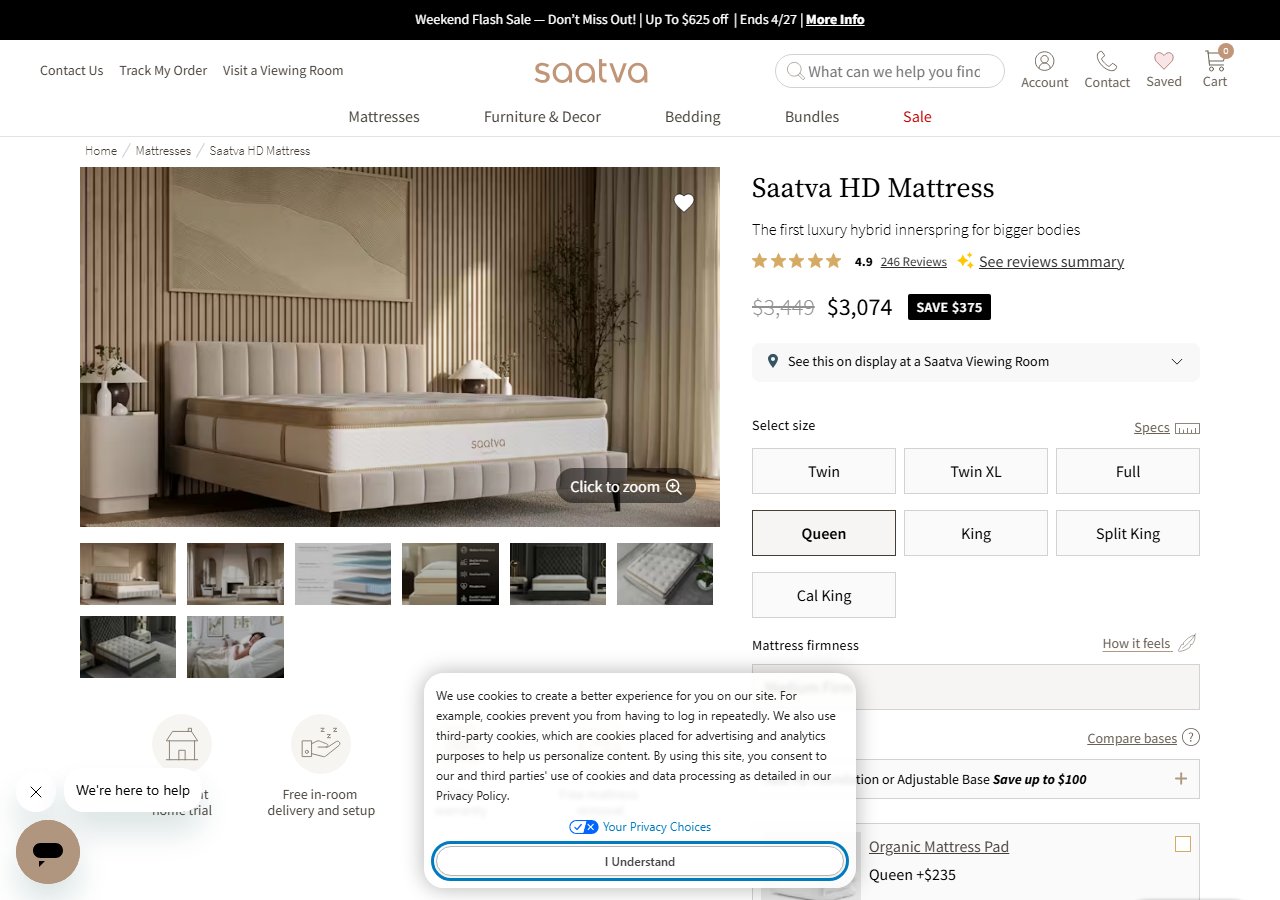
Saatva HD Mattress (Heavy-Duty)
$2,395-$3,995
See Price at Saatva →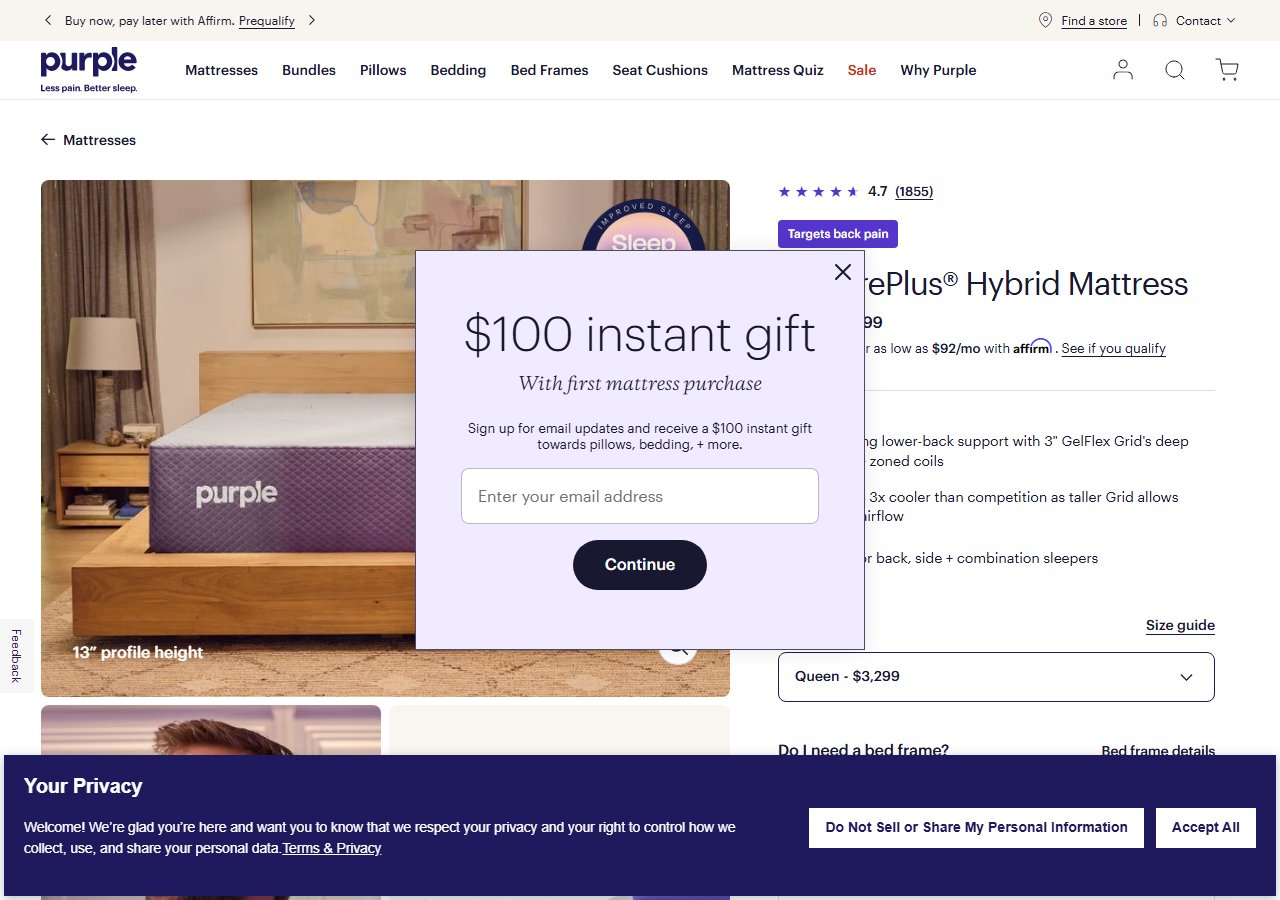
Purple Hybrid Premier Mattress
$2,499-$4,799
See Price at Purple →Putting the Data Hierarchy Together
The federal data on chronic back pain tells a coherent story that the healthcare system often fragments across specialties. CDC NHANES data documents that 20% of adults are living with the condition. AHRQ HCUP data shows how expensive it becomes when it escalates. NIOSH's Lifting Equation explains the occupational mechanism. NIH NCCIH's evidence review identifies the interventions with the strongest evidence base. And SSA disability data shows where the trajectory leads when none of it gets addressed.
The intervention hierarchy that emerges from this data is not complicated: fix mechanics and movement first, correct sleep position second, confirm your existing mattress has not physically failed third, see a clinician if any red flags are present, and then — if all of those are addressed and lumbar pain persists through the night — evaluate a sleep surface whose construction is matched to your body weight, sleep position, and pain pattern. A mattress is not a treatment. It is a recovery environment. The quality of that environment matters, but only after the upstream variables are controlled.
For readers who have done the work and need a better recovery environment, the three options above represent the best-matched constructions available at their price points. The Saatva Loom & Leaf for sustained lumbar support in a premium memory foam construction. The Saatva HD for occupationally loaded bodies at higher weights. The Purple Hybrid Premier for pressure-sensitive side sleepers managing simultaneous hip and lumbar pain. None of them are magic. All of them are well-matched to specific, federally documented biomechanical problems that back pain sufferers actually have.