One in Five Americans Wakes Up in Pain — and the Federal Numbers Are Stark
CDC NCHS Data Brief 390 estimates that approximately 20% of U.S. adults experience chronic pain, with lower back pain as the most commonly reported site. That is not a rounding error. It means roughly 65 million Americans go to bed every night knowing they will likely wake up hurting. Many of them spend hours searching for the right mattress, the right pillow, the right position — but the federal data tells a more complicated story than any product review will acknowledge.
AHRQ HCUP data identifies back pain as one of the most expensive conditions in the U.S. healthcare system by total inpatient and outpatient spending. AHRQ's Medical Expenditure Panel Survey (MEPS) shows that adults with chronic back conditions carry substantially higher annual personal healthcare costs than those without. CMS drug spending data flags opioid and non-opioid pain medications among the most expensive Medicare drug categories — a direct downstream consequence of undertreated or mismanaged chronic back pain. And SSA Disability Insurance reports consistently identify musculoskeletal disorders as the single largest category of new disability claims each year. This is a public health crisis with a price tag, and a mattress — however well-designed — is one variable among many.
This article follows the evidence hierarchy that federal agencies themselves use: mechanism first, free interventions second, clinical red flags third, equipment last.
Why Chronic Back Pain Gets Worse at Night — the Biomechanics
Your spine spends approximately one-third of its life horizontal. During those hours, every structural inadequacy in your sleep surface either loads your lumbar discs asymmetrically or leaves them unsupported entirely. The intervertebral discs — the gel-filled shock absorbers between your vertebral bodies — rehydrate during sleep, drawing in fluid when compressive load is removed. That rehydration process depends on a neutral spinal curve being maintained throughout the night. When it is not — because your mattress sags in the middle, because you are a stomach sleeper, or because a too-soft surface lets your pelvis drop and your lumbar spine flex — you wake stiffer than you went to bed and the disc rehydration cycle is incomplete.
The BLS Musculoskeletal Disorders by Occupation data makes the occupational context explicit: the back is the most commonly injured body part across all U.S. occupations associated with days away from work. Workers in warehousing, construction, and healthcare — the same populations the NIOSH Lifting Equation documents as routinely exceeding safe spinal loading limits during manual material-handling tasks — arrive home with cumulative compressive load already banked in their spines. Their sleep surface is not optional recovery equipment. It is the primary environment in which their spine either repairs or continues to degrade.
CDC Arthritis data notes that approximately 25% of U.S. adults report doctor-diagnosed arthritis, with the highest prevalence in physically demanding occupations. Arthritis-related facet joint inflammation is often worst during prolonged inactivity — meaning the 7-to-8 hours of sleep that should be restorative can instead become the period of maximum morning stiffness if the sleep surface allows the spine to drift out of neutral alignment.
The mechanism is not mysterious. It is mechanical. A surface that is too soft allows the heavier pelvis to sink faster than the lighter lumbar spine, creating a lateral flexion curve that holds the facet joints in a compressed, inflamed position for hours. A surface that is too firm creates pressure-point loading at the greater trochanter and shoulder in side-sleepers, causing compensatory positional shifting that interrupts sleep architecture. The research consensus — supported by NIH guidance — points toward medium-firm surfaces for most back pain sufferers, with the specific firmness depending on body weight, sleep position, and the underlying pain etiology.
CDC sleep data compounds this: approximately 35% of U.S. adults already sleep less than 7 hours per night, the threshold below which chronic disease risk rises substantially. Back pain is both a cause and a consequence of short sleep — pain fragments sleep architecture, and poor sleep amplifies pain perception through inflammatory cytokine pathways. The person with chronic low back pain who is also sleeping 5-6 hours per night on a sagging mattress is caught in a documented physiological loop.
BLS Employer Costs for Employee Compensation data provides the macro-economic signal: industries with high musculoskeletal disorder incidence carry workers' compensation insurance rates 3 to 5 times higher than low-MSD industries. The individual worker absorbs the pain. The employer absorbs the insurance cost. Neither outcome is inevitable.
Try These First — The Federal Evidence Base for Non-Product Interventions
The cheapest intervention is the one that does not require buying anything. Before any discussion of mattresses, federal health agencies are remarkably consistent on what works for chronic low back pain — and several of those interventions are free or near-free. The evidence base here is not anecdotal; it comes from systematic reviews cited by NIH, NIOSH, and OSHA.
Sleep position is the single biggest free variable available to a chronic back pain sufferer tonight. NIH National Institute of Arthritis and Musculoskeletal and Skin Diseases guidance recommends side-sleeping with a pillow between the knees or back-sleeping with a pillow under the knees to maintain lumbar neutral. Stomach-sleeping torques the lumbar spine and forces the cervical spine into sustained rotation — it is mechanically the worst sleep position for chronic low back conditions, and changing it costs nothing.
Daily walking is backed by a more robust evidence base than most people expect. The NIH NCCIH Low-Back Pain In Depth review documents that walking 30 minutes most days reduces chronic low back pain as effectively as most non-drug clinical treatments. This finding is consistent across multiple systematic reviews. A new mattress helps, but movement remains the dominant lever for chronic pain modulation.
Evaluating your current mattress honestly is the third intervention. CDC Sleep Hygiene guidance and sleep science consensus suggest replacing a mattress when it shows visible sag, when you wake stiffer than you went to bed consistently, or when it has exceeded 7-to-10 years of use. Even the most expensive mattress does not compensate for sedentary days, poor sleep hygiene, or the absence of movement.
Lifting and bending mechanics deserve mention here because most acute back episodes are mechanical — and rehearsable. OSHA's Ergonomics Solutions guidance recommends hinging at the hips rather than the lumbar spine, keeping loads close to the body, and avoiding twisting under load. Workers who routinely exceed the thresholds documented by the NIOSH Lifting Equation are not just at risk at work. They carry that cumulative spinal load home.
Many readers will have already tried the interventions above — changed their sleep position, started walking, replaced a sagging mattress. For those who have done all of that and are still waking up in pain on a serviceable surface, the quality of the sleep surface itself becomes a legitimate clinical variable. The research on mattress firmness and chronic back pain is more nuanced than manufacturer marketing suggests, which is why the product section of this article focuses on specific construction features that map to documented biomechanical needs rather than on brand claims alone.
When to See a Clinician Before Anything Else
Not all back pain is mechanical. Some presentations require imaging, referral, or urgent evaluation — and no mattress purchase is appropriate until those are ruled out. NIH National Institute of Neurological Disorders and Stroke back pain guidance is explicit about the red flags that should prompt prompt clinical evaluation rather than self-management. If you recognize any of the following in your own presentation, the appropriate next step is a clinician — not a new sleep surface.
The broader clinical context matters here. Back pain that is managed well at the primary care level typically resolves faster and costs less than back pain that spirals into specialist visits, imaging, and medication escalation. AHRQ MEPS data documents the cost differential starkly — chronic back condition patients carry substantially higher annual healthcare expenditures than those without such conditions. Early, appropriate clinical evaluation is not an expense; it is cost avoidance.
Where Sleep Surface Construction Actually Matters
For back pain sufferers who have addressed sleep position, movement, and lifestyle variables and are still experiencing nocturnal and morning pain on a mattress that is either too old, too soft, or structurally inadequate for their body weight, the sleep surface is a legitimate clinical variable. The research on this is more precise than "firm is better." A 2015 study in The Lancet found medium-firm mattresses produced better outcomes for chronic non-specific low back pain than firm mattresses. Systematic reviews published in Sleep Health and the Journal of Orthopedic Research have reinforced the medium-firm finding, with the caveat that body mass and sleep position modulate the optimal firmness level significantly.
What does that mean in practice? A 130-pound side-sleeper needs more surface give at the shoulder and hip than a 230-pound back-sleeper. A person with lumbar disc herniation needs different zoned support than a person with facet joint arthritis. The intervention is not "buy a firm mattress." The intervention is "buy a mattress with the right firmness and zoned support architecture for your specific body and sleep position."
Three products merit discussion here, each addressing a different profile of the back pain sufferer reader.
Saatva Loom & Leaf — For Serious Lumbar Conditions in the Middle Weight Range
The Saatva Loom & Leaf Memory Foam Mattress is the most relevant pick for back pain sufferers who have been prescribed or advised toward memory foam by a physical therapist or clinician. Available in Relaxed Firm and Firm configurations, the Loom & Leaf uses a dual-layer memory foam system with a gel-infused top layer for temperature regulation and a high-density base layer that resists the progressive compression that causes older foam mattresses to develop the hip-sinking sag responsible for morning lumbar pain. The organic cotton cover and the spinal zone quilting panel — which adds targeted lumbar support — address the documented need for neutral spinal alignment during the disc rehydration phase of sleep.
At $1,695 to $3,295 depending on size, this is not an impulse purchase. But in the context of AHRQ HCUP's documentation of back pain as one of the most expensive conditions in U.S. healthcare, a mattress that reduces morning pain, improves sleep continuity, and supports the disc rehydration cycle is defensible as a healthcare-adjacent expenditure — especially for adults who are already carrying the substantial annual healthcare costs that AHRQ MEPS data associates with chronic back conditions.
Saatva HD — For Workers with High Body Mass and Occupational Loading History
The back pain population is not monolithic. The NIOSH Lifting Equation documentation of routine spinal overloading in warehousing, construction, and healthcare describes workers who are often also carrying higher body mass — and who need a sleep surface engineered for that combination of occupational load history and body weight. Standard mattresses, even firm ones, are not typically engineered for sustained high-mass use. They compress unevenly, develop sag patterns that mirror the user's heaviest body regions, and within 2-3 years can no longer maintain the surface geometry necessary for lumbar neutral alignment.
The Saatva HD Mattress is specifically engineered for users up to 500 pounds per side, with a 3-inch AirCradle comfort layer, 12.5-gauge tempered steel coils, and a high-density foam encasement designed to prevent perimeter compression. For the warehouse worker or construction professional whose BLS data confirms is already statistically the most back-injured worker in the U.S. economy, and who weighs 250 pounds or more, the Saatva HD addresses a structural engineering problem that medium-weight mattresses simply cannot solve. Priced at $2,395 to $3,995, it is the most expensive option in this list — and the one most specifically justified by occupational and anthropometric need.
Purple Hybrid Premier — For Pressure Relief as the Primary Complaint
Not all back pain sufferers have the same primary complaint. For back pain sufferers whose dominant issue is pressure-point loading — people who shift position repeatedly during the night because no position stays comfortable, who wake with hip or shoulder pain that then feeds into back pain, or who have been diagnosed with conditions like fibromyalgia alongside their lumbar diagnosis — the Purple Hybrid Premier Mattress addresses a different problem than either Saatva pick.
Purple's proprietary GelFlex Grid replaces traditional foam comfort layers with a hyper-elastic polymer grid that collapses under pressure points while remaining supportive under lighter body regions. The physics here are distinct from foam: the grid does not compress progressively across the full surface. It selectively yields at high-pressure zones — hips and shoulders — while maintaining lift under the lumbar region. For a side-sleeper with lumbar and hip pain, that selective yield is the feature that makes the mattress worth discussing. The Hybrid Premier version, priced at $2,499 to $4,799, adds a pocketed coil base layer for edge support and motion isolation that the all-grid Purple models lack.
Sleep Surfaces Matched to Chronic Back Pain Profiles — by Body Type and Pain Etiology
These three mattresses were selected because each addresses a distinct mechanical profile documented in the federal back pain data — medium-weight back pain sufferers, high-mass occupational workers, and pressure-point-dominant pain presentations — not because they carry the most prominent marketing budgets.

Saatva Loom & Leaf Memory Foam Mattress
$1,695-$3,295
See Price at Saatva →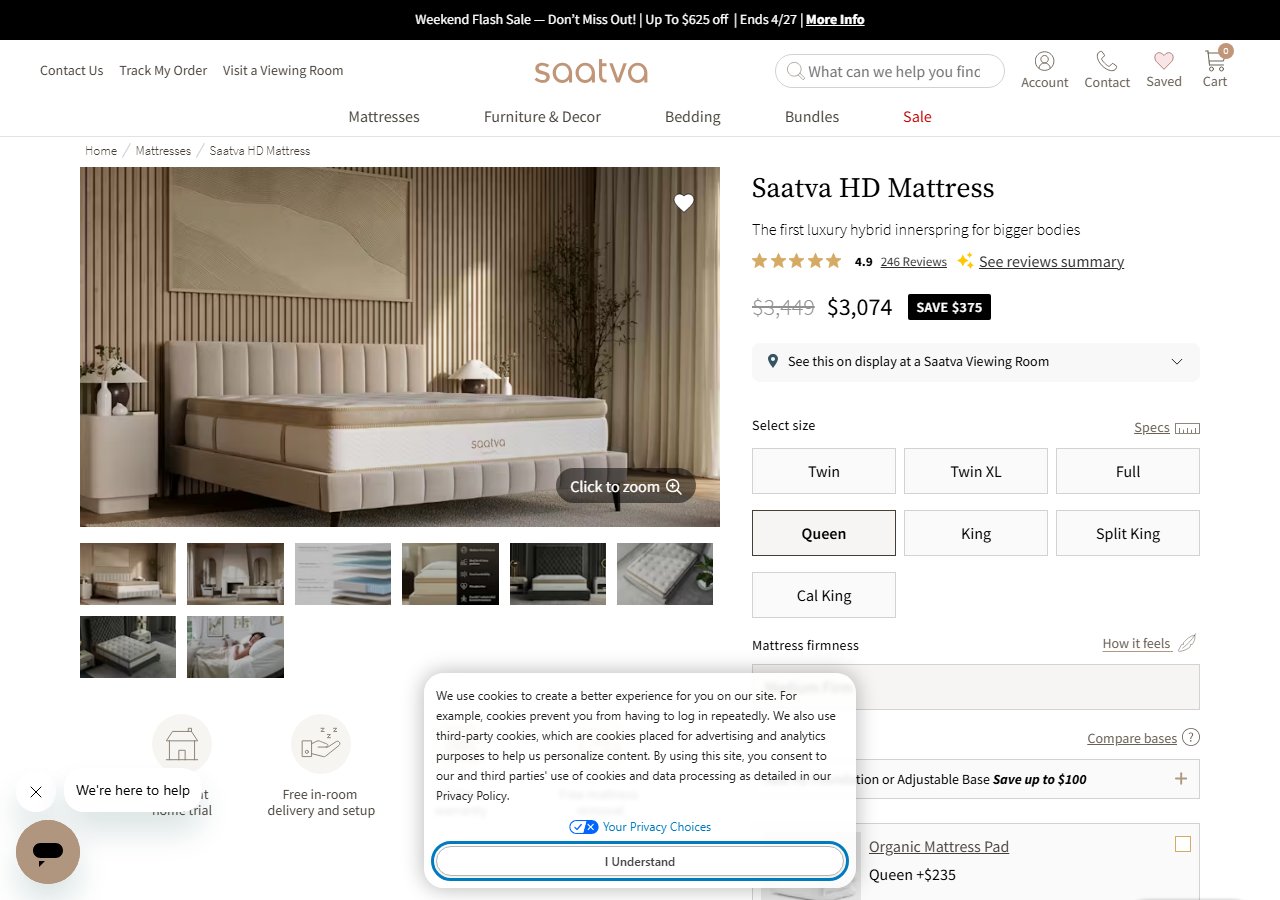
Saatva HD Mattress (Heavy-Duty)
$2,395-$3,995
See Price at Saatva →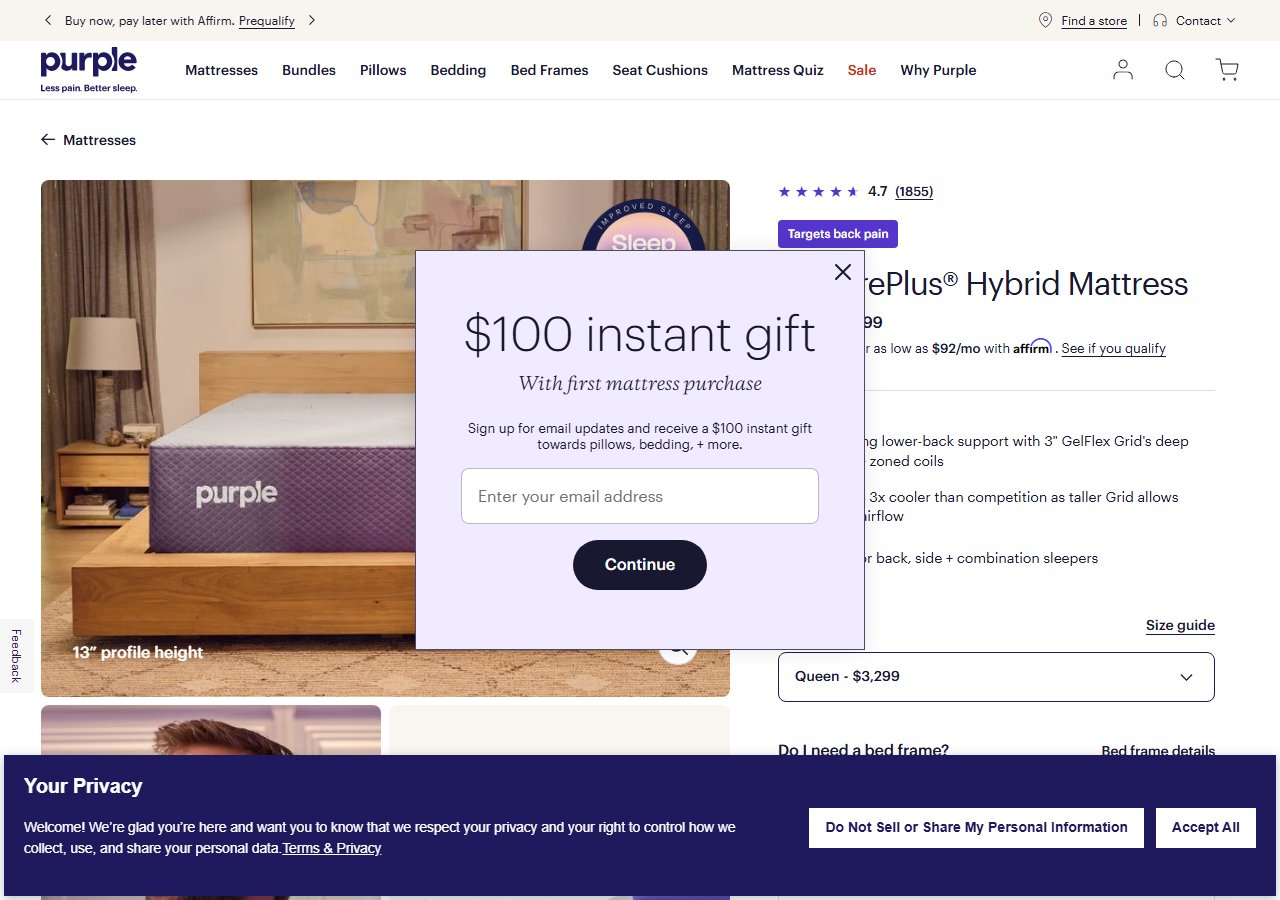
Purple Hybrid Premier Mattress
$2,499-$4,799
See Price at Purple →What the Federal Data Is Actually Saying
Taken together, the CDC, AHRQ, BLS, NIOSH, SSA, and CMS datasets converge on an uncomfortable truth: chronic back pain is undertreated, outrageously expensive, functionally disabling for millions, and driven in large part by occupational exposures that most workers cannot simply opt out of. SSA Disability Insurance data documents musculoskeletal disorders as the largest single category of new disability claims each year — the end-stage of a continuum that often started with a warehouse lift, a construction twist, or a nursing shift that never fully recovered.
The role of sleep surface in that continuum is real but limited. A well-matched mattress — the right firmness for body weight and sleep position, the right construction for occupational load history — cannot undo the cumulative spinal loading documented by the NIOSH Lifting Equation. It cannot replace the walking program that NIH NCCIH evidence reviews support as the most effective non-drug intervention for chronic low back pain. It cannot substitute for the clinical evaluation that NIH NINDS guidelines recommend when red flags are present.
What it can do is stop the nocturnal phase of the pain cycle from adding to the daytime damage. For 65 million Americans with chronic back pain, that is not nothing. But it requires choosing the right surface for the right reasons — not the most marketed surface, not the most expensive surface, and not a new surface when the existing one is structurally adequate and the problem is actually sleep position, movement deficit, or an unexamined clinical presentation.
The evidence hierarchy is: position first, movement second, clinical evaluation when indicated, equipment when the other variables are optimized. Federal data supports every step of that sequence. The mattress industry does not advertise any step except the last one. That gap is what this article was written to close.