One in Five Americans Wakes Up in Pain — Federal Data Explains Why
CDC NCHS Data Brief 390 puts a precise number on what millions of Americans already know from lived experience: roughly 20% of U.S. adults report chronic pain, and the lower back is the most commonly affected body region by a wide margin. That is approximately 65 million people navigating their days — and their nights — around a structure that was never designed for the sitting, sustained lifting, and sedentary recovery periods that define modern American work.
The scale of this problem extends well beyond individual discomfort. AHRQ HCUP data identifies back pain as one of the most expensive conditions in U.S. healthcare by total inpatient and outpatient cost. AHRQ MEPS data reinforces that finding at the household level: adults with chronic back conditions spend substantially more out-of-pocket on personal healthcare each year than adults without such conditions. SSA Disability Insurance data goes further, identifying musculoskeletal disorders — led by back conditions — as the largest single category of new disability claims filed annually in the United States. These are not abstract epidemiological numbers. They describe what happens when chronic lumbar pain goes unmanaged across working years.
And the sleep connection is direct. CDC sleep surveillance data shows that approximately 35% of U.S. adults already sleep fewer than 7 hours per night — the threshold below which chronic disease risk elevates across multiple body systems. Back pain and poor sleep form a reinforcing loop that federal data has documented repeatedly: pain interrupts sleep architecture; disrupted sleep impairs the tissue repair that happens during deep slow-wave stages; impaired repair worsens pain sensitivity the following day. Breaking that loop requires understanding why it forms.
Why Chronic Back Pain Gets Worse at Night: The Biomechanical Mechanism
The lumbar spine — the five vertebrae between the ribcage and the pelvis — bears the largest compressive and shear loads in the human body during waking hours. It is also the region most dependent on passive support during sleep, because the muscles that stabilize it during the day go off-duty when you lie down. What replaces those muscles is your sleep surface.
When a sleep surface fails to maintain the lumbar spine in a neutral position — neither excessively flexed nor hyperextended — one of two mechanical failure modes emerges. A surface that is too soft allows the pelvis and shoulders to sink disproportionately, pushing the lumbar spine into flexion. A surface that is too firm bridges the pelvis and shoulders without filling the lumbar curve, leaving that curve unsupported and forcing the muscles to hold tension all night rather than recover. Both scenarios produce the hallmark symptom most chronic back pain sufferers recognize immediately: waking up stiffer than you went to bed.
BLS Musculoskeletal Disorders by Occupation data documents that the back is the most commonly injured body part across all U.S. occupations with days away from work. The NIOSH Lifting Equation documents that manual material-handling tasks across warehousing, construction, and healthcare routinely exceed safe spinal loading limits — meaning many chronic back pain sufferers arrive at their mattress each night carrying cumulative mechanical debt from their workday. The sleep surface is then the only passive recovery tool available for the next six to eight hours.
Occupational context matters here. Workers in physically demanding jobs — warehouse associates, construction laborers, nurses, home health aides — are absorbing compressive spinal loads throughout their shifts that far exceed what sedentary office workers experience. BLS data also shows that industries with high musculoskeletal disorder incidence carry workers' compensation insurance rates 3 to 5 times higher than low-MSD industries, a figure that captures the aggregate cost of inadequate spinal load management over careers. For these workers especially, the sleep surface is not a luxury item — it is occupational recovery infrastructure.
Complicating the picture is the relationship between chronic pain and arthritis. CDC Arthritis Data indicates that approximately 25% of U.S. adults report doctor-diagnosed arthritis, with prevalence concentrated in occupations involving sustained physical demand — the same populations most likely to present with overlapping lumbar spine degeneration. For these readers, firmness preference is not merely comfort-driven; it reflects underlying structural changes in the facet joints and intervertebral discs that alter how spinal loads distribute across a surface.
The financial weight of unmanaged back pain compounds over time. CMS Drug Spending Dashboard data identifies opioid and non-opioid pain medication spending among the most expensive Medicare drug categories — a spending pattern that reflects decades of undertreated chronic pain reaching the Medicare-eligible population. Prevention and early mechanical management are not just clinically preferable; they are substantially cheaper for both individuals and the healthcare system.
Try These First: Free Interventions Before Any Purchase
The cheapest intervention is always the one that does not require buying anything. Federal health agencies have published robust, evidence-based guidance on the non-product levers for chronic back pain — and those levers should be pulled before a single dollar is spent on new sleep equipment.
The single highest-leverage free variable is sleep position. NIH National Institute of Arthritis and Musculoskeletal and Skin Diseases guidance is explicit: side-sleeping with a pillow between the knees, or back-sleeping with a pillow under the knees, keeps the lumbar spine in a neutral position and reduces overnight compressive load on the discs. Stomach-sleeping, by contrast, forces the lumbar spine into hyperextension and rotates the cervical spine — a posture that chronically worsens lumbar and neck pain. No mattress can compensate for consistent stomach-sleeping. If you have been sleeping prone for years and your back hurts, position change is the intervention to attempt first.
Movement — specifically walking — is the second free intervention and arguably the most underutilized. NIH NCCIH's evidence review on low-back pain concludes that walking 30 minutes on most days reduces chronic low back pain as effectively as most non-drug clinical treatments. This finding is counterintuitive for many sufferers who equate movement with pain exacerbation, but the mechanism is well-established: walking activates the multifidus and transversospinalis muscles that stabilize the lumbar spine, increases disc nutrient exchange through cyclical loading and unloading, and reduces the central sensitization that amplifies pain perception after prolonged inactivity.
Lifting and bending mechanics represent the third free lever, particularly for workers in physically demanding occupations. OSHA Ergonomics guidance recommends hinging at the hips rather than the lumbar spine, keeping loads close to the body, and eliminating twisting under load. Most acute back episodes are mechanically rehearsable — meaning they are the product of practiced bad movement patterns that can be un-practiced with deliberate attention and, if needed, brief coaching from an occupational or physical therapist.
Finally, mattress replacement criteria matter more than mattress brand. CDC Sleep Hygiene guidance frames the sleep environment as a modifiable chronic disease risk factor — but the modification that matters is replacing a mattress with visible sag, a mattress that produces stiffness worse than pre-sleep baseline, or a mattress older than 7 to 10 years. No premium mattress on the market can overcome poor sleep hygiene or a sedentary daytime routine.
For readers who have already addressed position, movement, lifting mechanics, and mattress age — and who are still waking up in pain — the sleep surface itself becomes the logical next variable. Not all mattresses perform equivalently for chronic lumbar conditions, and the construction details that matter are specific enough to warrant examination.
When to See a Clinician Before Buying Anything
Back pain is common, but it is not always mechanical. NIH National Institute of Neurological Disorders and Stroke guidance on back pain is unambiguous about the symptoms that require prompt clinical evaluation rather than a new mattress: pain that radiates below the knee, pain that followed a traumatic event, pain accompanied by leg weakness or numbness, pain with bowel or bladder changes, and pain accompanied by fever. These presentations suggest nerve root compression, cauda equina syndrome, infection, or fracture — none of which respond to mattress firmness adjustments and all of which can worsen with delayed imaging.
The broader clinical context matters too. If back pain has been present for more than six weeks without improvement, if it wakes you from sleep consistently (as opposed to causing stiffness on waking), or if it is associated with unexplained weight loss, those are additional referral criteria recognized in clinical guidelines. AHRQ MEPS data documents that adults with chronic back conditions spend significantly more on healthcare than their peers — but that spending gap is far smaller when conditions are identified early. A clinical evaluation is the highest-value first step for any back pain presentation that fits the red-flag criteria listed above.
Where Sleep Surface Construction Actually Matters
For readers who have ruled out red-flag symptoms, addressed sleep position and movement habits, and are sleeping on a mattress that is visibly deteriorating or past its service life, the evidence does support specific mattress construction choices for chronic lumbar pain. The operative variables are spinal alignment support, pressure relief at the shoulders and hips (which determines whether the lumbar curve is bridged or filled), and thermal regulation (because heat retention disrupts sleep architecture in ways that impair the tissue recovery that chronic pain sufferers need most).
Memory foam has the strongest evidence base for pressure redistribution in chronic pain populations. Viscoelastic foam conforms to body contours more precisely than innerspring or latex, filling the lumbar curve rather than bridging it. The tradeoff historically has been heat retention — an issue that modern gel-infused and breathable memory foam designs have partially addressed. For serious chronic back pain sufferers who are primarily side or back sleepers, a high-quality memory foam mattress is the construction to evaluate first.
The Saatva Loom & Leaf Memory Foam Mattress is the premium memory foam recommendation in this analysis. It uses a multi-layer construction with gel-infused memory foam over a supportive foam base, specifically engineered to provide lumbar zone support — a firmer region directly beneath the lower back that prevents the pelvic sinking that leads to overnight lumbar flexion. The Loom & Leaf is available in Relaxed Firm and Firm configurations, making it appropriate for the majority of chronic back pain sufferers who need support over plushness. Saatva also delivers and sets up the mattress in your home rather than leaving it compressed in a box, which matters for buyers who need to assess the feel immediately rather than waiting through a break-in period.
For physically larger readers or those in occupationally demanding jobs — warehouse workers, construction laborers, healthcare workers — standard mattress weight limits and zoning designs may not provide adequate support. The Saatva HD Mattress addresses this directly. Engineered specifically for heavy-duty use, the Saatva HD uses a dual-tempered steel coil system with reinforced edge support and a higher weight capacity than most consumer mattresses on the market. For the warehouse worker absorbing compressive spinal loads all shift and sleeping at the upper end of standard weight ranges, this construction distinction is not marketing language — it is the difference between a mattress that maintains its support profile for a decade and one that develops premature sag within two years. Given that BLS and NIOSH data both document the elevated spinal loading these workers experience, the HD's reinforced construction addresses a real mechanical need.
For readers whose primary complaint is pressure at the hips and shoulders rather than lumbar sag — a pattern more common in side sleepers and those with hip arthritis — a grid-based or hybrid design may outperform standard memory foam. The Purple Hybrid Premier Mattress uses Purple's GelFlex Grid technology, a hyper-elastic polymer grid that provides dynamic pressure relief by collapsing under pressure points (hips, shoulders) while remaining firm in lower-pressure zones (lumbar region). This means the grid provides pressure relief where the body projects force and support where it does not — a mechanical behavior that is distinct from uniform-firmness memory foam. The Purple Hybrid Premier also runs cooler than gel-infused memory foam in most independent thermal assessments, which benefits the roughly 35% of U.S. adults who are already sleeping fewer than 7 hours per night and who cannot afford additional sleep disruption from heat retention.
Mattresses Engineered for Chronic Lumbar Recovery — Backed by Federal Data
These three mattresses were selected based on construction characteristics that directly address the biomechanical failure modes documented in CDC, NIOSH, and BLS back-pain research — zoned lumbar support, pressure redistribution, and durability under high-load occupational use patterns.

Saatva Loom & Leaf Memory Foam Mattress
$1,695-$3,295
See Price at Saatva →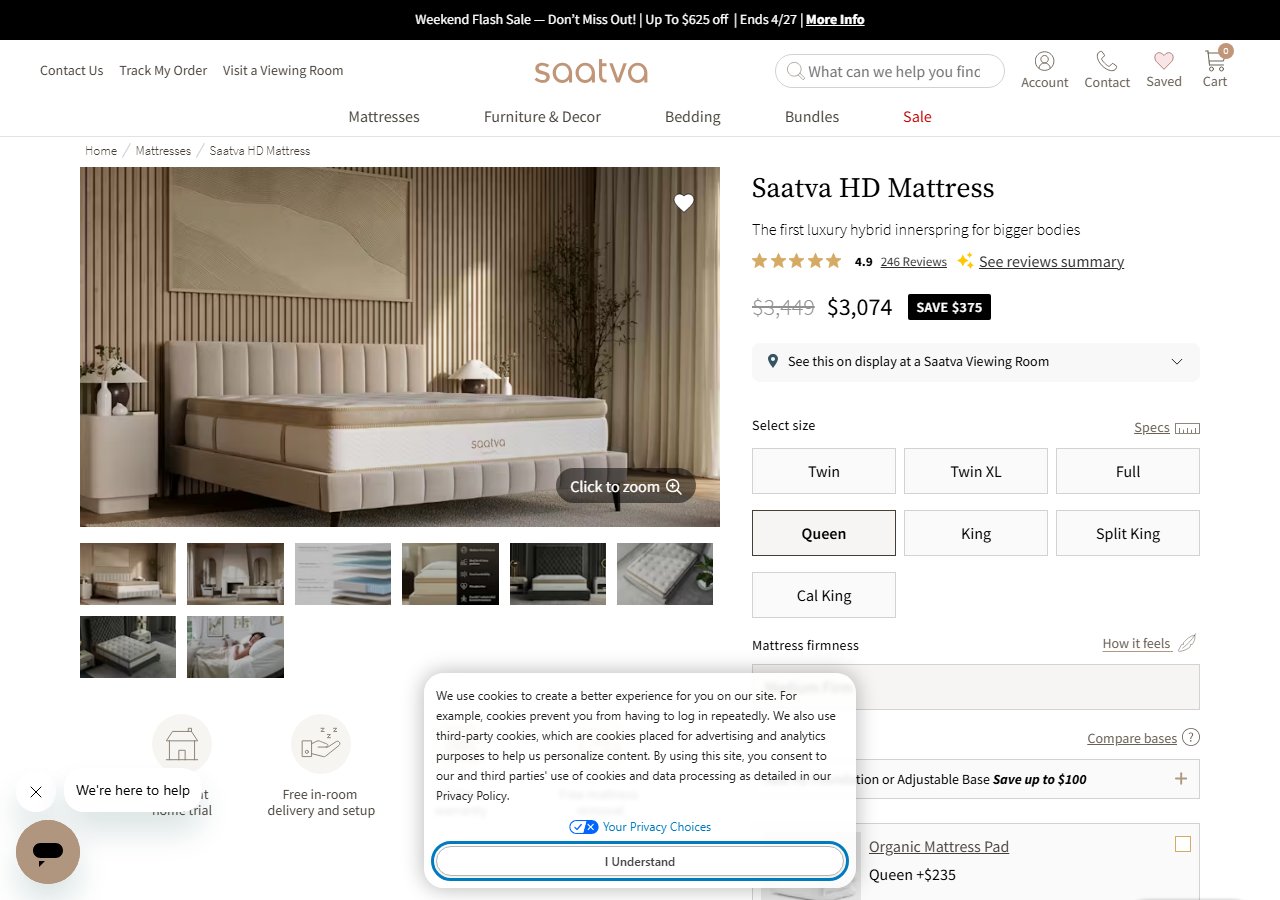
Saatva HD Mattress (Heavy-Duty)
$2,395-$3,995
See Price at Saatva →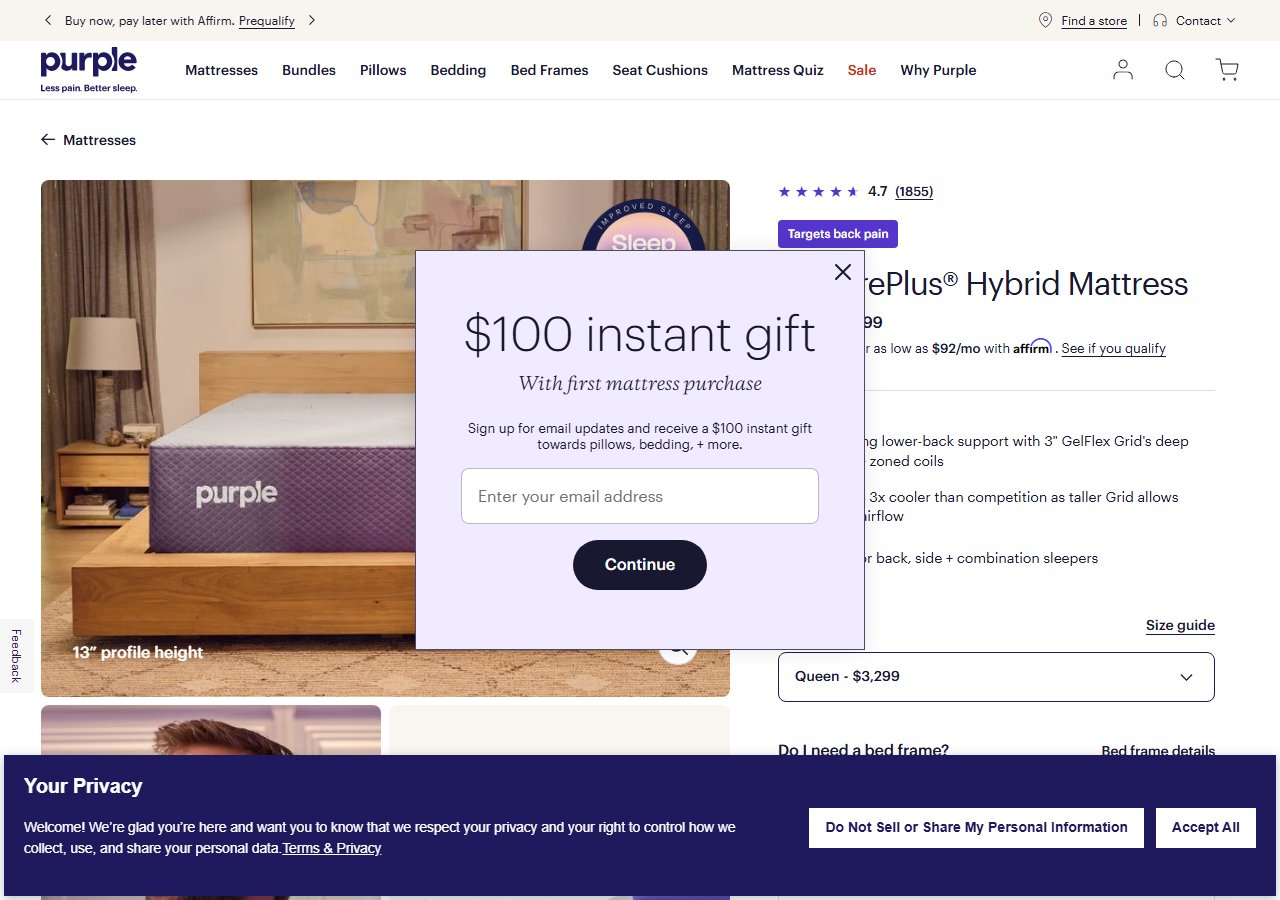
Purple Hybrid Premier Mattress
$2,499-$4,799
See Price at Purple →The Data-to-Decision Hierarchy for Chronic Back Pain Sufferers
The federal data reviewed in this analysis points toward a consistent decision hierarchy. Back pain is the leading occupational injury, the largest category of new disability claims, and one of the most expensive conditions in U.S. healthcare — and it is also one of the most modifiable through behavioral and mechanical interventions that do not begin with a purchase.
The sequence that the evidence supports is this: first, rule out red-flag symptoms that require imaging or clinical referral. Second, audit sleep position and correct it using the NIH guidance on neutral spinal alignment. Third, add structured daily walking — the NIH NCCIH evidence review rates it as effective as most non-drug treatments. Fourth, evaluate your current mattress against the simple criteria CDC sleep guidance provides: visible sag, waking stiffer than you went to bed, or age over 7 to 10 years. Only after those steps have been taken does the specific construction of a new mattress become the relevant variable.
When it is relevant, the construction choices matter. Memory foam fills the lumbar curve better than bridging it. Zoned support addresses the differential firmness needs of shoulders, hips, and lumbar spine. Reinforced construction addresses the higher loading patterns that occupationally exposed workers bring to their beds every night. The three mattresses identified in this analysis — the Saatva Loom & Leaf for memory foam precision, the Saatva HD for heavy-duty occupational recovery, and the Purple Hybrid Premier for pressure-dominant presentations — represent distinct engineering approaches to a shared biomechanical problem.
The cheapest intervention remains the one that requires no purchase. But when the free interventions have been applied and a mattress is genuinely the remaining variable, federal data gives us enough to make that decision with confidence rather than with marketing copy.