The Federal Case for Taking Recovery Seriously
Here is a number worth holding: cardiovascular disease accounts for approximately 1 in 3 U.S. deaths annually, per CDC WONDER mortality tracking. That single statistic explains why the longevity community has become so focused on autonomic regulation, inflammation management, and cardiovascular stress adaptation—the exact physiological levers that cold-water immersion research is targeting. But the cardiovascular mortality figure is only the beginning of the federal data story around recovery infrastructure.
CDC NCHS Data Brief 390 reports that approximately 20% of U.S. adults experience chronic pain, with high-impact chronic pain—the kind that limits daily activity—affecting roughly 7% of adults. That is not a fringe clinical population. That is one in five Americans carrying a pain burden that compounds across every domain of health, from sleep quality to cardiovascular risk to metabolic function. For the longevity-focused reader, chronic pain is not just uncomfortable. It is a systems-level stressor that accelerates the biological aging processes you are trying to slow.
BLS Survey of Occupational Injuries and Illnesses adds another layer: musculoskeletal disorders account for approximately 30% of all nonfatal occupational injuries with days away from work across U.S. private industry. Construction workers, warehouse workers, and anyone doing sustained physical labor under mechanical load are accumulating musculoskeletal wear at rates the federal data documents with precision. The SSA Disability Insurance Statistical Reports confirm that musculoskeletal disorders represent one of the top categories of new disability claims, with construction and warehouse workers disproportionately represented. Physical laborers are not an edge case in this analysis—they are the population most at risk of the outcomes that cold therapy and deliberate recovery infrastructure are positioned to address.
The biohacking and longevity community tends to frame cold plunges through the lens of elite performance optimization—Andrew Huberman protocols, ice bath minutes, dopamine spikes. That framing is not wrong, but it is incomplete. The more durable argument for cold-water immersion as a mainstream recovery tool is built on federal occupational health data: a large share of the American workforce is accumulating cumulative biomechanical damage at a rate that will eventually produce the chronic pain, disability, and cardiovascular stress burden the CDC and BLS are already measuring. Deliberate recovery infrastructure is not a luxury for that population. The NIOSH Total Worker Health Program makes this explicit, documenting that workers in physically demanding occupations face cumulative biomechanical loading that requires deliberate recovery interventions—and framing that infrastructure as occupational health, not wellness indulgence.
Why the Body Breaks Down: The Mechanism Behind the Data
Understanding why cold immersion has biological plausibility requires a brief detour into the physiology of cumulative load. When the body performs sustained physical work—whether that is construction, warehouse logistics, endurance athletics, or high-volume resistance training—it accumulates several categories of physiological debt simultaneously.
Inflammatory cytokine load is the first mechanism. Tissue micro-damage from repeated mechanical stress triggers localized and systemic inflammatory responses. In moderate doses, this inflammation is adaptive—it is the signal that drives tissue remodeling and strength gains. In chronic overdose, as documented across the physically demanding occupational cohorts in BLS data, inflammatory burden becomes a chronic stressor that elevates cardiovascular risk, disrupts sleep architecture, and accelerates musculoskeletal degeneration. The BLS CFOI 2024 release documented 1,075 fatal work injuries in construction alone in 2023—the highest absolute total of any private industry sector—and while most of those fatalities are acute trauma events, they occur against a backdrop of workers whose cumulative physiological load has already been compressing their resilience margin for months or years.
Autonomic nervous system dysregulation is the second mechanism. High-demand physical occupations, combined with financial stress, inadequate sleep, and inadequate recovery time, push workers chronically into sympathetic dominance. Heart rate variability (HRV)—the measure longevity researchers use as a proxy for autonomic health and cardiovascular resilience—degrades under these conditions. Cold-water immersion produces a well-documented acute sympathetic spike followed by a parasympathetic rebound; repeated exposure appears to train autonomic flexibility in ways that HRV-focused longevity researchers consider directly relevant to cardiovascular risk reduction. Given that cardiovascular disease kills roughly 1 in 3 Americans, that autonomic training effect is not trivial.
Lactate and metabolic waste accumulation is the third mechanism. After intense physical exertion, metabolic byproducts—lactate, reactive oxygen species, inflammatory mediators—accumulate in muscle tissue. Cold immersion causes peripheral vasoconstriction followed by vasodilation on rewarming, a pump effect that accelerates the clearance of these metabolic wastes. This is the mechanism behind the athletic recovery use case, and it maps directly onto the occupational health population: a construction worker finishing a 10-hour shift in summer heat is experiencing the same metabolic waste accumulation as an athlete finishing a hard training session, compounded by NOAA-documented heat exposure risk that elevates cardiovascular and inflammatory stress simultaneously.
Healthcare cost as a downstream signal completes the picture. AHRQ Medical Expenditure Panel Survey data documents per-person healthcare expenditures for musculoskeletal conditions averaging several thousand dollars annually for affected adults, with significantly higher costs for those with chronic back conditions. BLS Employer Costs for Employee Compensation data shows that construction and warehousing employers carry workers' compensation insurance rates priced such that a single MSD claim produces thousands of dollars in annual premium delta. These are not wellness statistics—they are the financial actualization of biomechanical debt that was never repaid during the accumulation phase. Recovery infrastructure, including cold immersion, is the repayment mechanism.
The Regulatory Landscape: FDA and the Clinical-Consumer Divide
One aspect of cold therapy that the biohacking community underweights is the regulatory divide between clinical-grade cryotherapy equipment and consumer cold plunge hardware. The FDA 510(k) Clearance Database indexes thousands of cleared cryotherapy and recovery devices, and the distinctions it draws matter for informed purchasing. Clinical cryotherapy units—whole-body cryochambers used in physical therapy and sports medicine settings—carry FDA clearances that document their safety and efficacy parameters within defined clinical protocols. Consumer cold plunges operate in a different regulatory category: they are wellness appliances, not medical devices, and the evidence base for their use comes from peer-reviewed exercise science literature rather than FDA clearance submissions.
This is not an indictment of consumer cold plunges. It is a calibration tool. The longevity reader who understands this regulatory divide can make better purchasing decisions, set more realistic expectations about what a cold plunge does and does not do, and engage more productively with their clinician about whether cold immersion is appropriate given their individual cardiovascular health status. The FDA database is publicly searchable, and cross-referencing any recovery device you are considering against it takes less than five minutes and produces genuinely useful information about the claims the manufacturer is permitted to make.
Try These First: Free Interventions Before Hardware
The cheapest intervention is the one that does not require buying anything. Before evaluating cold plunge hardware at any price point, the longevity-focused reader should audit their free recovery stack—because no cold plunge compensates for the cumulative physiological damage of chronically inadequate sleep, dehydration, or a sedentary recovery protocol.
Active recovery is the foundation that cold immersion gets layered on top of, not replaced by. CDC Physical Activity guidance documents that 10 to 15 minutes of light walking or cycling after intense work or training clears lactate faster than passive rest. Cold immersion used as a substitute for active recovery is a misapplication of the modality. Used as a complement—active recovery first, cold immersion as the final stage of a deliberate protocol—it fits the physiological sequence.
Sleep is the recovery multiplier that no hardware can replace. CDC guidance on sleep duration establishes 7 or more hours per night as the adult minimum. Sleep deprivation directly increases workplace injury rates and undermines every physiological adaptation that cold immersion is attempting to train. A $4,000 cold plunge cannot compensate for a chronic 5-hour sleep schedule.
Hydration protocols matter more in cold immersion than most practitioners acknowledge. CDC NIOSH heat-related illness prevention guidance specifies one cup (8 oz) of water every 15 to 20 minutes during heat exposure, with electrolyte replacement on shifts longer than two hours. Cold immersion does not replace fluid loss—it can mask the sensation of thirst—and entering a cold plunge already dehydrated amplifies the cardiovascular stress of the cold shock response.
NIOSH work-rest cycle protocols address the occupational upstream of the recovery downstream. NIOSH recommendations for working in outdoor and indoor heat environments establish validated work-rest ratios for physically demanding jobs in heat. For the longevity reader who is also a physical laborer or who trains at high volume, pacing the work is the injury prevention layer that cold immersion recovery sits on top of. Skipping the work-rest structure and relying on cold plunges to absorb unlimited accumulation is physiologically incorrect.
For readers who have built the behavioral foundation—consistent sleep, active recovery protocols, adequate hydration, and structured work-rest ratios—and who want to add cold immersion as the next layer of their recovery infrastructure, hardware selection becomes the relevant question. The following products represent the range of serious consumer cold plunge options, from no-frills barrel-style immersion at the accessible end to filtered, temperature-controlled systems designed for daily high-volume use.
When to See a Clinician Before Cold Plunging
Cold-water immersion produces a reproducible acute cardiovascular stress response: heart rate spikes, blood pressure elevates transiently, and peripheral vasoconstriction redistributes blood volume centrally. For most healthy adults, this response is well-tolerated and is precisely the stimulus that drives the autonomic training adaptation. For a subset of adults, it is a clinically significant risk factor that requires medical clearance before initiating any cold immersion protocol.
The NIH National Heart, Lung, and Blood Institute guidance is clear: individuals with known cardiovascular conditions—hypertension, arrhythmias, recent cardiac history, or peripheral vascular conditions like Raynaud's disease—should not begin cold immersion without explicit clinician clearance. Given that CDC data shows cardiovascular disease kills approximately 1 in 3 Americans, a significant fraction of the adult population carries subclinical cardiovascular risk that makes this clearance step non-optional, not a bureaucratic formality. The longevity community's enthusiasm for cold therapy is generally well-founded, but the same community's tendency to self-experiment without clinical baseline testing is a blind spot worth naming directly.
Clinical red flags that require evaluation before starting cold immersion are detailed in the section below. If any of those flags apply, the protocol is not "start cold plunging cautiously"—the protocol is clinician consultation first, hardware selection second.
Where Products Fit: Hardware for a Serious Recovery Stack
For practitioners who have cleared the behavioral and clinical prerequisites above, cold plunge hardware selection comes down to three variables: temperature control, maintenance burden, and budget. The longevity reader who is committed to a daily or near-daily protocol needs a system that is frictionless enough to actually use—because a cold plunge you do not use because setup is too complicated is worth exactly what it cost you minus the square footage it occupies.
The Ice Barrel 400 is the honest entry point for serious practitioners who do not want to finance a chiller unit. At $1,200, it is the most accessible purpose-built cold plunge in this category—not a stock tank, not a chest freezer conversion, but a barrel-format unit designed specifically for cold immersion with drainage, a lid, and a form factor that works on a deck, in a garage, or at the side of a gym space. The no-chiller design means you are managing temperature with ice, which requires more operational attention than a self-refrigerating unit but also means fewer mechanical components to maintain. For the longevity reader who wants to establish a cold immersion practice before committing to chiller-level investment, the Ice Barrel 400 is the right starting point.
For practitioners who are ready to commit to daily cold immersion as a non-negotiable infrastructure item—the same way they treat a quality mattress or a gym membership—the Sun Home Cold Plunge Pro at $4,499 addresses the primary friction point in high-frequency cold plunge use: water quality maintenance. The Pro's self-cleaning filtration system eliminates the water change and sanitization burden that makes cheaper units impractical for daily year-round use. Temperature control is precise and digital, which matters if you are using heart rate variability data to calibrate protocol intensity—because the cardiovascular stress dose of cold immersion is temperature-dependent, and inconsistent temperatures produce inconsistent training stimuli. For the reader who has already established that cold immersion is a permanent part of their longevity stack, the Sun Home Cold Plunge Pro is the infrastructure-grade choice.
Cold Plunges Built for the Serious Longevity Stack
These two units were selected for practitioners who have cleared the behavioral and clinical prerequisites and are ready to add temperature-controlled cold immersion as a non-negotiable infrastructure item in a data-informed recovery protocol.
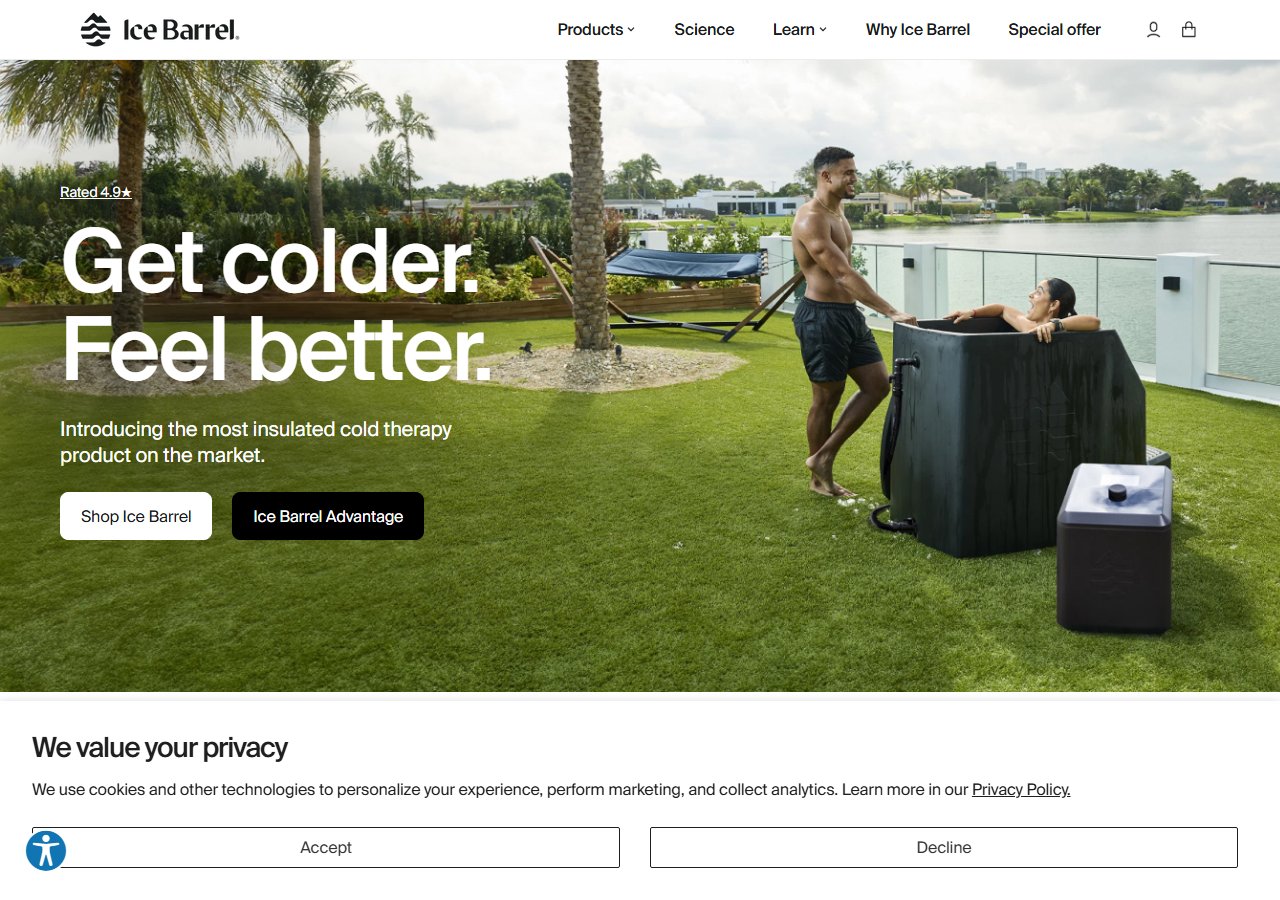
Ice Barrel 400
$1,200
See Price at Ice Barrel →
Sun Home Cold Plunge Pro
$4,499
See Price at Sun Home →Building the Complete Recovery Architecture
The federal data assembled above tells a coherent story that the wellness industry often fragments into product pitches. Start from first principles: CDC mortality data shows cardiovascular disease killing 1 in 3 Americans, BLS occupational data shows musculoskeletal disorders disabling workers at scale, CDC chronic pain data shows 20% of adults carrying chronic pain burdens, and AHRQ expenditure data shows those burdens translating into thousands of dollars per year in healthcare costs. The NIOSH Total Worker Health Program responds to exactly this data by framing recovery infrastructure as occupational health necessity.
Cold-water immersion fits into that architecture as a physiologically plausible, accessible, and increasingly mainstream tool for autonomic regulation, inflammatory management, and metabolic waste clearance. It is not a cure for the underlying occupational and behavioral stressors the federal data documents. It is one layer of a recovery stack that must be built on behavioral foundations—sleep, hydration, active recovery, and structured work-rest ratios—before hardware adds meaningful value.
For the longevity-focused reader, the takeaway is this: the federal data does not endorse any specific cold plunge brand. What it does is build the case that deliberate recovery infrastructure is not optional for high-demand humans, that the physiological mechanisms cold immersion targets are the same ones implicated in the mortality and morbidity statistics the CDC and BLS are tracking, and that the decision to invest in that infrastructure—starting with the free interventions, proceeding through clinical clearance, and then selecting hardware that fits your protocol and budget—is among the highest-ROI investments in the longevity stack.
The Ice Barrel 400 starts that conversation at $1,200 without a chiller commitment. The Sun Home Cold Plunge Pro ends it at $4,499 with daily-use infrastructure-grade performance. What sits between those two price points is a decision about how central cold immersion is to your individual recovery architecture—and the federal data gives you the analytical framework to make that decision with evidence rather than marketing.