The Federal Case for Cold Plunge Therapy
The number that should anchor every conversation about athletic recovery is not a heart-rate zone or a macronutrient ratio. It is this: approximately 20% of U.S. adults live with chronic pain, and high-impact chronic pain — the kind that limits daily work, social activity, and physical function — affects roughly 7% of the adult population according to CDC NCHS Data Brief 390. For a country where roughly 76% of adults already fail to meet weekly aerobic activity guidelines per CDC BRFSS surveillance data, that chronic pain burden creates a compounding trap: people who cannot move without pain move less, accumulate more inflammatory load, and incur significantly higher healthcare costs as a result.
The AHRQ Medical Expenditure Panel Survey (MEPS) quantifies what that trap costs: musculoskeletal conditions average several thousand dollars per affected adult annually in direct healthcare expenditures, with chronic back conditions driving costs substantially higher. Meanwhile, SSA Disability Insurance statistical data documents musculoskeletal disorders as one of the leading categories of new disability claims — and construction and warehouse workers are disproportionately represented in that pool. These are not abstractions. They are the financial and physical stakes of inadequate recovery for anyone who trains hard, works physically, or both.
Cold plunge therapy enters this conversation not as a wellness trend but as a documented intervention. NIOSH-cited recovery literature establishes that cold-water immersion at 50–59°F (10–15°C) for 10–15 minutes post-exertion measurably reduces delayed-onset muscle soreness (DOMS) and lowers serum creatine kinase — the enzyme your body releases as muscle fibers sustain microtears under load. This is the biochemical signature of productive training stress, and cold immersion is one of the few non-pharmacological tools with a credible federal research footprint behind its ability to modulate that stress response. What follows is a careful translation of that evidence — including where it supports cold plunge use, where it demands clinical caution, and where equipment purchases actually add value.
Why the Body Needs Deliberate Recovery Infrastructure
Understanding why cold immersion works requires a brief walk through exercise physiology and why the federal occupational health framework has started treating recovery as a clinical necessity rather than an athlete's indulgence.
When skeletal muscle is subjected to intense eccentric loading — the kind generated by heavy lifting, downhill running, high-volume resistance training, or a full shift of physical labor — the mechanical stress triggers a well-characterized inflammatory cascade. Cytokines including interleukin-6 and tumor necrosis factor-alpha flood the local tissue environment. Creatine kinase leaks into the bloodstream as a marker of membrane disruption. Prostaglandins sensitize nociceptors, which is why you feel the ache of DOMS 24–72 hours after a hard session. This process is necessary for adaptation — muscles do not grow stronger without it — but when inflammatory load is chronic and unmanaged, it shifts from adaptive to destructive.
The NIOSH Total Worker Health Program has made precisely this argument at the population level. Its research framework documents that workers in physically demanding occupations face cumulative biomechanical loading that is fundamentally different from recreational athletic stress: it recurs daily without the periodization that a structured training program provides, it is rarely followed by a deload week, and it accumulates across careers that may span decades. The program explicitly frames recovery infrastructure — rest protocols, cooling interventions, ergonomic design — as components of occupational health with measurable downstream effects on injury rates and long-term disability. This is a meaningful federal endorsement of the principle behind cold plunge therapy, even if no federal agency is in the business of recommending specific consumer products.
Cold-water immersion at the temperatures and durations NIOSH-cited literature specifies works through two primary mechanisms. First, vasoconstriction: immersion in 50–59°F water dramatically reduces blood flow to peripheral tissue, limiting the volume of inflammatory mediators that reach damaged muscle fibers during the acute post-exercise window. Second, hydrostatic pressure: full-body or lower-body immersion creates uniform external compression that reduces edema formation — the fluid accumulation that contributes to both soreness and reduced range of motion. When the body rewarms after immersion, vasodilation creates a reactive hyperemia — a flushing effect that clears accumulated metabolic byproducts from tissue. The net result, documented across the NIOSH-cited literature, is reduced perceived soreness and lower serum creatine kinase at 24 and 48 hours post-exertion compared to passive rest controls.
For outdoor workers, there is an additional physiological argument. NOAA heat-related workplace risk data documents elevated injury and recovery demand for outdoor occupations — agriculture, construction, roadwork — during summer months, when core body temperature dysregulation compounds musculoskeletal fatigue. Cold immersion is also a validated core-cooling intervention in heat-stressed populations, a fact that broadens its relevance beyond the gym and into the jobsite recovery trailer.
Construction recorded 1,075 fatal work injuries in 2023, the highest absolute total of any private industry sector per BLS CFOI data. While most of those deaths involved falls, struck-by events, and electrocution rather than heat directly, the fatigue and cognitive impairment that heat stress and inadequate recovery contribute to are recognized risk multipliers for exactly those categories of fatal incident. Recovery is not a gym topic. It is a safety topic.
Try These First: Free Interventions the Federal Data Already Supports
Before any discussion of equipment, a frank acknowledgment: the cheapest intervention is the one that does not require buying anything. Federal occupational health research has documented several recovery behaviors with strong evidence bases that cost nothing except discipline. Athletes and physically demanding workers who are not doing these consistently will get limited return from a cold plunge tub — or any other recovery product.
Active recovery before cold immersion. CDC Physical Activity Basics guidance supports the principle that light aerobic movement — 10 to 15 minutes of walking or low-intensity cycling — clears lactate from working muscle faster than sitting still. Active recovery is the foundation on which any cold-plunge protocol gets layered. Immersion immediately following intense work is most effective when the body has already begun its clearance process through movement; passive collapse into a chair is not a substitute.
NIOSH work-rest cycling. For workers in heat or under sustained physical load, NIOSH outdoor and indoor heat stress recommendations prescribe scheduled rest in cool environments as a primary intervention. Cold immersion is one validated cooling modality within that framework, but the scheduling of work and rest — pacing the physiological demand — prevents the injury that necessitates recovery. Athletes operating on voluntary training schedules have the same lever available through periodization.
Hydration. CDC NIOSH heat-related illness prevention guidance recommends one cup of water every 15–20 minutes during heat exposure or physical exertion, with electrolyte replacement on efforts longer than two hours. Cold immersion does not replace fluid lost through sweat. Beginning a plunge session dehydrated blunts its cardiovascular and inflammatory benefits and increases the risk of cardiac stress during the vasoconstriction phase.
Sleep as the recovery multiplier. CDC sleep guidance establishes seven or more hours per night as the evidence-based minimum for adults. Sleep deprivation directly elevates inflammatory cytokine levels, impairs muscle protein synthesis, and increases workplace injury rates. No cold plunge — and no other recovery product — compensates for chronic sleep deficit. This is not a soft recommendation; it is a hard physiological floor.
For readers who have those foundations in place — consistent movement, structured rest cycles, adequate hydration, and sufficient sleep — and who are still experiencing significant post-training soreness, slow recovery between sessions, or the cumulative physical fatigue that physically demanding work generates, equipment enters the picture as a legitimate adjunct. The question is which equipment is worth the investment at what price point.
When to See a Clinician Before You Buy a Cold Plunge
Cold-water immersion is not a universally safe intervention, and the federal health data on cardiovascular risk demands that this be stated plainly. Cardiovascular disease accounts for approximately 1 in 3 U.S. deaths annually per CDC WONDER data — making it the single largest cause of death in the country. Cold immersion triggers an immediate and pronounced cardiovascular stress response: heart rate initially drops due to the diving reflex, then rebounds sharply as sympathetic tone increases and peripheral vasoconstriction elevates systemic vascular resistance. In a healthy cardiovascular system, this is manageable. In a system with underlying pathology, it can be a precipitating event for arrhythmia, hypertensive crisis, or cardiac arrest.
For physically demanding workers and serious athletes who may have undiagnosed hypertension — a condition CDC tracks as affecting nearly half of U.S. adults — the risk is not hypothetical. NIH National Heart, Lung, and Blood Institute guidance is unambiguous: clear cold therapy with a clinician before starting if any cardiovascular condition is present, including hypertension, arrhythmia, Raynaud's phenomenon, or recent cardiac history. This applies to anyone who has not had a cardiovascular evaluation within the past year, trains at high intensity, or works a physically demanding occupation with significant exertional cardiovascular demand.
The clinical red flags section below synthesizes the specific warning signs this reader population should treat as hard stops before beginning cold immersion therapy.
Clinical Red Flags for Cold Immersion Therapy
See the red flags panel for the full clinical checklist. As a rule: if you have a documented cardiovascular condition, uncontrolled hypertension, a history of cold urticaria or Raynaud's, recent surgery, or an open wound, consult a physician before purchasing or using any cold plunge system. The investment in a clinical visit is substantially lower than the cost of an adverse cardiac event — and AHRQ MEPS data documents that musculoskeletal and cardiovascular conditions, when they result in hospitalization, generate costs that dwarf the price of any consumer recovery product.
Where Products Help: Matching Equipment to the Federal Evidence
With the mechanism understood, the free interventions in place, and the clinical contraindications reviewed, equipment becomes a legitimate conversation. The NIOSH-cited literature is specific about two variables that matter most for cold immersion efficacy: temperature (50–59°F) and duration (10–15 minutes). Any equipment decision should be evaluated against its ability to consistently deliver and maintain water in that temperature range for the duration required. Everything else — aesthetics, brand identity, smart features — is secondary to those two numbers.
There are three meaningful product tiers in the current market: no-chiller vessels that rely on ice, self-contained systems with integrated chillers, and entry-level options that work but require more manual management. The right choice depends on frequency of use, climate, and budget.
The no-chiller case: Ice Barrel 400. For athletes and recovery enthusiasts who train three to five times per week and have reliable access to bagged ice, the Ice Barrel 400 is the most cost-effective route to NIOSH-validated cold immersion temperatures. Priced at $1,200, it is a purpose-built vertical immersion vessel with UV-resistant construction rated for outdoor use year-round. The vertical orientation matters biomechanically: it allows full lower-body and core immersion — the muscle groups carrying the highest inflammatory load after most athletic and occupational stress patterns — without requiring the footprint of a horizontal tub. Ice management is real work: in summer months in warm climates, reaching 50–59°F requires 40–60 pounds of ice per session. For athletes who train indoors or live in climates where ambient water temperatures are lower, ice costs drop substantially. The Ice Barrel 400 is the right choice for anyone who wants a proven, no-electronics vessel at a price that does not require financing.
The self-cleaning chiller system: Sun Home Cold Plunge Pro. For athletes with higher training frequency, households with multiple users, or anyone who finds the ice management burden of a no-chiller system unsustainable over months of daily use, the Sun Home Cold Plunge Pro is the most complete integrated system in this tier. At $4,499, it includes a self-cleaning filtration and UV sanitation system, a chiller capable of reaching 39°F, and a digital temperature control interface. The self-cleaning designation is not a marketing abstraction: stagnant water in shared cold plunge vessels accumulates biofilm and microbial load in ways that present genuine infection risk, particularly for athletes with any skin integrity compromise from training or occupational abrasion. The Sun Home's UV and ozone filtration cycle addresses that risk systematically, which is why this product is the right choice for households, small training facilities, or any context where multiple users share the same vessel. For athletes who want to set a temperature and have it waiting at 50°F every morning without ice delivery, the Sun Home Cold Plunge Pro is the only option in this list that delivers that protocol reliability.
Cold Plunge Systems Validated Against NIOSH Temperature and Duration Standards
Each product below was evaluated on its ability to consistently deliver and maintain 50–59°F water for 10–15 minutes — the exact parameters NIOSH-cited recovery literature identifies as effective for reducing DOMS and lowering creatine kinase in athletic and physically demanding worker populations.
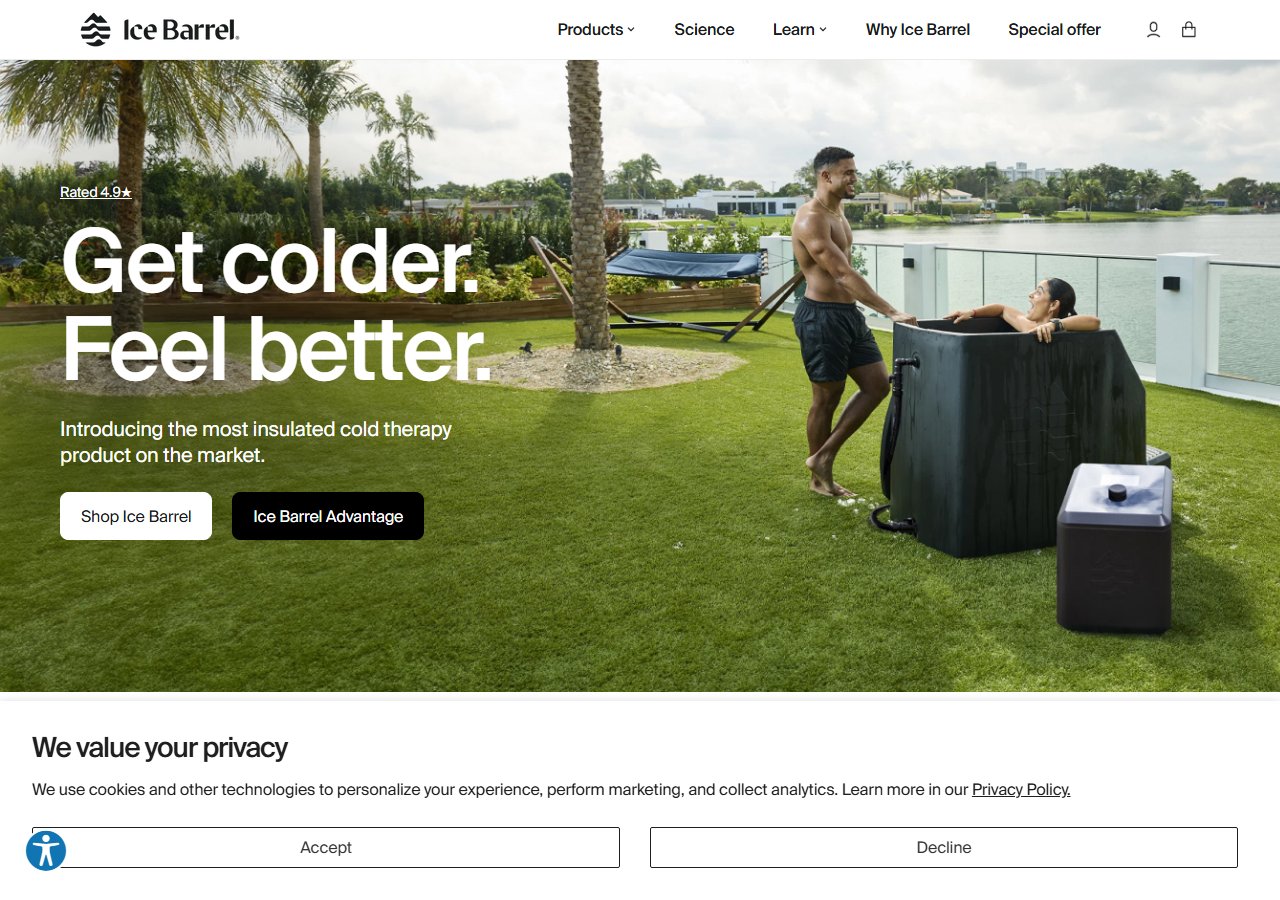
Ice Barrel 400
$1,200
See Price at Ice Barrel →
Sun Home Cold Plunge Pro
$4,499
See Price at Sun Home →Applying the Evidence: A Practical Protocol
The federal data converges on a specific, actionable protocol for cold immersion that most consumer marketing materials either simplify or ignore. NIOSH-cited literature identifies 50–59°F and 10–15 minutes as the effective window. Below 50°F, the cardiovascular stress-to-benefit ratio shifts unfavorably for most users; the physiological benefits plateau before the cardiac risks do. Above 59°F, vasoconstriction and its downstream anti-inflammatory effects are attenuated. Duration under 10 minutes does not allow sufficient time for the hydrostatic pressure and peripheral vasoconstriction mechanisms to complete their full effect; duration beyond 15–20 minutes provides diminishing returns and increasing shivering-induced metabolic cost.
Timing relative to training matters and is a nuance frequently lost in consumer discussions of cold plunge therapy. The inflammatory cascade that DOMS represents is also the signal cascade that drives adaptation — hypertrophy, endurance gains, strength progression. Some exercise science researchers have argued that aggressive post-training cold immersion, particularly in hypertrophy-focused training blocks, may blunt the anabolic signaling that makes training productive. The current evidence base does not support cold immersion as harmful to adaptation when used at NIOSH-validated parameters (50–59°F, 10–15 minutes), but athletes optimizing specifically for muscle growth may consider limiting cold immersion to rest days or the evening before a rest day, where adaptation signaling is less time-critical.
For physically demanding workers — particularly those in construction, warehousing, or agriculture, where BLS employer workers' compensation data shows single MSD claims driving thousands of dollars in annual premium delta — the calculus is different. These workers are not periodizing for hypertrophy; they are trying to sustain physical function across a multi-decade career. For them, consistent recovery — including cold immersion when accessible — is the intervention that keeps them working. The NIOSH Total Worker Health Program has made this case explicitly, and it is why federal occupational health frameworks have moved toward treating recovery infrastructure as a workplace health intervention rather than a personal wellness choice.
The Summary the Data Supports
Cold plunge therapy is one of the few consumer recovery modalities with a credible federal research footprint. NIOSH-cited literature supports cold-water immersion at 50–59°F for 10–15 minutes as an effective intervention for reducing DOMS and lowering creatine kinase — the two most measurable indicators of post-exertion muscle damage. The CDC's chronic pain data quantifies the population-level burden that inadequate recovery contributes to, and AHRQ MEPS expenditure data puts a dollar figure on what that burden costs. The NIOSH Total Worker Health Program frames deliberate recovery — including cold immersion — as a medical necessity for those under cumulative physical load, not an indulgence.
The hierarchy is clear: free interventions — active recovery, work-rest cycling, hydration, sleep — come first and form the foundation. Clinical evaluation, particularly for cardiovascular risk, comes before any equipment purchase. Equipment enters the picture as an adjunct that enables consistent delivery of the specific temperature and duration the research validates. The Ice Barrel 400 does that at $1,200 without electronics. The Sun Home Cold Plunge Pro does it at $4,499 with integrated sanitation and chiller reliability. Both are legitimate tools. The federal data tells you which one matches your recovery load and frequency.