The Nighttime Acid Problem Nobody Talks About Enough
You already know the feeling: you lie down after dinner, drift toward sleep, and then a hot, sour surge climbs your chest and throat, jolting you awake at 1 a.m. You stack pillows, prop yourself up on an elbow, maybe reach for an antacid on the nightstand. You eventually fall back asleep—only for it to happen again at 3 a.m. By morning you feel like you never slept at all.
This is the lived reality for tens of millions of Americans with gastroesophageal reflux disease (GERD). CDC sleep and sleep disorders data documents that approximately 35% of U.S. adults already report sleeping fewer than 7 hours per night—the federal threshold below which chronic disease risk measurably rises. GERD compounds that deficit: people with frequent nighttime reflux experience more arousals, less restorative slow-wave sleep, and higher rates of daytime fatigue. The interaction between chronic acid exposure and disrupted sleep is not merely uncomfortable—it is a documented pathway to esophageal damage, dental erosion, and worsening of comorbid conditions.
The AHRQ Healthcare Cost and Utilization Project (HCUP) consistently ranks gastrointestinal conditions among the most expensive categories in U.S. ambulatory and inpatient care. GERD-related expenditures run into the billions annually—driven partly by proton pump inhibitor (PPI) prescriptions, endoscopy procedures, and emergency visits for chest pain that turns out to be reflux rather than cardiac in origin. Yet the positional intervention—sleeping with the head elevated—is essentially free to attempt, extraordinarily well-supported by the clinical literature, and almost never the first thing a busy gastroenterologist has time to explain in a 12-minute appointment.
This article exists to close that information gap. We will walk through exactly why lying flat makes GERD worse (the biomechanics are straightforward), what federal data says about the scale of the problem, which non-product interventions to try before spending a dollar, which symptoms require a clinician's evaluation rather than a product upgrade, and—for readers who have already tried the free interventions—which motorized adjustable bases are engineered specifically to hold a therapeutic incline through the night without letting you slide into a flat position by 3 a.m.
Why Lying Flat Is the Worst Position for a GERD Sufferer
The lower esophageal sphincter (LES) is the muscle ring at the junction of the esophagus and stomach. In healthy individuals, it maintains sufficient resting tone to prevent gastric contents from traveling upward. In GERD sufferers, the LES either relaxes at inappropriate times, generates insufficient resting pressure, or both—allowing acidic stomach contents to reflux into the esophagus.
Gravity is one of the most powerful forces working in your favor when you are upright. Standing or sitting, the stomach sits below the LES; acid would have to travel upward against gravitational pull to reach the esophagus. The moment you assume a fully supine (flat on your back) position, you eliminate that gravitational assist entirely. The stomach and esophagus are at essentially the same height. Any transient LES relaxation now allows acid to pool across the esophageal mucosa rather than draining back down immediately. Acid contact time—the critical determinant of esophageal mucosal injury and the subjective burning sensation—increases dramatically in the supine position.
Sleep biology makes this worse in two additional ways. First, salivary flow drops by roughly 80–90% during non-REM sleep. Saliva is mildly alkaline and acts as a continuous esophageal irrigation system while you are awake, neutralizing small acid exposures before they cause irritation. Asleep, that buffer is gone. Second, swallowing frequency drops from roughly once per minute while awake to as few as once every five minutes during sleep. Swallowing is the primary mechanism by which acid is cleared from the esophageal lumen—so its absence prolongs contact time even further.
The net result: a single reflux episode at night exposes the esophageal lining to acid for far longer than the equivalent episode during the day. Chronic nocturnal acid exposure is the driver of Barrett's esophagus—the precancerous cellular transformation of the lower esophageal lining that gastroenterologists screen for in long-term GERD sufferers. It is also strongly associated with chronic cough, laryngitis, dental enamel erosion, and non-cardiac chest pain—all conditions with their own downstream costs that the AHRQ HCUP system tracks in its utilization databases.
The incline intervention works by restoring partial gravitational protection even while supine. Elevating the head of the bed by 6–8 inches tilts the body at roughly 10–15 degrees, enough to meaningfully reduce acid contact time in multiple randomized controlled trials. The important detail: a wedge of stacked pillows is not equivalent, because pillows compress under body weight and shift during the night. A sustained, locked incline—whether from under-mattress wedges or a motorized adjustable base—is what clinical studies actually test and confirm.
The Scale of the Problem: Federal Data on GERD and Sleep
The CDC estimates that GERD affects between 18–28% of North American adults on a weekly or more frequent basis, placing it among the most prevalent chronic gastrointestinal conditions in the country. When you cross-reference that prevalence against CDC's sleep disorder tracking data, which documents that over one-third of U.S. adults are chronically sleep-deprived, the overlap population—people dealing with GERD and insufficient sleep simultaneously—is enormous.
Chronic sleep deprivation is not a mild inconvenience. The CDC's chronic disease surveillance frameworks link sleeping under 7 hours per night to elevated risk for obesity, type 2 diabetes, cardiovascular disease, mental health disorders, and immune dysfunction. For GERD sufferers, the connection is bidirectional: GERD disrupts sleep, and sleep deprivation itself has been shown to heighten visceral sensitivity, meaning sleep-deprived individuals actually perceive the same acid exposure as more painful than their better-rested counterparts. This creates a reinforcing loop that no single antacid or sleep medication will break on its own.
On the pharmaceutical side, the FDA Adverse Event Reporting System (FAERS) provides important federal-level visibility into the safety profile of common sleep and reflux medications. PPI long-term use has accumulated a substantial adverse event literature—including associations with hypomagnesemia, increased infection risk, and bone density reduction—that FAERS data reflects. Sleep medications independently carry significant adverse event profiles in FAERS. Neither drug class is without risk, which underscores the clinical and economic value of behavioral and positional interventions that address the root mechanism rather than masking the symptom.
Meanwhile, the musculoskeletal costs of poor sleep compound over time. BLS Musculoskeletal Disorders data identifies the back as the single most commonly injured body part across all U.S. occupations involving days away from work. Poor sleep quality is a documented risk factor for increased pain sensitivity and impaired soft-tissue recovery—meaning a GERD sufferer who sleeps poorly is also more likely to experience their back pain as more severe. The SSA Disability Insurance Statistical Reports show musculoskeletal disorders are the largest single category of new federal disability claims annually, a burden that inadequate sleep directly worsens. These data points are not tangential: for the working adult managing GERD plus a physically demanding job, poor nighttime sleep is the thread connecting multiple health risks simultaneously.
Try These First: Free and Low-Cost Interventions
The cheapest intervention is the one that does not require buying anything. Before any GERD sufferer reaches for their credit card, there are several evidence-backed behavioral and positional changes that carry zero cost, are supported by NIH and CDC guidance, and will help a meaningful percentage of readers on their own.
The most powerful free intervention is left-lateral sleeping position combined with head-of-bed elevation using a fixed wedge. The stomach's natural anatomy favors the left-lateral decubitus position: lying on your left side positions the gastric fundus (where acid collects) lower than the LES, further leveraging gravity. Multiple studies show left-side sleeping reduces acid contact time compared to right-side or supine sleeping. NIH guidance on back pain and sleep posture identifies sleep position as a primary modifiable factor for both spinal load and symptom management—and the left-lateral position happens to be among the better positions for lumbar support when combined with a pillow between the knees. If you are currently a back or right-side sleeper, transitioning to left-side sleeping with a body pillow is the single highest-impact free change you can make tonight.
Second is meal timing and pre-sleep posture discipline. The clinical literature consistently supports not lying down within 2–3 hours of the last meal. Stomach emptying is substantially complete within that window for most people, reducing the volume of gastric contents available to reflux when you assume a horizontal position. This costs nothing and eliminates a major driver of nocturnal reflux for many patients.
Third is sleep environment hygiene. CDC sleep hygiene guidance recommends a bedroom temperature of 65–68°F, blackout darkness, and no screens in the hour before bed. Sleep environment modifications are free, improve sleep architecture, and reduce the number of arousals during which reflux episodes are most likely to be perceived. For GERD sufferers specifically, cooler temperatures also reduce the likelihood of gastric motility disruptions linked to heat.
Fourth, daily walking supported by AHRQ and NIH evidence has demonstrated benefit beyond just back pain. Thirty minutes of moderate walking most days improves gastric motility, supports healthy body weight (excess abdominal adiposity is a primary driver of elevated intragastric pressure and LES dysfunction), and improves sleep quality through thermoregulatory mechanisms.
Fifth, anyone managing GERD alongside snoring or witnessed apnea episodes should be formally screened for obstructive sleep apnea before investing in any sleep equipment. NHLBI guidance is explicit: loud snoring, witnessed gasping, or excessive daytime sleepiness are indications for a sleep study. Sleep apnea and GERD have high comorbidity, and CPAP therapy has been shown to independently reduce nocturnal reflux in many patients with concurrent diagnoses. An adjustable base can assist with CPAP positional comfort, but it does not replace CPAP therapy.
For readers who have genuinely tried the above—who already sleep on their left side, eat dinner before 7 p.m., walk daily, and have ruled out sleep apnea—and who still wake up multiple nights a week with acid in their throat: the evidence supports a mechanical incline intervention. A motorized adjustable base is the most practical and sustainable way to maintain a therapeutic incline through an entire sleep period without pillow compression or positional drift. Let us look at what the federal engineering data says about these devices, and which specific models make sense for GERD sufferers.
When to See a Clinician: Red Flags That Require Medical Evaluation
Positional interventions and lifestyle changes are appropriate first-line strategies for typical, uncomplicated GERD—frequent heartburn, acid taste in the mouth, mild regurgitation, and disturbed sleep. However, several presentations require medical evaluation before any self-management strategy is pursued.
NIH National Institute of Neurological Disorders and Stroke guidance on back pain establishes a useful framework for distinguishing symptoms that warrant imaging or specialist evaluation. For GERD specifically, the analogous red flags include: dysphagia (difficulty or pain when swallowing, which may indicate esophageal stricture or, in severe cases, esophageal cancer); unexplained weight loss; gastrointestinal bleeding or vomiting of blood; chest pain that is not clearly reproducible with positional change (cardiac causes must be excluded); and symptoms present for more than 5 years without a previous endoscopic evaluation (Barrett's esophagus surveillance). The American Gastroenterological Association's population-level guidance—reflected in AHRQ clinical practice summaries—supports endoscopic screening for patients with chronic, long-standing GERD and additional risk factors such as obesity, male sex, or tobacco history.
NHLBI sleep apnea screening criteria also apply here: any GERD sufferer with concurrent loud snoring, morning headaches, or witnessed breathing pauses during sleep should be formally evaluated. The interaction between untreated OSA and GERD is well-documented—negative intrathoracic pressure during apneic episodes actively draws acid into the esophagus—meaning treating one condition often substantially improves the other.
Where Products Help: Motorized Adjustable Bases for GERD
Adjustable bed bases earn their place in the GERD management toolkit for a specific reason: they eliminate the single biggest failure mode of the cheaper alternatives. Pillow stacking collapses. Under-mattress foam wedges shift and degrade. A motorized base with a locking head incline holds a precise angle—typically 0 to 70+ degrees—through the entire sleep period, every night, without requiring any behavioral effort beyond pressing a remote button. For a GERD sufferer who needs a consistent 15-degree head elevation to see therapeutic benefit, reliability is not a luxury; it is the mechanism of action.
The FDA 510(k) clearance database provides federal-level engineering review for the motorized mechanisms and pinch-point safety standards of adjustable bases classified as Class II medical devices. When evaluating any motorized base, it is worth confirming whether the manufacturer has pursued FDA clearance for the motorized mechanism—it represents a meaningful bar of engineering scrutiny that distinguishes medical-grade products from purely furniture-grade alternatives.
Here are the three Sven & Son models that make clinical sense for GERD sufferers, presented in order of feature depth.
For the GERD sufferer who also wants a new mattress: The Sven & Son Bliss Adjustable Bed Base-Frame + 14-inch Hybrid Spring Mattress (Medium Soft) bundles a motorized adjustable base with a 14-inch hybrid spring mattress tuned to Medium Soft—a firmness that allows for shoulder pressure relief during the left-lateral positioning that gastroenterologists recommend for GERD. The integrated package eliminates the compatibility guesswork of pairing a separate base with a separate mattress. At $2,749.95, it is the most comprehensive option for someone setting up a GERD-optimized sleep environment from scratch.
For the GERD sufferer who already owns a compatible mattress: The Sven & Son Harmony Adjustable Bed Base at $2,194.95 delivers independent head and foot articulation, zero-gravity preset positioning (which places the head and knees at approximately equal elevation, further reducing gastric pressure on the LES), and wireless remote operation. The zero-gravity preset is clinically relevant here: it is not merely a comfort feature. By gently elevating the knees while raising the head, it reduces abdominal compression and intragastric pressure—which is the same mechanical principle behind why post-surgical patients are positioned in modified Trendelenburg recovery positions to reduce aspiration risk.
For the GERD sufferer seeking the most accessible entry point: The Sven & Son Classic Adjustable Bed Base at $1,994.95 provides the core therapeutic function—programmable head elevation with a locking motor—without the premium feature set of the Harmony. For the reader whose primary goal is reliable, nightly head elevation rather than massage functions or split-zone programming, the Classic delivers the evidence-based intervention at the lowest price point in this lineup.
All three bases should be evaluated against your existing mattress compatibility. Adjustable bases require flexible mattresses—typically memory foam, latex, or hybrid constructions. Traditional innerspring mattresses with interconnected coil systems will not articulate properly and may be damaged. If you are uncertain, contact Sven & Son directly before purchasing.
Adjustable Bases Engineered for Nightly GERD Incline Relief
These three Sven & Son motorized bases were selected specifically for their ability to hold a reliable, programmable head incline—the core mechanical requirement for reducing nocturnal acid contact time in GERD sufferers who have already tried free positional and lifestyle interventions.
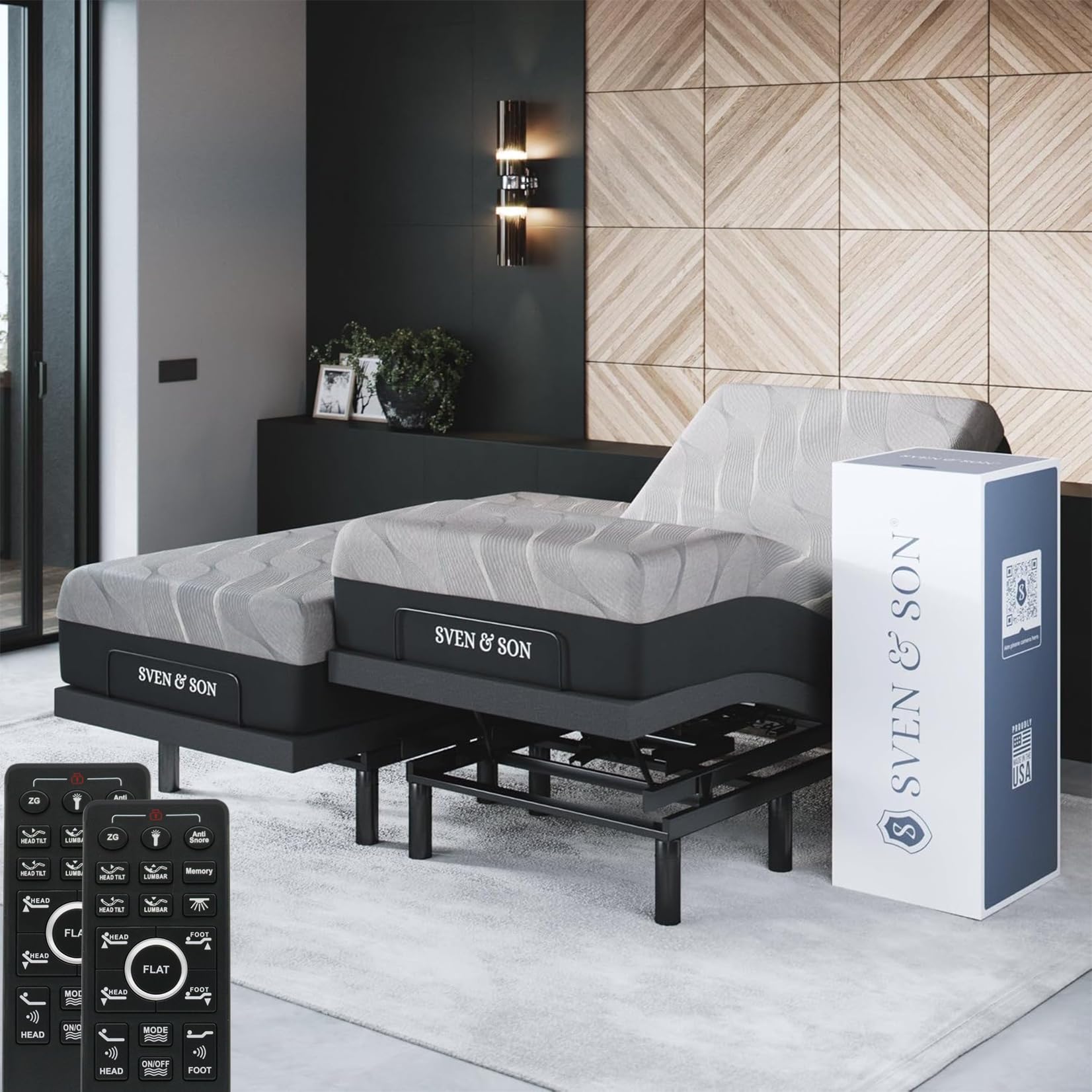
Sven & Son Bliss Adjustable Bed Base-Frame + 14 inch Hybrid Spring Matt (Medi...
$2,749.95
Check Price on Amazon →
Sven & Son Harmony Adjustable Bed Base, Head and Foot Lift, Massage, Under-Be...
$2,194.95
Check Price on Amazon →
Sven & Son Classic Adjustable Bed Base, Head and Foot Lift, Massage, Under-Be...
$1,994.95
Check Price on Amazon →Putting It Together: A Data-Grounded Protocol for Nighttime GERD
The federal data picture here is coherent and actionable. CDC sleep tracking documents that over a third of Americans are already sleep-deprived; GERD is a leading reason why. AHRQ utilization data shows the condition imposes enormous healthcare system costs that dwarf the price of behavioral interventions. The FDA FAERS database provides federal transparency on the risk profile of the pharmaceutical alternatives most commonly prescribed. And FDA 510(k) clearance standards give consumers a meaningful engineering benchmark for evaluating the motorized bases that mechanize the incline intervention.
The hierarchy is clear: start with left-lateral sleeping, meal timing, and sleep hygiene—they cost nothing and will help many readers substantially. Add a formal sleep apnea screening if snoring is present. See a gastroenterologist if any red-flag symptoms appear. And for the subset of readers who have done all of that and still wake up three nights a week with acid in their throat: a quality adjustable base is the most sustainable, evidence-aligned mechanical tool available outside a clinical setting.
Nighttime GERD is not a problem you have to simply endure. The biomechanics are well understood, the federal data on scale and cost is unambiguous, and the interventions—from free to several thousand dollars—exist on a clear evidence ladder. Climbing that ladder systematically, rather than skipping straight to a pill or a device, is both the scientifically sound and economically rational path.
CDC NCHS Data Brief 390 documents that approximately 20% of U.S. adults live with chronic pain, lower back being the most common site. For the GERD sufferer who also has back pain—a substantial overlap population given that both conditions are driven partly by excess body weight and sedentary behavior—the interventions above address multiple mechanisms simultaneously. Sleep position optimization, daily walking, and a well-calibrated adjustable base do not just reduce reflux; they reduce lumbar load, improve sleep architecture, and break the reinforcing cycle of pain and poor sleep that drives so much of the musculoskeletal disability burden documented in SSA Disability Insurance Statistical Reports each year.
That is not a product pitch. That is what the federal data actually shows.