The Injury Data Behind That Familiar 3 a.m. Back Pain
You finish a 12-hour shift. Your lower lumbar feels like it has been wrung like a wet cloth. You have repositioned patients, pushed med carts down linoleum corridors, crouched over procedure tables, and absorbed the low-grade vibration of rubber-soled shoes on concrete subfloor for half a day. Now you need to sleep — and sleep well enough to do it again in 16 hours.
BLS Musculoskeletal Disorders by Occupation data documents that the back is the most commonly injured body part across all U.S. occupations that result in days away from work. Healthcare — specifically nursing, home health, and patient transport roles — consistently ranks among the highest-incidence sectors in that dataset. These are not freak accidents. They are the predictable output of a job architecture that demands repeated spinal loading across shifts that can stretch 13 or 14 hours when handoffs run long.
The downstream consequence is staggering. SSA Disability Insurance Reports identify musculoskeletal disorders as the single largest category of new disability claims filed annually in the United States — a dataset that skews heavily toward physically demanding occupations. Meanwhile, AHRQ HCUP hospital cost data consistently places back pain among the most expensive conditions by combined inpatient and outpatient spending. Healthcare workers who develop chronic MSDs do not just suffer — they become expensive patients themselves, often in the very system they work inside.
CDC NHANES data, published in NCHS Data Brief 390, shows approximately 20% of U.S. adults live with chronic pain, with the lower back as the most common anatomical site. Among healthcare occupations, the proportion with occupationally-linked low back pain is substantially higher. And according to CMS Drug Spending Dashboard data, opioid and non-opioid pain medications rank among the most expensive Medicare drug categories — a number that reflects, in part, the population of workers who aged out of physical occupations with unresolved spinal injuries.
This article is not a product recommendation list. It is a data-anchored guide to understanding the mechanism behind healthcare worker back injury, what federal health agencies recommend you try before spending money, and — after all of that — how sleep-surface characteristics can either support or undermine the recovery you are trying to achieve during the hours you are off the floor.
Why This Happens: The Biomechanics of a Healthcare Shift
Healthcare back injuries are not random. They follow a biomechanically predictable pattern rooted in the specific physical demands of patient care.
Patient handling is the primary mechanism. Lateral patient transfers — moving a patient from a bed to a gurney, for instance — require sustained awkward postures combined with high-force exertion. The NIOSH Lifting Equation was developed precisely to quantify this risk: it documents that manual material-handling tasks in healthcare (and warehousing and construction) routinely exceed safe spinal loading limits when performed under real-world conditions. A patient transfer does not resemble an idealized lift from the NIOSH model — the load is asymmetric, the environment is constrained, and the worker is often already fatigued.
Sustained standing compounds the problem. Twelve hours of standing on hard flooring progressively compresses lumbar intervertebral discs. Disc hydration, which provides cushioning and nutrient exchange, depends on periods of unloading — specifically, horizontal rest. Workers who stand for extended periods without adequate rest intervals arrive at the end of a shift with discs that have lost measurable height and hydration. This is not a metaphor; it is measurable on MRI.
Shift structure disrupts sleep architecture. CDC sleep disorder data shows approximately 35% of U.S. adults sleep fewer than 7 hours per night — the threshold below which chronic disease risk measurably increases. Among shift workers, the problem is worse: rotating shifts, night shifts, and split days off disrupt circadian rhythm in ways that reduce both sleep duration and sleep quality independent of total hours in bed. Fragmented sleep impairs tissue repair, elevates inflammatory cytokines, and lowers pain thresholds — meaning healthcare workers are sleeping poorly during the exact window when spinal tissue is supposed to recover.
Arthritis accelerates the trajectory. CDC Arthritis Data shows approximately 25% of U.S. adults report doctor-diagnosed arthritis, with prevalence concentrated in occupations involving sustained physical demand. Healthcare workers in their 40s and 50s who have spent two decades in physical roles frequently present with occupationally-accelerated facet joint arthritis, disc degeneration, and sacroiliac dysfunction — conditions that make sleep-surface firmness not a comfort preference but a clinical variable.
The compound effect of these factors — repetitive spinal loading, poor sleep quality, and accelerated degenerative change — is what produces the MSD burden that the BLS, SSA, and AHRQ data capture. It also explains why addressing only one variable (say, buying a new mattress) without addressing the others will produce limited results.
The Cheapest Interventions Are the Ones That Cost Nothing
Before any product recommendation, federal occupational health agencies are clear: behavioral and mechanical interventions outperform passive solutions for most cases of occupationally-linked back pain. The evidence hierarchy here is well-established. OSHA's Ergonomics Solutions guidance documents that proper lifting mechanics — hinging at the hips rather than rounding the lumbar spine, keeping loads close to the body, and eliminating torso twisting under load — prevent the majority of acute back injuries before they become chronic. Most acute back episodes are mechanical in origin and mechanical in solution.
NIH NCCIH's evidence review of low-back pain treatments reaches a conclusion that surprises most patients: walking 30 minutes most days reduces chronic low back pain as effectively as most non-drug clinical interventions. This includes many passive modalities that cost considerably more. For healthcare workers who spend their days on their feet, this recommendation can feel counterintuitive — but the mechanism is different. Purposeful, rhythmic walking at comfortable pace activates lumbar stabilizers, promotes disc hydration through cyclic loading and unloading, and reduces inflammatory markers. It is not the same physiologically as reactive standing under load.
Sleep position is the most underappreciated free variable in back pain management. NIH's National Institute of Arthritis and Musculoskeletal and Skin Diseases back pain guidance is explicit: side-sleeping with a pillow between the knees and back-sleeping with a pillow under the knees maintain lumbar lordosis in a neutral position that minimizes intradiscal pressure during sleep. Stomach-sleeping torques the lumbar spine and places the cervical spine in sustained rotation — a posture that worsens chronic pain over time regardless of what surface the worker is lying on. Correcting sleep position costs nothing and produces measurable symptom improvement for many patients within weeks.
Finally, CDC Sleep Hygiene guidance is direct about mattress replacement criteria: replace a mattress if it shows visible sag, if you wake stiffer than you went to bed, or if it is older than 7–10 years. Even a premium sleep surface cannot compensate for poor sleep hygiene, sedentary days, or a shift structure that consistently produces under-7-hour sleep windows. The mattress is one lever in a multi-lever system.
For readers who have already worked through those interventions — corrected mechanics, added walking, optimized sleep position, ensured their current surface is not actively degrading their recovery — the next question becomes: does the surface itself need to change? That is where equipment enters the conversation, not before.
When to See a Clinician First
A new sleep surface is appropriate for healthcare workers managing occupational fatigue and garden-variety low back stiffness. It is not appropriate as a first response to several clinical presentations that require imaging or referral.
NIH's National Institute of Neurological Disorders and Stroke back pain guidance identifies specific red flags that warrant prompt clinical evaluation rather than lifestyle modification. Do not attempt to manage these with a mattress change or any other passive intervention without first ruling out serious pathology.
The AHRQ MEPS data on healthcare expenditures for adults with chronic back conditions underscores the economic stakes here: average annual personal spending substantially exceeds that of adults without chronic back conditions, and much of that gap is attributable to delayed diagnosis and inadequately managed progression. Early clinical evaluation for red-flag presentations is cost-effective over a multi-year horizon.
How Sleep-Surface Characteristics Affect Spinal Recovery
For healthcare workers who have cleared the clinical threshold — no red flags, stable chronic musculoskeletal fatigue, disrupted sleep quality — the evidence on sleep-surface selection is more nuanced than the mattress industry typically presents.
The relevant variables are pressure relief, spinal alignment support, and thermal regulation. Healthcare workers who run warm during sleep (an elevated core temperature is common in workers who have been physically active for long shifts) may find that high-density foam surfaces trap heat in a way that disrupts sleep architecture independent of the support question. Motion isolation matters in households where a partner has a different schedule — common in nursing families where one partner works nights.
For healthcare workers with significant back pain and sensitivity to pressure points — particularly those with facet joint arthritis or disc-related pain — memory foam with appropriate density and pressure-mapping characteristics is the dominant clinical recommendation. The Saatva Loom & Leaf Memory Foam Mattress is the premium pick in this category. Its multi-layer gel-infused memory foam addresses both the spinal contouring that arthritis and disc patients need and the thermal dissipation that active workers require. Saatva constructs this surface with a 3.5-inch layer of Spinal Zone gel memory foam specifically designed to support the lumbar region — not a marketing claim, but an engineering specification relevant to the reader who has spent a shift in lumbar flexion. At $1,695–$3,295 depending on size and firmness, it is not a budget option, but for a worker whose back is their livelihood, the frame of comparison is personal healthcare expenditure, not retail price.
For larger-framed healthcare workers — or those who carry patient care equipment and experience higher baseline spinal loading — standard mattress construction often fails within 18–24 months because it is not engineered for the weight distribution patterns of heavier users. The Saatva HD Mattress is specifically built for users up to 500 pounds, with a lumbar crown support system and a 14.5-gauge Bonnell innerspring base that resists the edge and center compression that causes premature sag in conventional mattresses. For a 260-pound nurse whose standard mattress has developed a body impression at the hip, this is not a luxury upgrade — it is a structural fix. Price range is $2,395–$3,995.
For healthcare workers whose primary complaint is pressure-point pain — hip pain while side-sleeping, shoulder soreness after rest, or generalized soreness at bony prominences — the grid architecture of the Purple Hybrid Premier Mattress offers a mechanically distinct solution. Purple's GelFlex Grid distributes pressure across a non-foam matrix that neither conforms like memory foam nor pushes back like latex — it collapses under pressure points (hips, shoulders) while supporting areas of lesser weight (lumbar, thighs). For healthcare workers who side-sleep and experience hip or shoulder pain that is positional rather than disc-related, this architecture is worth serious consideration. At $2,499–$4,799, it is the highest-priced option in this list, but the pressure-mapping technology is genuinely differentiated from standard foam-over-coil construction.
Sleep Surfaces Built for Healthcare Worker Spinal Recovery
These three mattresses were selected for healthcare workers managing occupational musculoskeletal fatigue — evaluated on pressure relief, spinal alignment support, durability under sustained use, and thermal regulation relevant to workers coming off physically demanding shifts.

Saatva Loom & Leaf Memory Foam Mattress
$1,695-$3,295
See Price at Saatva →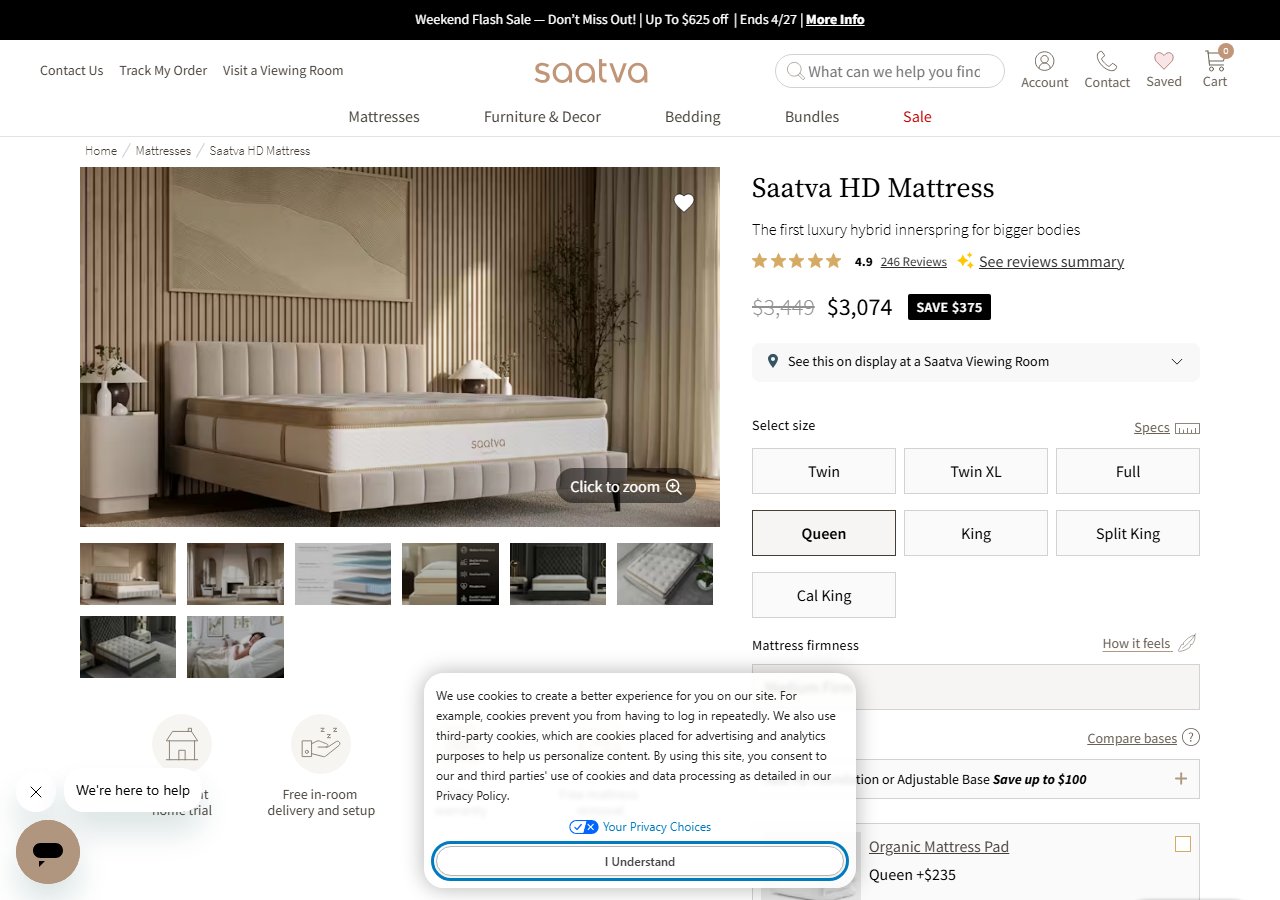
Saatva HD Mattress (Heavy-Duty)
$2,395-$3,995
See Price at Saatva →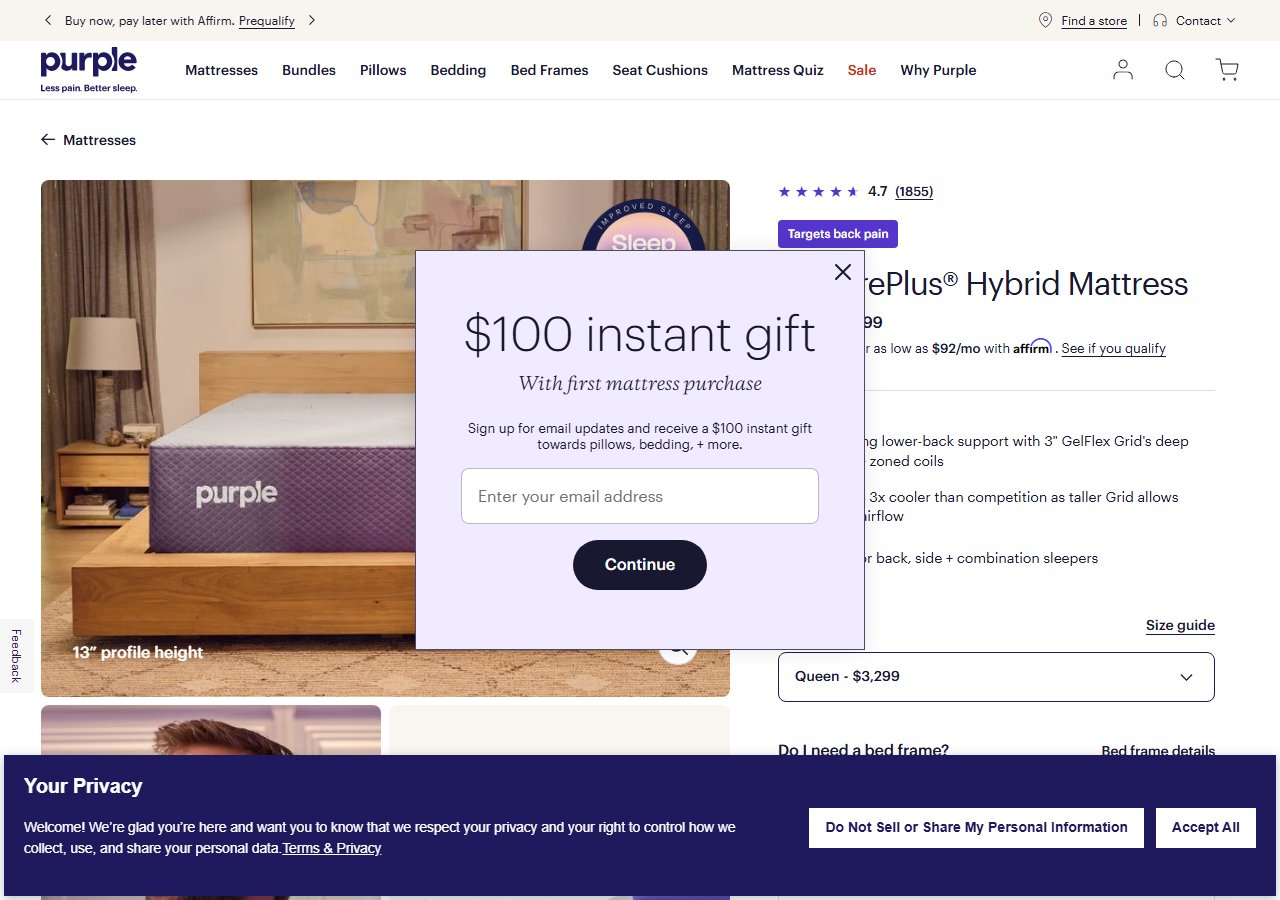
Purple Hybrid Premier Mattress
$2,499-$4,799
See Price at Purple →Putting the Data Together: A Decision Framework for Healthcare Workers
The federal data, assembled, tells a coherent story. BLS injury data identifies healthcare as a high-MSD sector. NIOSH Lifting Equation research documents that spinal loading routinely exceeds safe limits during standard patient care tasks. CDC sleep data shows shift workers are sleeping below the 7-hour threshold at high rates. SSA disability data shows where that trajectory ends when it is not interrupted. And AHRQ expenditure data shows what chronic back conditions cost in out-of-pocket terms over a career.
The intervention hierarchy that emerges from that data is clear: mechanics first, movement second, sleep position third, surface fourth, clinical evaluation whenever red flags appear. A mattress that costs $3,000 and is placed under a worker who still rounds their lumbar spine during patient transfers, does not walk regularly, and stomach-sleeps will produce minimal return. The same mattress under a worker who has addressed the first three variables may meaningfully improve sleep quality and reduce morning stiffness.
BLS Workers' Compensation cost data documents that high-MSD industries carry workers' compensation rates 3–5x higher than low-MSD industries — a statistic that reflects the institutional cost of allowing these injuries to progress unchecked. Individual workers bear the personal version of that same cost curve: in lost productivity, in out-of-pocket healthcare spending that AHRQ MEPS documents is substantially elevated for chronic back patients, and in the compounding disability trajectory the SSA data captures.
The goal of this analysis is not to sell a mattress. It is to help a nurse, a surgical technician, or a home health aide understand exactly where a sleep surface fits in the evidence hierarchy — and to make that decision with the same clinical rigor they would apply to any other intervention in their workday.
For most healthcare workers with occupational back fatigue: address the free variables first, consult a clinician if red flags emerge, and then — when you have done that work — treat a sleep surface as what it is: a recovery tool with real but bounded utility, selected on the basis of your specific sleep position, body structure, and pain pattern.