The Federal Data Behind Infrared Sauna Recovery
Here is the uncomfortable truth that most sauna marketing ignores: the most compelling research justifying infrared sauna use for athlete recovery does not come from supplement brands or boutique wellness companies. It comes from federal occupational health agencies and chronic disease surveillance systems. NIOSH-cited research documents that passive heat therapy interventions — including regular sauna use — are associated with measurable cardiovascular and circulatory adaptations in habitual users. That is a meaningful evidentiary anchor for a category drowning in vague claims.
At the same time, cardiovascular disease accounts for approximately 1 in 3 U.S. deaths annually according to CDC mortality tracking. Approximately 76% of U.S. adults fail to meet weekly aerobic activity guidelines, and roughly 25% of U.S. adults carry a doctor-diagnosed arthritis diagnosis, with concentration in physically demanding occupations. These are not background statistics. They are the physiological and epidemiological context that explains why federal health researchers have turned serious attention toward passive cardiovascular conditioning tools — and why athletes who already train hard are looking for structured recovery adjuncts that do measurable work between sessions.
This article does not promise that a sauna will make you faster. It does something more useful: it traces the federal evidence, explains the mechanism, surfaces the protocols you can implement before spending a dollar, and then identifies the equipment that best operationalizes the science for everyday athletes.
Why Infrared Sauna Works on Athletic Bodies: The Biomechanical Mechanism
Traditional Finnish saunas heat the air around the body to temperatures between 170°F and 200°F. Infrared saunas operate differently and, for recovery purposes, more efficiently. Near-, mid-, and far-infrared wavelengths penetrate 1.5 to 3 inches into soft tissue, elevating core temperature directly without requiring the ambient air to reach scalding levels. Sessions typically run between 120°F and 150°F — hot enough to trigger meaningful physiological responses, cool enough to sustain longer exposure for athletes who are already heat-adapted from training.
The core recovery mechanism is cardiovascular. As core temperature rises, heart rate increases to between 100 and 150 beats per minute in a 20-minute session — a cardiac output comparable to moderate aerobic exercise, documented in research the NIOSH evidence base cites. Peripheral vasodilation follows: blood vessels near the surface of the skin dilate, increasing circulation to muscles, tendons, and connective tissue. For athletes in the 24-to-72-hour post-competition window, this circulation flush is the primary mechanism of interest. Metabolic waste products — lactate, creatinine, cytokines associated with delayed-onset muscle soreness — are cleared more rapidly from tissue when local blood flow is elevated.
The secondary mechanism is anti-inflammatory. Repeated thermal challenge triggers heat shock protein (HSP) upregulation. Heat shock proteins are molecular chaperones that help cells manage and repair misfolded proteins — a direct response to the mechanical stress of high-intensity training. HSP production is associated with reduced cellular inflammation markers and improved muscle cell resilience in the literature that NIOSH-affiliated researchers review.
A third mechanism is relevant specifically to athletes carrying arthritic load — a population larger than most people assume. CDC arthritis surveillance data shows approximately 25% of U.S. adults have been diagnosed with arthritis, with higher rates in occupations and sport populations that accumulate years of sustained joint stress. Infrared heat penetrating synovial joints increases synovial fluid viscosity and reduces joint stiffness, which is why a structured post-training sauna session often allows athletes to move through their next morning's warm-up with markedly less start-up friction.
Finally, the cardiovascular adaptation argument deserves its own paragraph. NOAA occupational heat data documents the elevated physiological toll of sustained heat exposure on the cardiovascular system — research that established baseline understanding of how the body acclimates to repeated thermal load. The same adaptation pathway operates in voluntary sauna use: repeated exposure trains the cardiovascular system to respond more efficiently to heat stress, producing lower resting heart rate, improved autonomic regulation, and better peripheral circulation over weeks of consistent protocol. CDC PLACES county-level cardiovascular data tracks the exact conditions — hypertension, CVD, stroke — that sauna research has studied most intensively, and the geographic clustering of those conditions maps directly to regions with high concentrations of physically demanding occupational populations.
What the Federal Safety Framework Actually Tells You
Before protocol comes safety architecture. Federal oversight of infrared sauna devices is more rigorous than most consumers realize, and understanding it helps you separate legitimate hardware from the flood of unvetted units.
The FDA 510(k) clearance database indexes infrared therapy and thermal treatment devices as Class II medical devices, meaning manufacturers seeking clearance must demonstrate substantial equivalence to a previously cleared predicate device and submit safety and performance data for federal review. This is not a rubber stamp — it is a structured technical review process. When you are evaluating any sauna purchase, querying the 510(k) database for the manufacturer's device is a baseline due diligence step that most buyers skip.
The FDA Adverse Event Reporting System (FAERS) provides federal-level safety surveillance on adverse events associated with thermal therapy devices. FAERS data for sauna devices is sparse compared to pharmaceutical categories, which is epidemiologically meaningful — it suggests that when used according to protocol, these devices have a low adverse event rate in the real-world population. What FAERS does flag disproportionately is events involving dehydration and rapid blood pressure changes — the exact risk vectors the non-product protocols below are designed to address.
The NIOSH Total Worker Health framework formally integrates passive recovery interventions, including thermal therapy, into comprehensive occupational health — not as fringe wellness but as legitimate physiological tools within a structured health program. This is the federal imprimatur that serious athletes and their medical teams should be citing when building a recovery stack.
Try These First: Non-Product Protocols That Cost Nothing
The cheapest intervention is the one that requires no purchase. Before evaluating any hardware, athletes should internalize and implement the following evidence-backed protocols. They are not filler — they are the difference between sauna use that produces adaptation and sauna use that produces adverse events.
The foundational behavioral protocol is hydration before and after. A 20-minute infrared sauna session can produce between 0.5 and 1 liter of sweat loss. CDC NIOSH heat-stress guidance translates directly: pre-hydrate with at least 16 ounces of water before entering, and replace fluid plus electrolytes within 60 minutes of exiting. Athletes who train twice daily are already in a marginal hydration state before evening recovery sessions — this is not a minor detail.
Pairing sauna with light cardio is the second protocol, and it matters mechanistically. Most of the cardiovascular benefit documented in sauna research comes from cohorts who also met CDC physical activity guidelines of 150 minutes of moderate aerobic activity per week. Sauna is a cardiovascular complement, not a cardiovascular replacement. Athletes who substitute sauna for missed training sessions are not accessing the adaptation pathway the research documents — they are simply getting warm.
Timing sauna sessions for sleep optimization is the third protocol, and it is counterintuitive to many athletes. Body temperature must drop to initiate sleep onset. NIH guidance recommends finishing heat exposure at least 90 minutes before lights-out to allow core temperature to decline. Athletes who sauna at 10 PM and wonder why they cannot fall asleep at 10:30 PM are working against fundamental thermoregulatory sleep biology.
Medical clearance before starting any thermal protocol is non-negotiable for specific populations. NIH NCCIH guidance is explicit: clear heat therapy with a clinician if you have uncontrolled hypertension, a recent cardiac event, are pregnant, or take medications affecting thermoregulation (beta-blockers, diuretics, and anticholinergics all impair normal heat dissipation). This is not boilerplate caution — infrared sessions can drop systolic blood pressure 10-20 mmHg within minutes, which for athletes on antihypertensives represents a clinically significant stacking effect.
For athletes who have absorbed the above, implemented consistent hydration and timing discipline, obtained appropriate medical sign-off, and are now asking what hardware will best operationalize these protocols at home — the following equipment analysis addresses that question directly.
When to See a Clinician Before You Buy Anything
The recovery sauna market has a meaningful blind spot: it markets primarily to the healthy and already-fit, which obscures the clinical contraindications that affect a non-trivial slice of even the recreational athlete population. Federal data quantifies this risk pool.
CDC PLACES data shows that hypertension prevalence in many U.S. counties exceeds 35% — even in physically active adult populations. AHRQ MEPS data documents the substantial healthcare cost differential between adults with and without chronic cardiovascular conditions, which is part of why preventive intervention research is funded — but it also underscores that the population most motivated to try recovery tools often has the highest baseline cardiovascular risk. NIH guidance on sauna contraindications recommends medical clearance before initiating regular sauna use if you have any of the following: uncontrolled hypertension, recent myocardial infarction or cardiac procedure, arrhythmia, active infection with fever, or are in the first trimester of pregnancy — where elevated maternal core temperature is associated with neural tube defects in prospective cohort data per CDC pregnancy guidance.
For athletes post-surgery or managing orthopedic conditions, the calculus changes further. Infrared penetration into tissue is not trivial — it reaches hardware including surgical implants, which can conduct heat differently than surrounding tissue. Any athlete with metal implants, pacemakers, or cochlear implants should receive explicit orthopedic or cardiac clearance before infrared sauna use. This is not a fringe scenario: CDC arthritis data shows that roughly 25% of the U.S. adult population carries an arthritis diagnosis, and joint replacement rates in the 45-to-64 age bracket — an age group well-represented in masters athletics and serious recreational sport — have increased substantially over the past decade.
Where Products Fit: Equipment That Translates the Federal Research Into Daily Practice
With mechanism understood, protocols internalized, and clinical flags addressed, the question of which hardware to acquire becomes answerable from a functional rather than marketing standpoint. Three products represent distinct positions on the athlete recovery spectrum — price, format, and use-case differ meaningfully.
For athletes with outdoor space and the budget for a permanent recovery installation, the Almost Heaven Pinnacle 4-Person Barrel Sauna ($5,499) represents the most complete solution. The barrel geometry is not aesthetic indulgence — curved interior walls concentrate and circulate heat more evenly than rectangular box designs, producing more consistent temperature gradients across the session. At 4-person capacity, it accommodates team recovery protocols, partner sessions, or simply the ability to stretch and move during longer sessions without feeling confined. The exterior barrel design is engineered for outdoor weather tolerance, which matters for athletes who train year-round and want sauna access in shoulder seasons when outdoor training overlaps with cold ambient temperatures. This is the permanent recovery infrastructure choice — the analog of building a home gym rather than keeping a gym membership.
For athletes who travel, live in apartments, rent their space, or want to add infrared exposure without committing to a full cabin installation, the HigherDOSE Infrared Sauna Blanket V4 ($599) is the most accessible entry point in this category. It delivers far-infrared wavelengths at controlled temperatures up to 158°F in a portable format that stores in a bag. The practical ceiling here is 30-minute sessions, which aligns with the documented evidence window for far-infrared cardiovascular and circulatory response. Athletes in-season traveling for competition can pack it; athletes in off-season cutting costs can use it as a primary recovery tool before committing to a cabin purchase. The blanket format does limit movement — you are stationary during the session — which makes the timing and hydration protocols above even more important to nail.
Each of these products fits a different stage of athlete commitment to thermal recovery. The Almost Heaven Pinnacle is a long-term infrastructure investment for athletes who have validated sauna recovery in their training cycle and want permanent daily access. The HigherDOSE Blanket is the entry product for athletes beginning to build the protocol, validating personal response to infrared exposure, or operating under space and budget constraints.
Infrared Saunas and Blankets Built for Athlete Recovery Protocols
Each product below was selected because it aligns with the NIOSH-cited thermal physiology research and federal safety framework discussed above — differing by format, investment level, and athlete use case.
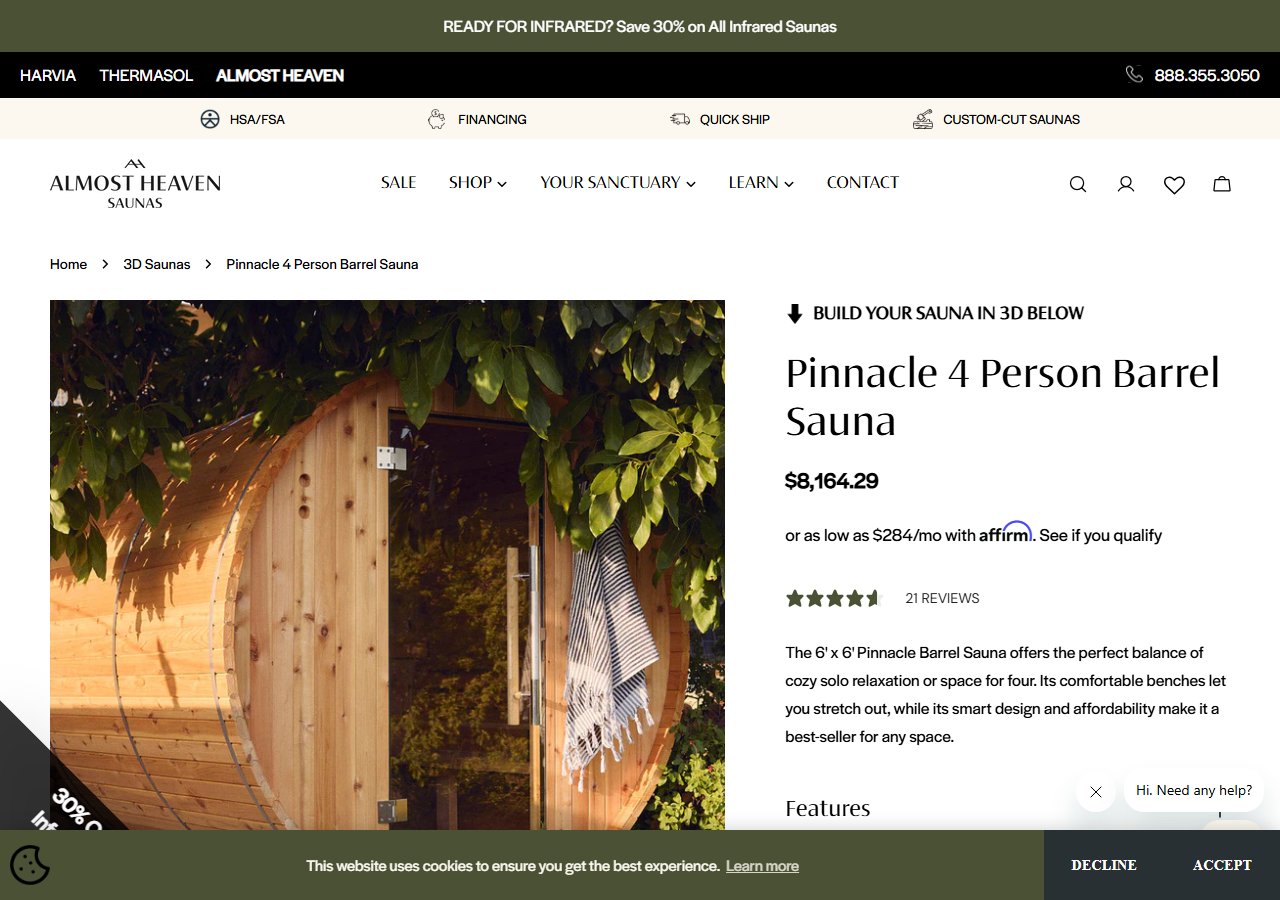
Almost Heaven Pinnacle 4-Person Barrel Sauna
$5,499
See Price at Almost Heaven →
HigherDOSE Infrared Sauna Blanket V4
$599
See Price at HigherDOSE →Building the Full Recovery Stack: Sauna as One Tool Among Many
The NIOSH Total Worker Health framework positions passive thermal therapy not as a standalone intervention but as one component of a comprehensive health program that integrates physical activity, sleep, nutrition, and stress management. That framing is the correct one for serious athletes.
A sauna session three to four times per week, properly timed (90+ minutes before sleep), properly hydrated (pre- and post-session), and combined with meeting CDC's 150-minute weekly aerobic activity baseline produces a different physiological outcome than any single element in isolation. The cardiovascular conditioning from aerobic training sensitizes the body to respond more robustly to the passive cardiac output of a sauna session. The sauna session clears inflammatory metabolites that would otherwise depress the quality of the next training session. The sleep optimization from correct timing consolidates the neuromuscular adaptations from both. These are not independent variables — they are a stack.
The federal data does not oversell this. AHRQ MEPS data on healthcare costs for cardiovascular conditions motivates preventive research, not miracle cures. CDC BRFSS data showing that 76% of U.S. adults fail aerobic activity guidelines is a reminder that sauna cannot substitute for the foundational work. FDA FAERS data on thermal therapy adverse events is a reminder that even beneficial interventions carry risk when protocols are not followed.
The athletes who will extract the most value from an infrared sauna investment — whether a $599 blanket or a $5,499 barrel installation — are the ones who treat it as a precision tool applied within a structured recovery system, not as a passive box to sit in after a hard workout and hope for the best. Federal research supports the tool. The protocol is what separates recovery science from recovery theater.
Summary
Infrared sauna recovery sits in a credible federal evidence base — NIOSH-cited cardiovascular adaptation research, FDA Class II device oversight, CDC chronic disease surveillance that identifies exactly the conditions sauna research targets most. The mechanism is real: passive cardiac output, peripheral vasodilation, HSP upregulation, joint mobility improvement for arthritis-affected athletes. The contraindications are also real and documented by NIH, CDC, and FDA adverse event data. The protocol — hydrate, pair with cardio, time for sleep, clear medically — is the difference between the evidence-based use case and the wellness marketing version. The equipment choices reflect different athlete contexts: a permanent outdoor barrel installation for committed daily use, and a portable infrared blanket for flexible entry-level access. Apply the federal research. Follow the protocol. Then choose the hardware that fits your training life.