The Stress-Cardiovascular Nexus: What Federal Data Actually Shows
Start with the number that should stop any high-stress professional cold: cardiovascular disease accounts for approximately 1 in 3 U.S. deaths annually, per CDC WONDER mortality tracking. That is not a background statistic. For the lawyer billing 70-hour weeks, the surgeon absorbing compounding clinical decisions, the executive whose nervous system never fully exits fight-or-flight mode—that number is an occupational hazard dressed in epidemiological clothing. Chronic psychological stress is a primary upstream driver of cardiovascular pathology: it sustains cortisol and catecholamine elevation, promotes systemic inflammation, disrupts sleep architecture, and accelerates arterial stiffening. The downstream conditions—hypertension, atherosclerosis, arrhythmia—are the exact ones CDC PLACES tracks at the county level as the top targets for community-level intervention.
The professional context makes this worse. Approximately 76% of U.S. adults do not meet weekly aerobic activity guidelines, per CDC's Behavioral Risk Factor Surveillance System (BRFSS). Among high-stress knowledge workers with compressed schedules, that number almost certainly trends higher. You cannot out-supplement a sedentary, high-cortisol lifestyle. But the federal research framework does suggest something useful: passive heat therapy—specifically, regular sauna use—has a documented physiological mechanism that partially mimics the cardiovascular response to moderate aerobic exercise, particularly in populations whose schedules or physical limitations restrict conventional activity.
NIOSH-cited research documents that passive heat therapy interventions, including sauna use, are associated with measurable cardiovascular and circulatory adaptation in regular users. The mechanism is not mystical. It is thermoregulatory physiology: elevated core temperature drives peripheral vasodilation, increases cardiac output, elevates heart rate into a moderate aerobic-equivalent range, and triggers parasympathetic rebound during the cooling phase post-session. That parasympathetic rebound—the nervous system downshift after heat stress—is the mechanism most directly relevant to chronic stress management in high-demand professionals.
This is also why the NIOSH Total Worker Health framework is relevant here. TWH explicitly integrates recovery interventions—including thermal therapy—as part of comprehensive occupational health, not as a separate wellness luxury. When federal occupational health researchers frame sauna use as a workplace recovery tool rather than a spa indulgence, that framing should recalibrate how high-stress professionals think about the investment.
Why the Stress-Inflammation Loop Is Especially Hard to Break
Understanding the mechanism matters because it determines which interventions actually interrupt the cycle—and which ones merely feel good without doing so. Chronic occupational stress activates the hypothalamic-pituitary-adrenal (HPA) axis on a near-continuous basis. Sustained cortisol elevation suppresses immune regulation, promotes visceral fat accumulation, and drives systemic low-grade inflammation. That inflammation is the common upstream driver of both cardiovascular disease and the musculoskeletal complaints—joint pain, stiffness, tendinopathy—that high-stress desk workers accumulate over years.
Approximately 25% of U.S. adults report doctor-diagnosed arthritis, with concentration in occupations involving sustained physical demand. But sustained sedentary demand—the posture-locked, keyboard-intensive work of legal, financial, and executive roles—produces its own inflammatory load through different mechanisms: reduced lymphatic circulation, chronic muscle tension, and the compressive joint stress of hours-long static posture. The same NIOSH-cited passive heat research that documents cardiovascular adaptation also notes circulatory benefits consistent with reduced inflammatory marker burden in regular users.
The AHRQ Medical Expenditure Panel Survey (MEPS) documents a substantial healthcare cost differential between adults with and without chronic cardiovascular conditions. The implication for preventive intervention research—including heat therapy—is that even modest, consistent reductions in cardiovascular risk burden translate to significant downstream cost offsets. This is the kind of framing that makes infrared sauna a rational line item in a professional's health budget rather than a luxury purchase.
NOAA's heat-related workplace risk data establishes the broader federal context for thermal physiology research, documenting elevated occupational injury risk during peak summer months in agriculture, construction, and roadwork. That research corpus, while focused on heat hazard avoidance, produces the same foundational understanding of thermoregulatory physiology that informs therapeutic heat application—the body's adaptive responses to heat stress are well-characterized in the federal research literature precisely because the hazard version has demanded rigorous study.
The Federal Safety Framework Around Infrared Sauna Devices
Before discussing interventions or products, the regulatory context matters. The FDA 510(k) Class II clearance database indexes infrared therapy and thermal treatment devices, providing federal review of manufacturer safety claims. Not every sauna product on the market has cleared this review. When evaluating any home infrared sauna—particularly at the price points involved—checking whether the device or its core infrared panel technology has received 510(k) review is a baseline due diligence step, not an optional one.
Separately, the FDA Adverse Event Reporting System (FAERS) provides federal-level safety data on adverse events associated with thermal therapy devices. The adverse event profile for properly used, properly constructed infrared saunas is limited—primarily dehydration, hypotension on exit, and heat exhaustion in users who violate session length or hydration protocols. That profile is manageable with proper protocol, which is why the intervention section below is not optional reading.
Try These First: Free and Low-Cost Interventions Before You Buy Anything
The cheapest intervention is the one that does not require buying anything. For high-stress professionals, the temptation to solve a physiological problem with a product purchase is strong—and the infrared sauna industry is very good at marketing to exactly that impulse. But the federal evidence base for sauna therapy is built on cohorts who followed consistent protocols, maintained adequate hydration, and used heat therapy as a complement to physical activity—not a replacement for it. Before evaluating hardware, these interventions establish the behavioral and physiological foundation that makes sauna therapy actually work.
Pair sauna with light cardio for circulation. The most-cited cardiovascular benefits in sauna research come from cohorts who also met CDC physical activity guidelines—150 minutes of moderate aerobic activity per week. Sauna is a complement to aerobic activity, not a substitute. For high-stress professionals who are already exercise-constrained, this means that even 20-30 minutes of brisk walking before a sauna session meaningfully amplifies the cardiovascular and circulatory benefit compared to sauna alone. This is the intervention with the highest evidence-to-cost ratio on this list.
Hydrate before and after every session. A 20-minute sauna session can produce 0.5 to 1 liter of sweat loss. CDC NIOSH heat-stress guidance translates directly: pre-hydrate with at least 16 oz of water before entering, and replace fluid plus electrolytes within an hour of exit. Dehydration is the most common mechanism behind the adverse events in FAERS data—and it is entirely preventable with a consistent pre- and post-session hydration protocol. High-stress professionals who are also heavy caffeine users—a demographic nearly universal in this population—should account for caffeine's diuretic effect and add additional fluid intake accordingly.
Time your session 90 minutes before sleep. Body core temperature must drop to initiate sleep onset. NIH sleep guidance is specific: finish heat exposure at least 90 minutes before lights-out so core temperature has time to fall adequately. This is the single most commonly violated sauna protocol among professionals who use their sauna session as an end-of-evening wind-down ritual—finishing at 10:45 PM and attempting sleep at 11:00 PM. The result is delayed sleep onset and degraded slow-wave sleep quality, which is exactly the opposite of the recovery goal. Schedule accordingly.
Obtain clinical clearance if you have cardiovascular risk factors. Saunas produce rapid peripheral vasodilation and a significant drop in blood pressure on exit. NIH NCCIH sauna guidance is unambiguous: if you have uncontrolled hypertension, a recent cardiac event, are pregnant, or take medications affecting thermoregulation (including beta-blockers, diuretics, or certain antidepressants), clear sauna use with a physician before beginning. This is not a liability disclaimer—it is a physiological reality. The same vasodilatory mechanism that produces the therapeutic benefit creates real risk in the wrong clinical context.
Avoid sauna use during pregnancy. CDC pregnancy guidance and NIH both identify sauna avoidance as a firm recommendation during pregnancy. Elevated maternal core temperature in the first trimester is associated with neural tube defects in cohort data. This contraindication is absolute, not risk-stratified.
For readers who have already adopted consistent hydration, timing, and light cardio protocols—and who have confirmed no clinical contraindications—the next question is equipment. The behavioral protocol produces the physiological benefit; the hardware determines whether that protocol is sustainable in the context of a high-stress professional's life. Convenience, session quality, and integration into a home environment are real variables. The three products below were selected against those criteria.
When to See a Clinician
Infrared sauna therapy operates on the same thermoregulatory physiology as any other thermal stressor. The federal safety framework—FDA FAERS adverse event data, NIH clinical guidance—identifies specific clinical presentations that require physician evaluation before or during sauna use. High-stress professionals, who often normalize physical symptoms as occupational wear, should be particularly attentive to these red flags.
If you experience chest discomfort, significant shortness of breath, or palpitations during or immediately after a sauna session, exit immediately and seek evaluation. These are not adaptation symptoms. They are potential indicators of underlying cardiovascular instability that sauna-induced cardiac output elevation may be unmasking. NIH NCCIH's sauna guidance specifically flags uncontrolled hypertension and recent cardiac events as absolute contraindications. Similarly, if you are on antihypertensive medications, diuretics, or any drug class affecting thermoregulation, the blood pressure drop on sauna exit can be clinically significant—not merely uncomfortable. Orthostatic hypotension events (sudden dizziness or near-syncope when standing after a session) should prompt medication review with your prescribing physician before continuing sauna use.
Where Products Help: Hardware That Makes the Protocol Sustainable
With mechanism understood, interventions established, and clinical contraindications cleared, the product decision becomes practical rather than aspirational. High-stress professionals face a specific hardware constraint: the product needs to fit a real home environment, integrate into a compressed schedule, and deliver consistent session quality without requiring elaborate setup each use. The three options below address different versions of that constraint.
For professionals with outdoor space and a commitment to the full traditional barrel sauna experience, the Almost Heaven Pinnacle 4-Person Barrel Sauna is the most robust permanent installation on this list at $5,499. The barrel geometry is not aesthetic preference—curved walls distribute heat more evenly than rectangular cabin designs, reducing hot spots that force positional adjustment mid-session. For two-person households where one partner has adopted sauna use and the other is curious, the 4-person capacity removes the constraint of single-occupancy scheduling and turns the session into a shared recovery practice. Almost Heaven builds with North American cedar, which maintains structural integrity through humidity cycling better than most import softwoods. This is a capital purchase, not a consumable—evaluate it against the AHRQ MEPS cost differential data between adults with and without managed cardiovascular conditions, and the math is less dramatic than the sticker suggests.
For professionals whose living situation—urban apartment, frequent travel, or space constraints—makes a permanent outdoor installation impractical, the HigherDOSE Infrared Sauna Blanket V4 at $599 is the highest-utility portable option on this list. The blanket format delivers far-infrared wavelength exposure across the full body surface while the user lies flat, which is a physiologically meaningful difference from seated exposure formats that concentrate heat on the lower body. For the executive with a 6:00 AM departure and a hotel room as their primary recovery environment three nights a week, a sauna blanket that packs in a carry-on bag and requires only an outlet is not a compromise—it is the only viable format. The V4 operates at temperatures up to 158°F across eight heat settings, with a session timer that enforces the 45-minute maximum recommended by NIH guidance. At $599, it is accessible to most professionals who have already committed to the behavioral protocol and simply need hardware that doesn't require a backyard.
Infrared Saunas Built for High-Stress Professional Recovery
These products were selected for high-stress professionals who have confirmed clinical clearance, adopted the behavioral protocol, and need hardware that integrates into a real schedule—whether that means a permanent outdoor installation or a portable option that travels.
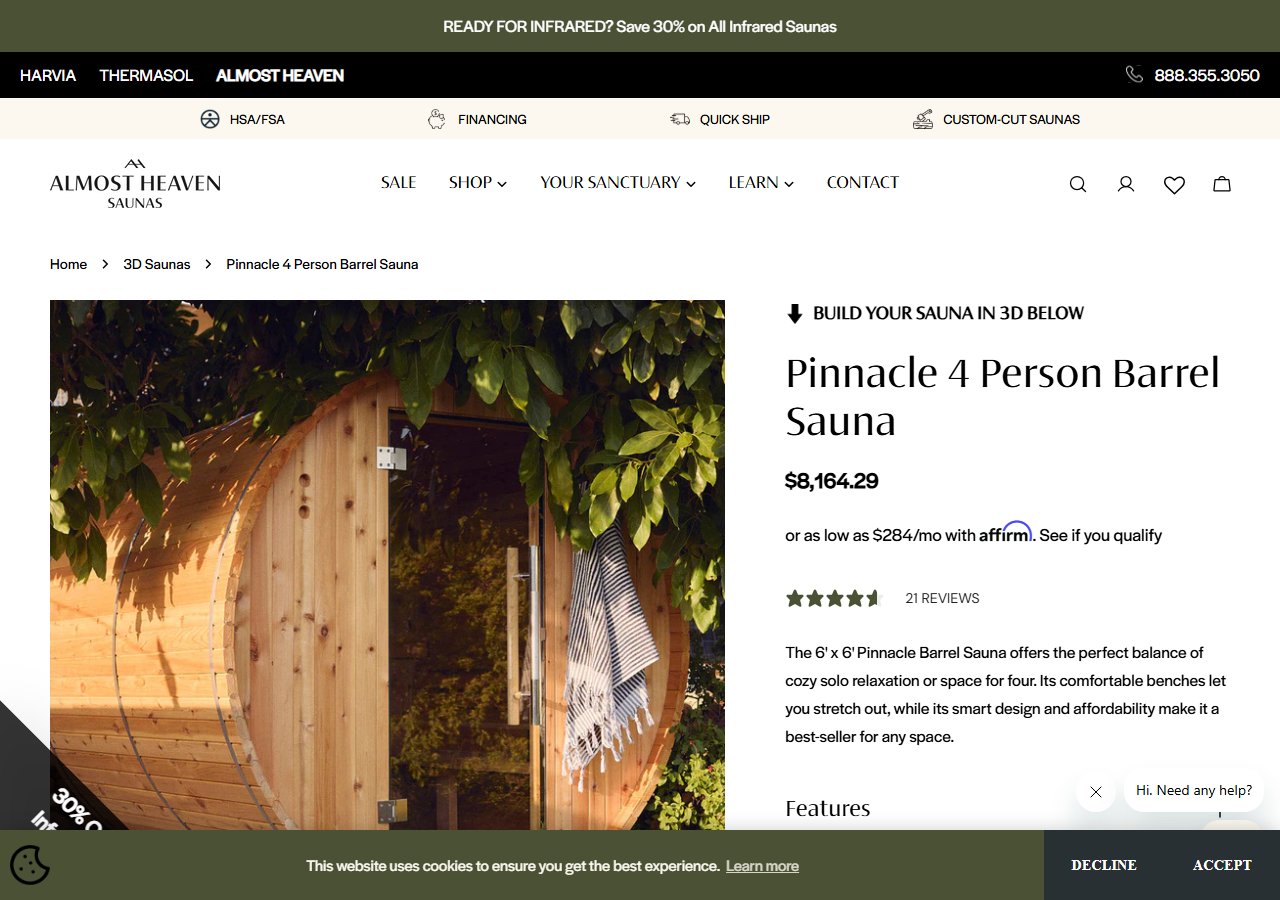
Almost Heaven Pinnacle 4-Person Barrel Sauna
$5,499
See Price at Almost Heaven →
HigherDOSE Infrared Sauna Blanket V4
$599
See Price at HigherDOSE →The Data-to-Intervention-to-Product Hierarchy
The federal data is unambiguous on two points that are easy to lose in a product-forward wellness conversation. First, cardiovascular disease—the condition most directly implicated in chronic stress pathophysiology and most consistently studied in sauna intervention research—kills approximately 1 in 3 Americans annually. Second, 76% of U.S. adults are not meeting the aerobic activity baseline that underlies the strongest sauna benefit data. These are not statistics that a product purchase resolves.
What the NIOSH Total Worker Health framework correctly identifies is that recovery interventions—including thermal therapy—are occupational health tools that work when embedded in a coherent behavioral protocol. Hydration, timing, light cardio, clinical clearance for contraindicated conditions: these are the mechanism activators. The Almost Heaven Pinnacle and the HigherDOSE Sauna Blanket V4 are delivery vehicles for that mechanism—and good ones—but they do not manufacture the mechanism themselves.
High-stress professionals make excellent patients for this intervention precisely because they already understand that outcomes require systems, not single inputs. Build the behavioral protocol first. Confirm clinical clearance. Then select the hardware format that integrates most naturally into the environment you actually live in, not the aspirational one. That sequencing is what the federal evidence base supports—and it is what separates therapeutic sauna use from expensive sweating.