The Federal Data Truckers Are Not Seeing at Pre-Trip Inspections
If you drive a commercial rig for a living, you already know the back pain. What you may not know is that the federal data quantifying that pain is alarming enough to justify a serious look at your recovery infrastructure — not just a heating pad and ibuprofen. According to BLS Musculoskeletal Disorders by Occupation tracking, the back is the single most commonly injured body part across all U.S. occupations with days away from work. That statistic spans office workers, nurses, and construction crews — and yet it is truckers who spend 10 or more consecutive hours in a seat engineered for vibration absorption and payload capacity, not spinal health.
The financial consequence of ignoring that reality is not abstract. AHRQ's Healthcare Cost and Utilization Project (HCUP) documents that a single workers' compensation lumbar strain claim averages $30,000 to $60,000 in direct medical costs depending on jurisdiction and severity — before lost wages, rehabilitation, and the compounding costs of chronic-pain management are factored in. CDC NCHS Data Brief 390 adds population-level context: approximately 20% of U.S. adults live with chronic pain, with the back named as the most common location. For long-haul drivers, that national average likely undercounts occupational exposure.
This article is built on a simple premise: the cheapest intervention is the one that does not require buying anything. We will work through the biomechanics of how cab driving injures the spine, the free interventions OSHA, NIOSH, and CDC recommend, the clinical red flags that mean you need a physician before anything else, and finally the specific massage chair specifications that address trucker-pattern spinal loading when equipment becomes the appropriate next step.
Why Cab Driving Breaks Down the Spine: The Biomechanical Mechanism
A standard truck cab seat positions the driver in roughly 90 to 110 degrees of hip flexion for the duration of a shift. That posture does three things simultaneously that are each individually damaging and collectively catastrophic over a career.
First, it compresses lumbar discs asymmetrically. Sitting — particularly in a slightly forward-slumped position common in long cab drives — increases intradiscal pressure in the L4-L5 and L5-S1 segments more than standing does. When sustained for hours with added whole-body vibration from road surface and drivetrain, the nucleus pulposus (the gel center of each intervertebral disc) experiences repetitive hydraulic stress. Over years, this accelerates degenerative disc disease at exactly the segments most vulnerable to herniation.
Second, it progressively shuts off the glutes. The gluteus maximus and gluteus medius are the primary stabilizers of the lumbar pelvis. Extended sitting neurologically downregulates their activation — a pattern exercise scientists call "gluteal amnesia." When the glutes stop firing properly, the erector spinae and the quadratus lumborum (a deep lumbar muscle that laterally stabilizes the spine) overcompensate, developing chronic hypertonic tension that presents clinically as persistent low-back tightness and, eventually, trigger point pain.
Third, it shortens the hip flexors into a functional anterior pelvic tilt. The iliopsoas complex — the primary hip flexor — adaptively shortens in prolonged sitting. A shortened iliopsoas pulls the anterior pelvis downward, increasing lumbar lordosis beyond its healthy range. This compresses the posterior elements of the lumbar spine (facet joints, posterior ligaments) and is a direct contributor to the facet arthropathy that older truckers frequently develop.
CDC arthritis and musculoskeletal data confirms that approximately 1 in 4 U.S. adults reports doctor-diagnosed arthritis, with prevalence concentrated in occupations with high physical demand — and sustained vibration exposure in a compressive spinal posture is precisely the kind of occupational stressor that accelerates that timeline. The BLS SOII data by NAICS similarly shows warehousing and logistics sectors among the highest nonfatal injury rates in private industry — an industry that overlaps heavily with the loading, unloading, and physical labor truckers perform off the cab.
The additional metabolic reality for truckers is access. A warehouse worker goes home to a fixed environment where they can install a standing desk, see a physical therapist regularly, and control their diet. A trucker's "home" for 3 to 4 weeks at a time is a sleeper berth measuring roughly 30 square feet. Recovery infrastructure is not optional enrichment — it is a logistical constraint that shapes what interventions are actually executable.
And the downstream cost of unmanaged pain is not limited to medical bills. CMS Drug Spending Dashboard data shows that opioid and non-opioid pain medication spending ranks among the most expensive Medicare drug categories, reflecting the chronic-pain treatment burden that accumulates when structural recovery is never addressed. AHRQ MEPS data further documents that adults with chronic back conditions carry substantially higher annual personal healthcare expenditures than those without — a gap that widens with each year the underlying mechanical cause goes unaddressed.
Try These First: Free and Low-Cost Interventions That Work
Before any product recommendation is appropriate, federal occupational health guidance is clear: the cheapest intervention is the one that does not require buying anything. The following evidence-based strategies from OSHA, NIOSH, and the CDC address the specific injury patterns truckers face. They should be the first line of defense — and for some drivers, they may be sufficient.
Fix the driving posture before adding equipment. OSHA's ergonomics guidance and its Materials Handling resources document that most occupational back injuries are mechanical and preventable through technique and setup changes. For truckers, this means adjusting the seat lumbar support to its maximum position before every shift, setting the steering wheel tilt so your arms are at roughly 90 to 100 degrees of elbow flexion, and ensuring the seat height positions your hips at or slightly above knee level. These adjustments cost nothing and directly reduce the compressive load pattern described above.
Micro-breaks are non-negotiable. NIOSH research on office ergonomics demonstrates that 30-second micro-breaks every 30 minutes meaningfully reduce musculoskeletal symptoms in sedentary workers. For truckers, this translates to using every fuel stop, weigh station, and mandatory rest break to get out of the cab, walk 100 feet, and do several lumbar extension movements. The HOS (Hours of Service) regulations already mandate rest — the question is whether those breaks involve movement or more static sitting in a truck stop booth.
Daily thoracic mobility work reverses the seated forward posture. CDC physical activity guidance for adults recommends muscle-strengthening activity on two or more days per week as a baseline. For truckers, the minimum effective dose is two minutes of thoracic extension over a foam roller (a piece of equipment that fits in any gear bag) plus chin tucks performed against the headrest to restore cervical neutral position. This directly counteracts the thoracic kyphosis that develops from hours of forward-reaching steering posture.
Lifting mechanics protect the spine between drives. OSHA's Materials Handling guidance is explicit: lift with the legs, keep loads close to the body, avoid twisting under load. Truckers who load and unload freight — or even heavy personal gear — are exposed to the same mechanical injury risk as warehouse workers during that activity. BLS SOII data confirms warehousing among the highest-injury industries precisely because of this combination of sustained posture and acute lifting load.
Many truckers reading this have already tried postural adjustments, micro-breaks, and mobility work — and still end the day with a lumbar region that feels like it was worked over with a tire iron. That is not weakness or failure. It reflects the cumulative load of whole-body vibration, extended static posture, and restricted recovery access that a stationary office worker does not face. When behavioral interventions are consistently applied and still leave residual pain and muscular tension, targeted mechanical recovery equipment becomes a clinically rational next step — not a luxury purchase, but a recovery infrastructure investment with a measurable cost-avoidance case behind it.
When to See a Clinician: Red Flags That Mean Stop and Get Evaluated
Massage therapy — mechanical or human — is appropriate for non-radicular muscle pain and soft-tissue tension. It is not appropriate as a substitute for medical evaluation when specific warning signs are present. NIH's National Institute of Neurological Disorders and Stroke is explicit that certain presentations require immediate clinical attention, and truckers are at elevated risk for several of them given the occupational biomechanics described above.
If you experience pain that radiates from the low back down the leg past the knee, particularly with numbness, tingling, or weakness in the foot or ankle, that is a clinical emergency pattern consistent with nerve root compression or lumbar disc herniation requiring physician evaluation before any self-care. Similarly, back pain accompanied by bladder or bowel dysfunction is cauda equina syndrome until proven otherwise — a true surgical emergency. Pain following a sudden trauma (a hard stop, a fall from the cab, a loading dock impact) requires imaging before massage or mobilization. And back pain accompanied by fever, unexplained weight loss, or night sweats raises the possibility of infection or malignancy, both of which are made worse — not better — by delayed medical evaluation.
For truckers specifically, the FMCSA medical qualification standards require a CDL holder to be medically certified as physically qualified to drive. Chronic pain managed exclusively through self-care — without a physician's documentation — can create regulatory exposure in addition to health risk. A timely occupational medicine evaluation is both a clinical and a professional protection.
Where Products Help: Massage Chair Specifications Matched to Trucker Biomechanics
With behavioral interventions established and clinical red flags ruled out, the question becomes: what does a massage chair need to do specifically for a long-haul trucker's injury pattern? The answer is more specific than the marketing suggests.
Truckers need chairs with genuine SL-track roller systems — the curved track that follows the spine from the cervical region through the lumbar and into the upper glutes. A standard L-track stops at the lumbar. An S-track stops at the upper thoracic. The SL-track is the only configuration that reaches all three problem zones — cervical (from steering posture), lumbar (from disc compression), and gluteal (from prolonged hip flexion). Any chair that does not clearly specify SL-track coverage is a compromise for this use case.
Zero-gravity positioning is not a marketing gimmick for truckers — it is structurally relevant. When the chair reclines to the zero-gravity position (approximately 120 degrees of trunk-to-thigh angle), the lumbar spine is offloaded of the compressive forces that accumulate during sitting. This is the closest approximation to spinal traction available in a home or sleeper-berth-adjacent setting. For truckers whose discs have been hydraulically stressed for 10 hours, that decompression window matters.
4D roller systems (rollers with speed, pressure, width, and depth adjustability) matter because trucker musculature is not the same as an office worker's. Years of isometric bracing against vehicle vibration and the physical demands of loading/unloading create dense, hypertonic muscle tissue that requires greater depth of mechanical stimulation to achieve the vasodilation and neurological downregulation (the relaxation response) that therapeutic massage produces.
On the product side, the Bodyfriend Phantom 2 is the premium recommendation in this space for truckers with serious spinal recovery needs. At $4,990, it is a capital equipment decision — but Bodyfriend is the leading Korean medical-grade massage chair manufacturer, and the Phantom 2 features a full SL-track system, genuine 4D rollers, and multiple zero-gravity positions engineered through collaboration with clinical rehabilitation specialists. The company's chairs have been evaluated under frameworks consistent with FDA 510(k) Class II medical device clearance standards, which distinguishes clinical-grade therapeutic equipment from the consumer wellness category. For a trucker with documented chronic lumbar loading across a multi-year career, the cost-avoidance arithmetic against a $30,000 to $60,000 workers' comp claim is not difficult to run.
For drivers who need a capable chair at a more accessible price point, the RELX Massage Chair Full Body at $1,899.99 through Amazon delivers SL-track coverage and zero-gravity positioning in a package that covers the core trucker recovery requirements without the premium price. It is a credible entry into serious spinal recovery — not a fashion chair with two massage modes — and the Amazon purchase pathway provides familiar buyer protection for drivers purchasing remotely.
The HealthRelife 4D Massage Chair Full Body Zero Gravity Recliner with 55-inch SL-Track at $1,699.00 rounds out the options as the value-tier pick with explicit 4D roller and SL-track specifications at a price point that makes the investment accessible for owner-operators managing costs tightly. The 55-inch SL-track length is notable — longer track coverage means more thoracic and gluteal reach, which is exactly what the driver's posture pattern demands.
Massage Chairs Built for Long-Haul Trucker Spinal Recovery
Each chair below was selected for SL-track coverage, zero-gravity positioning, and 4D roller depth — the three specifications that directly address the lumbar compression, thoracic stiffness, and gluteal tension patterns documented in long-haul driving biomechanics.

Bodyfriend Phantom 2 Massage Chair
$4,990
See Price at Bodyfriend →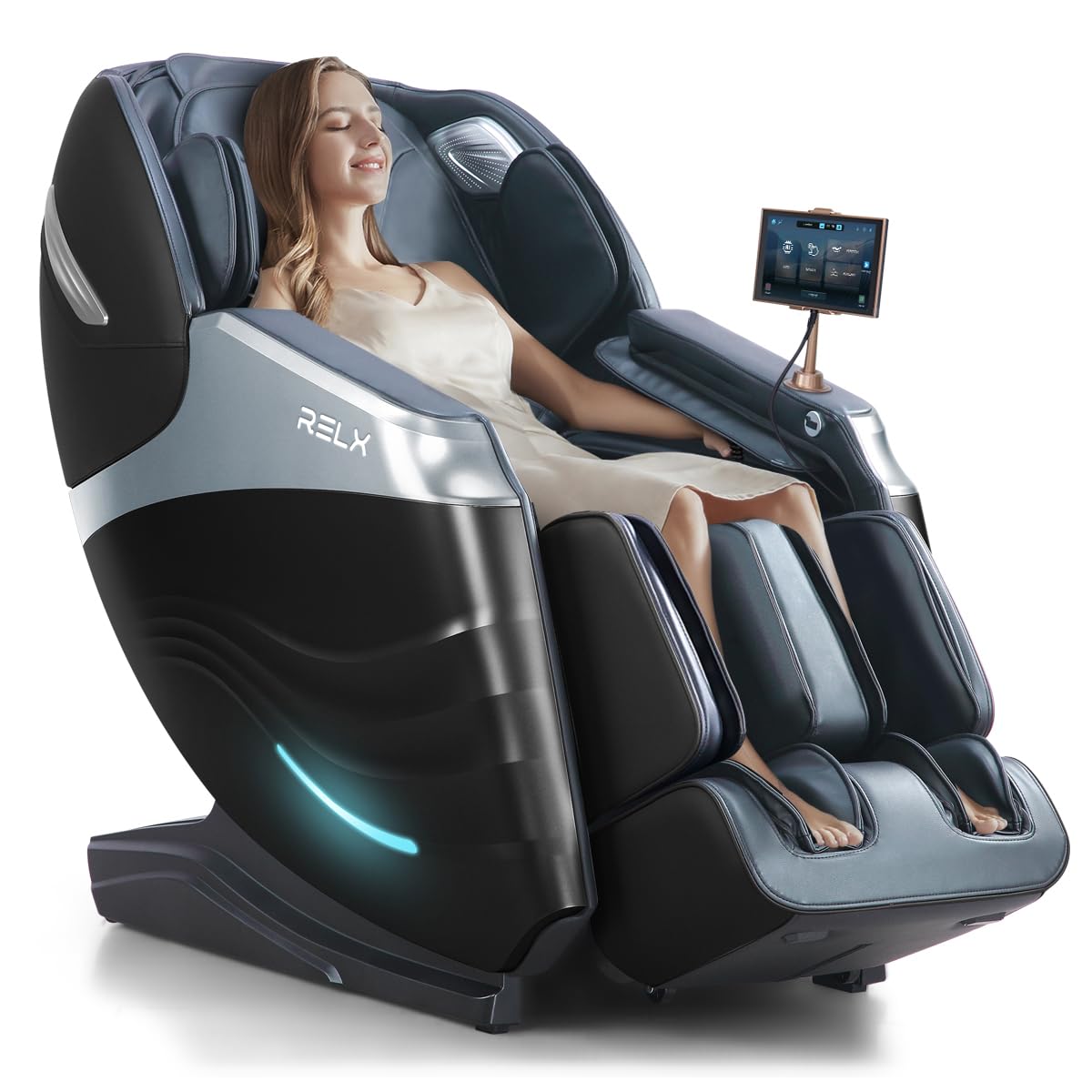
RELX Massage Chair Full Body, 20 Modes Zero Gravity SL-Track Shiatsu Massage ...
$1,899.99
Check Price on Amazon →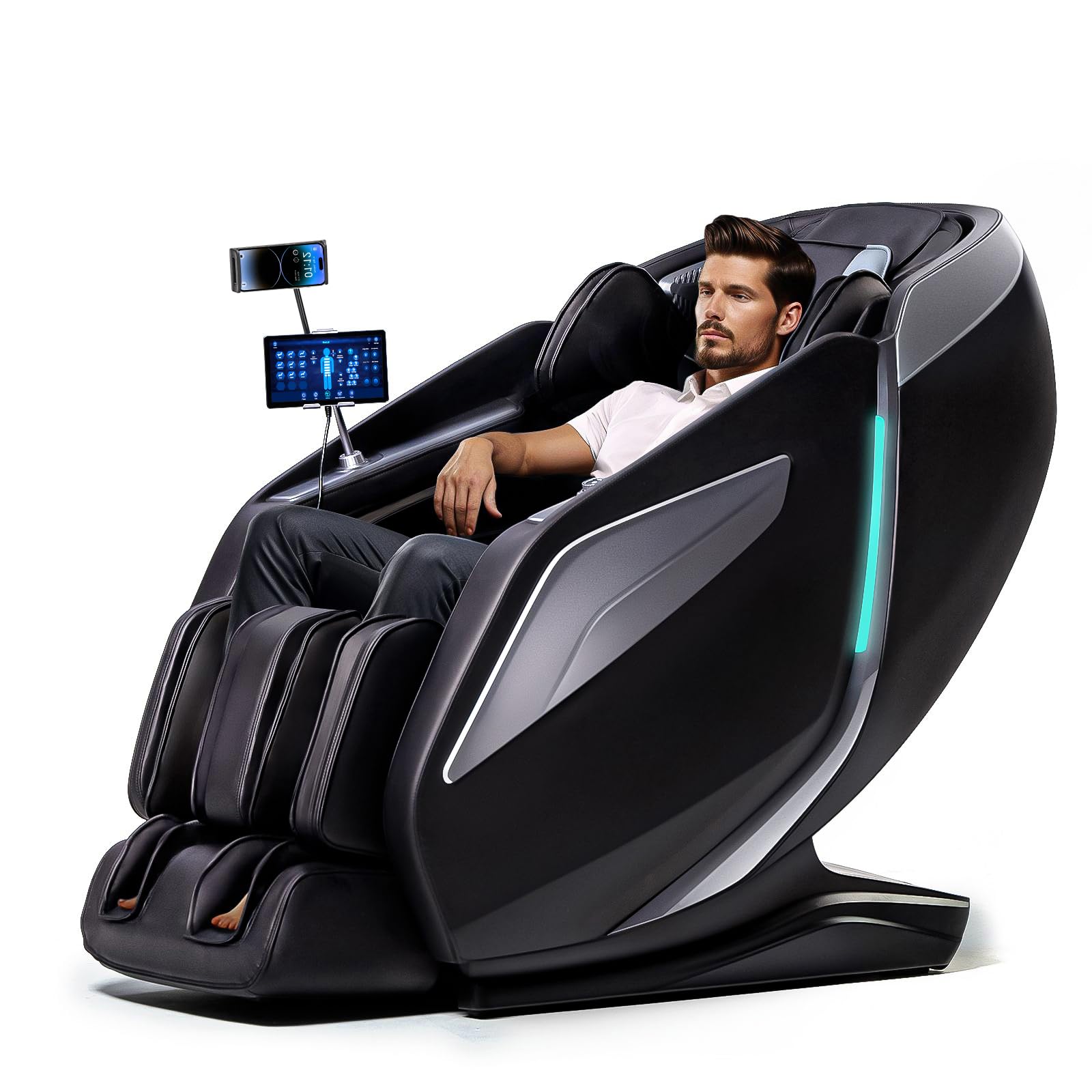
HealthRelife 4D Massage Chair Full Body Zero Gravity Recliner - 55“ SL-Track,...
$1,699.00
Check Price on Amazon →The Recovery ROI Case: Framing This as a Business Decision
Owner-operators in particular should think about massage chair investment the same way they think about preventive maintenance on a rig. A $500 repair done at 300,000 miles prevents a $15,000 engine overhaul at 400,000 miles. The math for spinal health is structurally identical. AHRQ HCUP data puts a single lumbar strain workers' comp claim at $30,000 to $60,000 in direct costs. AHRQ MEPS data documents that adults with chronic back conditions carry substantially higher healthcare costs every year — costs that compound. A $1,700 to $5,000 massage chair, used daily over a 10-year career, amortizes to between $0.47 and $1.37 per day. Against the financial and physical cost of a career-ending lumbar injury, that is not a consumer purchase. It is occupational health infrastructure.
Company drivers should be aware that the BLS Employer Costs for Employee Compensation (ECEC) data documents that workers' compensation insurance premiums in high-MSD sectors are already elevated — meaning carriers and fleet operators have a direct financial incentive to reduce injury frequency. Some progressive carriers have begun offering sleep and recovery equipment allowances precisely because the actuarial case is clear. If your employer offers any wellness or HSA benefit, a physician-documented recommendation for therapeutic massage equipment may qualify for reimbursement under IRS Publication 502 — worth confirming with your tax advisor.
Finally, the broader chronic-pain cost context matters. CMS Drug Spending Dashboard data shows pain medication among the most expensive drug categories in Medicare — and that spending reflects what happens when musculoskeletal pain is managed pharmacologically rather than mechanically. The trucker who uses a quality massage chair daily and maintains basic movement hygiene is not merely feeling better. They are potentially deflecting a trajectory that leads to opioid dependence, surgical intervention, or early career termination — all of which federal data documents as far more expensive outcomes.
Summary: The Data-to-Intervention-to-Product Hierarchy
Federal occupational health data builds an unambiguous case: long-haul truckers face one of the most mechanically demanding spinal loading profiles in the U.S. workforce. The back is the most-injured body part nationally. Lumbar strain claims cost tens of thousands of dollars per incident. Chronic pain affects one in five adults and costs more every year it persists. The biomechanics of sustained cab driving — disc compression, gluteal inhibition, hip flexor shortening — explain exactly why.
The right response to that data is sequential. Fix posture first. Add movement breaks. Do the thoracic mobility work. Rule out clinical red flags with a physician. Then, when behavioral interventions have been consistently applied and equipment becomes the rational next step, choose a chair with SL-track coverage, zero-gravity positioning, and 4D roller depth that matches the density and depth of trucker musculature. The Bodyfriend Phantom 2 is the premium choice for drivers who want clinical-grade engineering. The RELX and HealthRelife chairs deliver the core specifications at accessible price points for drivers managing costs tightly.
The data supports the investment. The biomechanics explain the need. The interventions come first.