The Federal Case for Taking Muscle Recovery Seriously
Here is a number worth sitting with: musculoskeletal disorders account for approximately 30% of all nonfatal occupational injuries with days away from work across U.S. private industry, according to the Bureau of Labor Statistics Survey of Occupational Injuries and Illnesses. That is not a niche statistic. It means that nearly one in three serious workplace injuries involves soft tissue — muscles, tendons, ligaments, and the connective structures that hold the body together under repetitive load. For athletes and physically active workers, those tissues are the engine. When they break down faster than they recover, performance declines, injury risk escalates, and eventually workers end up on the wrong end of a lost-time claim.
The economics reinforce the urgency. BLS Workers' Compensation data identifies back, neck, and shoulder claims as among the most expensive musculoskeletal claim categories across industries. Transportation and warehousing workers — a population that overlaps heavily with athletic movement patterns in terms of load, lift, and repetitive reach — face a median of more than 14 days away from work per musculoskeletal injury event. Fourteen days. That is two full weeks of earnings, two weeks of deconditioning, two weeks of lost athletic development for a competitive athlete. The downstream cost of inadequate recovery is not abstract.
This is the context in which percussive massage therapy has become one of the fastest-growing recovery categories in sports medicine and occupational health. The question this article addresses is a specific one: what does the federal evidence base actually say about these devices, who should use them, and how should an informed consumer evaluate the options? We are going to follow the data, not the marketing.
Why Muscles Break Down — and Why Recovery Is a Biological Process, Not a Product
Understanding what percussion therapy is actually supposed to do requires a brief detour into exercise physiology. When skeletal muscle is subjected to high-force or repetitive mechanical load — whether that is a deadlift, a warehouse shift, or a long-haul trucking route that requires repeated cab entry and exit — it sustains microscopic structural damage at the level of the muscle fiber and its surrounding fascia. This is normal. The biological term is exercise-induced muscle damage (EIMD), and the soreness that follows 24 to 72 hours later — the delayed-onset muscle soreness (DOMS) that makes stairs brutal the day after leg day — is the inflammatory response to that damage.
The inflammatory cascade that produces DOMS serves a purpose. It signals the immune system to clear cellular debris, stimulates satellite cell activation, and initiates the remodeling process that results in stronger, more resilient tissue. The problem is the timeline. In competitive athletic contexts, and in physically demanding occupational settings, the gap between tissue-loading events is often shorter than the biological recovery window. A construction worker lifts Monday through Friday. A competitive athlete trains twice a day. The tissue does not fully remodel before the next load cycle arrives. Cumulative microtrauma accumulates. OSHA ergonomics guidance for repetitive-motion workers explicitly recommends recovery and stretching protocols between work cycles specifically to reduce this cumulative tissue load — an acknowledgment from the federal regulatory apparatus that the biological recovery window must be actively managed, not assumed.
The mechanism by which percussive therapy is theorized to assist this process involves several overlapping pathways. Rapid mechanical oscillation — typically at 30 to 53 Hz in commercial devices — is thought to stimulate muscle spindle reflexes, increase local blood flow and lymphatic drainage, reduce myofascial trigger point tenderness through repeated desensitization of mechanoreceptors, and modulate pain perception through gate-control mechanisms in the dorsal horn of the spinal cord. This is not fringe science. NIH NCCIH evidence reviews on percussive massage therapy report short-term reductions in delayed-onset muscle soreness and improvements in range of motion — language that carries the weight of the National Institutes of Health systematic review process. Short-term is the operative word. The evidence for long-term structural changes from percussion devices alone is considerably thinner, which is why this article frames percussion as a recovery adjunct rather than a standalone intervention.
CDC chronic pain surveillance reports approximately 20% of U.S. adults experiencing chronic pain, with non-opioid self-management tools growing in clinical relevance precisely because CMS drug spending data shows opioid and pain-medication costs among the highest in Medicare's drug expenditure categories. That public-health framing matters. Percussive therapy is not a cure for chronic pain. But in the context of a healthcare system looking for non-pharmacologic alternatives, evidence-backed mechanical interventions occupy an increasingly credible position. The NIH Pain Consortium's research catalogue explicitly lists mechanical and physical interventions, including percussive therapy, as adjuncts to standard rehabilitation for soft-tissue conditions — adjuncts, not replacements.
What the FDA Actually Regulates — and What It Does Not
This is where many consumers are misled by marketing language. Brands frequently position their devices using clinical-sounding terminology — "professional grade," "medical device," "FDA-cleared" — without always being transparent about what those designations mean in practice.
The FDA classifies most consumer percussive massage devices as low-risk Class I or unregulated wellness devices, which are legally distinct from prescription medical massagers. Class I devices are subject to "general controls" — basic manufacturing, labeling, and reporting requirements — but they are not subject to the 510(k) premarket notification process that applies to Class II devices, and they certainly are not subject to the premarket approval process that applies to Class III devices (like pacemakers). When a consumer massage gun brand advertises "FDA-cleared" status, it is important to understand what that means in context: the device has been determined to be in a class that does not require demonstration of clinical efficacy before it reaches market shelves. That is not a fraud. It is a legitimate regulatory category. But it is different from a drug or medical device that has demonstrated efficacy through controlled clinical trials as a condition of market entry.
What this means practically: the evidence base for percussive therapy comes primarily from independent research — the NIH NCCIH reviews, sports medicine journals, physical therapy literature — not from FDA-mandated clinical trials on specific commercial devices. The device you purchase has been reviewed for basic safety, not for the specific athletic recovery claims on its packaging. Informed consumers should treat the independent research evidence as the evidentiary floor, and approach brand-specific efficacy claims with appropriate skepticism.
Try These Before You Buy Anything
The cheapest intervention is the one that does not require buying anything. Before any athlete or physically active worker invests in percussive therapy hardware, there are evidence-backed, zero-cost interventions that the federal evidence base supports — and that, in many cases, produce equivalent or superior outcomes for the injury patterns in question.
Active recovery — light cardio such as 10 to 15 minutes of walking or easy cycling — clears metabolic byproducts faster than any percussive device, according to CDC Physical Activity Guidelines. The mechanisms are straightforward: low-intensity aerobic activity drives circulation, flushes lactate and inflammatory cytokines from loaded tissue, and maintains mobility without adding new mechanical stress. A percussion device at rest does not produce those cardiovascular effects. Active recovery does, and it is free. Similarly, daily 30-second static stretches targeting chronically shortened muscles — hip flexors from prolonged sitting, pectorals from rounded-shoulder posture — address the postural shortening that drives most chronic tightness with more structural specificity than a percussion device applied generally to the same region. NIH NCCIH stretching guidance confirms this: targeted stretching interventions show consistent range-of-motion benefits across the literature.
For users who do proceed to a device, the NIOSH Total Worker Health framework's guidance on soft-tissue safety supports one to two minutes per muscle group with light to moderate pressure as the appropriate dose ceiling. More time and more pressure does not produce more recovery. It produces more mechanical stress on tissue that is already in a recovery state. This is a point manufacturers rarely foreground. The device is not a dial you turn up for better results. Dose discipline matters.
Finally, the contraindication picture matters enormously. NIH guidance is explicit: percussion devices should never be used over bone, fresh injuries, the front of the neck, varicose veins, areas with DVT history, areas with reduced sensation, or anywhere with active inflammation. These are not edge cases. Overuse of percussion over an acute sprain, for example, can worsen the inflammatory response and delay healing. Users with any specific medical condition should clear percussion use with a clinician before self-treating.
For readers who have already worked through the zero-cost interventions and are genuinely in the market for a percussion device — perhaps because they train volume is high, recovery windows are short, or they are managing the kind of chronic soft-tissue loading that comes with athletic competition or physically demanding occupational schedules — the evidence does support percussion as a useful adjunct. The question is which device, at which price point, serves those needs most effectively.
When to See a Clinician Instead of Reaching for a Device
A percussion gun is a recovery tool. It is not a diagnostic instrument, and it is not appropriate for pain that has moved beyond the normal DOMS-and-tightness territory that physically active adults experience.
NIH National Institute of Neurological Disorders and Stroke back pain guidance is clear: pain that persists beyond two weeks, radiates down a limb, comes with numbness or weakness, or follows acute trauma requires evaluation by a licensed clinician. No percussion device changes that clinical calculus. In fact, using a percussion device on referred pain — pain that originates in the spine and is felt in the leg, for example — can mask the symptoms that a clinician needs to assess, and may in some presentations worsen the underlying pathology. The NIOSH Total Worker Health framework endorses non-pharmacologic recovery modalities specifically within the context of occupational health management supervised by appropriate professionals, not as a replacement for medical evaluation when clinical criteria are met.
The clinical red flags for this population are specific and worth enumerating clearly in the section below.
Where Products Fit — and How to Evaluate Them
For the athlete or active worker who has done the active recovery work, addressed postural shortening through stretching, respects the dosing limits from NIOSH soft-tissue guidance, and does not present any clinical red flags — a well-engineered percussion device can meaningfully support the recovery process that NIH NCCIH research confirms is real.
The three devices below were selected based on build quality, amplitude and stall-force specifications (the two most functionally relevant engineering parameters), independent review evidence, and price-point coverage. Each device is positioned for the specific recovery demands of an athletic or physically active reader. We led with the direct-brand option first because it represents the most thoroughly documented performance specification in this category.
The Hyperice Hypervolt 2 Pro is the strongest alternative to the Theragun line for athletes who need professional-grade performance without paying professional-grade prices. At $329, it is not inexpensive. But for athletes managing serious training volume or physically demanding occupational schedules, the Hypervolt 2 Pro's 90-watt brushless motor, five-speed range, and Hyperice's pressure sensor technology — which provides real-time feedback when you are applying more force than the tissue can productively use — directly address the dosing discipline problem that NIOSH soft-tissue guidance identifies. The device also holds Bluetooth connectivity for integration with the Hyperice app, which structures recovery protocols by muscle group in a way that aligns with the NIH NCCIH's recommendation for targeted, session-structured use rather than diffuse, time-unlimited application.
For readers who want solid mid-tier performance and prefer the Amazon marketplace, the Opove M3 Pro 2 at $129.99 offers a legitimate percussion device at roughly 40% of the Hypervolt 2 Pro's price. Its 12mm amplitude and three-speed motor deliver adequate tissue penetration for the large muscle groups — quads, hamstrings, glutes, lats — that accumulate the most loading in athletic and occupational contexts. It is not as quiet as the Hypervolt 2 Pro, and it lacks the pressure sensor feedback, which means dosing discipline falls entirely to the user. But for athletes who understand the NIOSH guidance and apply it self-directed, the Opove represents a competent recovery tool at a price point that does not require justification.
The Mebak 3 at $99.99 is the entry-level option for athletes who are new to percussive therapy and want to evaluate whether it works for their specific recovery patterns before investing further. Its six interchangeable head attachments are a genuine functional advantage at this price: the flat head for large muscle belly work, the bullet head for trigger point specificity, and the fork head for paraspinal work alongside the spine (never on it) cover the most common athletic recovery use cases. The Mebak 3 is best understood as a trial device — appropriate for users working through the NIH NCCIH-documented short-term benefits for the first time and not yet certain that percussion therapy will become a permanent fixture of their recovery stack.
Percussion Devices for Athletes Who Have Done the Work First
These three devices were selected for athletes and physically active workers managing real training volume — curated for amplitude, stall force, and dosing features that align with NIH NCCIH and NIOSH soft-tissue recovery guidance.
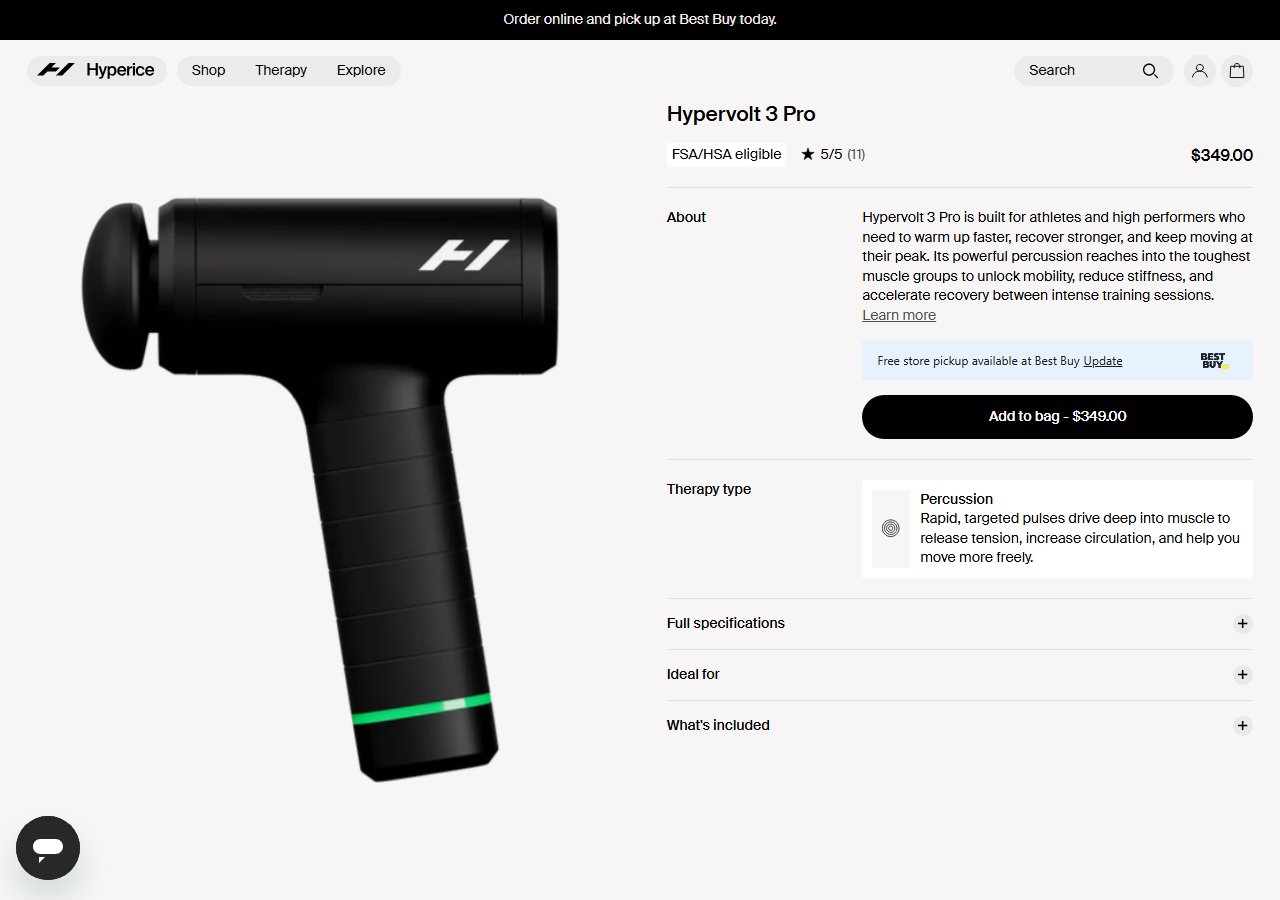
Hyperice Hypervolt 2 Pro
$329
See Price at Hyperice →
Opove M3 Pro 2 Massage Gun Deep Tissue Percussion Muscle Massager for Workout...
$129.99
Check Price on Amazon →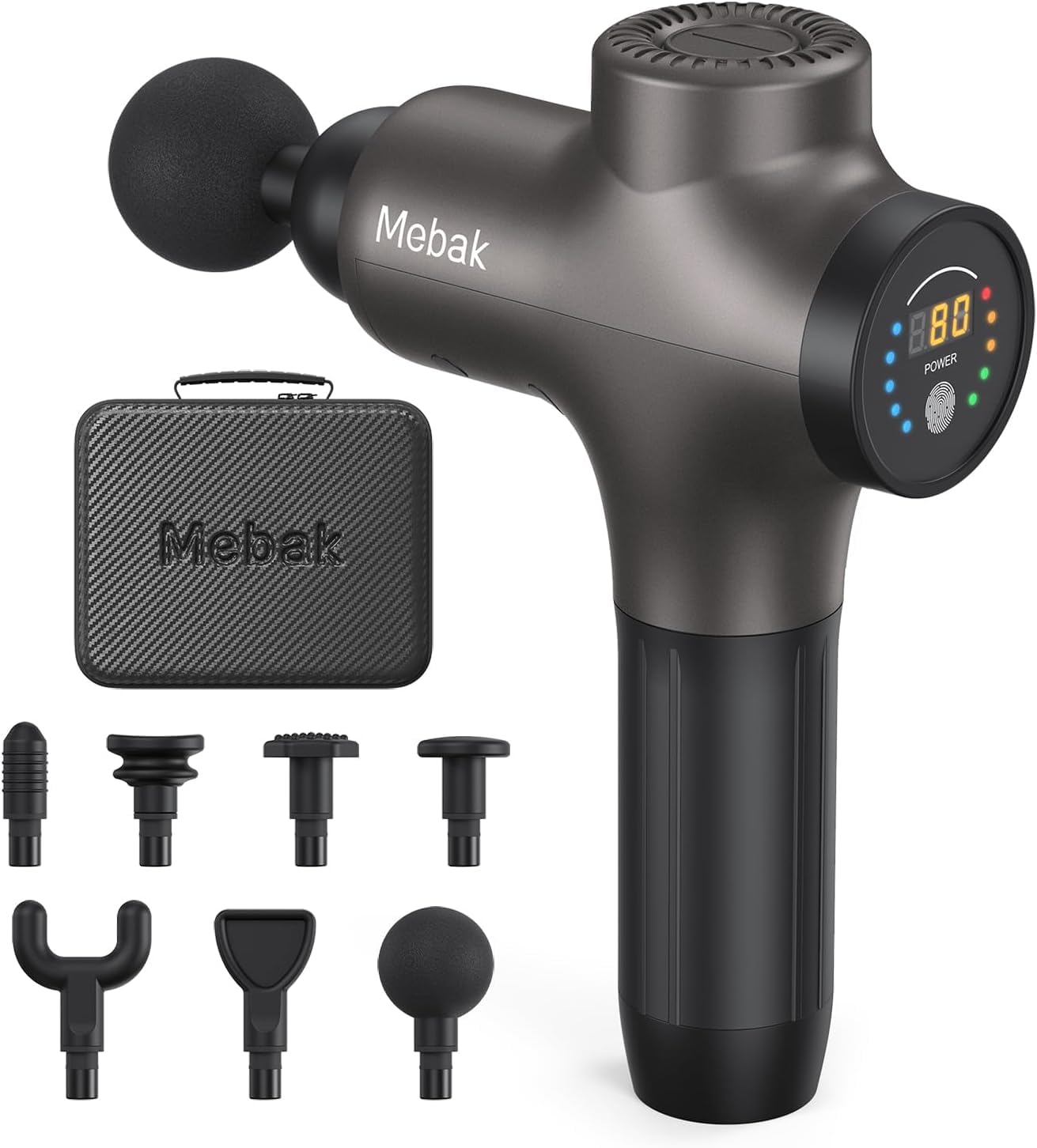
Mebak 3 Massage Gun, Massage Gun Deep Tissue for Athletes, Professional Muscl...
$99.99
Check Price on Amazon →Building a Recovery Stack That the Federal Evidence Actually Supports
The arc of this article reflects the hierarchy of evidence in federal occupational and public health data. BLS data establishes that musculoskeletal disorders are the dominant injury category in U.S. industry. OSHA ergonomics guidance and the NIOSH Total Worker Health framework both identify active recovery and non-pharmacologic interventions as the appropriate first-line response for physically active workers managing cumulative tissue load. NIH NCCIH confirms that percussive therapy has a short-term evidence base for DOMS reduction and range-of-motion improvement. FDA classification data helps consumers understand what "cleared" actually means — and what it does not. And CDC chronic pain data frames the growing clinical relevance of non-pharmacologic tools in a healthcare system under opioid cost pressure.
The practical hierarchy for athletic recovery, grounded in that federal evidence base:
- Active recovery first. Ten to fifteen minutes of low-intensity cardio after high-load sessions is the most evidence-backed recovery intervention available — and it costs nothing.
- Targeted stretching second. Address the specific postural shortenings your training or occupation creates. Hip flexors, pectorals, thoracic extensors. Daily, 30-second holds. Free.
- Percussion as adjunct. When active recovery and stretching are already in place, a well-dosed percussive session — one to two minutes per muscle group, light to moderate pressure — can accelerate the DOMS reduction and range-of-motion improvements that NIH documents.
- Clinical evaluation for anything that does not resolve. Two weeks of persistent pain, any radiating symptoms, neurological signs — these require a licensed clinician, not a device upgrade.
- Device selection as the final variable. Only once the first four elements are in place does the specific device you choose become the deciding factor in recovery outcomes.
The Hyperice Hypervolt 2 Pro, Opove M3 Pro 2, and Mebak 3 are the devices we would recommend within that final variable — at three distinct price points, for three distinct athlete profiles. But they are the last piece of a recovery system that the federal evidence base defines clearly, not the first.
For athletic recovery done right, the data comes before the device. Every time.