The Number That Should Alarm Every Office Worker
American adults average approximately 9.5 hours per day in sedentary behavior, according to CDC Physical Activity Surveillance data. That figure does not mean 9.5 hours of sleep. It means 9.5 hours of waking inactivity — seated in front of screens, in cars, on couches — stacked on top of whatever sleep you logged the night before. For office workers, the workday alone accounts for a staggering share of that total. Eight hours of desk time, plus a commute, plus an evening of recovery on the couch, and the only question is whether you squeezed 20 minutes of movement somewhere in between.
The scale of the population exposed to this risk is not trivial. BLS Occupational Employment and Wage Statistics identify more than 100 million U.S. workers in primarily seated occupations. These are not marginal jobs. They are the backbone of the professional economy: software engineers, financial analysts, attorneys, writers, project managers, executives, customer service representatives. The same BLS data shows that managers and high-credentialed professionals — the highest-paid white-collar workers — also carry the highest sedentary occupational exposure. In other words, career success in the American economy is systematically correlated with sitting more.
And the health consequences are not abstract. CDC adult obesity surveillance reports approximately 40% adult obesity prevalence, with sedentary occupational exposure listed as a contributing factor. NIH research through the National Heart, Lung, and Blood Institute has confirmed that prolonged sitting elevates cardiovascular and metabolic risk independent of leisure exercise volume — meaning that your weekend run does not fully cancel out what your desk is doing to you Monday through Friday. That finding is not intuitive, and it changes the strategic calculus for anyone who thought a gym membership was sufficient insurance against a sedentary career.
Why Sitting All Day Is a Distinct Biological Problem
The mechanism behind sedentary harm is not simply the absence of exercise. It is a specific physiological state that your body enters when large muscle groups — primarily the glutes, hamstrings, and hip flexors — remain inactive for extended periods. When those muscles are idle, glucose uptake slows, lipoprotein lipase activity drops, and systemic insulin sensitivity degrades. This is not a theory; it is a documented metabolic cascade that operates at the cellular level.
For office workers, the pattern is particularly insidious because the harm accumulates in the gaps between intentional exercise. You may spend 45 minutes on a treadmill at 6 a.m. and still spend the following nine hours in a state of metabolic suppression at your desk. NIH's National Institute of Diabetes and Digestive and Kidney Diseases emphasizes that movement integration into daily routines is more sustainable and metabolically effective than concentrated bouts of exercise alone for type 2 diabetes prevention. The implication is direct: frequent, low-intensity movement throughout the workday — even walking at 1.5 mph while answering email — is mechanistically distinct from, and complementary to, structured exercise.
Posturally, sustained sitting also creates predictable musculoskeletal problems. Hip flexors adaptively shorten. Thoracic extensors weaken. Lumbar discs experience asymmetric loading. The glutes develop inhibition patterns that shift load to the lower back. None of these adaptations require a traumatic event — they emerge slowly from thousands of hours of the same posture. By the time an office worker notices chronic low back pain, neck stiffness, or hip tightness, the postural adaptation has typically been building for months or years.
NIOSH's Total Worker Health framework recognizes this dual burden — cardiometabolic and musculoskeletal — and explicitly endorses workplace movement integration as a primary-prevention strategy for both chronic disease and musculoskeletal disorders. This is not fringe wellness advice. It is federal occupational health policy.
The Federal Activity Gap
CDC adult physical activity guidelines call for 150 minutes of moderate aerobic activity per week, with an explicit recommendation to break up extended sitting throughout the day. The 150-minute target is widely cited, but the sitting-interruption guidance is less well known and arguably more directly relevant to office workers during the workday itself. A worker who never reaches 150 minutes of weekly structured exercise but breaks up their sitting every 45 minutes with five minutes of walking is doing something meaningfully different — and measurably better — than one who sits continuously for eight hours and then runs for 30 minutes.
CDC's Step It Up campaign provides the clearest federal endorsement of walking as a health intervention, documenting that even modest increases in daily walking volume produce measurable improvements in adult cardiometabolic markers — blood pressure, fasting glucose, waist circumference, resting heart rate. These are not marginal effect sizes in elite athletes. These are real improvements in ordinary adults who simply walked more during their existing daily routines. The policy implication for office workers is that the walking does not need to happen in a park or on a trail. It can happen at a desk.
OSHA's Computer Workstations eTool adds an ergonomic dimension, explicitly recognizing alternation between sitting, standing, and walking during the workday as a neutral-posture strategy. OSHA's framing matters because it moves desk-based movement from wellness trend to occupational health standard.
Try These First — Before You Buy Anything
The cheapest intervention is the one that does not require buying anything. Before any discussion of equipment, there are several behavioral and ergonomic strategies grounded in federal guidance that office workers should attempt and sustain. These are not consolation prizes for people who cannot afford equipment — they are genuinely effective first-line approaches, and some of them address risks that equipment alone cannot solve.
Start with pace discipline. CDC's Step It Up walking guidance supports a slow, gradual approach to desk-integrated walking: begin at 1.0 to 1.5 mph for sessions of 15 to 20 minutes, and only increase speed once your typing accuracy has stabilized. Most failed attempts at desk walking — and the returns and negative reviews that follow — trace back to starting too fast. Cognitive work requires motor stability. That stability takes time to develop on a moving surface.
Check your workstation geometry before adding motion. OSHA's neutral-posture standards — elbows at 90 degrees, shoulders relaxed, monitor at eye level — do not change when you are walking, but your effective standing height does. A walking pad used under a fixed-height desk will almost certainly produce neck and shoulder strain within weeks. The equipment question is not just about the walking surface; it is about whether your entire workstation can accommodate movement.
Understand that desk walking supplements structured exercise, not replaces it. CDC's adult physical activity guidelines are clear that 150 minutes per week of moderate aerobic activity remains the target regardless of how much ambient walking you log. Slow-pace desk walking counts as movement interruption and contributes to metabolic health, but it does not substitute for cardiovascular training at sufficient intensity. Frame desk walking as filling the gaps, not filling the requirement.
Hydrate proactively. Even slow walking adds meaningful caloric burn and fluid loss — roughly 100 to 200 additional calories and commensurate sweat output per hour. CDC NIOSH heat-related illness prevention guidance establishes that even modest thermal load demands proactive hydration. Keep water at the desk and track total daily walking volume if you are managing caloric intake.
Get medical clearance if you have cardiovascular or orthopedic history. NIH's heart-healthy living guidance is explicit that individuals with cardiovascular disease, uncontrolled hypertension, recent orthopedic surgery, or balance disorders should consult a clinician before beginning any new movement program — including low-intensity desk walking.
For many office workers, the behavioral changes above produce real results without any equipment investment. A programmable reminder to stand and walk every 45 minutes, a height-adjustable desk already in place, and a commitment to pace discipline can meaningfully interrupt sedentary load. That said, the research is also clear that convenience drives compliance. Equipment that removes friction from the habit — specifically, equipment that eliminates the need to go somewhere else to walk — produces higher and more sustained movement volume in occupational settings. If you have tried the behavioral approaches and found yourself sliding back into eight-hour sitting sessions, that is a compliance problem that equipment can legitimately help solve.
When to See a Clinician
Desk walking is low-intensity by design, but it is still a physical activity change that operates on a musculoskeletal and cardiovascular system that may have pre-existing vulnerabilities. There are specific clinical situations where starting without professional guidance creates real risk.
NIH's heart-healthy living guidance and OSHA occupational health standards both support the following triggers for clinical consultation before beginning a desk walking program:
[[clinical_red_flags]]
If none of those red flags apply, desk walking at slow pace is generally considered safe for otherwise healthy adults. The clinical risk profile of 1.0 to 1.5 mph walking is low. The risk of doing nothing — remaining sedentary for 9.5 hours daily — is substantially higher and better documented.
Where Equipment Helps — and What to Look for
Once behavioral strategies are in place and clinical clearance is confirmed where needed, equipment becomes the tool that makes consistency sustainable. The specific features that matter for office workers are different from what matters for fitness treadmills. You are not training for a 5K. You are trying to move at a controlled, slow pace for 60 to 120 minutes per workday, quietly, under a desk, without disrupting a video call.
What federal data tells us about product requirements: OSHA's neutral-posture guidance demands a flat, stable walking surface that does not introduce lateral instability or vibration that forces compensatory shoulder or neck tension. NIOSH's Total Worker Health framework emphasizes that workplace movement tools must be practical enough to be used consistently — which means low noise, small footprint, and minimal setup friction. The CDC's pace guidance (1.0 to 1.5 mph) means you need a unit that performs reliably at slow speeds, not one calibrated for running that bogs down or jerks at walking pace.
For office workers who want maximum adjustability and the ability to vary incline to shift muscle recruitment patterns and reduce monotony, the Vitalwalk 12% Auto Incline Walking Pad offers automatic incline progression up to 12% — a feature that meaningfully increases caloric expenditure and engages posterior chain muscles without requiring speed increases that would disrupt cognitive work. Auto-incline is the most underappreciated feature in this category: it allows metabolic intensity to increase while pace stays cognitively manageable.
The UREVO CyberPad Smart Walking Pad pushes the incline ceiling to 14% with smart controls, making it the strongest option for office workers who want a single piece of equipment that can also serve as a light fitness tool before or after work hours. The 14% grade at 2.0 mph produces a caloric output comparable to flat jogging without the joint impact or the speed that would compromise typing. For workers who want their desk walking to do double duty — ambient movement during the workday and a genuine cardio option before or after — this is the unit that covers both use cases.
For workers operating on a tighter budget or in smaller home office spaces, the PACEROCKER Walking Pad at $315 offers 12% auto-incline at a price point that removes the financial barrier that delays many office workers from acting on the federal data they are reading right now. The PACEROCKER's nine-level incline system gives meaningful progression without the price premium of the upper-tier units.
All three products are designed for under-desk use and slow-speed operation — the use pattern supported by CDC and NIOSH guidance. None of them are fitness treadmills miscategorized as desk equipment. They are built for the 1.0 to 2.5 mph range that desk work demands.
Walking Pads Built for the Office Worker's Sedentary-Hours Problem
These three units were selected specifically for desk-based slow-speed use — the 1.0 to 2.5 mph range CDC and NIOSH guidance supports — with auto-incline features that increase metabolic output without disrupting cognitive work.
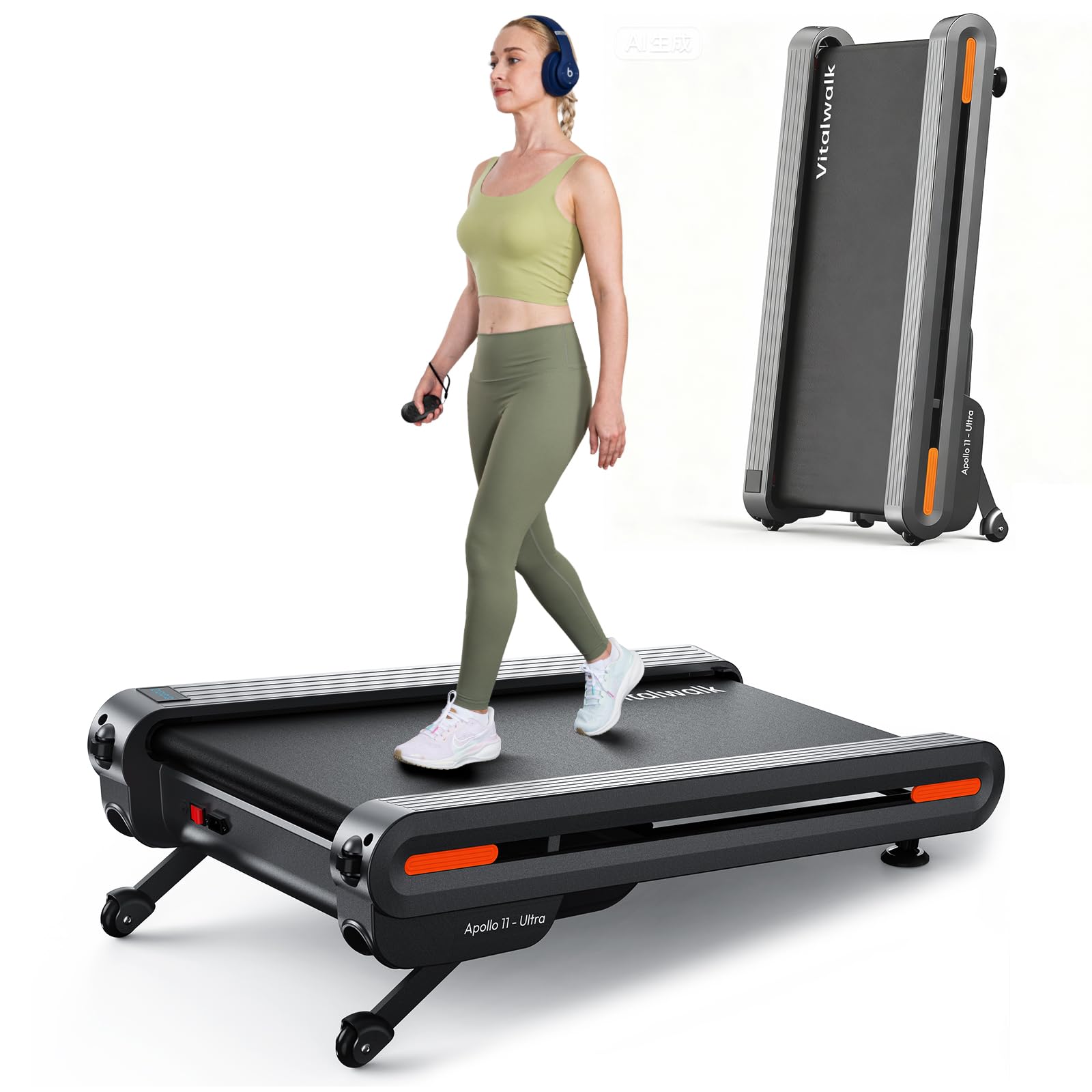
Vitalwalk 12% Auto Incline Walking Pad, 43"x18" Wide Full Deck Under Desk Tre...
$512.99
Check Price on Amazon →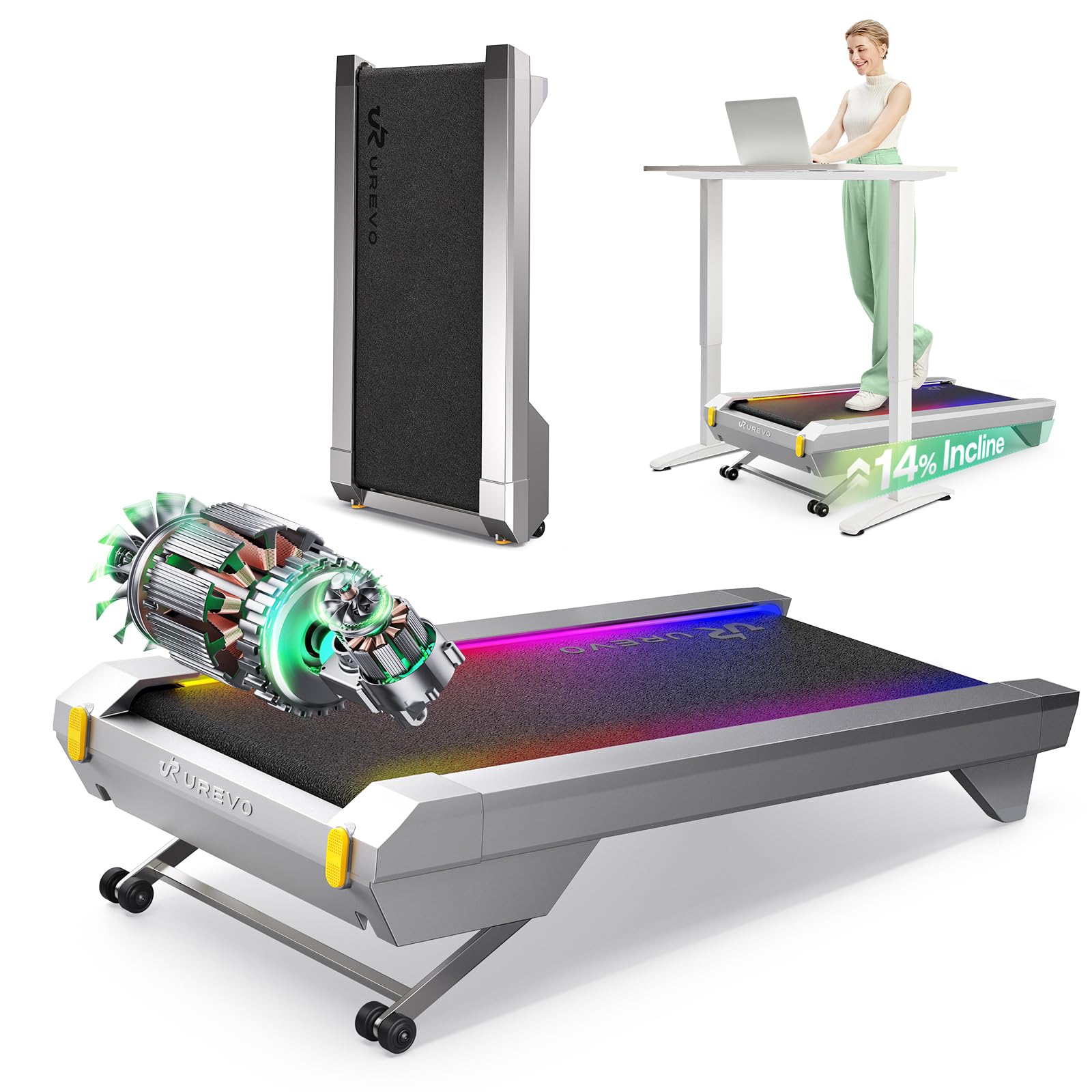
UREVO CyberPad Smart Walking Pad with 14% Auto Incline, Brushless Motorized U...
$479.99
Check Price on Amazon →
PACEROCKER Walking Pad Treadmill with 12% 9-Level Auto Incline, 450 lbs Capac...
$315.00
Check Price on Amazon →How to Build the Habit That Federal Data Actually Supports
The intervention that works is not the most expensive one. It is the one that gets used. Federal data from the NIOSH Total Worker Health program consistently shows that workplace health interventions succeed or fail based on environmental design, not on worker willpower. If the walking pad is stored in a closet and requires setup, it will not be used. If it lives under the desk and requires one button press, compliance rates are dramatically higher.
The practical framework that aligns with CDC, NIH, and NIOSH guidance looks like this: begin with two 20-minute sessions per day at 1.0 to 1.5 mph, separated by at least two hours of seated work. Log the sessions for two weeks. If typing accuracy remains normal and you have no musculoskeletal complaints, extend to three sessions or increase duration. Do not increase speed until pace feels completely automatic — typically three to four weeks in. Reserve higher incline settings for sessions when you are doing passive work (reading, listening to calls) rather than active typing.
This protocol keeps you within the parameters that CDC's Step It Up guidance and OSHA's ergonomic standards both support. It treats desk walking as an occupational health intervention — which is what federal data classifies it as — rather than as a fitness trend.
The 9.5-hour sedentary day is not inevitable. It is an artifact of workstation design and workplace norms that emerged before the cardiometabolic evidence base existed. That evidence base now exists, it is published by CDC, NIH, NIOSH, BLS, and OSHA, and it points clearly toward ambient movement integration as the most accessible chronic disease prevention tool available to office workers. The question is not whether to move during the workday. The data settled that question. The question is how to make it frictionless enough to actually do.