The Federal Case for a $5,000 Recovery Investment
There is a number that reframes the entire premium massage chair conversation: $30,000 to $60,000. That is the range of direct costs for a single workers' compensation lumbar strain claim, as documented by the AHRQ Healthcare Cost and Utilization Project (HCUP). It does not include lost productivity, retraining costs, or the downstream burden of chronic pain management. It is simply the direct medical cost of one back injury — the kind that happens every day in warehouses, on construction sites, and increasingly, in executive offices where decades of high-stress, high-travel careers deposit their toll on the lumbar spine.
For high-net-worth adults making rational capital allocation decisions, the math crystallizes quickly. A $5,000 to $8,000 premium massage chair — used consistently over five to ten years — costs less than one-tenth of a single serious back injury claim. The question is not whether the chair is expensive. The question is whether the federal data supports the biological thesis that structured mechanical soft-tissue intervention reduces chronic pain burden and downstream medical utilization. As this analysis will show, the answer runs through AHRQ, NIOSH, BLS, the FDA, and CMS — not through marketing copy.
Why Back Pain Is a Financial Problem, Not Just a Physical One
The AHRQ Medical Expenditure Panel Survey (MEPS) — the federal government's most rigorous household-level healthcare spending database — consistently shows that adults with chronic back conditions carry substantially higher annual personal healthcare expenditures than adults without such conditions. This is not a small gap. Chronic musculoskeletal conditions generate visits to primary care, orthopedics, pain management, physical therapy, and pharmacies. They cascade.
On the pharmaceutical side, CMS Drug Spending Dashboard data identifies opioid and non-opioid pain medications among the most expensive categories in Medicare drug spending. The chronic pain treatment model in American medicine defaults toward pharmacological management — a model with well-documented tolerance, dependency, and cost escalation problems. Every dollar spent on upstream mechanical intervention that reduces pharmaceutical demand is a dollar with a compounding return.
Zoom out further: CDC arthritis and musculoskeletal surveillance finds that approximately 1 in 4 U.S. adults reports doctor-diagnosed arthritis, with prevalence concentrated precisely in the occupational and demographic cohorts that high-net-worth adults often represent — people who built careers in physically demanding industries, who traveled extensively, who sat in first-class seats and board rooms and carried the load of high-output professional lives. Arthritis at the lumbar facets and cervical spine does not discriminate by income. But the capacity to intervene aggressively — with both clinical resources and high-quality equipment — does.
The BLS Musculoskeletal Disorders by Occupation tracking confirms what clinicians already know: the back is the single most common body part injured across all U.S. occupations with days away from work. This is not a warehouse-only phenomenon. It is a structural feature of human biomechanics meeting modern occupational demands.
The Biomechanical Mechanism: Why the Back Accumulates Damage
Understanding why premium recovery investment is rational requires understanding the actual injury mechanism — not at the surface level, but at the tissue and loading level that federal biomechanical frameworks describe.
The NIOSH Lifting Equation and Manual Material Handling guidelines provide the federal model for spinal loading analysis. The equation quantifies the compressive and shear forces on the L4-L5 and L5-S1 vertebral segments — the most common sites of disc herniation and degenerative change — under varying load, posture, and frequency conditions. The core finding: warehouse, construction, and manual material-handling tasks routinely exceed safe spinal loading limits, even when performed by trained workers using proper technique.
But the NIOSH model applies beyond manual labor. Prolonged seated flexion — the posture of executives, attorneys, surgeons, pilots, and high-frequency travelers — generates sustained compressive loading on the posterior disc annulus. The mechanism is different from a warehouse lift, but the cumulative tissue consequence is structurally similar: disc dehydration, facet joint loading, paraspinal muscle guarding, and eventually, the chronic inflammatory state that drives expensive medical utilization.
The BLS Survey of Occupational Injuries and Illnesses (SOII) shows that warehousing and storage (NAICS 493) reports nonfatal injury rates among the highest in U.S. private industry. Meanwhile, BLS Employer Costs for Employee Compensation (ECEC) data confirms that workers' compensation insurance rates in the warehousing sector rank among the highest-premium industries — a direct financial signal that insurers price the actuarial risk of occupational MSD at a level that should inform individual recovery investment decisions.
OSHA Severe Injury Reports document thousands of work-related hospitalizations annually, concentrated in manufacturing, construction, and warehousing — the industries whose workers' careers deposit the most cumulative spinal loading. High-net-worth individuals from these sectors carry that loading history into their 40s, 50s, and 60s, often without the structured decompression and soft-tissue management that would have interrupted the damage accumulation.
The FDA Device Distinction: Clinical Grade vs. Consumer Wellness
Not all massage chairs are equal under federal regulatory standards. The FDA 510(k) clearance database distinguishes Class II medical devices — including many therapeutic massage and percussion devices that have cleared the 510(k) process — from general wellness products that carry no clinical substantiation requirement. This is the regulatory dividing line between equipment that has demonstrated substantial equivalence to a predicate device with known clinical performance and equipment that simply markets wellness claims without federal review.
For high-net-worth consumers investing at the $5,000–$8,000 price point, the FDA device classification framework matters. Premium massage chairs that incorporate 3D or 4D roller mechanisms, zero-gravity positioning, lumbar heat therapy, and body-scanning technology are engineering toward the same physiological targets that cleared therapeutic devices address: paraspinal muscle tension reduction, localized circulation improvement, and passive range-of-motion facilitation. The engineering sophistication at the premium price tier reflects the mechanical complexity required to deliver those outcomes reliably across diverse body geometries.
Try These First: The Cheapest Interventions Cost Nothing
Before the product discussion, the federal occupational health evidence base is unambiguous: the cheapest intervention is the one that does not require buying anything. High-quality equipment amplifies a solid behavioral foundation. It does not replace one.
Daily thoracic mobility — two minutes of thoracic extensions over a foam roller plus chin tucks — directly counters the seated forward flexion posture that drives cervical and thoracic MSD in desk-intensive professionals. CDC physical activity guidance for adults recommends muscle-strengthening activity on two or more days per week as a baseline, and thoracic mobility work qualifies. Micro-breaks every 30 minutes — standing, shoulder rolls, distance gaze — are supported by NIOSH office ergonomics research showing that 30-second breaks at 30-minute intervals measurably reduce musculoskeletal symptoms in computer users. Massage chairs help, but they do not replace the movement stimulus that paraspinal musculature requires.
Lifting mechanics matter more than any recovery device for individuals who still perform manual loading tasks. OSHA's Materials Handling ergonomics guidance specifies load-close-to-body positioning, leg-drive initiation, and elimination of loaded trunk rotation — the three mechanical corrections that prevent the acute injury events that generate those $30,000–$60,000 HCUP claims. And before adding any equipment to a workspace, OSHA's Computer Workstation eTool provides the setup standard that resolves most chronic office-based neck and shoulder pain: monitor at eye level, elbows at 90 degrees, feet flat. Most executive home office setups are not configured to this standard.
For readers who have already implemented the behavioral and ergonomic foundation — or who are managing conditions where daily structured soft-tissue work provides a meaningful quality-of-life increment — the question shifts to equipment. And at that point, the federal cost data justifies a serious capital commitment.
When to See a Clinician First
Massage chair therapy, regardless of engineering quality, is appropriate for non-radicular muscle pain — the diffuse, aching, tension-driven back and neck discomfort that accounts for the majority of adult musculoskeletal complaints. It is not appropriate as primary management for several clinical presentations that require immediate professional evaluation.
NIH National Institute of Neurological Disorders and Stroke guidance on back pain is explicit: pain that radiates down a limb, arrives with weakness or numbness, follows direct trauma, or accompanies fever or unexplained weight loss requires clinician evaluation before any self-care intervention. These presentations may indicate nerve compression, vertebral fracture, infection, or malignancy — conditions where mechanical soft-tissue intervention can cause harm rather than relief. High-net-worth adults who have the resources to invest in premium recovery equipment also have the resources to invest in a proper diagnostic workup before deploying that equipment.
Where Products Enter the Picture
For individuals who have established the behavioral foundation, ruled out red-flag presentations, and are making a deliberate investment in chronic pain management and recovery optimization, the premium massage chair market warrants serious evaluation. The three chairs reviewed here represent distinct engineering philosophies and price-to-performance profiles anchored in the physiological targets the federal data identifies.
Bodyfriend Phantom 2: Korean Medical Engineering at $4,990
The Bodyfriend Phantom 2 is the most clinically oriented product in this review, and it should be the first chair high-net-worth consumers evaluate. Bodyfriend is South Korea's dominant massage chair manufacturer — a market where the regulatory and clinical culture treats therapeutic massage equipment as quasi-medical infrastructure, not lifestyle accessories. The Phantom 2 reflects that engineering tradition: it incorporates a body-scanning algorithm that maps individual spinal geometry before each session, 3D roller mechanisms that adjust depth and intensity across lumbar, thoracic, and cervical zones independently, and zero-gravity positioning that redistributes body weight to reduce compressive spinal loading — directly addressing the NIOSH-documented L4-L5 and L5-S1 compression dynamics that drive disc pathology.
At $4,990, the Phantom 2 sits at the entry edge of the premium tier, but the engineering density justifies the price point. For an individual carrying $2,000–$5,000 annually in excess healthcare expenditures driven by chronic back conditions — a gap that AHRQ MEPS data documents — the five-year return calculation is straightforward. The Phantom 2 is the direct brand recommendation in this review and the first chair readers should configure and trial.
RELX Massage Chair: Full-Body Coverage at $1,899
The RELX Massage Chair Full Body occupies the mid-market tier — positioned for buyers who want meaningful therapeutic capability without the full capital commitment of a flagship chair. The RELX delivers SL-track roller coverage that follows the natural curvature of the spine from the cervical region through the lumbar, which is the minimum track geometry for adequate lumbar decompression work. At $1,899, it is a reasonable starting position for buyers testing their utilization patterns before committing to a higher tier.
HealthRelife 4D SL-Track Zero Gravity Recliner: Engineering Value at $1,699
The HealthRelife 4D Massage Chair delivers 4D roller mechanics — meaning the rollers move in all four axes including in-and-out depth variation that more closely approximates human thumb pressure — on a 55-inch SL-track at $1,699. The zero-gravity recline position is mechanically sound: it tilts the user so that femurs are elevated relative to torso, reducing lumbar compressive load. For buyers who want 4D roller fidelity on a budget, the HealthRelife provides engineering specifications that would have cost significantly more in prior product generations.
Premium Massage Chairs for Federal-Data-Justified Recovery Investment
These three chairs were curated against the physiological targets that NIOSH, AHRQ, and FDA regulatory frameworks identify for chronic back pain management — zero-gravity positioning, multi-axis roller mechanics, and body-scanning personalization — at three distinct price points.

Bodyfriend Phantom 2 Massage Chair
$4,990
See Price at Bodyfriend →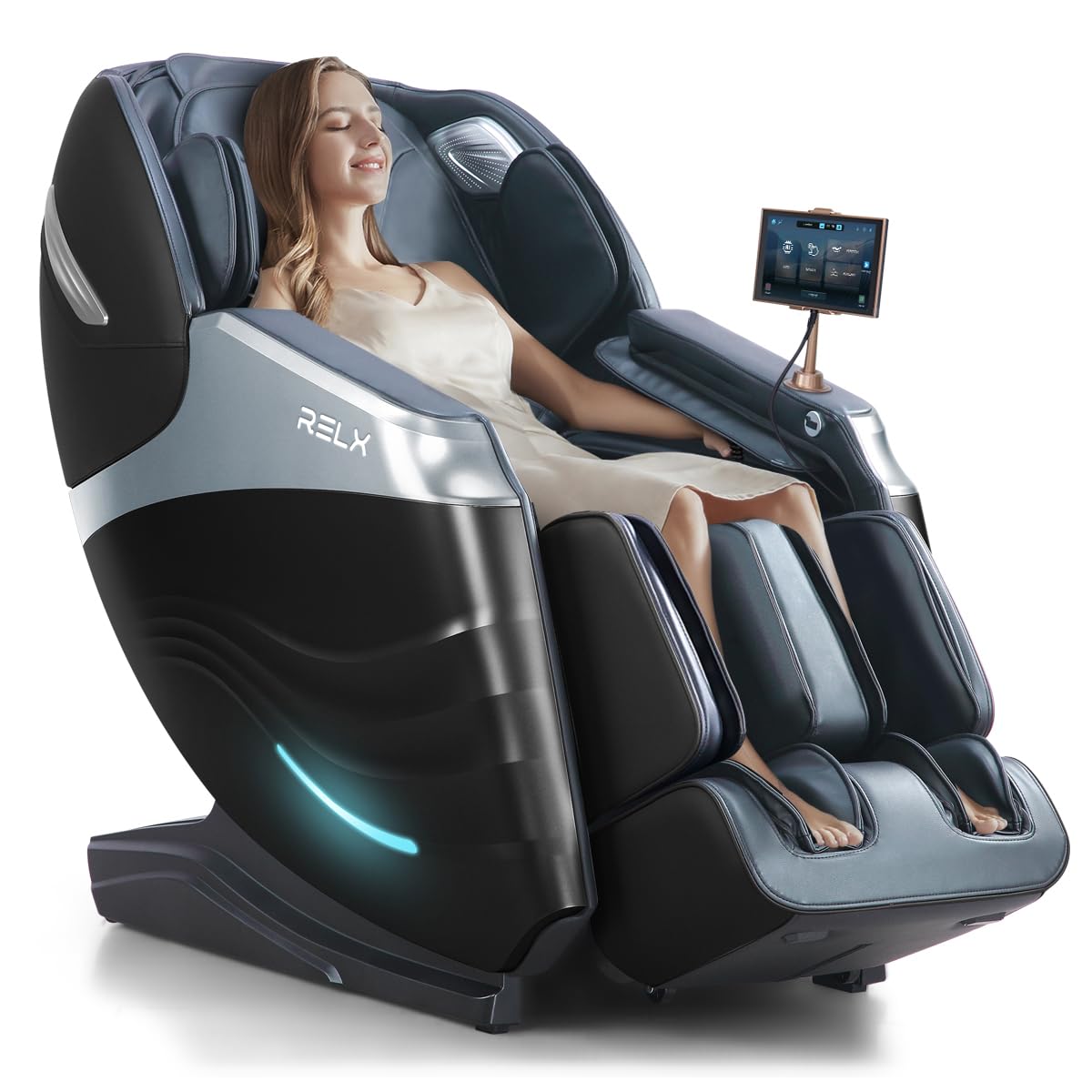
RELX Massage Chair Full Body, 20 Modes Zero Gravity SL-Track Shiatsu Massage ...
$1,899.99
Check Price on Amazon →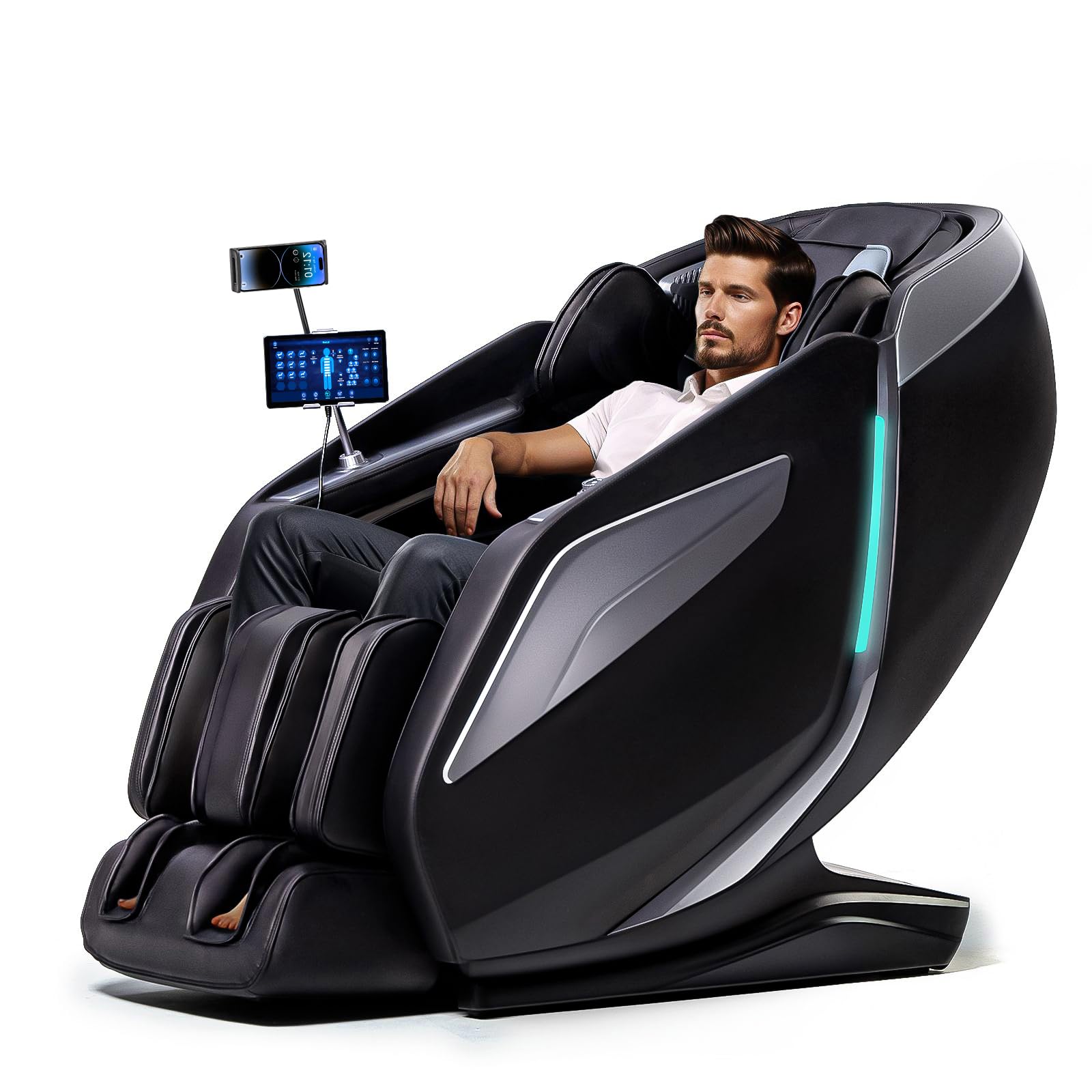
HealthRelife 4D Massage Chair Full Body Zero Gravity Recliner - 55“ SL-Track,...
$1,699.00
Check Price on Amazon →The Capital Allocation Logic: Building the ROI Case
High-net-worth consumers routinely make capital allocation decisions based on return projections, risk reduction, and asset duration. The premium massage chair decision responds to exactly that framework when the federal data is applied correctly.
Start with the AHRQ MEPS baseline: chronic back conditions generate substantially elevated annual healthcare expenditures. If conservative estimates place that excess at $2,000–$4,000 per year — in physical therapy co-pays, specialist visits, prescription costs, and imaging — a $5,000 chair with a ten-year service life costs $500 per year. The CMS drug spending data reinforces the pharmaceutical cost dimension: chronic pain patients who remain in the pharmaceutical management pipeline face escalating drug costs with dependency risk. Any intervention that reduces medication utilization carries both financial and clinical value.
The workers' compensation framing is especially relevant for business owners and executives who carry their own risk. AHRQ HCUP data placing a single lumbar strain claim at $30,000–$60,000 in direct costs — before litigation, before indemnity payments, before the productivity cascade of an owner or key person being sidelined — establishes the maximum downside scenario that upstream investment is hedging against. The premium massage chair is not the only hedge, but it is one of the few that occupies a defined space at home, gets used daily, and delivers compounding utilization value over a decade.
BLS ECEC data showing warehousing-sector workers' compensation premiums among the highest in private industry is a proxy signal for the actuarial cost of MSD risk in high-demand occupations. Individuals who built wealth in those sectors carry the biological load. The question is whether they invest in recovery infrastructure commensurate with that load — or whether they continue routing that expense through the reactive medical system.
The Standard Worth Buying Against
Premium massage chairs earn their price tier when they meet several engineering standards that the federal physiological framework defines. Zero-gravity positioning addresses the NIOSH-documented compressive loading mechanism. Body-scanning personalization addresses the anatomical diversity that one-size roller programs fail to accommodate. 3D and 4D roller mechanics approximate the pressure gradient variability of trained manual therapy. Lumbar heat therapy addresses the vascular component of soft-tissue recovery — increased local circulation supporting metabolic waste clearance from fatigued paraspinal musculature.
The Bodyfriend Phantom 2 meets all of those standards at $4,990. The RELX and HealthRelife chairs meet subsets of those standards at lower price points — appropriate for buyers at an earlier stage of the investment decision.
What none of these chairs replaces is the clinical evaluation that rules out the red-flag presentations the NIH identifies, the behavioral foundation of movement and ergonomic correction that federal occupational health guidance specifies, or the professional relationships that manage the conditions that mechanical soft-tissue work cannot address. The federal data justifies the investment. The clinical framework defines its appropriate scope.
For high-net-worth individuals managing the compounding biological costs of high-output careers, the $5,000–$8,000 massage chair investment is not a luxury line item. It is a healthcare cost differential, documented by federal data, with a calculable return over a service horizon measured in years.