The Federal Case for Heat Therapy Starts With Mortality Data
Start with the most uncomfortable number in American public health: cardiovascular disease accounts for approximately 1 in 3 U.S. deaths annually, making it the single largest cause of mortality in the country. That figure—drawn from CDC WONDER, the federal government's public-access mortality database—is not an abstraction. It is the baseline against which any longevity-oriented intervention must be measured. If you are building a health stack oriented toward living longer and functioning better into your seventh and eighth decades, the cardiovascular system is the central organ system you are trying to protect.
The secondary data point that makes heat therapy clinically interesting: approximately 76% of U.S. adults do not meet weekly aerobic activity guidelines, according to CDC Behavioral Risk Factor Surveillance System data. Aerobic exercise is the gold-standard cardiovascular intervention. But for the majority of American adults—whether due to injury, occupational demands, time constraints, or age-related mobility limitations—achieving 150 minutes of moderate aerobic activity per week is not consistently achievable. This is not a moral failure. It is a structural reality that the federal data documents plainly.
This gap between the cardiovascular protection that aerobic exercise provides and the exercise that most Americans actually perform is precisely where passive heat therapy enters the longevity conversation with serious scientific credibility.
The Biomechanics of Heat: Why Your Cardiovascular System Cannot Tell the Difference
To understand why sauna use registers as cardiovascular stress, you need to understand the mechanism. When core body temperature rises during a sauna session—typically by 1 to 2 degrees Celsius in a well-designed 20-minute session—the hypothalamus initiates a cascade of thermoregulatory responses that are functionally indistinguishable, at the circulatory level, from moderate aerobic exertion.
Heart rate increases to between 100 and 150 beats per minute in regular sauna users during peak exposure. Cardiac output rises. Peripheral vasodilation occurs as blood is shunted toward the skin to facilitate heat dissipation. Plasma volume expands over repeated sessions, a well-documented adaptation that reduces the cardiac work required for a given level of physical output. This is not metaphorical cardiovascular conditioning—it is the same hemodynamic pathway that makes a brisk walk beneficial.
NIOSH-cited research documents that passive heat therapy interventions, including sauna use, are associated with measurable cardiovascular and circulatory adaptation in regular users. This federal-sourced validation is significant: NIOSH is not in the business of endorsing wellness trends. When NIOSH-referenced literature finds cardiovascular adaptation from thermal therapy, the signal is meaningful.
For longevity readers specifically, the mechanism extends beyond acute cardiovascular stress. Repeated heat exposure has been studied for its effects on heat shock protein (HSP) expression—cellular chaperone proteins that help repair misfolded proteins and may contribute to cellular longevity. Nitric oxide bioavailability increases with heat exposure, improving endothelial function. These are the same pathways that exercise physiologists study when they talk about cardiovascular aging.
The occupational health literature adds important context here. NOAA's tracking of outdoor heat exposure documents elevated occupational injury risk during peak summer months in agriculture, construction, and roadwork, establishing that the federal government has been studying the physiological effects of thermal stress on human workers for decades. The distinction between uncontrolled occupational heat exposure—which is harmful—and controlled, voluntary, moderate heat exposure is a critical one that the federal thermal physiology research base helps clarify.
Inflammation, Arthritis, and the Chronic Disease Connection
The longevity case for heat therapy is not limited to the cardiovascular system. The second major federal data thread involves chronic inflammatory conditions, particularly arthritis.
Approximately 25% of U.S. adults report doctor-diagnosed arthritis, according to CDC arthritis surveillance data, with the highest concentrations in populations who have spent careers in physically demanding occupations. For the longevity-oriented reader who has spent decades in labor-intensive work—or who simply carries the cumulative inflammatory burden of middle and older age—this statistic is personally relevant.
Infrared heat penetrates soft tissue more deeply than convective heat (the kind produced by traditional Finnish saunas), reaching joints, tendons, and muscle fascia rather than primarily heating the skin surface. The thermal effect on inflammatory mediators has been the subject of controlled research, and while the federal government does not issue product-specific endorsements, CDC PLACES data tracking cardiovascular disease, hypertension, and stroke at the county level maps precisely the chronic disease cluster—vascular inflammation, endothelial dysfunction, elevated blood pressure—where heat therapy research has concentrated.
AHRQ Medical Expenditure Panel Survey data documents the substantial healthcare cost differential between adults with and without chronic cardiovascular conditions. The economic motivation for preventive intervention is federal-data-documented. Adults managing cardiovascular and inflammatory conditions spend significantly more on healthcare annually than those without these conditions. Interventions that can delay or reduce the severity of cardiovascular and inflammatory disease have meaningful downstream economic value, independent of any quality-of-life benefit.
Federal Regulatory Context: What FDA Review Actually Tells You
Before purchasing any thermal therapy device, the longevity reader should understand the federal regulatory landscape. Not all infrared sauna products are created equal, and the FDA has a specific review pathway that matters.
The FDA 510(k) Class II clearance database indexes infrared therapy and thermal treatment devices, providing federal review of manufacturer safety claims. A 510(k) clearance means the FDA has reviewed safety and substantial equivalence data for the device—it does not constitute an efficacy endorsement, but it does mean the manufacturer's safety claims have passed federal scrutiny. When evaluating infrared sauna products for a longevity stack, FDA clearance status is a baseline safety filter, not a luxury.
The FDA Adverse Event Reporting System (FAERS) also provides federal-level safety data on adverse events associated with thermal therapy devices. FAERS is a passive surveillance system—it captures reported adverse events, not incidence rates—but it serves as an important check on manufacturer claims. For thermal devices, the most commonly reported adverse events involve blood pressure drops, dehydration-related symptoms, and inappropriate use in contraindicated populations. These are manageable risks with proper protocol.
The Cheapest Intervention Requires No Equipment
Before discussing hardware, it is worth stating plainly: the lowest-risk, highest-return interventions in the heat therapy context do not require buying anything. This is not a disclaimer—it is a clinical reality that the federal data supports.
The interventions that should precede any hardware purchase include hydration management, session timing relative to sleep, physical activity pairing, and contraindication screening. Each of these is either free or already part of a functional health routine. None of them depend on owning a sauna. And the research on sauna benefit—the Finnish cohort studies, the cardiovascular adaptation literature—documents benefits in populations who also met physical activity guidelines, not populations who used sauna as a substitute for exercise.
The NIOSH Total Worker Health framework integrates workplace recovery interventions including thermal therapy as part of comprehensive occupational health—not as a standalone wellness product, but as one component of a multi-factor health protocol. That framing from a federal occupational health agency is the correct frame for the longevity reader as well.
For readers who have addressed the behavioral fundamentals and are ready to evaluate hardware, the question becomes which format best fits your use context, budget, and longevity priorities. The product landscape for infrared and traditional saunas ranges from sub-$600 portable blanket formats to $5,000-plus permanent outdoor installations, and the right choice depends heavily on your primary use case.
When to See a Clinician Before Starting a Sauna Protocol
The federal data is clear that heat therapy is not appropriate for all populations, and the longevity reader—who is, by definition, often managing age-related cardiovascular or metabolic conditions—needs to treat the clinical contraindication checklist seriously.
Saunas produce rapid peripheral vasodilation and can cause significant drops in blood pressure, particularly during exit when the user moves from supine or seated heat exposure to standing. For individuals with uncontrolled hypertension, recent cardiac events, or on medications that affect thermoregulation (beta-blockers, diuretics, certain antidepressants), this blood pressure dynamic represents a real safety consideration. NIH NCCIH guidance on sauna use explicitly recommends clearing heat therapy with a clinician if you have uncontrolled hypertension, a recent cardiac event, are pregnant, or take medications affecting thermoregulation.
Pregnancy is an absolute contraindication, not a relative one. CDC pregnancy guidance and NIH research associate elevated maternal core temperature during the first trimester with increased risk of neural tube defects in cohort studies. This is not a risk-benefit analysis situation—it is a categorical recommendation to avoid sauna during pregnancy.
For the longevity reader who is otherwise healthy, the clinical threshold for sauna use is relatively low. But the checklist matters, and a brief conversation with a primary care provider before starting a regular sauna protocol is the minimum reasonable step for anyone managing chronic cardiovascular or metabolic conditions.
The Hardware That Fits the Longevity Stack
With the mechanism understood, the behavioral interventions in place, and the clinical contraindications cleared, the hardware selection question becomes tractable. The longevity reader needs to match product format to use case: outdoor installation versus portable, traditional barrel versus infrared cabin versus blanket.
For readers building a permanent home-based longevity infrastructure—the kind of investment that signals a multi-decade commitment to health span—the Almost Heaven Pinnacle 4-Person Barrel Sauna is the outdoor barrel option that matches the scale and durability of that commitment. At $5,499, this is a capital investment in the same category as a home gym build-out. The barrel format is traditional Finnish construction, which produces convective heat from wood combustion or electric heating elements rather than infrared—a distinction that matters for users who want the full-body immersive heat experience documented in the Finnish cardiovascular cohort studies. The 4-person capacity also means it functions as a social wellness infrastructure, not just a solo recovery tool—an important consideration for longevity research that repeatedly finds social engagement to be an independent predictor of healthy aging.
For readers who want to start a sauna protocol without a $5,000 installation decision—or who travel frequently and want consistent heat exposure regardless of location—the HigherDOSE Infrared Sauna Blanket V4 at $599 is the most accessible entry point in the infrared format. The blanket design delivers far-infrared wavelengths directly to the skin surface, which proponents argue provides deeper tissue penetration than convective formats. At under $600, it is accessible to a much broader segment of the longevity-oriented population, and its portability means it can integrate into a travel routine without gap in protocol consistency.
Infrared and Barrel Saunas Built for the Longevity-Oriented Home
These products were selected for readers building a serious, multi-decade longevity infrastructure—matching format, durability, and heat delivery type to the cardiovascular and inflammatory recovery use cases documented in the federal data above.
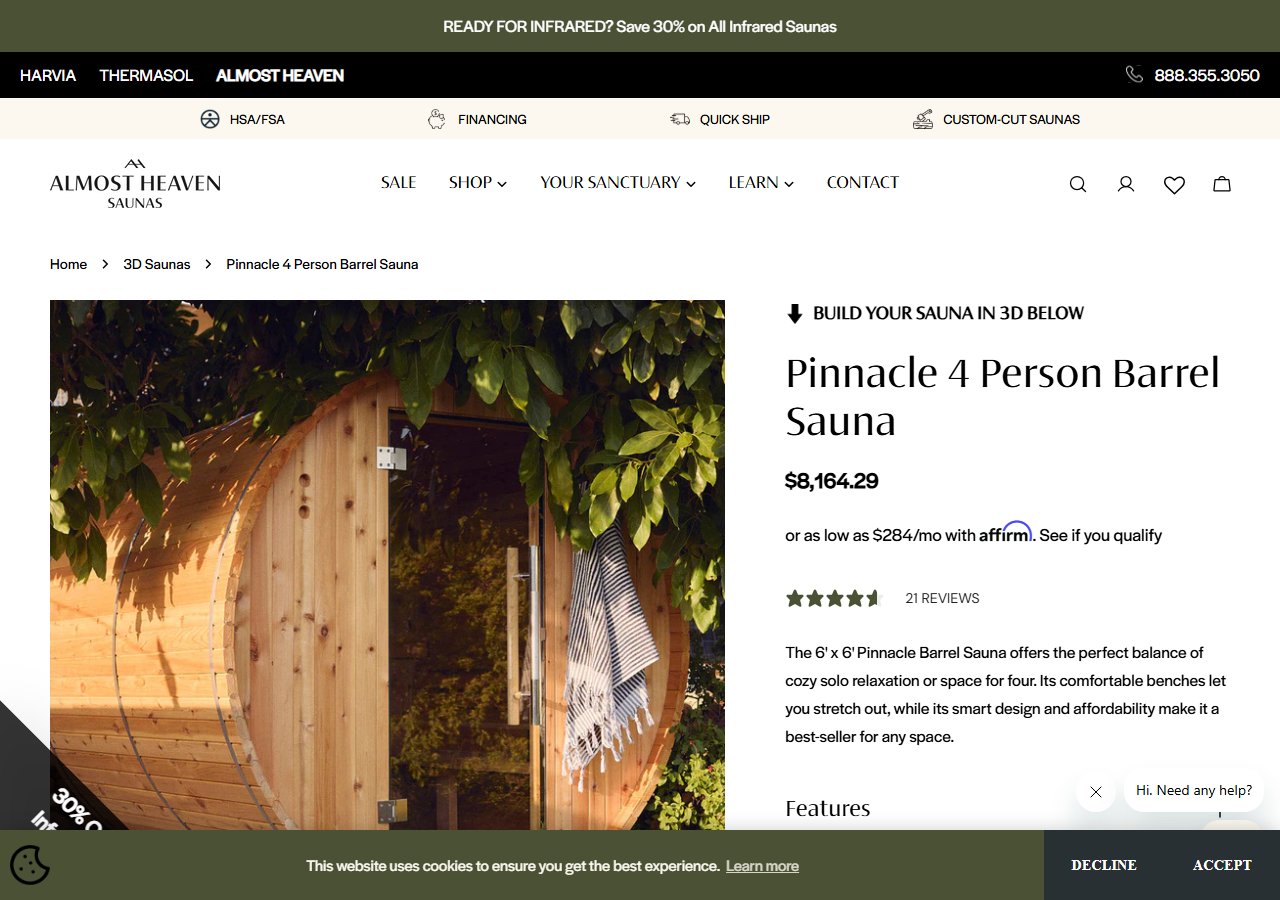
Almost Heaven Pinnacle 4-Person Barrel Sauna
$5,499
See Price at Almost Heaven →
HigherDOSE Infrared Sauna Blanket V4
$599
See Price at HigherDOSE →Putting the Federal Data Into Practice: The Longevity Sauna Protocol
The federal data converges on a clear protocol structure for the longevity-oriented sauna user. It is not complicated, but it requires discipline in each component.
First, address the aerobic activity gap. CDC BRFSS data documents that 76% of U.S. adults do not meet weekly aerobic activity guidelines—if you are in that majority, sauna is not your priority intervention. CDC adult physical activity guidelines recommend 150 minutes of moderate aerobic activity per week as the evidence base for cardiovascular protection. Sauna is a complement to that baseline, not a replacement for it. The cardiovascular benefits documented in the NIOSH-cited literature are strongest in populations who also meet physical activity guidelines.
Second, manage hydration with precision. A 20-minute sauna session produces 0.5 to 1 liter of sweat loss. CDC NIOSH heat-stress guidance translates to a practical protocol: pre-hydrate with 16 ounces of water before entry, and replace fluid plus electrolytes within one hour of exit. Electrolyte replacement matters because sweat loss is not pure water—sodium, potassium, and magnesium depletion from frequent sauna use is a real physiological risk that dehydration alone understates.
Third, time your sessions correctly relative to sleep. Core body temperature must drop to initiate sleep onset. A sauna session immediately before bed will delay sleep onset, undermining one of the primary recovery benefits that longevity-oriented users are seeking. NIH NCCIH sleep guidance: finish heat exposure at least 90 minutes before sleep so core temperature can fall to sleep-permissive levels. The optimal timing for most users is mid-afternoon or early evening—late enough to benefit from the parasympathetic recovery window, early enough for core temperature to normalize before bed.
Fourth, treat frequency as a dose-response variable. The Finnish cohort research that grounds most sauna-longevity discussion used 4 to 7 sessions per week as the high-frequency group. Starting at 2 to 3 sessions per week and building tolerance over 4 to 6 weeks is the appropriate protocol for new users, particularly those managing cardiovascular conditions.
The Honest Summary: What the Federal Data Does and Does Not Show
The federal data cross-reference for sauna and longevity produces a picture that is genuinely encouraging but appropriately bounded. The CDC mortality data establishes that cardiovascular disease is the primary threat to longevity in the U.S. population. NIOSH-cited research documents that passive heat therapy produces measurable cardiovascular adaptation. CDC BRFSS establishes that the majority of American adults are not meeting the aerobic activity standards that provide the strongest cardiovascular protection—creating legitimate clinical space for complementary passive cardiovascular interventions.
What the federal data does not show: a controlled randomized trial proving that sauna use, in isolation, extends human lifespan. The longevity literature on sauna is associational, and the populations studied are not always generalizable to the U.S. adult population managing the specific chronic disease burden that CDC PLACES maps at the county level.
The honest framing, then: infrared and traditional sauna use, practiced with appropriate contraindication screening, proper hydration per CDC NIOSH heat-stress guidance, and correct session timing per NIH sleep guidance, is a well-supported complementary intervention for the cardiovascular and inflammatory conditions that most threaten longevity in the U.S. adult population. It is not a replacement for aerobic exercise, clinical care, or medication management. It is one evidence-anchored tool in a multi-factor stack—and the federal data makes a reasonable case that it belongs there.