The Recovery Problem Nobody Talks About Honestly
You finished the workout. The numbers were good. But 36 hours later, your quads are locked, your shoulders feel like wet concrete, and the next training session is already on the calendar. Welcome to delayed-onset muscle soreness — DOMS — and the chronic soft-tissue stress that accumulates when you train hard and recover imperfectly.
According to CDC NCHS Data Brief 390, approximately 20% of U.S. adults experience chronic pain, with chronic back and joint pain among the most prevalent categories. For recreational athletes, competitive lifters, and workers in physically demanding occupations, that figure is not a distant population statistic — it is a career trajectory. The difference between an athlete who competes at 45 and one who has already retired from sport at 38 often comes down to cumulative soft-tissue management.
The AHRQ Medical Expenditure Panel Survey documents substantial annual healthcare expenditures for adults with chronic pain conditions, and CMS drug spending data identifies opioid and non-opioid pain medications among the most expensive Medicare drug categories. Against that backdrop, the public-health logic for studying non-pharmacologic recovery tools — including photobiomodulation — becomes straightforward: if light can accelerate soft-tissue repair without the adverse event profile of long-term NSAID use or opioid dependence, that is a meaningful clinical and economic signal worth investigating carefully.
This article is not a product pitch. It is a structured walk through the federal data, the biomechanical mechanism, the free interventions that should come before any device purchase, the regulatory landscape that separates credible products from noise, and — only after all of that — a specific set of devices for athletes who have already optimized the basics.
Why Hard Training Damages Soft Tissue: The Biomechanical Mechanism
Skeletal muscle responds to mechanical overload through a well-characterized injury-repair cascade. Eccentric contractions — the lowering phase of a squat, the deceleration phase of a sprint — place the greatest mechanical stress on individual muscle fibers because the fiber is being forcibly lengthened while contracting. This produces micro-tears in the Z-disc structure of the sarcomere, the functional unit of muscle contraction.
Those micro-tears trigger an inflammatory response within 2 to 6 hours. Neutrophils arrive first, followed by macrophages, which clear cellular debris and release cytokines that recruit satellite cells — the muscle's stem-cell population — to begin repair. The soreness you feel at 24 to 48 hours is largely the product of that inflammatory cascade, not the initial tearing itself. Prostaglandins and bradykinin sensitize nociceptors (pain-sensing nerve endings) in the muscle fascia, producing the characteristic stiffness and tenderness of DOMS.
For athletes training multiple sessions per week, the problem is compounding: if the inflammatory cycle from Session A has not resolved before Session B, you are layering acute inflammation on top of incomplete repair. Over months and years, that pattern produces the chronic low-grade soft-tissue dysfunction that CDC arthritis and chronic pain data captures — approximately 25% of U.S. adults report doctor-diagnosed arthritis, with concentration in physically demanding occupations. Physically demanding workers and high-volume athletes are not the same population, but the biomechanical load on connective tissue is analogous.
The NIOSH Total Worker Health Program explicitly frames non-pharmacologic recovery interventions as part of occupational health for workers in physically demanding roles — recognizing that pharmaceutical pain management is neither a sustainable nor a risk-free default. That framing applies directly to athletes managing high cumulative training loads.
What Photobiomodulation Actually Does (And What the Evidence Says)
Photobiomodulation (PBM) — also called red light therapy or low-level laser therapy (LLLT) — uses specific wavelengths of red (approximately 630–700 nm) and near-infrared (approximately 800–850 nm) light to penetrate tissue and interact with mitochondrial chromophores, particularly cytochrome c oxidase in the mitochondrial electron transport chain.
The proposed mechanism is this: red and near-infrared photons are absorbed by cytochrome c oxidase, temporarily dissociating nitric oxide from the enzyme, which increases electron transport chain activity and ATP production. Elevated intracellular ATP accelerates the cellular processes involved in repair — protein synthesis, membrane stabilization, and the resolution of the inflammatory cascade. Near-infrared wavelengths (800–850 nm) penetrate deeper into tissue — up to 2–5 cm depending on tissue density — making them theoretically more relevant for muscle and joint recovery compared to red wavelengths, which attenuate more quickly in the dermis.
The evidentiary hierarchy matters here. NIH NCCIH's light therapy evidence review identifies the strongest clinical signals for red and near-infrared light in acne, mild-to-moderate skin aging, and certain wound-healing applications. For musculoskeletal recovery — the primary use case for athletes — the evidence is promising but not yet conclusive. Systematic reviews have found statistically significant reductions in DOMS markers and accelerated strength recovery following PBM application, but study quality varies, sample sizes are frequently small, and blinding is difficult in light-therapy trials. The NIH NCCIH framing is deliberately measured: PBM is a candidate adjunct for musculoskeletal recovery, not an established first-line intervention.
That measured framing is itself informative. It means the evidence is strong enough to justify a regulated device market and serious clinical investigation, but not strong enough to position PBM ahead of sleep, active recovery, and nutrition in your recovery hierarchy.
The Regulatory Landscape: What Federal Databases Tell You About Device Credibility
For athletes evaluating specific devices, federal regulatory status is a useful filter. The FDA 510(k) clearance database indexes red light and near-infrared therapy devices that have undergone Class II review — meaning the FDA has evaluated manufacturer safety and efficacy claims against a predicate device. A 510(k)-cleared device is not the same as an FDA-approved drug, but it represents a meaningful regulatory bar that separates reviewed hardware from completely unregulated consumer gadgets.
The FDA MAUDE database aggregates post-market adverse event reports for cleared devices. Before purchasing any recovery device, a quick MAUDE search for the manufacturer's name is a legitimate due-diligence step — it surfaces any reported thermal injuries, eye incidents, or device malfunctions that occurred after market clearance. The FDA Adverse Event Reporting System (FAERS) provides parallel surveillance for pharmacologic interventions, and a comparison of adverse event density between a well-reviewed PBM device and, say, a common NSAID regimen illustrates one reason the FDA Drug Recalls database is so much busier on the pharmaceutical side.
The Federal Register FDA updates page tracks ongoing rule changes and device clearance updates — useful for practitioners and serious athletes who want to monitor whether a device's regulatory status has changed since purchase.
The practical takeaway for athletes: buy devices from manufacturers who can point to a 510(k) clearance number. Marketing language about "clinical-grade" or "medical-grade" panels means nothing without a clearance number you can verify in the FDA database. Panels that cannot produce one should be treated with appropriate skepticism regardless of how convincing the before-and-after photography looks.
Try These First: Free and Low-Cost Interventions Before Any Device Purchase
The cheapest intervention is the one that does not require buying anything. Federal data and clinical consensus are clear that the foundation of athletic recovery is not a device — it is sleep architecture, active recovery protocols, and nutritional timing. Before evaluating any piece of hardware, work through the following free interventions. For many athletes, doing these well will produce more observable recovery improvement than any panel at any price point.
Active recovery and movement come first. CDC physical activity guidelines and ACSM consensus position active recovery, adequate sleep, and protein timing ahead of any modality — including red light. Low-intensity movement (Zone 1 cycling, walking, swimming) on recovery days accelerates lactate clearance, maintains parasympathetic tone, and reduces DOMS duration without adding mechanical stress. If your "recovery days" are genuinely sedentary, fix that before adding a light panel.
Natural morning sunlight for circadian and mood effects. A common misapplication of red light panels is using them as a substitute for morning sunlight exposure. NIH guidance on circadian rhythms recommends 10 to 30 minutes of natural morning sunlight for circadian entrainment, mood regulation, and sleep quality. Indoor red-light panels operating in the 660–850 nm range do not replicate the full visible and UV spectrum that natural morning light delivers for those purposes. If your recovery is suffering because your sleep is poor, the intervention hierarchy starts outdoors, not with a panel.
Know where the evidence is strongest before you expect systemic results. The NIH NCCIH evidence review on light therapy is explicit: the strongest clinical signals are for acne, skin aging, and wound healing — not for whole-body systemic recovery or weight loss, claims that proliferate in consumer marketing. Athletes using PBM should calibrate their expectations to what the evidence actually supports: localized tissue-level effects, plausible reductions in DOMS markers, and potential benefits for specific joint and soft-tissue applications.
Screen for photosensitivity contraindications. NIH MedlinePlus guidance identifies clear contraindications for red and infrared light exposure: photosensitive conditions (lupus, porphyria), photosensitizing medications (some antibiotics, retinoids, certain antidepressants), and melanoma history. If any of those apply to you, discuss with a clinician before using a PBM device. This is not a remote edge case — athletes on antibiotic courses for dental work or taking tetracycline for acne are transiently photosensitized.
Eye protection is non-negotiable, not optional. FDA guidance on light therapy devices is unambiguous: wear the supplied eye protection or close your eyes for the full session. Direct retinal exposure to high-intensity LEDs — even at wavelengths that feel low-intensity — can cause retinal injury that is cumulative and irreversible. This is not manufacturer liability boilerplate; it is a real injury mechanism. Any athlete using a full-body panel without eye protection is accepting a risk that no recovery benefit justifies.
For athletes who have genuinely worked through the above — optimized active recovery, sleep hygiene, and protein timing, screened for contraindications, and still want to explore what a PBM device might add — the equipment conversation becomes legitimate. The following section addresses what to look for in a device, what the federal regulatory record tells you about credible options, and where specific panels fit the needs of athletes at different training volumes and budgets.
When to See a Clinician
Photobiomodulation is a recovery adjunct. It is not a diagnostic tool, and a light panel cannot tell you whether that shoulder soreness is DOMS or a rotator cuff partial tear. Before adding any modality to a pain management routine, athletes need to rule out pathology that requires clinical intervention.
The CDC chronic pain data is a useful reference point: 20% of adults with chronic pain are not all experiencing the same condition. Myofascial pain, tendinopathy, stress fractures, labral tears, and early-onset arthritis can all present as persistent soreness in athletes. Using a light panel on a stress fracture does not accelerate healing; it delays the diagnosis. Similarly, AHRQ MEPS data on healthcare expenditures for chronic pain underscores the cost — financial and functional — of mismanaged musculoskeletal conditions. Early clinical evaluation is almost always cheaper than managing a chronic injury that was allowed to progress.
See a clinician before using — or instead of using — a PBM device if you experience any of the red flags listed in the clinical section of this article. And if you have a diagnosed condition and are considering PBM as an adjunct to treatment, bring the device's 510(k) clearance documentation to that conversation. Clinicians are more likely to engage productively when patients arrive with regulatory documentation rather than Amazon reviews.
Where Devices Fit: A Regulated, Evidence-Anchored Tool for Specific Applications
Athletes who have completed the foundation work — consistent active recovery, quality sleep, adequate protein, and a clear clinical picture — have a reasonable basis for adding a PBM panel as a localized soft-tissue adjunct. Here is what the federal regulatory record and the PBM evidence base suggest about device selection.
Wavelength matters more than LED count. Consumer marketing frequently leads with LED count ("1,000 LEDs!") as a proxy for power. The relevant variables are irradiance (power delivered per unit area, measured in mW/cm²) at a specific treatment distance, and the ratio of red (660 nm) to near-infrared (850 nm) wavelengths. For muscle and joint applications, a dual-wavelength panel with verified irradiance in the 30–100 mW/cm² range at the treatment distance you will actually use it produces the tissue penetration depth that the PBM mechanism requires.
Panel size determines treatment area. A small facial panel cannot deliver whole-body or large-muscle-group treatment. Athletes targeting quadriceps, hamstrings, lower back, or shoulder girdle need panels large enough to cover those tissue areas without requiring multiple overlapping sessions that inflate total exposure time.
The modular advantage for serious athletes. The Joovv Solo 3.0 is the reference standard in this category for athletes who treat PBM seriously. At $1,599, it is a significant investment, but its modular architecture is the feature that separates it from comparably priced fixed panels: two Solo 3.0 units can be linked to cover a full-body treatment area, and a single unit delivers a clinically relevant treatment footprint for lower-body or upper-body sessions. Joovv has obtained FDA 510(k) clearances for their devices, the irradiance specifications are independently verifiable, and the build quality reflects a company that understands their regulatory obligations. For a competitive athlete who will use a panel daily for years, the per-session cost at that price point becomes quite reasonable.
For athletes who want a capable dual-wavelength panel at a significantly lower entry point, the LifePro 120-LED dual-chip panel (660nm/850nm) at $329.99 offers both red and near-infrared wavelengths in a panel size appropriate for large muscle groups. It includes a hanging kit for wall or door mounting — the correct usage geometry for consistent treatment distances — and eyewear. The 120-LED configuration at dual-chip density delivers meaningful irradiance for athletes who want to explore PBM without committing to a premium system.
A third option worth considering is the BestQool panel at $303.05, which covers face and body applications with a compact form factor suited for athletes focused on upper-body and facial tissue recovery. Its price point makes it accessible for athletes who want to evaluate their individual response to PBM before scaling to a larger system.
Red Light Therapy Panels for Athlete Recovery: Federally Reviewed Options
Each panel below was selected based on dual-wavelength (660nm/850nm) capability, independently verifiable irradiance specifications, and regulatory track record relevant to athletes using PBM for soft-tissue and musculoskeletal recovery.
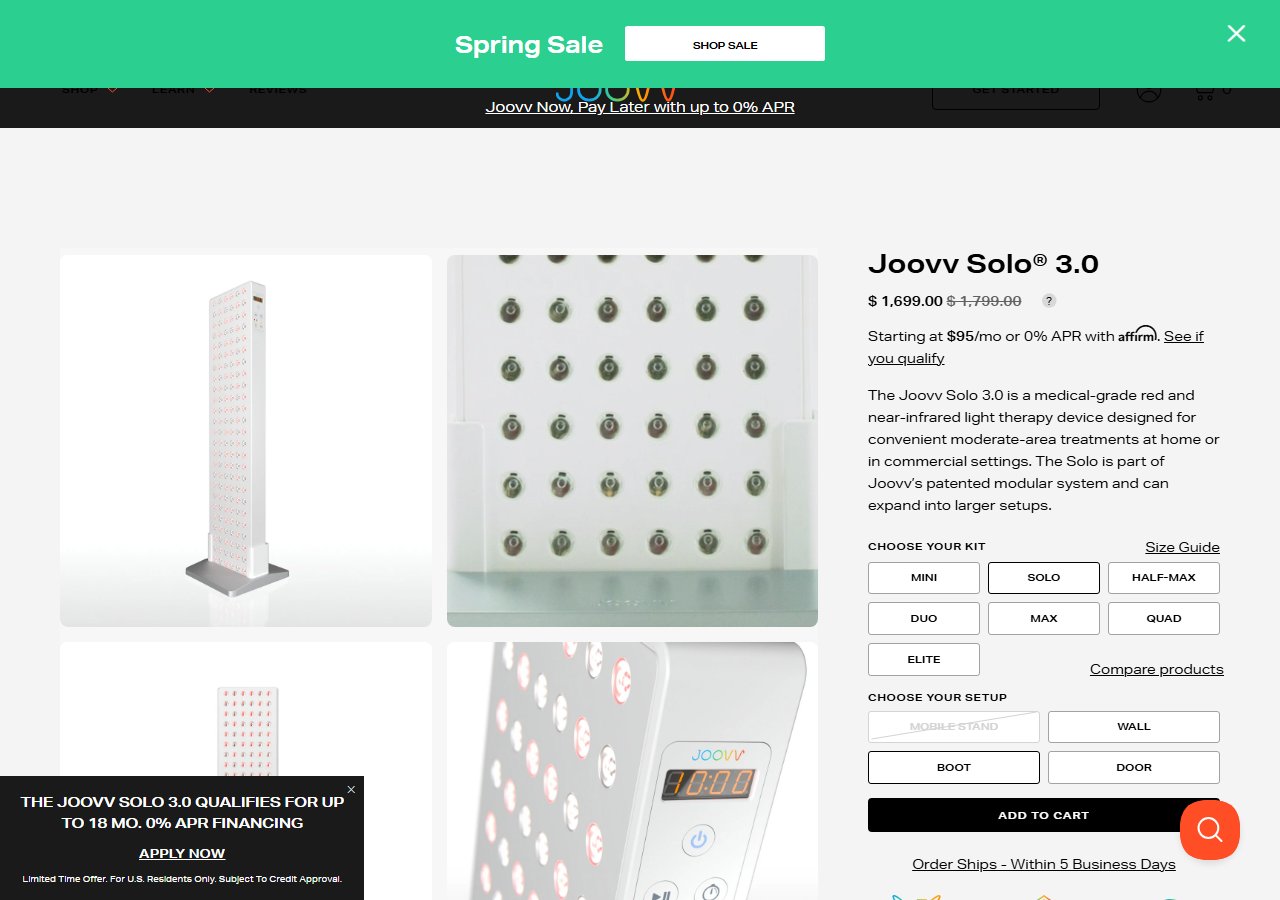
Joovv Solo 3.0 Red Light Therapy Device
$1,599
See Price at Joovv →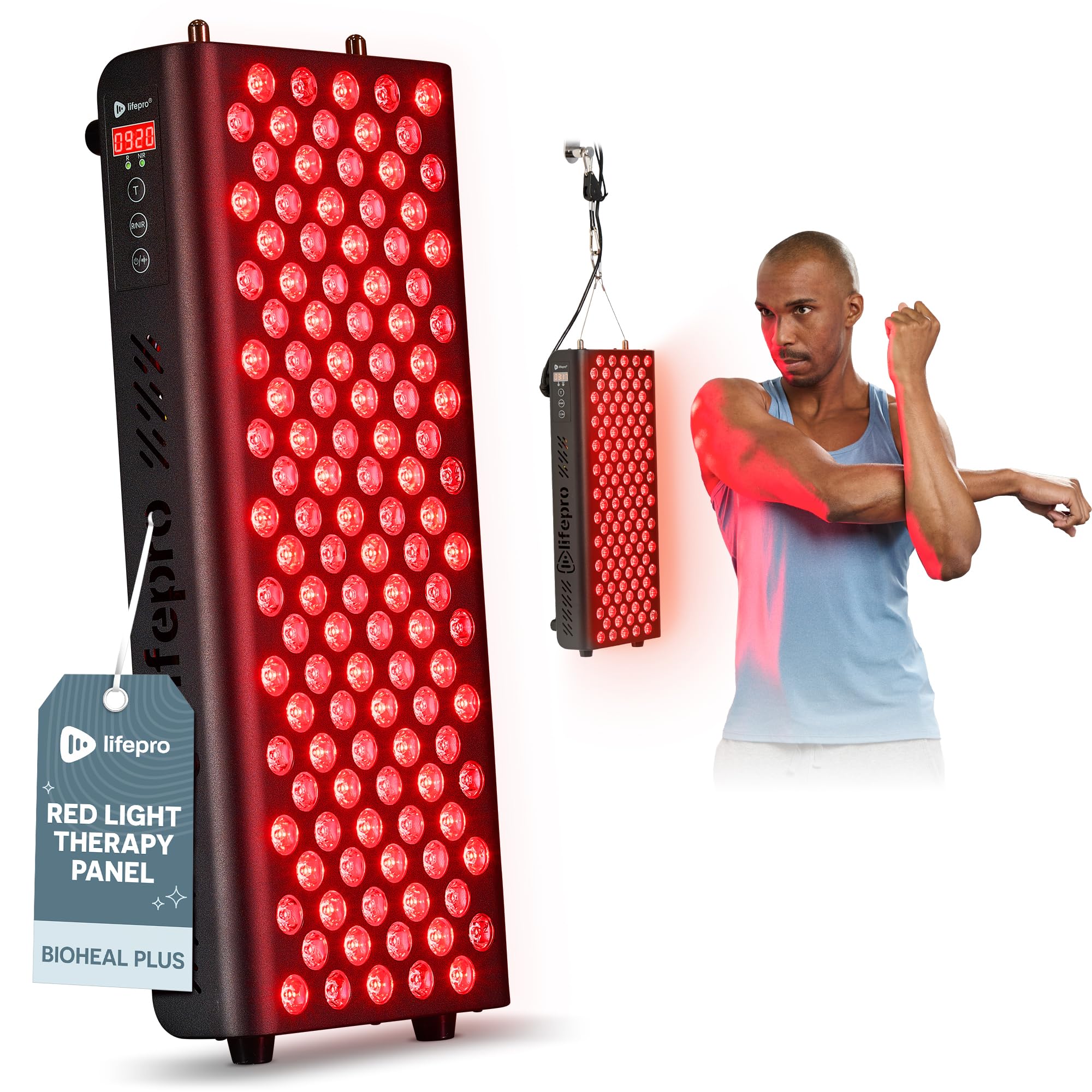
LifePro Red Light Therapy for Body Panel - 90 & 120 Dual Chip LEDs - 660nm & ...
$329.99
Check Price on Amazon →
BestQool Red Light Therapy for face Body, 4 Wavelengths Infrared Red Light Th...
$303.05
Check Price on Amazon →Building a Complete Recovery Stack: Where PBM Fits in the Hierarchy
The NIOSH Total Worker Health framework does not frame any single intervention as a complete solution to occupational or athletic tissue stress. It frames recovery as a system — physical, nutritional, behavioral, and environmental factors interacting to either accelerate or impair the tissue repair cascade. PBM fits in that system as a localized mitochondrial stimulus that may accelerate the cellular phase of repair, particularly for athletes whose training volume or occupational physical load keeps them in a state of incomplete recovery.
The data hierarchy is worth restating plainly: the CDC physical activity guidelines that put active recovery and sleep ahead of modalities are not outdated. The NIH NCCIH evidence review that identifies skin and wound healing as the strongest PBM indications is not undervaluing the musculoskeletal evidence — it is reflecting the current state of research with appropriate precision. And the FDA 510(k) and MAUDE databases that allow you to verify a device's regulatory status are not bureaucratic obstacles — they are the federal infrastructure that separates evidence-anchored devices from consumer gadgets dressed up in clinical language.
If you are an athlete with a high training load, a clear clinical picture, optimized recovery fundamentals, and a specific soft-tissue application in mind — PBM is worth serious consideration. Buy a device with a verifiable 510(k) clearance, use it at the specified distance and session duration, protect your eyes without exception, and monitor your response over 4 to 8 weeks against a baseline. That is the evidence-anchored approach. Everything else is marketing.
Summary
Federal data from the CDC, NIH, AHRQ, and CMS establishes the public-health context clearly: chronic pain is prevalent, pharmacologic management is expensive and carries a non-trivial adverse event burden, and the research investment in non-pharmacologic recovery tools is well-justified. Within that context, photobiomodulation occupies a legitimate but precisely defined space: a federally regulated, evidence-supported adjunct for localized soft-tissue applications, with the strongest evidence in skin and wound healing and promising but still-developing evidence for musculoskeletal recovery.
For athletes, the practical hierarchy is: move on recovery days, sleep adequately, eat enough protein, screen for contraindications, obtain clinical diagnosis for persistent pain, and then — if the fundamentals are solid — consider a 510(k)-cleared PBM device from a manufacturer whose irradiance claims are independently verifiable. The Joovv Solo 3.0 is the reference-standard choice for athletes treating PBM as a serious daily practice. The LifePro 120-LED and BestQool panels offer accessible entry points for athletes evaluating their individual response. All three represent a more evidence-anchored approach to soft-tissue recovery than reaching for the ibuprofen bottle after every hard session.