The Federal Picture: Chronic Pain, Drug Costs, and the Search for Alternatives
Start with the numbers that explain why post-injury recovery patients are asking these questions in the first place. CDC NCHS Data Brief 390 documents that approximately 20% of U.S. adults — roughly 50 million people — experience chronic pain, with chronic back and joint pain leading all categories. A separate CDC Arthritis dataset finds that approximately 25% of U.S. adults carry a doctor-diagnosed arthritis diagnosis, with prevalence sharply concentrated in physically demanding occupations: construction, manufacturing, agriculture, health care support. These are not mild inconveniences. They are productivity-destroying, quality-of-life-eroding conditions that overwhelm the primary care system.
The pharmaceutical backstory matters here. CMS Drug Spending Dashboard data places opioid and non-opioid pain medications among the most expensive drug categories in the Medicare program. AHRQ Medical Expenditure Panel Survey (MEPS) data documents substantial annual healthcare expenditures for adults with chronic pain conditions — spending that falls disproportionately on patients who cycle through prescriptions without resolving the underlying soft-tissue pathology. And the FDA Drug Recalls Database provides sober context: pharmacologic interventions carry a recall and adverse-event burden that non-pharmacologic alternatives, as a category, simply do not.
This is the public-health environment that has accelerated serious scientific and commercial interest in photobiomodulation — the use of red (roughly 630–700 nm) and near-infrared (roughly 800–1100 nm) wavelengths to interact with tissue at the cellular level. It is also the environment that has generated a flood of overclaimed consumer devices, aggressive marketing, and genuine confusion among patients about what the federal evidence actually supports.
This article is an attempt to cut through that confusion using federal data, regulatory filings, and published clinical evidence — not manufacturer talking points.
Why Soft Tissue Doesn't Always Heal Cleanly — The Biomechanical and Physiological Mechanism
Understanding why post-injury patients are interested in adjunct recovery tools requires understanding why soft-tissue healing stalls in the first place. Acute injuries — ligament sprains, muscle tears, contusions, post-surgical incision sites — move through a predictable inflammatory cascade: hemostasis, inflammation, proliferation, and remodeling. The problem is that in a large share of patients, especially those in physically demanding occupations who cannot fully off-load the injured area, this cascade gets stuck.
The NIOSH Total Worker Health Program has specifically framed non-pharmacologic recovery interventions as a legitimate occupational health concern for workers who cannot simply rest their way to full recovery. A warehouse associate with a soft-tissue knee injury does not have the option of six weeks of non-weight-bearing rest. A home health aide with a rotator cuff strain returns to patient transfers within days. These populations have an especially high stake in evidence-based adjuncts that might accelerate the proliferative phase, reduce chronic inflammation, or mitigate the fibrotic scarring that often follows incomplete tissue remodeling.
Photobiomodulation's proposed mechanism operates at the mitochondrial level. The leading hypothesis — supported by in-vitro and animal studies, and increasingly by controlled human trials — is that specific red and near-infrared wavelengths are absorbed by cytochrome c oxidase, a key enzyme in the mitochondrial electron transport chain. This absorption is thought to upregulate ATP synthesis, modulate reactive oxygen species, and promote anti-inflammatory cytokine activity in the target tissue. For wound healing specifically, this translates to measurable effects on fibroblast proliferation, collagen deposition, and keratinocyte migration — all key processes in the repair of soft tissue.
The honest caveat is that most of this mechanistic work was done in cell cultures and rodent models. Human trials are growing in number and quality, but the evidence hierarchy for photobiomodulation is still solidifying. The NIH NCCIH evidence review is direct about this: the strongest clinical evidence for red and near-infrared light applies to acne, mild-to-moderate skin aging, and some wound healing applications. Evidence for systemic recovery, athletic performance enhancement, and pain reduction in deep musculoskeletal structures is more mixed, more heterogeneous in methodology, and more susceptible to placebo effects in non-blinded trials.
That is not a dismissal. It is a calibration.
What FDA Regulatory Filings Actually Tell You
Federal regulatory status is one of the most useful — and most misread — signals in this market. Manufacturers frequently cite "FDA clearance" in marketing copy, but clearance through the FDA 510(k) process has a specific and limited meaning: a Class II medical device has been reviewed and found to be substantially equivalent to a legally marketed predicate device, in terms of intended use and technological characteristics. It is not FDA approval. It does not mean the agency conducted independent clinical trials. It means the device cleared a regulatory pathway that, in most cases, requires the manufacturer to demonstrate safety data and make claims consistent with the predicate.
For post-injury recovery patients, this matters in two ways. First, a 510(k)-cleared device is operating in a regulatory framework, which is meaningfully different from an uncleared device making broad therapeutic claims. The Federal Register tracks device clearances and rule changes, and the FDA MAUDE database aggregates post-market adverse event reports — a resource that allows informed consumers to check whether a device category has generated a pattern of harm reports. For red and near-infrared light therapy devices in the consumer tier, the MAUDE record is relatively sparse compared to higher-energy devices, which is consistent with the modality's favorable safety profile when used as directed.
Second, clearance language tells you what specific indication a device was reviewed for. A panel cleared for "temporary relief of minor muscle and joint pain" is making a narrower, more defensible claim than a device website asserting it "heals injuries faster" or "regenerates cells." Patients who read 510(k) summaries — publicly searchable — gain a significant information advantage over patients who rely solely on marketing copy.
The FDA Adverse Event Reporting System (FAERS) provides an additional layer: federal-level tracking of adverse events reported for therapy devices and complementary chronic-pain interventions. For context, the adverse event profile of photobiomodulation devices in post-market surveillance is qualitatively different from — and substantially less alarming than — the pharmacologic alternatives that FAERS tracks for the same chronic pain indications. This is not a marketing claim; it is a verifiable federal data observation.
The Cheapest Intervention Is the One That Doesn't Cost Anything
Before discussing any device, it is worth being direct: the evidence hierarchy for post-injury soft-tissue recovery still places movement, sleep, and nutrition well ahead of any modality. The CDC Adult Physical Activity Guidelines — aligned with American College of Sports Medicine guidance — position active recovery, adequate sleep, and protein timing as the non-negotiable foundation of tissue repair. Red light therapy is, at best, a candidate adjunct layered on top of that foundation. If you are not meeting those fundamentals, no device will compensate.
Equally important is the specificity of the evidence base. The NIH NCCIH light therapy review provides clear guidance that the clinical evidence is strongest for skin-level applications — wound healing, acne, superficial scar tissue. Claims that red light panels dramatically accelerate healing in deep tendons, ligaments, or joint cartilage in humans are extrapolating from a weaker evidence base. That does not make those applications implausible, but it does mean patients should calibrate their expectations accordingly.
Safety is also not optional. FDA guidance on at-home photobiomodulation devices is unambiguous: wear the supplied eye protection or close your eyes for the full session. Direct retinal exposure to high-intensity LEDs can cause retinal injury — a risk that is non-theoretical and has generated adverse event reports. This is not a minor precaution.
For patients with specific health conditions, the contraindication list is meaningful. NIH clinical guidance advises avoiding red and infrared light therapy if you have photosensitive conditions such as lupus or porphyria, are taking photosensitizing medications (including certain antibiotics and retinoids), or have a history of melanoma. Clearing these contraindications with a clinician before purchasing a panel is not a bureaucratic formality — it is a patient safety step.
Finally, for patients who are exploring red light therapy primarily for mood, energy, or sleep dysregulation related to their injury recovery period: NIH circadian rhythm guidance is clear that 10 to 30 minutes of natural morning sunlight is the evidence-supported intervention for circadian entrainment. Indoor red-light panels in the 630–850 nm range do not replicate the full spectrum that natural light delivers for this purpose. Morning sun exposure is free and has a stronger evidence base for circadian outcomes than any consumer panel on the market.
For patients who have already addressed the foundational interventions — and for whom a clinician has confirmed no contraindications — there is a legitimate case for evaluating FDA-reviewed photobiomodulation devices as adjuncts to a recovery protocol. The question then becomes: which devices are worth the investment, and what should you look for in a regulatory and technical sense?
When to See a Clinician — Red Flags Specific to Post-Injury Recovery
Photobiomodulation devices are not a substitute for clinical evaluation. Post-injury recovery patients in particular need to be alert to signs that their condition requires professional assessment before — or instead of — any home modality.
The NIH NCCIH evidence position is explicit that red light therapy has not been evaluated as a treatment for serious infections, deep-tissue injuries involving bone, nerve damage, or conditions requiring surgical intervention. If your injury involves any of the following, a clinician evaluation is mandatory — not optional — before deploying any at-home recovery device:
- Worsening pain, swelling, or instability more than 72 hours after acute injury (possible undiagnosed fracture, ligament rupture, or joint effusion)
- Numbness, tingling, or loss of strength in a limb distal to the injury site (possible nerve compression or vascular compromise)
- Signs of infection: warmth, redness tracking from the wound, fever, or purulent discharge
- Pain that is unresponsive to position changes and wakes you from sleep (possible bone stress injury or systemic pathology)
- Any skin lesion, mole, or tissue change in the area you are planning to treat with a light panel (melanoma contraindication per NIH MedlinePlus guidance)
Where Devices Fit: Evaluating the Field Honestly
For post-injury recovery patients who have cleared the contraindication list, completed a clinical evaluation, and are looking for an evidence-anchored adjunct to their protocol, the device market contains meaningful quality variation. Here is how to think about the field — and where specific products position.
The direct-brand tier: modular, full-spectrum, higher power density
The Joovv Solo 3.0 is the most fully documented modular option available to direct consumers in the United States. Joovv has pursued 510(k) clearance for its devices and publishes irradiance data (measured power output at the treatment surface) — a technical disclosure that most competitors omit or obscure. For post-injury recovery patients targeting soft tissue, irradiance matters: underpowered panels require impractically long session times to deliver the fluence doses used in clinical trials, which typically range from 4–60 J/cm² depending on tissue depth and indication. The Solo 3.0 delivers dual-wavelength output (660 nm red and 850 nm near-infrared) in a full-torso-coverage format, and its modular design allows stacking for whole-body coverage as clinical needs evolve. At $1,599, it is a serious purchase — appropriate for patients with chronic or recurring soft-tissue conditions rather than one-time acute injuries.
The accessible tier: dual-chip panels with documented wavelengths
For patients who want to evaluate the modality before a four-figure commitment, the LifePro Red Light Therapy Panel delivers 660 nm and 850 nm dual-chip LEDs in a 120-LED configuration with hanging hardware and eye protection included. At $329.99, it represents the entry point into a device format (panel, not handheld) that allows meaningful treatment area coverage. The dual-wavelength spec (660 nm for superficial tissue; 850 nm for deeper penetration) aligns with the wavelengths most frequently used in human clinical trials. Patients using this device should confirm irradiance specs against manufacturer documentation before assuming clinical-trial-equivalent dosing.
The BestQool Red Light Therapy Panel occupies a similar price tier at $303.05 and offers comparable wavelength coverage for face and body applications. For post-injury patients focused on superficial wound healing or scar tissue remodeling — where the NCCIH evidence is strongest — a panel at this price point is a reasonable starting point, provided the user applies the same contraindication checklist and eye protection protocols as with any device in this category.
What to look for regardless of brand
Regardless of device, post-injury patients should verify: (1) whether the device carries FDA 510(k) clearance and for what specific indication; (2) whether the manufacturer publishes irradiance data in mW/cm² at a stated treatment distance; (3) whether eye protection is included and what the specific LED wavelength specifications are. Devices that omit any of these data points are asking patients to trust marketing copy over verifiable technical disclosure — a red flag in any evidence-anchored evaluation.
Red Light Panels Reviewed for Post-Injury Soft-Tissue Recovery
These three devices were evaluated for post-injury recovery patients based on wavelength specification (660 nm red and 850 nm near-infrared), FDA regulatory status, published irradiance data, and treatment area coverage — the criteria most relevant to the clinical evidence base for soft-tissue and wound-healing applications.
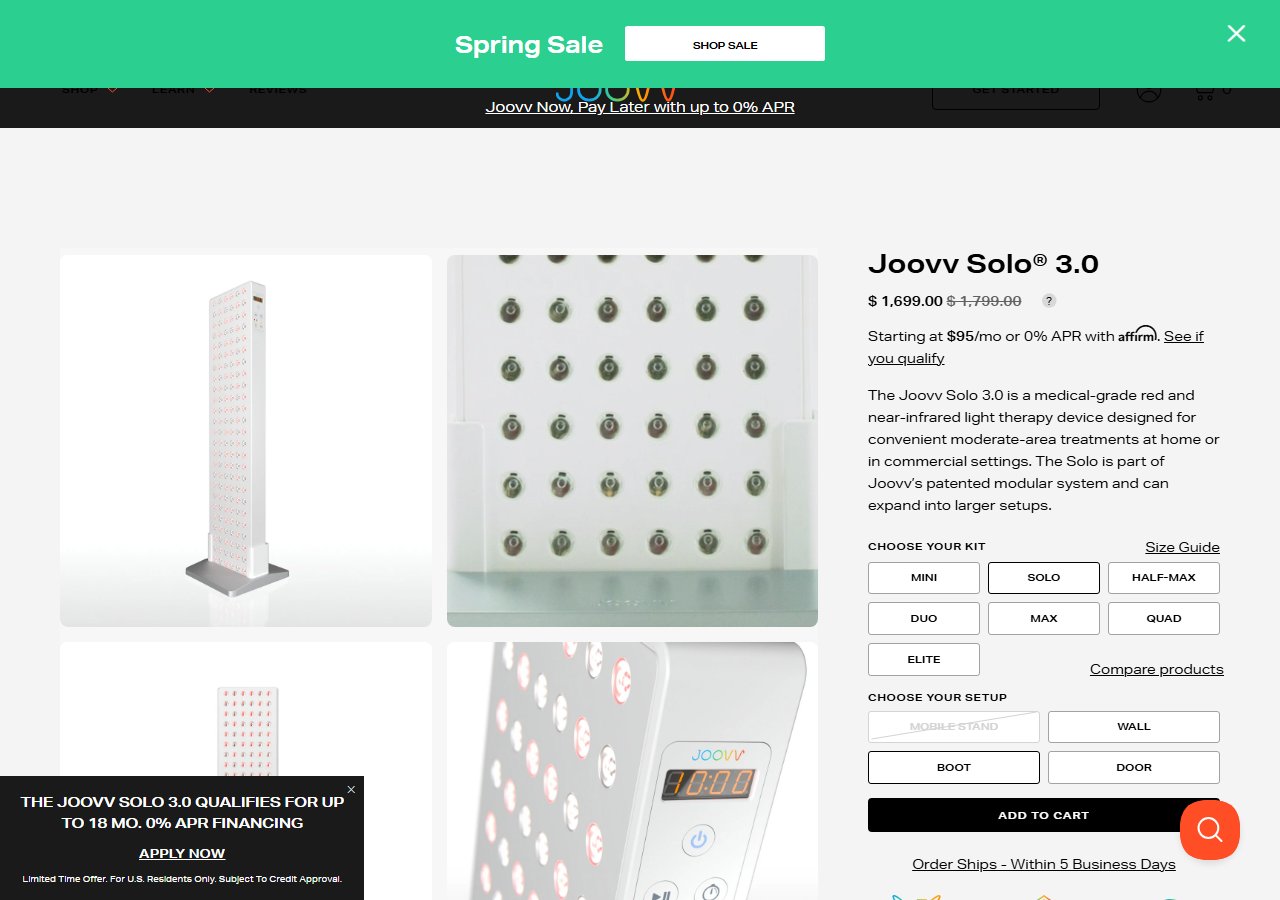
Joovv Solo 3.0 Red Light Therapy Device
$1,599
See Price at Joovv →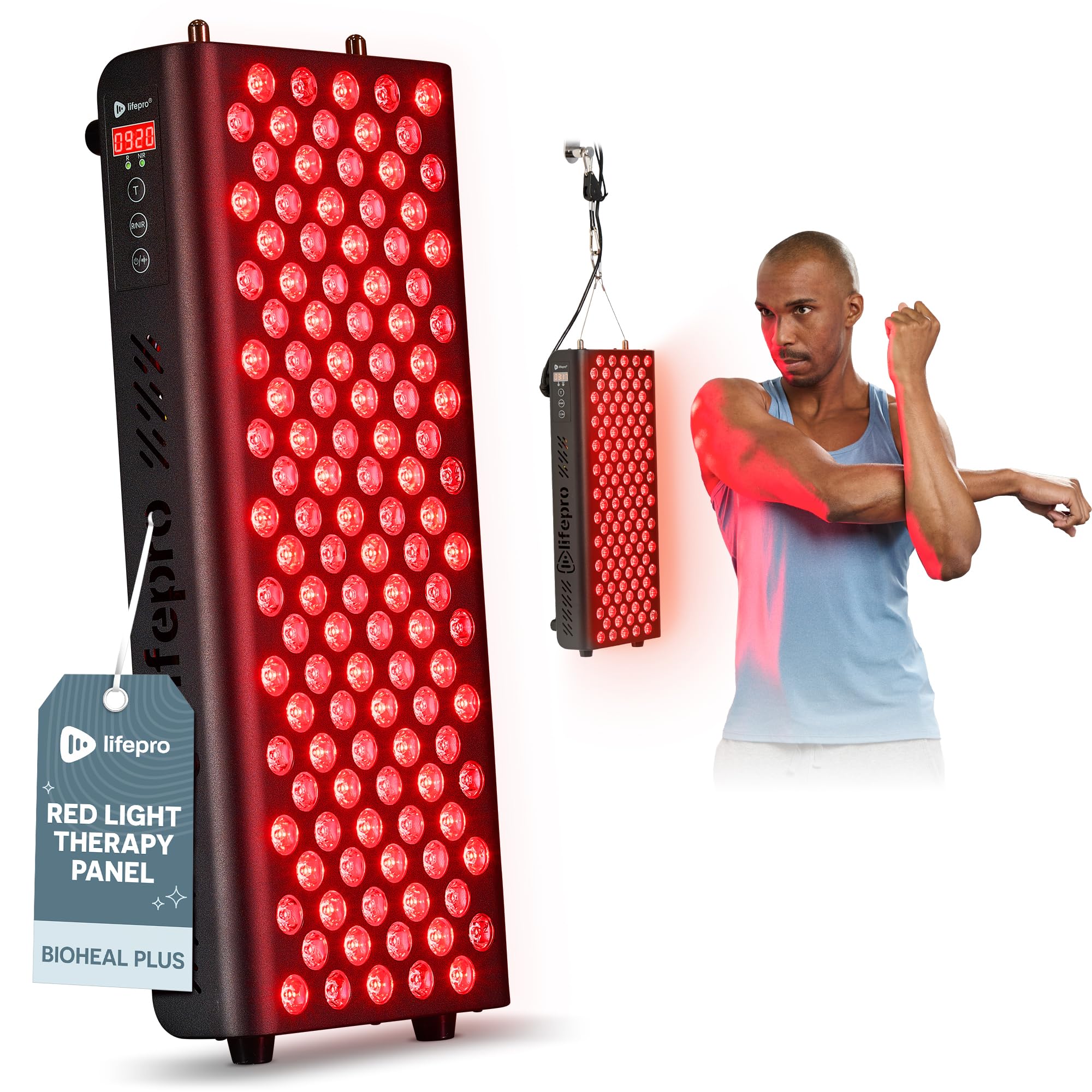
LifePro Red Light Therapy for Body Panel - 90 & 120 Dual Chip LEDs - 660nm & ...
$329.99
Check Price on Amazon →
BestQool Red Light Therapy for face Body, 4 Wavelengths Infrared Red Light Th...
$303.05
Check Price on Amazon →Building a Protocol That Holds Up to Scrutiny
The federal evidence picture for photobiomodulation is genuinely more nuanced than either enthusiastic proponents or reflexive skeptics acknowledge. The CDC chronic pain data and AHRQ cost burden data establish the scale of unmet need. The NIH NCCIH evidence review establishes where the clinical support is strong (wound healing, skin-level applications) and where it is still emerging (deep musculoskeletal recovery, systemic pain relief). The FDA regulatory framework provides a clearance pathway that, while not equivalent to drug approval, does create a meaningful accountability structure for devices in this category.
For post-injury recovery patients, the actionable hierarchy looks like this: First, address the foundations — active recovery, sleep quality, and protein intake. Second, clear contraindications with a clinician, especially if you have photosensitive conditions, are on relevant medications, or have any active skin concerns in the treatment area. Third, if a clinician confirms the modality is appropriate for your specific injury type and stage, evaluate devices using regulatory clearance, published irradiance data, and wavelength specifications — not marketing copy.
The NIOSH Total Worker Health framework frames this well: non-pharmacologic recovery tools earn their place in a protocol through documented evidence and patient-specific appropriateness, not because they are popular or heavily marketed. That framing should guide every purchase decision in this category. A device that delivers the right wavelengths at clinically relevant power densities, carries appropriate regulatory clearance, and is used by a patient without contraindications — as an adjunct to a complete recovery protocol — is a defensible, evidence-anchored tool. A device purchased as a shortcut past the foundational work is likely to disappoint regardless of the marketing claims behind it.