The Federal Data Picture: Warehousing and the Back Injury Crisis
If you work in a warehouse, the odds are stacked against your lumbar spine before you clock in. BLS Musculoskeletal Disorders by Occupation data confirms that the back is the single most commonly injured body part across all U.S. occupations that result in days away from work — and warehousing, which encompasses order fulfillment, distribution, and freight-handling operations, consistently ranks among the highest-incidence industries. This is not a matter of individual carelessness. It is a structural, biomechanical, and economic problem that federal agencies have been tracking for decades without resolution.
The downstream costs are staggering. AHRQ HCUP data identifies back pain as one of the most expensive conditions in the U.S. healthcare system measured by total inpatient and outpatient spending. AHRQ Medical Expenditure Panel Survey (MEPS) data shows that adults living with chronic back conditions spend substantially more on personal healthcare annually than adults without those conditions. And SSA Disability Insurance reports identify musculoskeletal disorders as the largest single category of new disability claims filed each year in the United States — meaning that a warehouse worker's back injury is not merely a personal inconvenience. It is a pipeline to a disability system already under extraordinary strain.
For the warehouse worker reading this at the end of a 10-hour shift: this article is for you specifically. Not for office workers with lumbar fatigue from sitting. Not for runners with disc compression. For the person who spent the last decade pulling 50-pound totes from floor-level shelves, twisting to load trailers, and walking 8–15 miles per shift across concrete floors — and who is now wondering why they wake up stiffer than they went to bed.
Why Warehouse Work Breaks the Lumbar Spine: The Biomechanical Mechanism
Understanding the mechanism is not academic. It directly determines which interventions matter and in what order.
The NIOSH Lifting Equation was developed precisely because federal researchers identified that manual material-handling tasks in warehousing, construction, and healthcare routinely exceed safe spinal compressive load limits. The equation calculates a Recommended Weight Limit (RWL) for any given lift, accounting for load weight, horizontal reach distance, vertical height of the lift, twisting angle, and coupling quality between hand and load. In practice, the majority of warehouse picking, palletizing, and loading tasks — particularly those involving floor-level picks, extended reaches into rack systems, or awkward bin angles — exceed the RWL regularly. The spine is absorbing compressive and shear forces that, over thousands of repetitions across a career, degrade the intervertebral discs, strain the posterior ligaments, and fatigue the paraspinal musculature.
The compressive loading during a shift is only half of the problem. The second half happens when the shift ends.
During sleep, the intervertebral discs rehydrate — they absorb fluid from surrounding tissue and recover some of the height lost during axial loading. This process requires a specific condition: the spine must be in a mechanically neutral position with adequate pressure relief at the hips and shoulders. If a warehouse worker — who may carry 180 to 300-plus pounds and has spent the previous 10 hours compressively loading their lumbar spine — sleeps on a surface that is either too soft (allowing the spine to sag into flexion) or too firm (creating pressure points at the iliac crest that force compensatory postures), disc rehydration is incomplete, paraspinal muscles remain in protective spasm, and the worker begins the next shift already in deficit.
This is the mechanism. The sleep surface is a recovery variable — not a cure, but a meaningful physiological input. CDC NCHS Data Brief 390 documents that approximately 20% of U.S. adults experience chronic pain with the lower back as the most common site. That prevalence is almost certainly higher among workers in physically demanding occupations. And CDC sleep data shows that roughly 35% of U.S. adults are already sleeping fewer than 7 hours per night — the threshold below which chronic disease risk rises meaningfully. A warehouse worker who is both sleep-deprived and sleeping in poor mechanical alignment is compounding an already serious occupational injury risk.
The economic stakes make this more urgent. BLS Employer Costs for Employee Compensation data shows that industries with high musculoskeletal disorder incidence carry workers' compensation insurance rates 3 to 5 times higher than low-MSD industries. CMS Drug Spending Dashboard data identifies opioid and non-opioid pain medications among the most expensive drug categories in Medicare — reflecting the chronic-pain treatment burden that flows, in part, from undertreated occupational back injuries. The worker who optimizes recovery is not just protecting their body. They are potentially protecting their career, their income, and their long-term financial stability.
The Cheapest Intervention Is the One That Doesn't Require Buying Anything
Before we discuss any product, we need to spend serious time on the free variables. Federal occupational health agencies have documented that most acute mechanical back episodes are preventable or manageable through behavioral change — and that the evidence base for non-pharmacological, non-equipment interventions is stronger than most people realize.
The most important free variable is lifting and bending mechanics. OSHA's ergonomics guidance is direct: hinge at the hips, not the lumbar spine. Keep loads close to the body's centerline. Avoid twisting under load — if you need to change direction, pivot your feet, not your spine. Most acute warehouse back injuries are mechanical and, critically, rehearsable. The paraspinal muscles and posterior chain can be trained to maintain a neutral lumbar curve under load. This takes deliberate practice, not equipment.
The second free variable is sleep position. NIH National Institute of Arthritis and Musculoskeletal and Skin Diseases guidance on back pain specifies that side-sleeping with a pillow between the knees or back-sleeping with a pillow under the knees maintains spinal neutrality during sleep. Stomach-sleeping torques the lumbar spine and — for workers already dealing with disc or facet joint irritation — actively worsens the mechanical situation overnight. This is free information that changes the recovery equation immediately, regardless of what mattress you own.
The third free variable is movement volume during off-duty hours. The NIH National Center for Complementary and Integrative Health evidence review on low-back pain concludes that walking 30 minutes on most days reduces chronic low back pain as effectively as most non-pharmacological clinical treatments. This is a finding that surprises warehouse workers who assume they have had enough movement during a shift — but occupational movement patterns (repetitive unilateral loading, sustained flexion, concrete-floor impact) are categorically different from the restorative movement of a 30-minute walk on varied terrain. The discs need non-compressive movement to circulate nutrients. Walking delivers that.
Finally, mattress replacement timing matters more than mattress brand selection. CDC sleep hygiene guidance identifies sleep surface quality as a component of sleep hygiene. If your mattress has visible sag, if you wake with more stiffness than you had when you went to bed, or if it is older than 7 to 10 years, the mattress is contributing to your problem regardless of what it cost when new. No product recommendation below is useful if you are sleeping on a structurally failed surface that even an expensive mattress cannot rehabilitate until it is removed.
For the readers who have already done the above — who have fixed their lifting mechanics, corrected their sleep position, added a daily walk, and replaced an aging mattress — and are still waking with lumbar stiffness and mid-shift soreness: the sleep surface specification matters. We will get to those products shortly. But first, the clinical gate.
When to See a Clinician Before You Buy Anything
Some back pain that warehouse workers experience is not mechanical back pain. It is neurological, vascular, or oncological — and treating it with a new mattress is not just unhelpful, it is dangerous because it delays appropriate care.
NIH National Institute of Neurological Disorders and Stroke guidance on back pain identifies the following as red flags requiring prompt clinical evaluation, not lifestyle modification:
- Back pain that radiates below the knee, particularly with associated burning, numbness, or weakness — this pattern suggests nerve root compression (radiculopathy) or spinal stenosis that may require imaging and specialist referral.
- Back pain following any trauma — a fall, a vehicle accident, a heavy load drop — where fracture or structural injury must be ruled out.
- Back pain accompanied by bowel or bladder dysfunction, which can indicate cauda equina syndrome, a surgical emergency.
- Back pain with fever, unexplained weight loss, or in a patient with a history of cancer — these patterns require imaging to exclude serious spinal pathology.
- Progressive leg weakness that is worsening, not stable.
CDC Arthritis Data documents that approximately 25% of U.S. adults report doctor-diagnosed arthritis, with prevalence concentrated in physically demanding occupations. Inflammatory arthritis affecting the spine (ankylosing spondylitis, psoriatic arthritis) presents differently from mechanical back pain and requires rheumatological management, not ergonomic optimization. If your morning stiffness lasts more than 45 minutes and is accompanied by fatigue or other joint involvement, see a physician before investing in any sleep product.
If none of those red flags apply — if your pain is dull, positional, worse after shifts, improved with movement, and has been stable for more than six weeks — you are likely dealing with the mechanical back pain that is endemic to warehouse work, and a properly specified sleep surface is a legitimate recovery variable.
Where Sleep Surface Specification Actually Matters for Warehouse Workers
The warehouse worker's recovery needs differ from a generic back-pain buyer's profile in three specific ways.
First, body weight distribution. Workers in high-physical-demand roles are frequently in the 180–300-plus pound range, carrying muscle mass and functional weight that consumer mattresses are often not engineered to support without premature foam compression. A mattress rated for "all sleepers" that bottoms out under 240 pounds is not providing the zoned support the lumbar spine needs — it is a hammock.
Second, thermal load. A 10-hour warehouse shift generates significant metabolic heat. Workers who come to bed thermally elevated need a sleep surface that dissipates heat rather than retaining it. Memory foam's reputation for heat retention is a real variable, not a marketing myth — and it matters more for workers who are already thermally stressed.
Third, shift variability. Many warehouse workers rotate between day and night shifts, which disrupts circadian rhythm and compresses recovery windows. Sleep quality — not just duration — becomes the operative variable. A mattress that reduces tossing and turning (by maintaining neutrality so the paraspinal muscles can actually relax) directly contributes to restorative sleep architecture.
With those reader-specific constraints on the table, here are the three sleep surfaces that are specifically engineered to address them.
For the worker whose primary complaint is lumbar pressure and spinal alignment, the Saatva Loom & Leaf Memory Foam Mattress ($1,695–$3,295) is the premium memory foam pick in this category. Where standard memory foam mattresses tend toward uniform compression — which can allow the lumbar region to sink relative to the hips and shoulders — the Loom & Leaf uses a multi-layer construction with a variable-density foam base designed to provide graduated support. The organic cotton cover and gel-infused memory foam layers address the thermal retention issue directly, which matters for workers coming off physically demanding shifts. This is not a mattress for workers who need heavy-duty weight support, but for workers in the 130–220-pound range who want the contouring pressure relief of memory foam without the hammock effect or the heat trap.
For heavier warehouse workers — and for anyone whose job involves significant compressive spinal loading across a full shift — the Saatva HD Mattress ($2,395–$3,995) is the purpose-built option. "HD" here refers to heavy-duty engineering: the support core uses a denser coil system designed to maintain its structural integrity under higher sustained loads where standard innerspring or hybrid mattresses would begin to develop sag. The sleep surface on a compromised mattress is not the surface as specified — it is a sagging surface that replicates the exact spinal misalignment that is worsening your condition. The Saatva HD is specifically engineered for larger body frames, addressing the structural failure mode that makes most standard mattresses an active contributor to lumbar dysfunction for high-BMI or high-muscle-mass workers.
For workers whose primary complaint is pressure at the hips and shoulders — particularly those who side-sleep — the Purple Hybrid Premier Mattress ($2,499–$4,799) offers a meaningfully different engineering approach. Purple's proprietary GelFlex Grid is not a foam layer. It is a polymer grid structure that collapses under pressure points (hips, shoulders) while remaining firm under lighter-loaded areas (lumbar, legs). The result is a surface that simultaneously relieves pressure at high-contact zones and maintains support at the lumbar spine — without requiring the sleeper to be in a specific weight range for the system to function as designed. The hybrid construction (grid over coils) also provides the temperature-neutral sleep environment that high-activity workers benefit from.
Sleep Surfaces Engineered for Warehouse-Worker Lumbar Recovery
These three mattresses were selected for their structural suitability to high-load, physically demanding occupations — prioritizing zoned lumbar support, appropriate weight-range engineering, and thermal neutrality for shift workers.

Saatva Loom & Leaf Memory Foam Mattress
$1,695-$3,295
See Price at Saatva →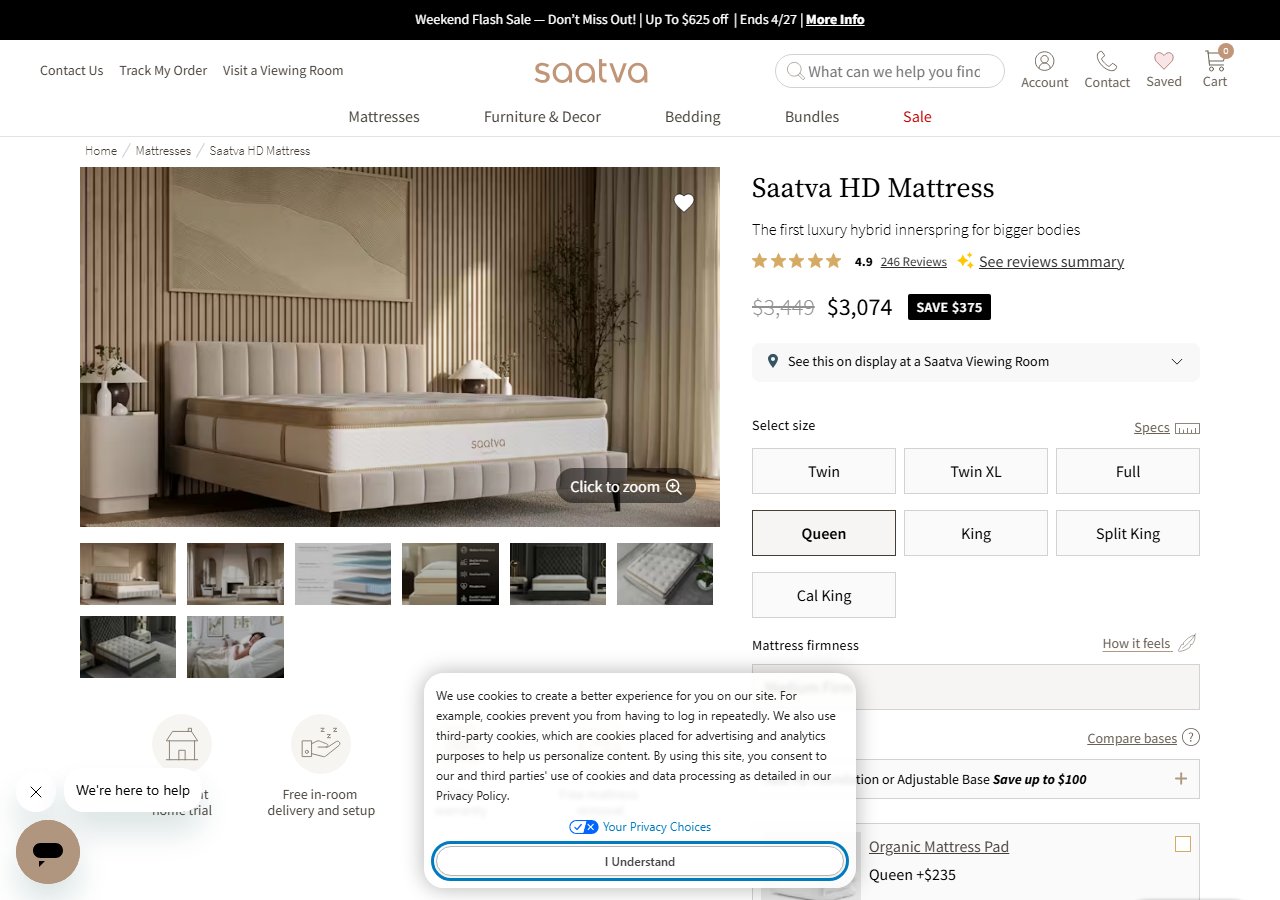
Saatva HD Mattress (Heavy-Duty)
$2,395-$3,995
See Price at Saatva →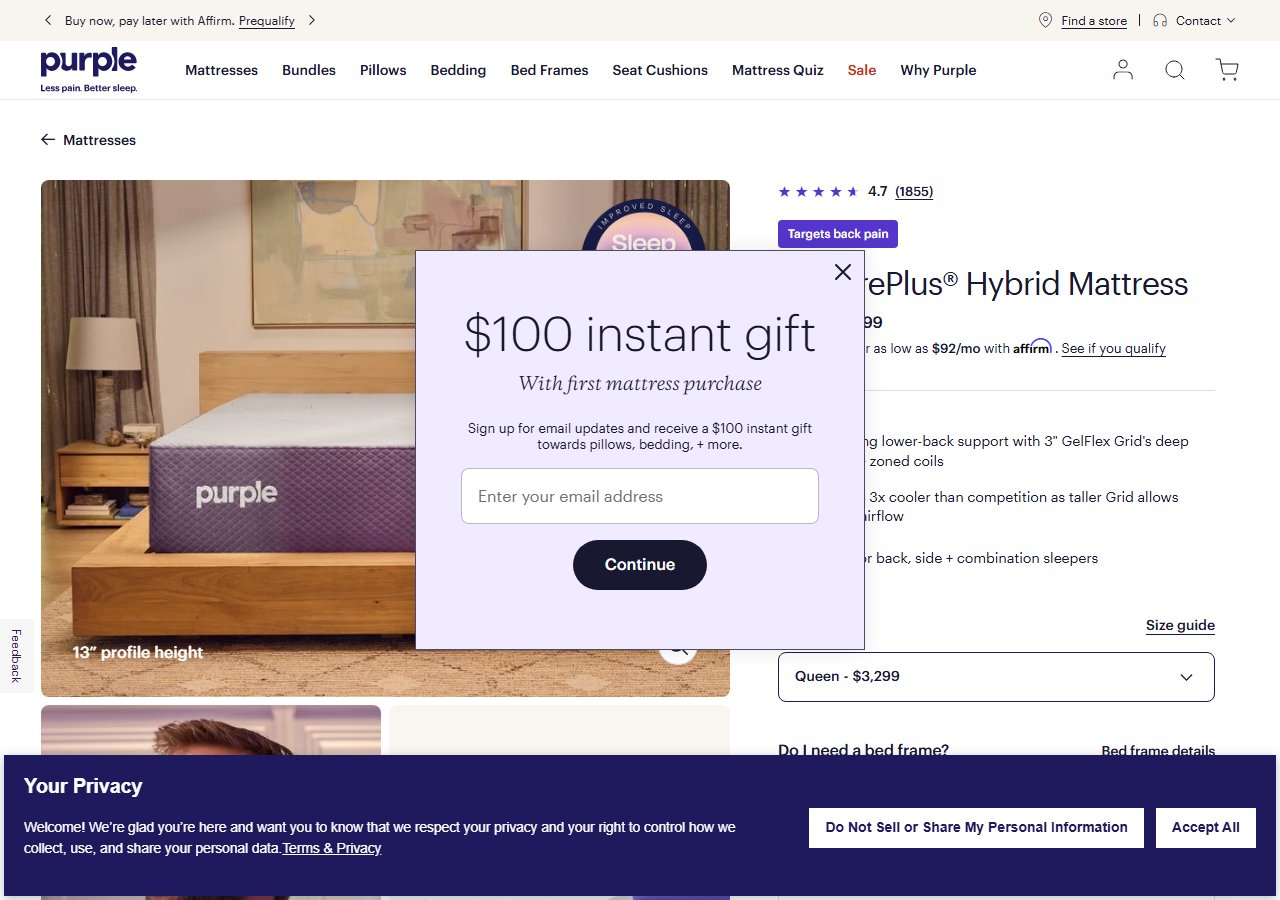
Purple Hybrid Premier Mattress
$2,499-$4,799
See Price at Purple →Putting the Data Hierarchy Together
The federal data on warehouse worker back injury is not ambiguous. BLS MSD tracking confirms the back is the most commonly injured body part across all occupations with lost workdays. NIOSH documents that warehouse lifting tasks routinely exceed safe spinal load limits. SSA data shows musculoskeletal disorders are the leading driver of new disability claims. This is a crisis with a clear occupational origin — and a recovery pathway that flows in a specific sequence.
The sequence matters. Free interventions — lifting mechanics, sleep position correction, daily walking — address the root causes and should come first. Clinical evaluation is mandatory when red flags are present and should happen before any consumer purchase. Sleep surface optimization is a legitimate third step for workers who have addressed the first two and still wake in structural deficit.
The sleep surfaces described here — the Saatva Loom & Leaf for memory foam contouring, the Saatva HD for high-load structural integrity, and the Purple Hybrid Premier for pressure-point management — are not cures. They are recovery tools that, used in the right order after the free interventions, have a reasonable physiological basis for reducing the overnight mechanical deficit that warehouse workers accumulate shift after shift. Used as a substitute for the free interventions, they are expensive foam and springs.
Read the federal data. Apply the free interventions. Rule out the red flags. Then — and only then — evaluate whether the sleep surface is the remaining variable.