The Federal Data Picture: Warehousing Is One of America's Most Injury-Prone Industries
If you work in a warehouse and your lower back hurts at the end of a shift, you are not alone—and you are not imagining it. Warehousing and storage (NAICS 493) reports nonfatal injury rates among the highest in U.S. private industry, according to the Bureau of Labor Statistics Survey of Occupational Injuries and Illnesses (SOII). That is not a commentary on individual fitness or toughness. It is a structural outcome of what warehouse work actually demands from the human body: repetitive lifting, sustained forward bending, asymmetric loading, and cumulative spinal compression over an eight-to-twelve-hour shift, repeated hundreds of times a year.
The back is not just the most common injury site in warehousing. It is the most common body part injured across all U.S. occupations with days away from work, per BLS Musculoskeletal Disorders by Occupation tracking. Warehouse workers simply experience this universal vulnerability at an accelerated rate and severity compared to the average U.S. worker. The BLS data is unambiguous on this point: manual material handling is among the highest-risk activities in American occupational life.
The financial consequence follows the injury data. Employer workers' compensation insurance rates in the warehousing sector rank among the highest in U.S. private industry, per BLS Employer Costs for Employee Compensation (ECEC) data—a direct market signal that insurers have priced the elevated risk of musculoskeletal claims into warehouse labor costs. For individual workers, the cost manifests differently: time off work, out-of-pocket medical expenses, reduced earning capacity, and the grinding reality of chronic pain that does not clock out when the shift ends.
Why Warehouse Workers' Spines Are Under Extraordinary Load
Understanding why warehouse workers experience MSDs at such high rates requires a brief detour into biomechanics—specifically, the federal government's own model for safe lifting. The NIOSH Lifting Equation is the standard federal tool for evaluating manual material handling tasks. It calculates a Recommended Weight Limit (RWL) based on variables including load weight, horizontal distance from the spine, vertical height, lift frequency, asymmetry angle, and coupling quality. When actual task demands exceed the RWL, the Lifting Index rises above 1.0—meaning spinal loading is entering injury risk territory.
In real warehouse environments—picking orders from floor-level shelves, loading trailers, moving pallets—nearly every one of those variables works against the worker simultaneously. Loads are heavy. They are often far from the body. They are frequently lifted from floor level. The pace of order fulfillment operations means high frequency. Twisting under load is common. The cumulative result, as the NIOSH Lifting Equation documents, is that these tasks routinely exceed safe spinal loading limits for sustained periods. This is not a failure of individual workers to use proper technique—it is a structural biomechanical mismatch between the demands of the job and the limits of human spinal tolerance.
The downstream health data reflects this reality. Approximately 20% of U.S. adults experience chronic pain, with the back identified as the most common pain location in CDC NHANES survey data. Among warehouse workers, that baseline prevalence is almost certainly higher. CDC arthritis data shows approximately 1 in 4 U.S. adults reports doctor-diagnosed arthritis, with prevalence concentrated in occupations with high physical demand—which squarely describes warehousing. And AHRQ MEPS data documents that average annual personal healthcare expenditures for adults with chronic back conditions substantially exceed those for adults without such conditions—meaning the health cost of a warehouse career accumulates year over year, even when no single catastrophic injury occurs.
The severity distribution matters too. OSHA Severe Injury Reports documents thousands of work-related hospitalizations annually, concentrated in manufacturing, construction, and warehousing. These are the cases that make workers' compensation actuaries nervous—and they are concentrated in exactly the sectors where bodies are asked to move the heaviest loads at the highest frequencies. The BLS and OSHA data together paint a consistent picture: warehouse work creates systematic, predictable, measurable musculoskeletal harm.
The Financial Case: A Single Claim Reframes the Purchase Math
Here is where the data journalism gets concrete. AHRQ Healthcare Cost and Utilization Project (HCUP) data documents that single workers' compensation lumbar strain claims average $30,000–$60,000 in direct costs, depending on jurisdiction and severity. That range does not include indirect costs to the worker: wage replacement gaps, retraining costs if the injury forces a career change, long-term out-of-pocket medical expenses for a condition that becomes chronic, or the quality-of-life costs that no claims database fully captures.
A premium massage chair costs between $1,700 and $5,000. A single avoided or mitigated workers' compensation lumbar strain claim is worth $30,000–$60,000 in direct costs alone. The amortization math is straightforward: if daily use of a recovery tool meaningfully reduces the cumulative spinal load that warehouse workers carry home from each shift—reducing inflammation, restoring muscle length, improving tissue perfusion, and improving sleep quality enough to reduce fatigue-related injury risk—then the breakeven on a $5,000 chair is a small fraction of a single avoided claim.
This is not a claim that any massage chair prevents workplace injuries, and no federal data source supports that specific causation. What the data does support is: (1) warehouse workers experience MSDs at high rates; (2) those MSDs carry enormous financial and health costs; (3) recovery quality between shifts is a legitimate occupational health variable; and (4) equipment that meaningfully improves recovery has a rational economic case in this occupational context that it does not have for lower-risk workers.
Try These First: Free Interventions That Cost Nothing
Before any equipment purchase discussion, the cheapest intervention is the one that does not require buying anything. Federal occupational health guidance offers several evidence-anchored, no-cost interventions for warehouse workers experiencing musculoskeletal pain—and these should be the first line of response, not an afterthought. Lifting mechanics training, structured micro-breaks, and thoracic mobility work have documented mechanistic rationale in NIOSH and OSHA guidance. None require a credit card.
The most impactful free intervention for warehouse workers is correcting lifting mechanics through OSHA's Materials Handling guidance: lift with the legs, keep loads close to the body, and avoid twisting under load. The NIOSH Lifting Equation makes clear that most occupational back injuries are mechanical and preventable through technique changes that reduce the Lifting Index. Pairing that with structured micro-breaks—NIOSH research supports 30-second micro-breaks every 30 minutes to reduce musculoskeletal symptoms—can meaningfully reduce cumulative tissue load across a shift. For workers who have developed thoracic stiffness from sustained forward bending, two minutes of thoracic extensions over a foam roller daily addresses the postural compensation pattern that transfers load from the thoracic spine to the lumbar spine. CDC physical activity guidance for adults recommends muscle-strengthening activity on two or more days per week—a minimum floor, not a ceiling, for workers in high-demand occupations.
For workers who have already implemented the free interventions—who are stretching, using correct lifting form, taking micro-breaks, and still coming home with back pain and muscle tension that accumulates week over week—equipment becomes a reasonable next conversation. Massage chairs occupy a specific niche in the recovery tool ecosystem: they deliver consistent, repeatable soft-tissue treatment at home, on the worker's schedule, without a co-pay or appointment. For workers doing ten-hour shifts four or five days a week, that accessibility matters. But equipment is an adjunct to behavioral and ergonomic intervention, not a replacement for it.
When to See a Clinician: Red Flags That Require a Doctor, Not a Massage Chair
Massage chairs and self-care tools are appropriate for non-radicular muscle pain—the diffuse aching, tightness, and fatigue that accumulates from high-demand physical work. They are not appropriate substitutes for clinical evaluation when specific warning signs are present. NIH National Institute of Neurological Disorders and Stroke guidance is explicit that certain presentations of back pain require immediate medical attention rather than self-treatment.
Warehouse workers should seek clinical evaluation rather than self-treating if pain radiates down a leg or arm (suggesting nerve root compression or disc herniation), if there is associated numbness, tingling, or weakness in a limb, if pain follows a traumatic incident at work, or if back pain is accompanied by fever, unexplained weight loss, or bowel or bladder changes. These presentations move the clinical picture from musculoskeletal strain—where recovery tools have a role—into territory that may require imaging, specialist evaluation, or intervention that no massage chair can provide. The investment calculus changes completely when the underlying condition is structural rather than soft-tissue.
Where Products Help: The Three Chairs Evaluated Through an Occupational Lens
For warehouse workers who have cleared the clinical threshold (no red flags, confirmed soft-tissue origin of symptoms) and who have already adopted the behavioral interventions, a quality massage chair addresses a specific gap: daily recovery between shifts, at home, on demand. The chairs evaluated here were selected based on their relevance to the specific recovery needs of manual material handling workers—particularly lumbar coverage, body-weight capacity, and the ability to deliver meaningful soft-tissue treatment rather than cosmetic vibration.
The Bodyfriend Phantom 2 is the most clinically serious option in this evaluation. Bodyfriend is a Korean manufacturer whose products are used in clinical rehabilitation contexts in Asia, and the Phantom 2 reflects that heritage. At $4,990, it sits at the high end of the consumer market—but that price point is worth contextualizing against the AHRQ HCUP data showing lumbar strain claims averaging $30,000–$60,000. The Phantom 2 features a 4D massage mechanism (meaning the rollers move in four axes, including forward pressure variation that approximates manual therapeutic depth), full SL-track coverage that follows the curvature of both the lumbar spine and the hamstrings, and zero-gravity positioning that reduces axial spinal loading during treatment. For a warehouse worker with significant lumbar compression at the end of a shift, zero-gravity positioning is not a marketing feature—it is a biomechanically meaningful posture that redistributes load away from spinal structures. Many premium massage chairs hold FDA 510(k) Class II medical device clearance for therapeutic massage devices, distinguishing clinical-grade equipment from consumer wellness products—a distinction worth asking manufacturers about directly.
For workers who want a mid-tier option available through a familiar marketplace, the RELX Massage Chair Full Body at $1,899.99 on Amazon offers SL-track roller coverage, multiple massage modes, and zero-gravity recline at roughly 38% of the Phantom 2's price. It is a reasonable entry point for workers who want to evaluate whether daily massage chair use genuinely improves their recovery before committing to a premium unit. The trade-off is mechanism quality and roller pressure depth—features that matter more for a 240-pound worker doing twelve-hour shifts than for a lighter user with lower daily physical load.
The HealthRelife 4D Massage Chair Full Body Zero Gravity Recliner with 55" SL-Track at $1,699 represents the accessible floor of this category while still offering the 4D mechanism designation and extended SL-track length. The 55-inch SL-track is meaningful for taller workers—a population overrepresented in warehouse labor—because standard L-track chairs often fail to cover the full lumbar-to-hamstring region in users over 5'10". At $1,699, it amortizes to roughly $4.65 per day over a year, a figure that is easier to evaluate against the daily cost of a chiropractor visit or physical therapy co-pay.
Massage Chairs Built for Warehouse-Worker Recovery: 3 Picks Evaluated by Occupational Load
These three chairs were selected specifically for warehouse workers' recovery needs—prioritizing lumbar depth, SL-track length, zero-gravity positioning, and value against the documented $30,000–$60,000 cost of a single workers' comp lumbar strain claim.

Bodyfriend Phantom 2 Massage Chair
$4,990
See Price at Bodyfriend →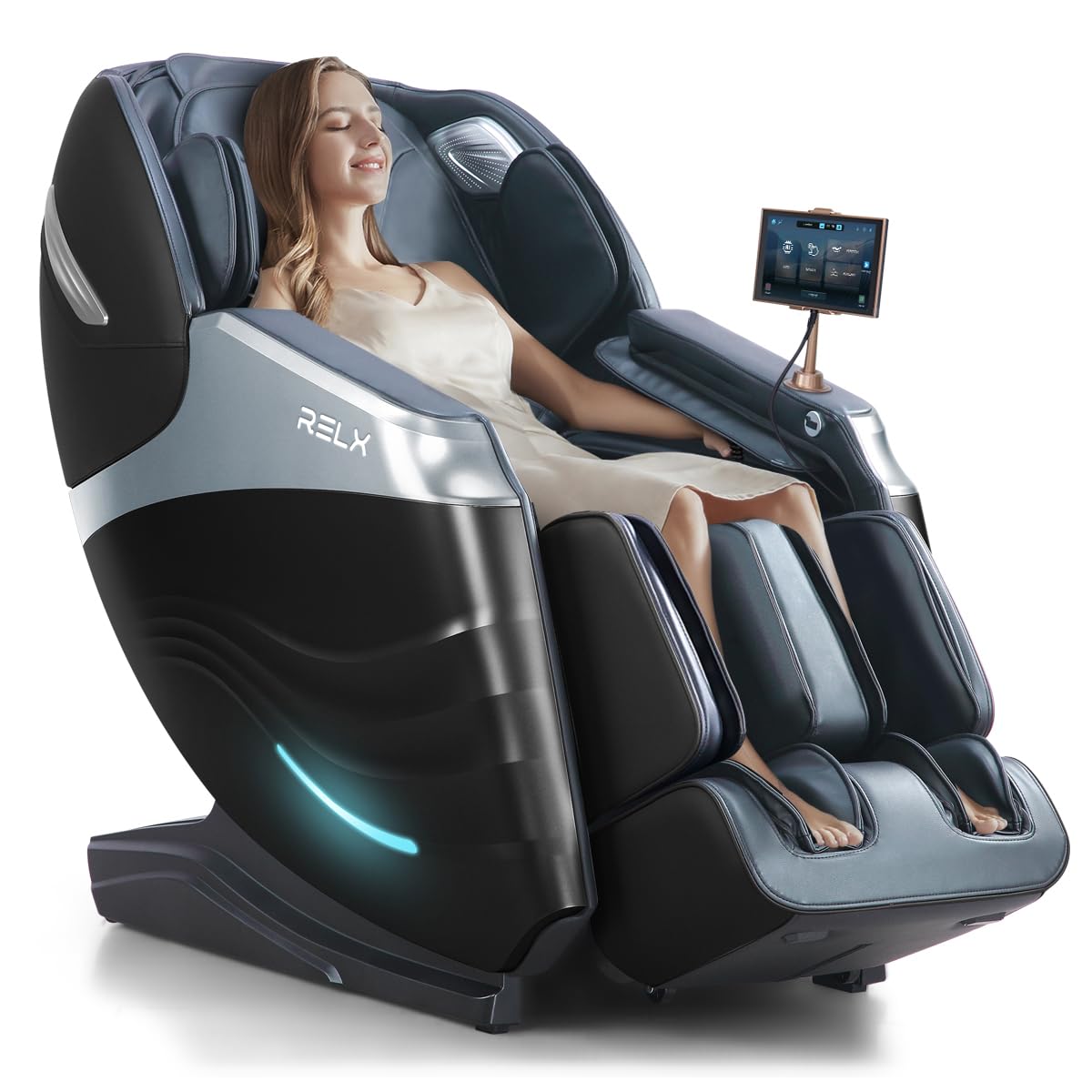
RELX Massage Chair Full Body, 20 Modes Zero Gravity SL-Track Shiatsu Massage ...
$1,899.99
Check Price on Amazon →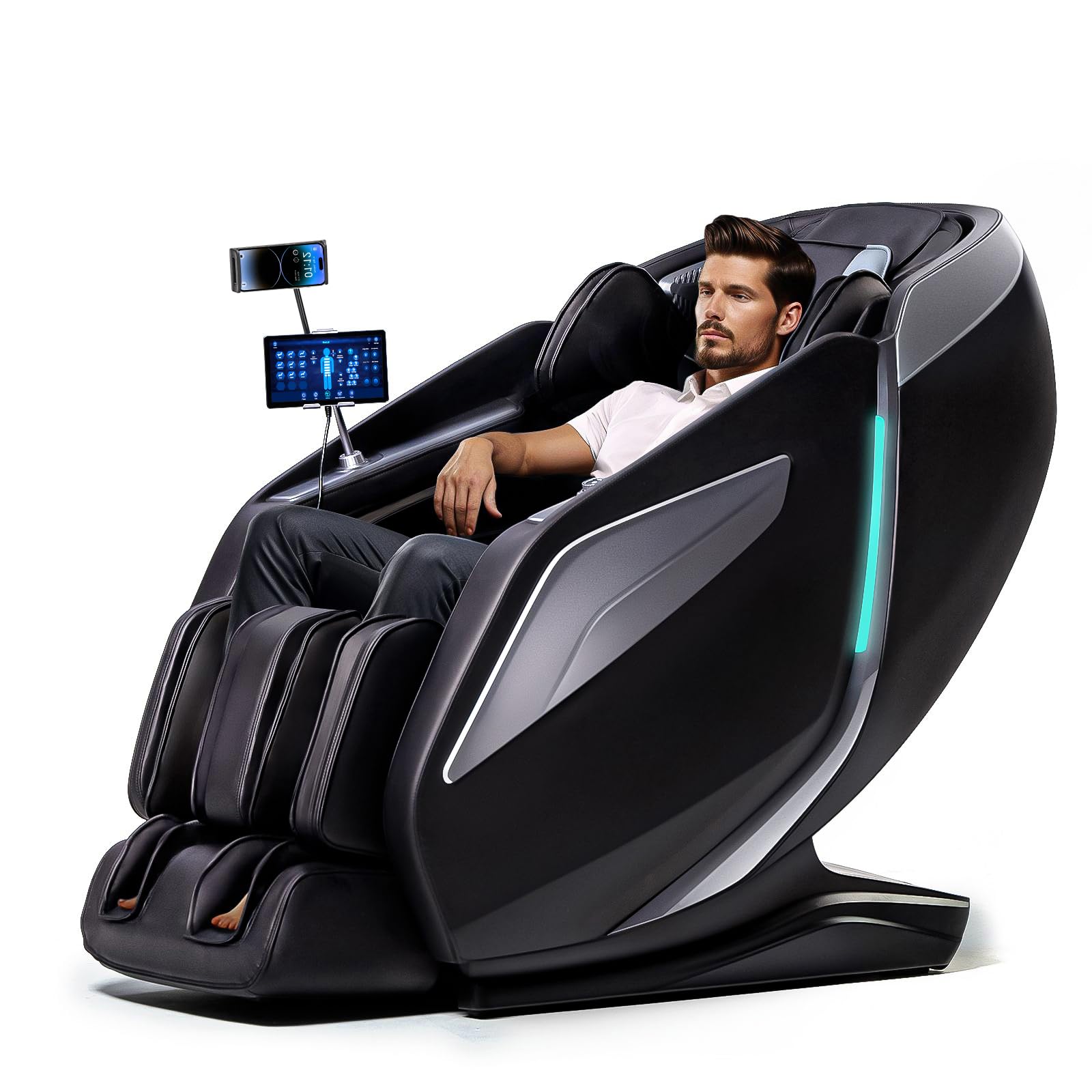
HealthRelife 4D Massage Chair Full Body Zero Gravity Recliner - 55“ SL-Track,...
$1,699.00
Check Price on Amazon →Putting the Data Hierarchy Together
The federal data on warehousing musculoskeletal disorders is not ambiguous. BLS SOII data places warehousing among the highest nonfatal injury rate industries in U.S. private employment. The NIOSH Lifting Equation provides the biomechanical mechanism: warehouse tasks routinely exceed safe spinal loading limits by design. AHRQ HCUP data puts the financial cost of a single lumbar strain claim at $30,000–$60,000 in direct costs. And BLS ECEC data confirms that the insurance industry has already priced this risk into warehouse labor costs through elevated workers' compensation premiums.
Against that data backdrop, the rational response for a warehouse worker is not to immediately buy a massage chair. It is to implement the free interventions first—correct lifting mechanics per OSHA ergonomics guidance, structured micro-breaks per NIOSH research, daily thoracic mobility work per CDC physical activity guidance—and to see a clinician if any red-flag symptoms are present. For workers who have done those things and still carry accumulated soft-tissue load home from every shift, a quality massage chair addresses a real recovery gap in a way that the federal data on injury costs can help quantify rationally.
The Bodyfriend Phantom 2 is the most serious piece of equipment in this evaluation for workers with the budget and the physical load to justify it. The RELX and HealthRelife options provide meaningful access to the category at price points that make the amortization math approachable for more workers. None of them replace behavioral intervention, clinical care, or a safer workplace. All of them make more sense for warehouse workers than for almost any other occupational group in the United States—and the federal data explains exactly why.