The Federal Data Picture: Construction and Back Pain Are Inseparable
If you pour concrete, frame walls, run conduit, or hang drywall for a living, your back is statistically your most vulnerable asset. BLS Musculoskeletal Disorder tracking identifies the back as the most common body part injured across all U.S. occupations with days away from work — and construction sits near the top of every high-MSD industry list the Bureau publishes. That injury profile has a direct financial consequence: BLS Employer Costs for Employee Compensation data shows that industries with high MSD incidence carry workers' compensation insurance rates 3–5 times higher than low-MSD industries. The cost is baked into your employer's overhead, but the pain is baked into your body.
The chronic dimension of this problem is just as striking. CDC NCHS Data Brief 390 reports that approximately 20% of U.S. adults experience chronic pain, with lower back pain identified as the most common pain location. For construction workers, that national average almost certainly understates the true exposure. And once chronic back pain becomes a diagnosing physician's concern, AHRQ MEPS data shows that annual personal healthcare expenditures for adults with chronic back conditions substantially exceed costs for those without — a gap that widens with every year of deferred treatment or inadequate recovery.
The downstream risk is not just pain and cost. SSA Disability Insurance Reports consistently identify musculoskeletal disorders as the largest single category of new disability claims filed annually in the United States. For a tradesperson whose livelihood depends on physical capacity, that statistic is the occupational equivalent of a cliff edge. The question this article addresses is specific: what happens to a construction-loaded spine between the time the boots come off and the alarm goes off — and what does federal data tell us about how to intervene?
Why Construction Work Loads the Spine Differently
Understanding morning stiffness requires understanding what construction actually does to spinal tissue during a workday. The mechanism is not mysterious; it is documented in federal engineering data.
The NIOSH Lifting Equation establishes recommended weight limits for manual material-handling tasks based on compressive spinal loading at the L4/L5 disc level. The equation's threshold — the point at which spinal loading begins elevating injury risk — is routinely exceeded in construction trades. Framing carpenters lift wall sections, concrete workers handle 80-pound bags of mix, ironworkers position rebar bundles, and HVAC technicians route ductwork in mechanically disadvantaged postures. None of these tasks are performed once. They are performed repetitively across an eight-to-ten-hour shift, often without adequate rest intervals between high-load episodes.
The spinal loading produced by these tasks creates a specific physiological cascade: intervertebral discs — the shock-absorbing structures between vertebral bodies — lose fluid under compressive load throughout the day, a process called diurnal disc height loss. Paraspinal muscles accumulate metabolic byproducts (lactate, hydrogen ions) during sustained exertion and enter a low-grade inflammatory state. Facet joints, the small articulating surfaces on the posterior spine, experience shear forces during the twisting motions common to masonry, plumbing rough-in, and roofing. By the time a construction worker reaches bedtime, the lumbar spine has been mechanically stressed in ways that require genuine tissue recovery — not just the absence of more loading.
This is where sleep surfaces become clinically relevant. If a mattress cannot decompress a spine that arrived at bedtime already compromised, it fails at its most fundamental biomechanical function. A surface that is too soft allows the heavier pelvis and torso of a high-body-mass tradesperson to sag into flexion — the exact posture that the spine needs to escape after a day of forward-loaded tasks. A surface that is too firm creates pressure point loading at the greater trochanter and shoulder, preventing the lateral positioning that many back-pain patients find most comfortable. And approximately 35% of U.S. adults are already sleeping fewer than 7 hours per night, the CDC-identified threshold below which chronic disease risk elevates — meaning the sleep that construction workers do get needs to be biomechanically functional, not just sufficient in duration.
There is also the arthritis factor. CDC Arthritis Data shows that approximately 25% of U.S. adults report doctor-diagnosed arthritis, with prevalence concentrated specifically in occupations involving sustained physical demand. A construction worker in their 40s or 50s who wakes stiff is not imagining things — the combination of inflammatory joint disease and mechanically loaded disc tissue creates a compounding morning pain presentation that is well-documented, not anecdotal. The chronic-pain treatment burden of this population is visible in CMS Drug Spending Dashboard data, which identifies opioid and non-opioid pain medications among the most expensive Medicare drug categories — reflecting decades of undertreated musculoskeletal injury in aging trade workers.
The Occupational Stressor Profile That Shapes Every Recommendation
Construction workers present a specific biomechanical and anthropometric profile that distinguishes them from office workers who also complain of back pain. Trade professionals tend to carry higher lean body mass from years of physical labor, but also higher total body weight — which changes the pressure distribution requirements of any sleep surface. High-body-mass sleepers create higher peak interface pressures at bony prominences (hips, shoulders, sacrum), which means a mattress that works for a 160-pound office worker may bottom out and fail to support a 230-pound ironworker.
Construction workers also tend to present with specific regional injury patterns that differ from the general population. Lumbar disc pathology is common in concrete and masonry trades. Rotator cuff involvement — relevant to sleep position comfort — is prevalent in carpentry, painting, and overhead mechanical work. Knee and hip OA, which affects preferred sleep position, accumulates in flooring installers and roofers who spend extended periods kneeling. These regional injury patterns mean that a single "best mattress for back pain" recommendation is too broad to be useful. The relevant question is: which mattress features address the specific spinal loading history of a construction professional who arrives at sleep already in physiological debt?
Try These First — Free Interventions That Federal Data Supports
The cheapest intervention is the one that does not require buying anything. Before this article addresses mattress selection, it is worth spending serious time on the interventions that federal health agencies document as effective — and that cost nothing beyond time and habit change.
Sleep position is the most underestimated free variable. NIH NIAMS back pain guidance is direct: side-sleeping with a pillow between the knees keeps the lumbar spine in a neutral position by preventing the top hip from internally rotating and dragging the lumbar spine into torsion. Back-sleeping with a pillow under the knees reduces the lumbar lordosis load. Stomach-sleeping, by contrast, forces the lumbar spine into extension and rotates the cervical spine — a combination that compounds the very injury patterns construction workers spend all day accumulating. If you are sleeping on your stomach, changing that one habit may produce more morning relief than any mattress purchase.
Daily walking outperforms most passive treatments for chronic low back pain. NIH NCCIH's evidence review on low back pain concludes that walking 30 minutes most days reduces chronic low back pain as effectively as most non-drug clinical treatments. For a tradesperson who is physically active at work but largely sedentary in recovery (sitting in a truck, on a couch), deliberate walking at a comfortable pace keeps the paraspinal muscles active and promotes disc fluid rehydration through rhythmic compressive loading — the exact mechanism the spine needs after a workday of asymmetric, high-intensity loading.
Lifting and bending mechanics during the workday are the primary upstream cause. OSHA's Ergonomics Solutions guidance is explicit: hinge at the hips rather than the lumbar spine, keep loads close to the body, and avoid twisting under load. Most acute back episodes in construction are mechanical — they follow a specific bad repetition, not a slow cumulative degradation. This means most acute episodes are, to some extent, rehearsable and preventable. A tradesperson who consciously implements hip-hinge mechanics even on familiar tasks can reduce the spinal load arriving at bedtime and, by extension, the recovery burden placed on a sleep surface.
Know when the mattress itself is the problem. CDC Sleep Hygiene guidance provides a practical benchmark: replace a mattress that shows visible sag, that leaves you waking stiffer than you went to bed, or that is older than 7–10 years. Even the most expensive mattress on the market does not undo poor sleep hygiene, insufficient sleep duration, or a sedentary recovery day. A mattress upgrade is a recovery tool, not a treatment.
Many construction workers reading this have already tried the basics — they've changed sleep positions, they've addressed lifting form, they have a walking routine — and they are still waking up stiff. For that reader, the mattress surface has become a legitimate intervention point. The data on what makes a sleep surface appropriate for a high-load body type is specific enough to be useful, and the products in this article were selected to address those specific variables.
When to See a Clinician Before You Buy Anything
A new mattress is not a diagnostic tool. There is a category of back pain that requires clinical evaluation before any product or lifestyle intervention is appropriate, and construction workers — because of the cumulative trauma profile of the trades — are at elevated risk for exactly the presentations that warrant prompt medical attention.
NIH National Institute of Neurological Disorders and Stroke back pain guidance identifies a specific set of red flags that should prompt clinical evaluation, not a mattress purchase. Back pain that radiates below the knee (suggesting nerve root involvement), back pain that follows a specific trauma (a fall from height, a vehicle accident), pain accompanied by leg weakness, or pain associated with bowel or bladder changes are all presentations that require imaging and referral. AHRQ HCUP data identifies back pain as one of the most expensive conditions in U.S. healthcare by total inpatient and outpatient cost — a figure that reflects the cost of delayed diagnosis on conditions that required surgical or specialist intervention. Getting in front of a clinician early when red flags are present is, in the most direct economic sense, the cheapest long-term option.
For construction workers, there is an additional occupational medicine angle: if back pain is clearly work-related, a workers' compensation claim — rather than a personal health insurance claim — may cover imaging, physical therapy, and specialist visits. Given that BLS data confirms industries with high MSD incidence carry 3–5x higher workers' comp insurance costs, the system is specifically funded for exactly this use case. An occupational medicine physician can document the work-relatedness of a musculoskeletal injury in ways that a general practitioner may not.
The Mattress Features That Actually Matter for Construction Body Types
With mechanism understood, interventions addressed, and clinical red flags acknowledged, the discussion of mattress features has specific grounding. Construction professionals shopping for a sleep surface are not the same as the general back-pain population, and the features that matter differ accordingly.
Support core depth and load distribution are the primary variables for high-body-mass sleepers. A mattress with an inadequate support core — typically an innerspring or foam layer that is too shallow or too low-density — will compress unevenly under the weight distribution of a 220-plus-pound body, creating a hammock effect at the lumbar spine. This recreates the flexed-spine position that a construction worker has been fighting all day.
Pressure relief at key contact points matters because construction-related muscle soreness and joint inflammation make pressure tolerance lower than baseline. A surface that creates high interface pressure at the greater trochanter or shoulder will interrupt sleep architecture by triggering positional discomfort, reducing the slow-wave sleep stages that are specifically associated with tissue repair and growth hormone release.
Edge support is a practical consideration for construction workers: getting in and out of bed — particularly with compromised lumbar mobility in the morning — requires a stable edge. A mattress that collapses at the perimeter creates an additional mechanical challenge for a spine that is already at its stiffest.
For construction professionals with serious chronic back pain, the Saatva Loom & Leaf Memory Foam Mattress deserves the first mention in any honest product discussion. Its dual-layer memory foam construction — 5-pound density memory foam over a support foam core, finished with an organic cotton cover — addresses pressure relief at the contact points most relevant to lateral sleeping, which NIH guidance identifies as the optimal position for lumbar spine decompression. The Loom & Leaf is available in Relaxed Firm and Firm configurations, the latter being appropriate for heavier-framed construction workers who need a support core that does not compress to the point of spinal flexion. Saatva's white-glove delivery and old-mattress removal also matter practically: a worn mattress that has been the source of the problem gets removed the same day the replacement arrives.
For construction workers who are larger-framed — specifically those over 230 pounds, or those whose physical work has built a body type that simply exceeds the design parameters of standard consumer mattresses — the Saatva HD Mattress is the most specifically engineered option in this list. The HD is purpose-built for bodies up to 500 pounds, with a support system designed around higher compressive loads than standard mattresses are rated to handle. For an ironworker or concrete finisher who has found that every mattress they've owned developed a visible body impression within 18 months, the HD's reinforced construction addresses the root cause of that failure mode.
For construction workers whose primary complaint is pressure-point pain — the hip, shoulder, or lower back soreness that is already present at bedtime and worsens during the night — the Purple Hybrid Premier Mattress offers a distinct engineering approach. Purple's proprietary GelFlex Grid technology distributes pressure differently than foam or innerspring systems: the grid collapses under high-pressure points (bony prominences) while remaining supportive under larger surface areas (the lumbar region). For a roofer with hip OA or a masonry worker with sacroiliac joint inflammation, that pressure differential matters at a tissue level. The Hybrid Premier adds a coil support layer beneath the grid, which provides the edge support and overall stability that construction workers need for the kind of in-and-out-of-bed mechanics that a stiff lumbar spine requires.
Mattresses Built for the Biomechanics of High-Load Trade Work
These three mattresses were selected for construction workers specifically — addressing high-body-mass support, pressure-point relief at inflamed joints, and the spinal decompression needs of a back that arrives at bedtime already loaded.

Saatva Loom & Leaf Memory Foam Mattress
$1,695-$3,295
See Price at Saatva →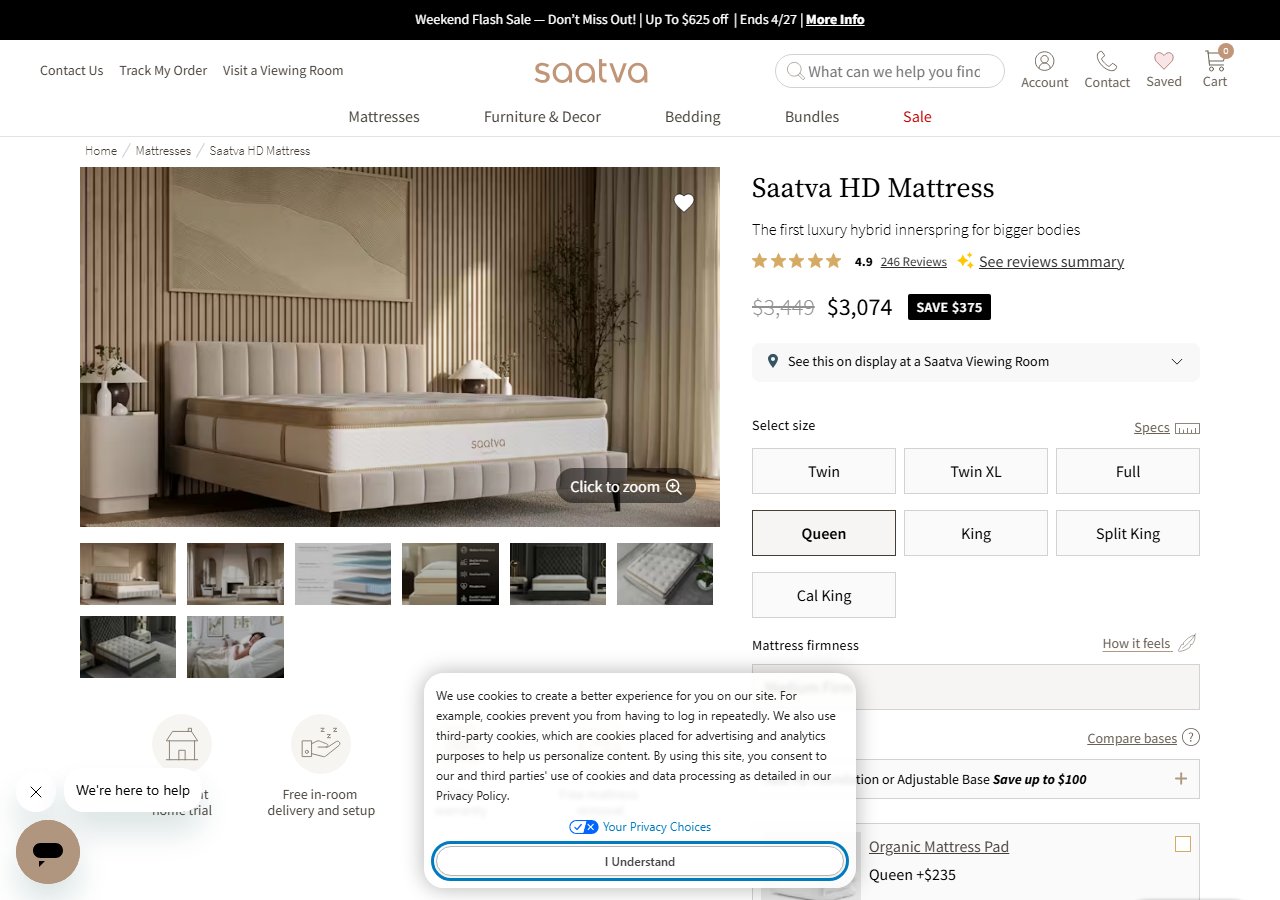
Saatva HD Mattress (Heavy-Duty)
$2,395-$3,995
See Price at Saatva →
Purple Hybrid Premier Mattress
$2,499-$4,799
See Price at Purple →The Data-to-Product Hierarchy: What Federal Research Actually Supports
The through-line of every federal data source cited in this article is consistent: construction workers experience back injury at rates and severities that create measurable lifetime economic and health consequences. SSA Disability Insurance data naming musculoskeletal disorders the largest single category of new disability claims is not an abstract statistic — it describes the end state of decades of undertreated, under-recovered spinal loading in trade occupations. The path from ironworker to disability claimant is not inevitable, but it is statistically well-worn.
The intervention hierarchy that this article has laid out reflects the hierarchy that federal health data supports: free behavioral changes first (sleep position, walking, lifting mechanics), clinical evaluation when red flags are present, and equipment upgrades as an adjunct to — not a substitute for — the first two categories. A construction worker who changes their sleep position, walks 30 minutes daily, and addresses their lifting mechanics will get more value from a mid-tier mattress than a sedentary worker with poor sleep habits will get from the most expensive one on this list.
With that hierarchy in place, the three mattresses profiled here represent specific engineering responses to specific biomechanical problems: the Saatva Loom & Leaf for pressure relief and memory foam conformance at a quality tier appropriate for serious chronic pain, the Saatva HD for high-body-mass construction workers whose size has made standard mattresses fail prematurely, and the Purple Hybrid Premier for trade workers whose primary complaint is pressure-point pain at bony prominences inflamed by physical work.
Morning stiffness after a construction workday is not an inevitable consequence of the trades. It is a documented biomechanical outcome with documented interventions — and federal data gives us enough specificity to address it with more precision than "buy a new mattress and hope for the best."