The federal data picture no one posts in the break room
If you work a 12-hour nursing floor shift, a rotating ICU schedule, or an ER rotation that bleeds into overnight hours, you already know your back hurts. What you may not know is exactly how the federal data quantifies that hurt — and why the off-duty hours you spend in bed are not passive recovery time. They are a therapeutic window you may be systematically wasting.
According to BLS Musculoskeletal Disorders by Occupation tracking, the back is the most common body part injured across all U.S. occupations with days away from work. Healthcare is not an exception to that finding — it is one of its primary drivers. Registered nurses, nursing assistants, and patient-care technicians consistently appear among the highest MSD-incidence occupations in BLS annual data, largely because patient repositioning, lateral transfers, and extended standing create compressive and shear loads on the lumbar spine that accumulate across a shift.
The financial downstream of that injury rate is documented separately. BLS Employer Costs for Employee Compensation data shows that industries with high MSD incidence carry workers' compensation insurance rates 3–5 times higher than low-MSD industries — a cost the healthcare sector passes through in staffing budgets, mandatory overtime, and the chronic understaffing that forces remaining workers to handle even more patient load. The injury creates the conditions for more injury.
And when injured workers stay on the job — which most do, because healthcare facilities routinely operate at capacity with no meaningful margin — AHRQ HCUP data documents back pain as one of the most expensive conditions in U.S. healthcare by total inpatient and outpatient cost. The worker who ignores the ache for six months to avoid taking FMLA leave is statistically likely to cost the system far more when the disc eventually herniates than they would have if the condition had been addressed at the mechanical stage.
Why this happens: the biomechanics of shift-work spinal loading
Understanding why healthcare workers develop back injury at elevated rates requires a brief tour of occupational biomechanics — because the mechanism is not random, and it is not simply "standing all day." It is a specific chain of compressive and cumulative load events that federal occupational health science has documented precisely.
The NIOSH Lifting Equation was developed to calculate the safe recommended weight limit for manual material-handling tasks. In healthcare, the relevant task is not a box — it is a patient. A lateral transfer of an average adult patient creates compressive spinal forces that routinely exceed the NIOSH recommended limits even for two-person lifts, particularly when the patient is not fully cooperative, when the lift happens in a confined space, or when the nurse is fatigued into the fourth hour of a shift. NIOSH explicitly documents that manual material-handling tasks across healthcare routinely exceed safe spinal loading limits. Over months and years, these loading events accumulate in the posterior intervertebral disc structures, the facet joints, and the erector spinae musculature in ways that do not resolve between shifts unless the off-duty recovery period is biomechanically supportive.
Here is where the sleep surface enters the picture — not as a luxury item, but as part of the recovery chain. When a healthcare worker with a mechanically stressed lumbar spine lies on a mattress that sags, has inadequate zonal support, or places them in lateral flexion for seven hours, the off-duty hours become an extension of the injury mechanism rather than a repair window. The disc is a viscoelastic structure that partially rehydrates during recumbent rest. That rehydration process requires the spine to be in a reasonably neutral position — not compressed into lateral flexion by a soft mattress edge, and not extended over a firm surface with no pressure relief at the shoulder and hip.
CDC NCHS Data Brief 390 reports that approximately 20% of U.S. adults experience chronic pain, with lower back as the most common location. Among healthcare workers, that prevalence is structurally higher — not because of genetics, but because the occupational exposure is higher and more consistent. And CDC sleep data shows that approximately 35% of U.S. adults already sleep fewer than 7 hours per night, a threshold linked to elevated chronic disease risk. Shift workers — who fight circadian misalignment on top of physical fatigue — sleep fewer hours and at lower quality than day-shift workers, compressing the recovery window precisely when the body needs it most.
The compounding effect is not hypothetical. SSA Disability Insurance data identifies musculoskeletal disorders as the largest single category of new disability claims annually. Many of those claimants were workers who had years of subclinical pain before a definitive injury forced them out of the workforce. The pattern is predictable, and to a degree, interruptible.
The cheapest intervention is the one that requires no purchase
Before examining sleep surfaces, it is worth spending real paragraphs on what federal occupational health science actually recommends as first-line approaches. A new mattress is one tool in a recovery toolkit that has several free items that should be tried first — not because this publication wants to avoid recommending products, but because the evidence hierarchy genuinely puts non-purchase interventions ahead of equipment.
The most immediately actionable free variable is sleep position. NIH back pain guidance from the National Institute of Arthritis and Musculoskeletal and Skin Diseases recommends side-sleeping with a pillow between the knees, or back-sleeping with a pillow under the knees, to maintain a neutral lumbar curve during sleep. Stomach sleeping places the cervical spine in sustained rotation and forces the lumbar spine into extension — both of which are biomechanically stressful for a spine that has already been loaded all shift. This is not a minor adjustment; for workers with facet-dominant pain, changing sleep position has documented symptom impact comparable to mild analgesics.
Second: daily walking as active recovery. NIH NCCIH's evidence review on low back pain concludes that walking 30 minutes most days reduces chronic low back pain as effectively as most non-drug clinical treatments. The mechanism is partly vascular (improved disc nutrition via movement-driven fluid exchange), partly neuromuscular (maintenance of deep stabilizer activation), and partly psychological (reduced pain catastrophizing). A healthcare worker who works a 12-hour shift and spends their days off entirely sedentary is depriving the spine of the movement stimulus it needs to partially reverse the cumulative loading of the prior shift.
Third: lifting mechanics on and off the job. OSHA's ergonomics guidance specifies hinging at the hips rather than the lumbar spine, keeping loads close to the body, and avoiding twisting under load. These principles apply equally to patient handling at work and to loading a dishwasher or picking up a child at home. Most acute back episodes in healthcare workers are mechanical events that occur during the kind of asymmetric, unguarded movement that happens when fatigue has degraded motor control.
Finally, mattress replacement criteria matter before any product selection. CDC sleep hygiene guidance supports replacing a mattress when it has visible sag, when you wake stiffer than you went to bed, or when it is older than 7–10 years. If none of these criteria apply, a new mattress is unlikely to produce dramatic results. If they do apply, continuing to sleep on a degraded surface is extending the injury mechanism into your recovery hours.
For healthcare workers who have already addressed sleep position, are walking regularly, and are sleeping on a mattress that passes the replacement criteria — or who have replaced a mattress once and still wake with significant stiffness — equipment selection becomes a legitimate next question. The interventions above are not a checklist to rush through. They are the highest-leverage tools in the recovery toolkit. But they are not the only tools, and for workers with established chronic MSD patterns, sleep-surface engineering can make a measurable difference in spinal loading during the off-duty hours.
When a new mattress is not the answer: clinical red flags
Not every back pain pattern in a healthcare worker is a mechanical, recoverable MSD. Some presentations require clinical evaluation and imaging before any home management — including mattress selection — is appropriate.
NIH's National Institute of Neurological Disorders and Stroke back pain guidance identifies several presentations that require prompt clinical attention: back pain that radiates below the knee (possible nerve root compression or disc herniation with neurological involvement), pain that follows trauma, pain accompanied by leg weakness, and pain associated with bowel or bladder changes or fever. These are not conditions a new sleep surface will address, and delaying evaluation by experimenting with equipment first can allow correctable neurological compromise to progress. If any of these features are present, the next step is a clinician visit, not a mattress review.
AHRQ Medical Expenditure Panel Survey data shows that adults with chronic back conditions incur substantially higher annual personal healthcare expenditures than adults without such conditions. Early intervention — when the condition is still in the mechanical phase — is the most cost-effective point in the treatment trajectory. CMS drug spending data similarly identifies opioid and non-opioid pain medication spending among the most expensive Medicare drug categories, reflecting the treatment burden of chronic pain that was not addressed at the mechanical stage. The case for clinical evaluation when red flags are present is both medical and economic.
How sleep-surface engineering applies to healthcare worker MSDs
For workers who have cleared the clinical threshold and whose pain pattern is mechanical — morning stiffness that improves within 30 minutes of movement, aching concentrated in the lumbar or thoracic region, pain that correlates with shift intensity — sleep-surface selection can meaningfully affect the quality of overnight spinal recovery.
The relevant engineering variables are zonal support, pressure distribution, and heat management. Zonal support refers to a mattress's ability to provide differential firmness across the body — firmer under the lumbar spine to prevent sag, softer under the shoulder and hip to allow lateral sleepers to maintain spinal alignment without creating pressure points. Healthcare workers who are side-sleepers (the evidence-preferred position for lower back pain) need a surface that allows the shoulder to sink slightly without collapsing the entire torso into lateral flexion.
Pressure distribution matters for a population that spends 12 hours on its feet. The feet, ankles, and lower legs arrive at bedtime already carrying edema and vascular load from hours of upright standing. The hips and shoulders carry the brunt of lateral sleeping pressure. A surface that distributes pressure evenly across the body's contact area reduces the likelihood of reactive position-shifting overnight — the kind of frequent micro-awakening that fragments sleep architecture without necessarily producing full conscious arousal.
For healthcare workers with larger frames — a reality in a workforce that handles patients across the full size spectrum — standard mattress support structures can bottom out, creating exactly the sag and lateral flexion that worsens lumbar MSD. CDC Arthritis data shows that approximately 25% of U.S. adults have doctor-diagnosed arthritis, with prevalence concentrated in physically demanding occupations. Workers with arthritis on top of MSD need a surface that manages both joint pressure and spinal alignment simultaneously.
The Saatva Loom & Leaf: memory foam engineered for spinal alignment
The Saatva Loom & Leaf Memory Foam Mattress is the first recommendation for healthcare workers whose primary complaint is lumbar and thoracic back pain from shift-work loading. Loom & Leaf uses high-density memory foam with a tapered lumbar zone — a region of denser foam positioned under the lower back to resist the sag that standard memory foam produces under sustained body weight. For side-sleepers, the softer top layer allows the shoulder to depress into the surface while the lumbar zone maintains the spine's horizontal alignment. For back-sleepers following the NIH-recommended pillow-under-knees position, the Loom & Leaf's surface contours to the lumbar curve without allowing the pelvis to sink into posterior pelvic tilt.
At $1,695–$3,295 depending on size and firmness, this is not a budget purchase. But the context established by AHRQ MEPS data — that chronic back conditions substantially increase annual healthcare expenditures — puts that price point in a different frame. A surface that extends the recovery capacity of each sleep period is a functional expenditure for a worker whose primary asset is their physical capacity to work.
The Saatva HD: built for workers who exceed standard mattress weight limits
For healthcare workers who are heavier or taller than the average mattress-design target — which, in standard construction, is typically sized for a 150–180 lb adult — the Saatva HD Mattress addresses a structural gap in the market. The HD uses a reinforced coil system with higher coil gauge and a dual-layer support core designed to maintain consistent support across the full weight range for which it is rated, up to 500 lbs per side.
The clinical relevance is direct: a mattress that progressively softens or sags under a heavier body is placing that body in sustained lateral flexion or lumbar sag for seven or eight hours per night. For a worker with already-loaded facet joints and posterior disc structures, that geometry is not neutral — it is an extension of the injury mechanism into the off-duty hours. The Saatva HD's construction is specifically intended to prevent that failure mode. At $2,395–$3,995, it carries a premium for the engineering required — but for the worker for whom standard mattresses have always felt inadequate, it addresses a genuine biomechanical need rather than a marketing category.
The Purple Hybrid Premier: pressure-grid technology for acute pressure relief
For healthcare workers whose primary symptom is point pressure pain — particularly those with hip or shoulder arthritis or bursitis on top of spinal MSD — the Purple Hybrid Premier Mattress offers a meaningfully different engineering approach. Purple's GelFlex Grid is a polymer grid structure that collapses under point pressure (shoulders, hips, heels) while maintaining consistent support across distributed surface areas (the lumbar span, the mid-thoracic region). This is mechanically distinct from memory foam, which distributes pressure through viscoelastic deformation, and from standard innerspring, which responds to pressure through coil compression.
For healthcare workers who wake with hip or shoulder pain from side-sleeping on a surface that cannot adequately offload those joints, the Grid's pressure-column collapse mechanism may deliver relief that neither foam nor coil constructions can match. At $2,499–$4,799, the Purple Hybrid Premier is the premium tier of this list — appropriate for workers with the most complex pressure-distribution needs, particularly those managing arthritis alongside spinal MSD.
Sleep Surfaces Built for Healthcare Shift-Worker Spinal Recovery
These three mattresses were selected for healthcare workers managing shift-work MSD patterns, prioritizing zonal lumbar support, pressure distribution for joint-heavy loads, and structural integrity for workers whose bodies exceed standard design parameters.

Saatva Loom & Leaf Memory Foam Mattress
$1,695-$3,295
See Price at Saatva →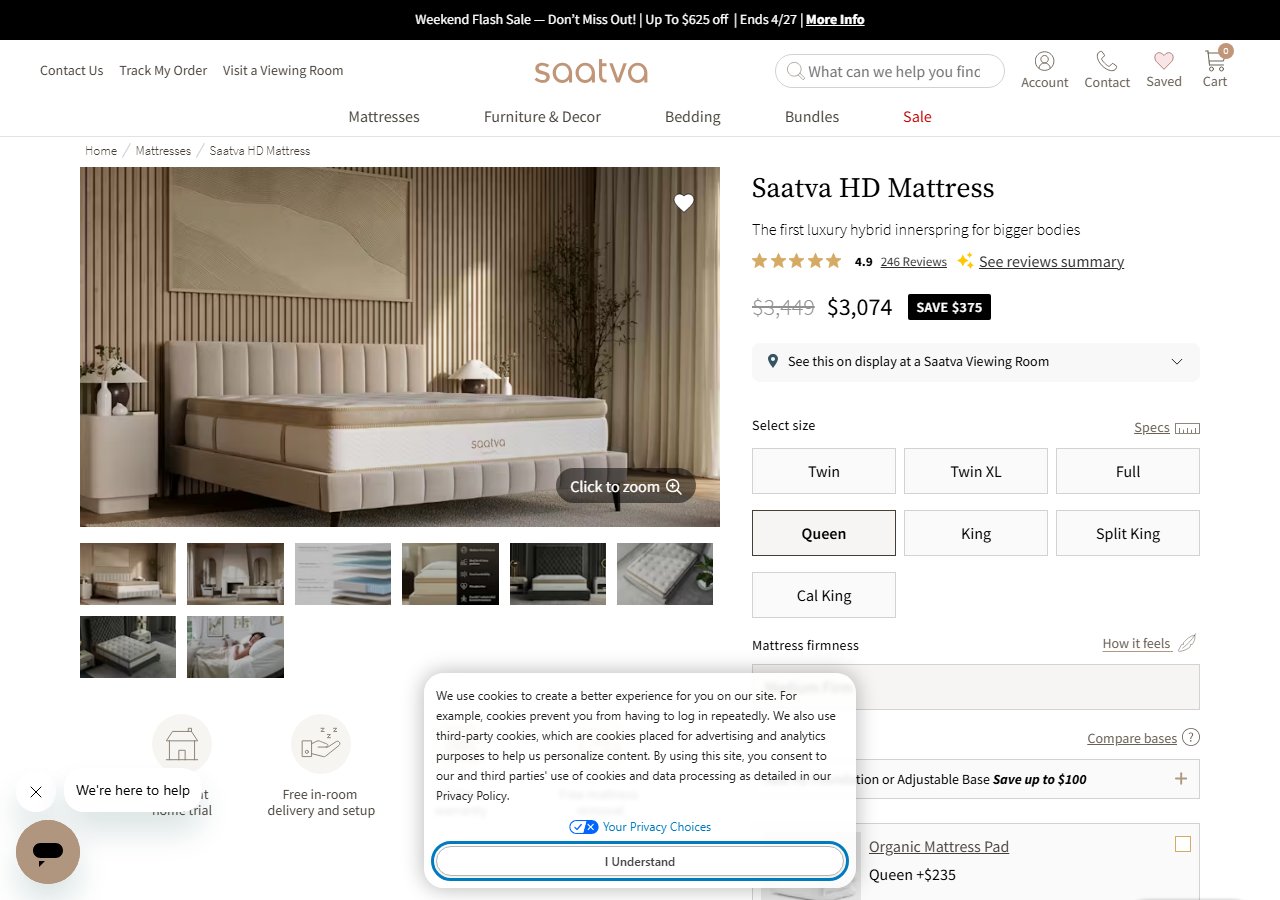
Saatva HD Mattress (Heavy-Duty)
$2,395-$3,995
See Price at Saatva →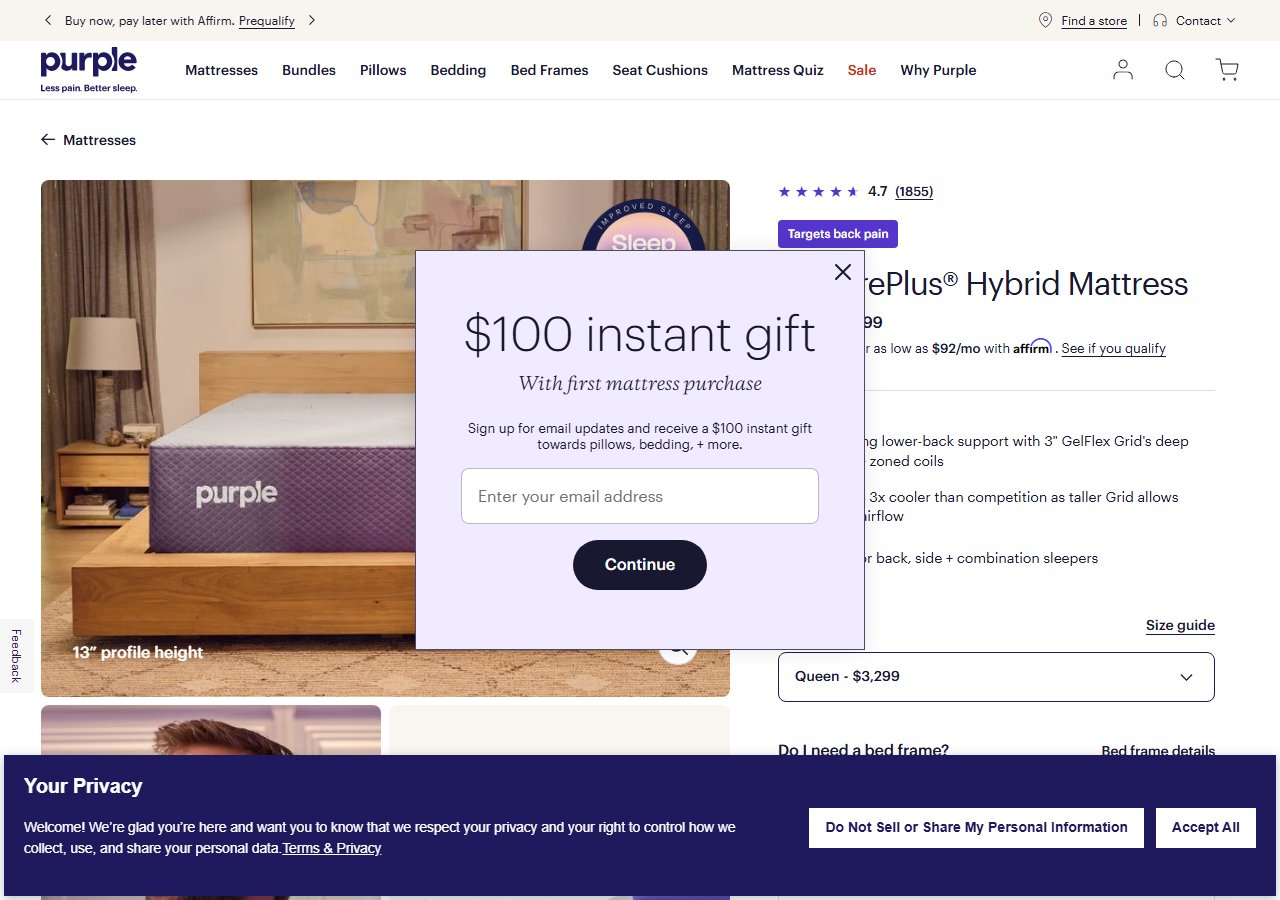
Purple Hybrid Premier Mattress
$2,499-$4,799
See Price at Purple →What the data tells you to do with this information
The federal data points assembled in this article are not abstract statistics. They are the architecture of an occupational health problem that affects hundreds of thousands of healthcare workers whose injury pattern is predictable, whose recovery window is structurally compressed by shift work, and whose sleep surface may be either supporting or undermining the repair process during the hours they are not at work.
The hierarchy is clear: movement and sleep position first, because NIH NCCIH evidence supports walking as effective as most non-drug treatments for chronic low back pain, and because NIH documents that sleep position alone significantly affects lumbar spine loading overnight. Clinical evaluation next, for any presentation that includes the neurological red flags documented by NIH NINDS. And sleep-surface selection as an adjunct intervention for workers in the mechanical pain category who are already doing the free things right.
The Saatva Loom & Leaf addresses the lumbar alignment needs of the typical healthcare worker side-sleeper. The Saatva HD addresses the structural gap for workers whose body size exceeds standard mattress design parameters. The Purple Hybrid Premier addresses the pressure-distribution needs of workers managing arthritis or joint pain alongside spinal MSD. None of these surfaces are a substitute for clinical care, for movement, or for the basic sleep hygiene that CDC has long documented as the most accessible lever in sleep quality. But for workers who have already optimized the free variables, they represent the evidence-informed next step — not a luxury, but a functional piece of occupational recovery infrastructure.
SSA disability data tells us that musculoskeletal disorders are already the largest driver of new disability claims in the country. The healthcare workers who appear in that data did not get there overnight. They got there across years of accumulated spinal loading, compressed recovery windows, and off-duty hours that did not fully repair what the shift had stressed. The recovery window is real. What happens during it matters.