The back pain epidemic hiding inside every hospital and clinic
When the Bureau of Labor Statistics tracks which body part gets injured most often across every U.S. occupation with days away from work, the answer is always the same: the back. For the general workforce, that number is alarming. For healthcare workers — nurses, nursing assistants, surgical techs, radiology staff, emergency room personnel — it is a career-defining reality. These workers spend 8- to 13-hour shifts lifting, repositioning, and transferring patients, often in cramped spaces and under time pressure that overrides any ergonomic training they received during orientation. And when the shift ends, many go home to sleep surfaces that offer zero recovery advantage to a spine that has been mechanically loaded beyond its safe threshold for half a day.
The federal data on this is unambiguous. CDC NCHS Data Brief 390 estimates that approximately 20% of U.S. adults live with chronic pain, with lower back pain as the single most common pain location. AHRQ HCUP data goes further: back pain ranks among the most expensive conditions in U.S. healthcare by total inpatient and outpatient cost. That is to say, the workers treating other people's health conditions are themselves generating enormous healthcare expenditures from conditions rooted in their own occupational demands. SSA Disability Insurance reports confirm that musculoskeletal disorders are the largest single category of new disability claims annually in the United States — a reality that maps directly onto high-physical-demand occupations like bedside nursing and surgical support.
This article is not a mattress roundup disguised as health journalism. It is a detailed look at why healthcare workers experience the specific musculoskeletal injury pattern they do, what free interventions the federal evidence supports, and — after all of that — what sleep surfaces the construction and pressure-mapping evidence supports for people with genuine spinal loading history.
Why it happens: the biomechanics of a 12-hour shift
Understanding why healthcare workers end up with chronic back pain requires understanding the specific loading pattern their spines absorb over the course of a career. Patient handling — repositioning a 250-pound patient in a hospital bed, pivoting a post-surgical patient from bed to chair, or manually lifting a fallen resident in long-term care — generates compressive and shear forces on the lumbar spine that exceed what federal occupational health standards define as safe.
The NIOSH Lifting Equation is the federal benchmark for safe manual material handling. It calculates a Recommended Weight Limit (RWL) based on task variables including load weight, horizontal distance from the body, vertical height, asymmetric twisting, and task frequency. NIOSH documents that manual material-handling tasks across warehousing, construction, and healthcare routinely exceed these safe spinal loading limits — and patient handling in nursing is among the most biomechanically demanding tasks in any occupation because the "load" (a person) is unpredictable, often cannot be gripped safely, and must be moved in positions that force the spine into flexion under load.
The cumulative damage model is well-established in occupational medicine: repeated episodes of spinal loading above the NIOSH threshold compress intervertebral discs, fatigue paraspinal muscles, and over years accelerate degenerative changes in the lumbar facet joints. This is not acute injury from a single dramatic event — though those happen too. It is the slow accumulation of microtrauma across hundreds of shifts. CDC data on arthritis shows approximately 25% of U.S. adults report doctor-diagnosed arthritis, with prevalence concentrated in occupations involving sustained physical demand. Healthcare workers are overrepresented in that group.
Now layer in the sleep dimension. CDC sleep surveillance data shows 35% of U.S. adults sleep fewer than 7 hours per night — the threshold associated with elevated chronic disease risk. For healthcare shift workers, that number almost certainly skews worse. Rotating shift schedules — the 7a-7p, 7p-7a rotation that defines nursing in most U.S. hospitals — disrupt circadian rhythms, compress sleep windows, and reduce slow-wave sleep, which is the stage most important for musculoskeletal tissue repair. A nurse on a three-day stretch of night shifts may be sleeping 5 to 6 hours on a disrupted schedule. Whatever sleep surface they land on needs to do real work.
The financial downstream is severe. AHRQ Medical Expenditure Panel Survey (MEPS) data shows that average annual personal healthcare expenditures for adults with chronic back conditions substantially exceed costs for adults without such conditions. CMS drug spending data identifies opioid and non-opioid pain medication spending among the most expensive Medicare drug categories — a direct reflection of the chronic-pain treatment burden that occupational musculoskeletal injury feeds into. And BLS workers' compensation cost data shows that industries with high MSD incidence carry workers' compensation insurance rates 3 to 5 times higher than low-MSD industries — meaning the economic burden is distributed across the entire employment system, not just the individual worker.
Try these first: free and low-cost interventions that federal evidence supports
The cheapest intervention is the one that does not require buying anything. Before a healthcare worker spends $2,000 or more on a new sleep surface, there is a set of evidence-backed, zero-cost behavioral changes that the federal literature consistently identifies as effective for chronic low back pain management and sleep quality. These are not consolation prizes for people who cannot afford better equipment — they are first-line interventions that independent research consistently ranks above passive equipment interventions for long-term pain reduction.
NIH NCCIH's evidence review on low back pain is direct: walking 30 minutes most days reduces chronic low back pain as effectively as most non-drug clinical treatments. For a healthcare worker whose job already involves walking miles per shift, this may sound counterintuitive — but the key distinction is intentional, moderate-intensity walking with good posture versus reactive, hurried movement under load. The walking that happens during a busy ICU shift is not the same as a 30-minute deliberate walk that activates the paraspinal stabilizers in a controlled way. Movement is the lever; the mattress is the table.
Sleep position is the single biggest free variable in the overnight recovery equation. NIH back pain guidance is clear: side-sleeping with a pillow between the knees, or back-sleeping with a pillow under the knees, maintains spinal neutrality. Stomach-sleeping, by contrast, forces lumbar hyperextension and cervical rotation simultaneously — two mechanical insults to an already-compromised spine. A $3 pillow repositioned between the knees may do more for a nursing assistant's morning back pain than a mattress upgrade alone.
OSHA's lifting ergonomics guidance covers the mechanics of safe lifting — hinging at the hips, keeping loads close to the body, avoiding axial twisting under load — which are rehearsable movement patterns that reduce acute injury risk. Most acute back episodes in healthcare are mechanical and are predictable from task structure. Workers who consciously apply hip-hinge mechanics when repositioning patients, even when fatigued, reduce cumulative disc loading over the course of a career.
And for workers whose back pain is accompanied by neurological symptoms or systemic signs, NIH National Institute of Neurological Disorders and Stroke guidance is explicit: back pain that radiates below the knee, follows trauma, presents with leg weakness, bowel or bladder changes, or fever requires prompt clinical referral, not a new mattress.
For many healthcare workers who have already tried position adjustments, walking programs, and lifting mechanics — who are waking stiff, sleeping on a mattress with visible sag, or whose mattress is older than 7 to 10 years per CDC sleep hygiene guidance — a sleep surface upgrade is a legitimate next step. The goal is not to replace the free interventions. It is to remove the active impediment to recovery that an inadequate sleep surface creates.
When to see a clinician first
A new mattress is an appropriate tool for optimizing recovery from occupational musculoskeletal load. It is not a diagnostic or treatment tool. Healthcare workers, ironically, are among the populations most likely to self-manage back pain and delay clinical evaluation — they have access to clinical knowledge, they understand the healthcare system's complexity, and they are often simply too tired to schedule and attend an appointment for themselves.
Federal guidance is unambiguous about which presentations require professional evaluation before any self-management approach is initiated. Per NIH NINDS back pain clinical criteria, any of the following should prompt same-week evaluation with a primary care provider or occupational medicine specialist — not self-management:
- Pain that radiates below the knee, particularly with numbness or tingling in the foot or toes
- Back pain following a traumatic event (a fall, a vehicle collision, a patient-handling incident with a sudden onset)
- Leg weakness that has developed alongside or after the back pain onset
- New bowel or bladder dysfunction accompanying back pain
- Back pain with systemic symptoms including fever, unexplained weight loss, or night sweats
- Back pain in a worker with a known history of cancer, osteoporosis, or immunosuppression
These are red flags for spinal cord compression, cauda equina syndrome, vertebral fracture, or malignancy — conditions for which mattress selection is irrelevant and delay is dangerous. NIH NIAMS back pain guidance reinforces that the majority of non-specific low back pain resolves with conservative management, but the minority that does not is precisely the population for whom clinical evaluation is non-negotiable.
Where sleep surfaces fit in the recovery hierarchy
For healthcare workers whose back pain is occupational, non-specific, and present in the absence of any red flags — which describes the majority of chronically sore nurses and nursing assistants — the sleep surface is a legitimate modifiable variable. The logic is straightforward: if you spend 7 to 8 hours (ideally) on a surface that either supports spinal neutrality or undermines it, that surface either extends or truncates your musculoskeletal recovery window every single night.
The evidence-based requirements for a sleep surface appropriate to a healthcare worker with chronic low back pain are:
Pressure relief at the shoulder and hip: Healthcare workers who side-sleep (the federally recommended position for spinal neutrality with pillow support) need a surface that allows the shoulder and hip to sink enough to keep the spine in a roughly horizontal plane. A surface that is too firm creates pressure points at the greater trochanter and acromion, forcing the lumbar spine into lateral flexion.
Lumbar support under the natural curve: A surface that is too soft allows the pelvis to sink faster than the thorax, flattening the lumbar curve and creating sustained flexion loading on the posterior disc. Medium to medium-firm support — with targeted lumbar zoning where possible — maintains the natural lordotic curve without torquing it.
Temperature neutrality: Healthcare workers on rotating night shifts are trying to sleep at irregular hours, often in warmer daytime environments. Sleep-disrupting heat retention is a documented mattress problem with materials science solutions. Memory foam retains heat; open-cell and gel-modified foams dissipate it faster.
Durability under sustained occupational load: A spine that absorbs repeated suprathreshold loading during shifts needs a sleep surface that does not itself introduce additional mechanical insult from sagging or inadequate edge support. Mattress durability — measured by foam density (ILD) and coil gauge in hybrids — matters more for this population than for sedentary office workers.
With those criteria in mind, three sleep surfaces stand out for this specific population.
The Saatva Loom & Leaf Memory Foam Mattress is the premium memory foam pick for healthcare workers with serious chronic back pain. Loom & Leaf uses an organic cotton cover, cooling gel layer, and high-density memory foam construction designed to deliver the pressure-contouring that side-sleeping healthcare workers need without the heat retention that disrupts the already-compromised sleep of shift workers. The mattress is available in Relaxed Firm and Firm profiles — the Relaxed Firm is typically appropriate for side-sleepers; the Firm for back-sleepers or workers who have been advised toward firmer surfaces by physical therapists. Saatva's white-glove delivery and old-mattress removal is a practical consideration for workers who simply don't have time or energy to manage the logistics of a mattress swap after a string of night shifts.
For healthcare workers who are larger-framed or whose body weight means standard mattresses bottom out before providing adequate lumbar support, the Saatva HD Mattress is engineered specifically for that load pattern. The HD is built with a higher-gauge coil system and denser foam layers designed to maintain support integrity under sustained higher-weight loads — the same engineering logic that makes it appropriate for warehouse and construction workers applies directly to larger-framed nurses and nursing assistants. A standard mattress that compresses unevenly under a 280-pound nurse provides less therapeutic value than the manufacturer's spec sheet implies.
The Purple Hybrid Premier Mattress takes a structurally different approach to pressure relief. Purple's proprietary GelFlex Grid is a hyper-elastic polymer grid that simultaneously provides firm support under heavier load points (the lumbar and hip) while flexing under lighter zones (the shoulder and ankle). For healthcare workers with diffuse pressure sensitivity — people whose pain is not concentrated in one spinal segment but distributed across the entire posterior chain — this pressure-adaptive construction may outperform both standard memory foam and standard coil hybrids. The grid's open-cell structure also provides better airflow than closed-cell memory foam, addressing the temperature-neutrality requirement for daytime sleepers.
Sleep Surfaces Built for Healthcare Worker MSD Recovery
These three mattresses were selected for their pressure-relief construction, lumbar support zoning, and temperature management — the specific performance variables that matter for shift workers sleeping on compromised schedules with chronic occupational back load.

Saatva Loom & Leaf Memory Foam Mattress
$1,695-$3,295
See Price at Saatva →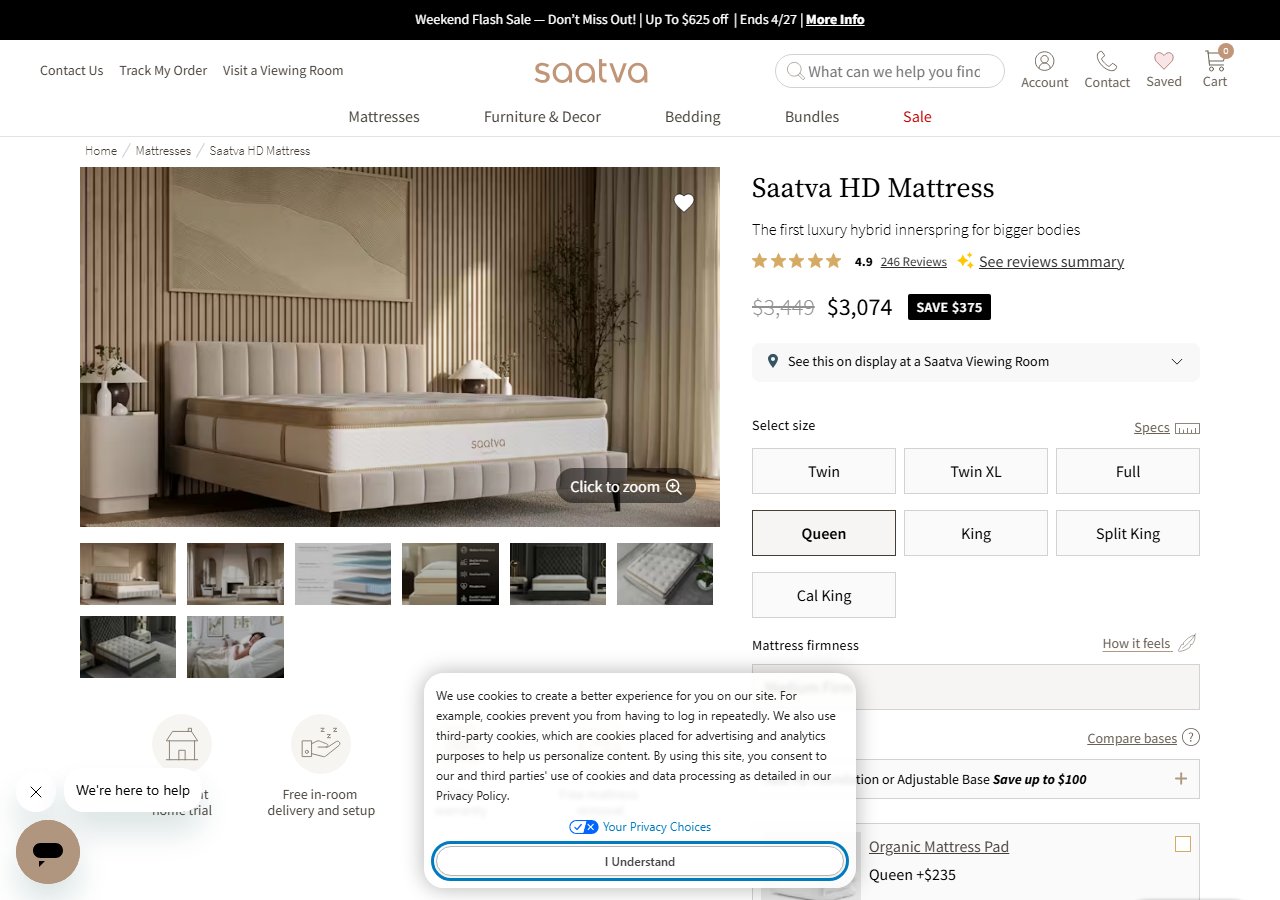
Saatva HD Mattress (Heavy-Duty)
$2,395-$3,995
See Price at Saatva →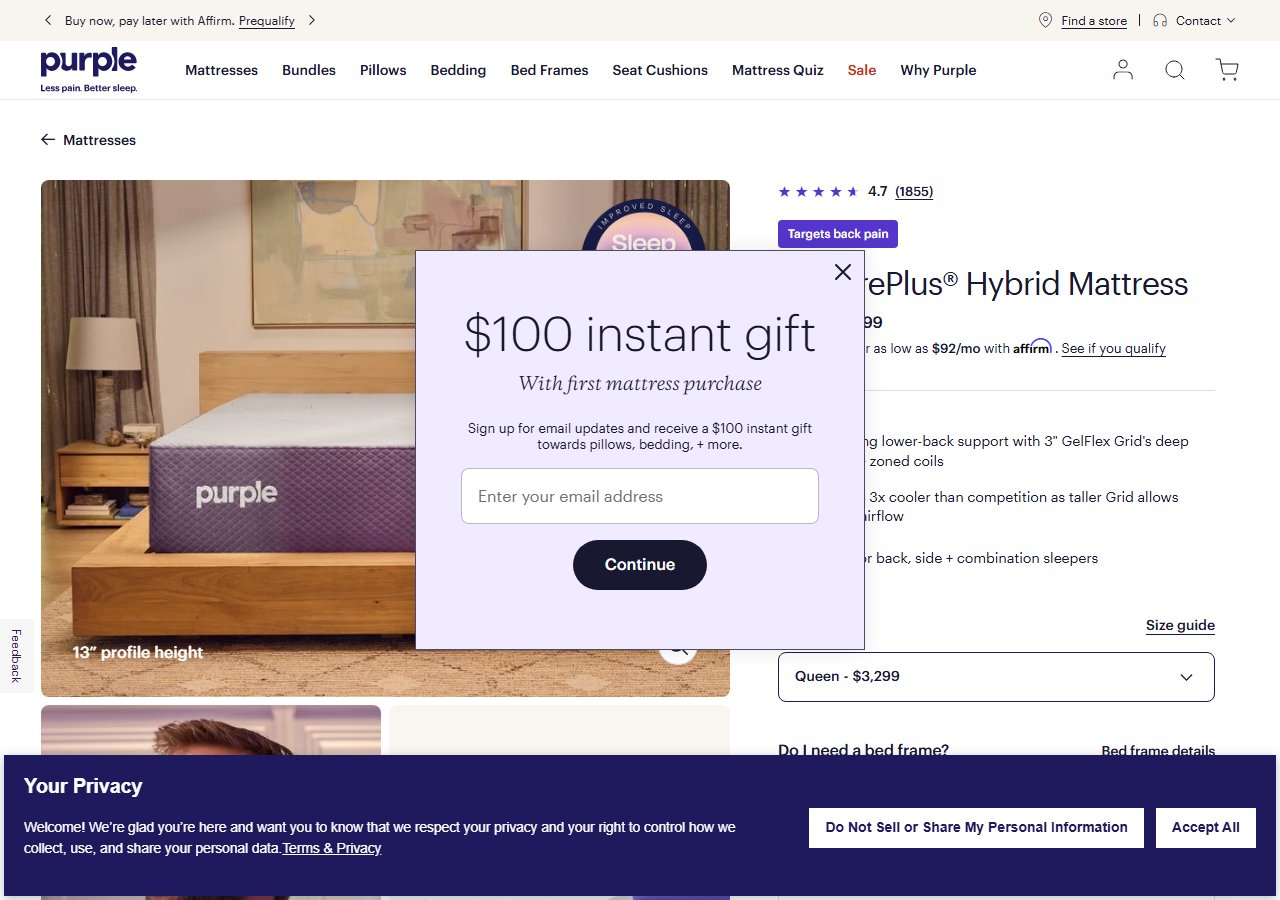
Purple Hybrid Premier Mattress
$2,499-$4,799
See Price at Purple →The data-to-intervention-to-product hierarchy in plain English
The federal data on healthcare worker musculoskeletal health tells a consistent story: these workers absorb occupational spinal loading that routinely exceeds NIOSH safe limits, they sleep fewer hours than the CDC identifies as the chronic disease threshold, and they generate healthcare and disability insurance costs that reflect a system-level failure to address occupational MSD at the source. SSA Disability Insurance data showing musculoskeletal disorders as the largest disability claim category annually is not abstract — it is the career-ending endpoint of a trajectory that begins with repetitive suprathreshold loading and inadequate recovery.
The intervention hierarchy that federal evidence supports is clear: movement first (NIH NCCIH: walking reduces chronic low back pain as effectively as most non-drug treatments), sleep position second (NIH NIAMS: neutral spine positioning with pillow support), lifting mechanics third (OSHA: hip-hinge, load-close, no-twist), and clinical referral immediately for any neurological or systemic red flags (NIH NINDS criteria above). A sleep surface upgrade is a legitimate fifth lever for workers who have worked through the first four and are still sleeping on a surface with visible sag or age-related deterioration.
The three mattresses detailed above — the Saatva Loom & Leaf for pressure-contouring memory foam performance, the Saatva HD for larger-framed or heavier workers, and the Purple Hybrid Premier for diffuse pressure sensitivity and temperature-neutral sleep — are not miracle devices. They are tools that remove a preventable impediment to recovery. The work of recovery still happens in the body. The mattress is the environment in which that work either proceeds uninterrupted or gets undermined, one inadequate night at a time.
For a healthcare worker managing chronic occupational back pain, removing that impediment is worth taking seriously. The federal data on what back pain costs — in dollars, in disability, in career years — makes the case that adequate recovery infrastructure is not a luxury. It is occupational health infrastructure for a body that is already working too hard.