The Federal Evidence Your Back Already Knows
If you are a nurse, surgical tech, patient care aide, or any other healthcare worker who ends a 12-hour shift feeling like your lumbar spine was used as a hinge point — federal data confirms you are not imagining it. According to BLS Musculoskeletal Disorders by Occupation tracking, the back is the most common body part injured across all U.S. occupations that result in days away from work. Healthcare consistently ranks among the sectors with the highest absolute MSD case counts, year over year.
The downstream cost is staggering. AHRQ HCUP data identifies back pain as one of the most expensive conditions in the entire U.S. healthcare system when measured by combined inpatient and outpatient spend. The AHRQ Medical Expenditure Panel Survey (MEPS) further documents that adults living with chronic back conditions spend substantially more on personal healthcare annually than adults without such conditions — a gap that compounds across a nursing or aide career spanning decades. And at the societal level, SSA Disability Insurance data shows musculoskeletal disorders are the single largest category of new disability claims filed every year in the United States.
The financial pressure reaches employers too. BLS Employer Costs for Employee Compensation data shows that industries with high MSD incidence carry workers' compensation insurance rates 3 to 5 times higher than low-MSD industries. That arithmetic explains why hospital systems spend heavily on safe-patient-handling programs — and why individual workers who internalize those same biomechanical principles off-duty tend to have better long-term outcomes.
Why Healthcare Work Specifically Breaks the Lower Back
Understanding the mechanism matters, because the intervention follows directly from the etiology. Healthcare work produces back injury through a combination of factors that are rare in their intensity and frequency even among other physically demanding occupations.
Cumulative spinal loading is the primary driver. Patient transfers, bed repositioning, and equipment transport require workers to generate high trunk forces repeatedly across shifts that can stretch 12 to 16 hours. The NIOSH Lifting Equation — the federal standard for evaluating manual lifting risk — documents that patient-handling tasks routinely exceed the Recommended Weight Limit even when lift-assist equipment is nominally available. Every lift that exceeds the NIOSH threshold generates compressive and shear forces on the intervertebral discs of the lumbar spine that exceed what the tissue was designed to sustain repeatedly over years.
Postural asymmetry and sustained static loading compound the cumulative lift problem. Charting at workstations of inconsistent height, leaning over beds to reach patients, and standing on hard institutional flooring for extended periods all impose sustained muscle activation in the erector spinae and quadratus lumborum — the muscles that keep you upright. When those muscles are chronically fatigued by the time a healthcare worker lies down, the sleep surface becomes the last biomechanical intervention of the day. If it fails — if it sags under hip weight and lets the lumbar spine flex into kyphosis, or if it is so firm it creates pressure points at the shoulders and hip — the muscles that just spent 12 hours under load never fully decompress.
Shift-work sleep compression makes this worse in a way that straight daytime workers rarely experience. CDC Sleep and Sleep Disorders data shows that approximately 35% of U.S. adults already sleep fewer than 7 hours per night, the threshold the CDC associates with elevated chronic disease risk. For rotating-shift healthcare workers, that baseline is lower still — circadian disruption, odd daytime sleep hours, and noise interference all reduce both total sleep time and the proportion of deep slow-wave sleep, which is when the body performs its most significant tissue repair. The practical implication: healthcare workers often have fewer hours and lower-quality hours on their sleep surface than day workers do, making the surface's ability to support neutral spinal alignment during whatever sleep time exists disproportionately important.
Arthritis and degenerative disc disease are not just conditions healthcare workers treat — they are conditions healthcare workers develop. CDC Arthritis data shows approximately 25% of U.S. adults report doctor-diagnosed arthritis, with prevalence concentrated in occupations involving sustained physical demand. And CDC NCHS Data Brief 390 identifies chronic pain, with the lower back as the most common location, affecting roughly 20% of U.S. adults — a rate that almost certainly understates prevalence among workers in physically intensive healthcare roles who may underreport to preserve employment.
Try These First — The Interventions Federal Evidence Supports
The most important thing to understand before evaluating any sleep surface is that the cheapest intervention is the one that does not require buying anything. Federal occupational health agencies have documented the following behavioral and clinical interventions with evidence that predates any mattress marketing. If you have not tried these consistently, a new mattress will help less than the marketing suggests.
The single highest-leverage free intervention is daily walking. The NIH National Center for Complementary and Integrative Health's evidence review on low-back pain finds that walking 30 minutes most days reduces chronic low-back pain as effectively as most non-drug clinical treatments. For healthcare workers whose instinct after a brutal shift is to be completely sedentary, this is a counterintuitive but well-supported recommendation. Movement drives fluid exchange in intervertebral discs and prevents the inflammatory cycle that sedentary recovery accelerates.
Sleep position is the second free variable. NIH National Institute of Arthritis and Musculoskeletal and Skin Diseases back-pain guidance recommends side-sleeping with a pillow between the knees, or back-sleeping with a pillow under the knees, to maintain neutral lumbar alignment. Stomach-sleeping — common among healthcare workers who collapse face-down from exhaustion — torques the lumbar spine into extension and rotation simultaneously, exactly the loading pattern that NIOSH documents as injurious during work tasks.
Lifting and bending mechanics matter even off the clock. OSHA's ergonomics guidance is explicit: hinge at the hips, not the lumbar spine; keep loads close to the body; avoid twisting under load. Most acute back episodes in healthcare are mechanical and rehearsable. Groceries, laundry, children — the daily off-shift lifting environment replicates the hospital environment at lower intensity but higher frequency.
Mattress condition itself is an underappreciated variable. CDC Sleep Hygiene guidance supports replacing a sleep surface that has visible sag, produces more stiffness in the morning than at bedtime, or has exceeded 7 to 10 years of use. Even the most expensive mattress does not undo poor sleep hygiene or a sedentary lifestyle — but a sagging mattress actively undermines the spinal alignment that every other intervention is trying to protect.
If you have addressed sleep position, daily movement, and body mechanics and are still waking with significant back pain or stiffness, a better sleep surface is a rational next step — not an indulgence. The federal data makes clear that chronic back pain is expensive, disabling, and progressive if unmanaged. The question then becomes which surface features the occupational health evidence actually points toward for healthcare workers specifically.
When to See a Clinician First
Before evaluating any product, it is worth being direct about when this conversation should be happening with a physician or physical therapist, not a buying guide. A sleep-surface upgrade is appropriate for mechanical back pain that is clearly positional and that has not responded to conservative self-management. It is not appropriate as a first response to back pain with neurological or systemic features.
NIH National Institute of Neurological Disorders and Stroke back-pain guidance is clear: seek prompt clinical evaluation for back pain that radiates below the knee, follows a traumatic injury, comes with leg weakness or numbness, involves bowel or bladder changes, or accompanies fever or unexplained weight loss. These presentations require imaging and clinical workup. A new mattress is not the intervention — and delaying evaluation by attributing these symptoms to a bad sleep surface is a documented pathway to worse outcomes.
For healthcare workers specifically, the occupational exposure history matters to any clinician evaluating back pain. Be explicit about your shift length, patient census, lift-assist equipment availability, and how long symptoms have been present. AHRQ MEPS data shows that adults with chronic back conditions carry substantially higher annual healthcare expenditures — which means early conservative management, including physical therapy, exercise prescription, and sleep optimization, is economically rational relative to the downstream cost of undertreated chronic pain. CMS drug spending data identifies opioid and non-opioid pain medication among the most expensive Medicare drug categories, a downstream consequence of chronic pain that conservative early management helps avoid.
What the Evidence Points Toward in a Sleep Surface
For healthcare workers with documented MSD risk — which the federal data suggests includes essentially everyone in a bedside or direct-care role — three mattress features map most directly to the biomechanical problems described above.
Pressure relief at the hips and shoulders matters because healthcare workers, like all adults, spend the majority of sleep time on their sides. A surface that is too firm creates pressure points at the greater trochanter and acromion that trigger position changes — interrupting the slow-wave sleep that is already compressed by shift schedules. A surface that is too soft allows the hips to sink and the lumbar spine to flex into lateral flexion, replicating the asymmetric loading patterns NIOSH documents as injurious.
Zoned support — firmer in the lumbar region, softer under the shoulders and hips — addresses the divergent needs of a body that has spent 12 hours under asymmetric load. Uniform-firmness mattresses require workers to choose between lumbar support and shoulder/hip pressure relief. Zoned construction offers both.
Temperature regulation is not cosmetic for this population. Healthcare workers in institutional environments often spend shifts in temperature-controlled spaces and then attempt sleep in non-climate-controlled home environments. Memory foam's heat retention is well-documented and can disrupt the temperature drop that signals sleep onset — particularly for rotating-shift workers sleeping in daylit, warmer rooms.
With those criteria in front of you, three options are worth examining in detail.
The Saatva Loom & Leaf Memory Foam Mattress is the premium memory foam recommendation for healthcare workers with documented back pain and pressure-point sensitivity. Saatva constructs the Loom & Leaf with a multi-layer memory foam architecture — a gel-infused top layer for temperature management, a contour layer that responds to hip and shoulder geometry, and a high-density support foam base. The mattress is available in Relaxed Firm and Firm configurations, which maps well to the side-sleeper majority who need shoulder compliance without lumbar collapse. At $1,695 to $3,295 depending on size, it is a significant investment — one the AHRQ MEPS data on chronic-back-condition healthcare costs helps contextualize.
For healthcare workers on the heavier end of the body-weight spectrum — or those who have found that standard mattresses sag prematurely under their frame — the Saatva HD Mattress is engineered specifically for higher body weights. Its reinforced coil system and dual-tempered steel spring array are designed to maintain consistent lumbar support at weights where conventional mattresses compress beyond their rated deflection, producing exactly the hammock effect that worsens back pain. The Saatva HD runs $2,395 to $3,995 — a higher price point that reflects the engineering tolerance required to support higher body-weight loads without progressive sag.
The Purple Hybrid Premier Mattress takes a different engineering approach: its proprietary GelFlex Grid sits above a pocketed coil system and creates a surface that is simultaneously pressure-relieving and supportive without the heat-retention profile of traditional memory foam. For healthcare workers who run warm, who share a bed with a partner of different weight, or who have found memory foam causes them to sweat through their already-compressed sleep window, the Purple's temperature-neutral grid construction addresses a real biomechanical need. It ranges from $2,499 to $4,799.
Sleep Surfaces Engineered for Healthcare Worker MSD Recovery
These three mattresses were selected specifically for healthcare shift workers carrying cumulative spinal load — prioritizing zoned lumbar support, pressure-point relief at the hips and shoulders, and temperature management for daylit recovery sleep.

Saatva Loom & Leaf Memory Foam Mattress
$1,695-$3,295
See Price at Saatva →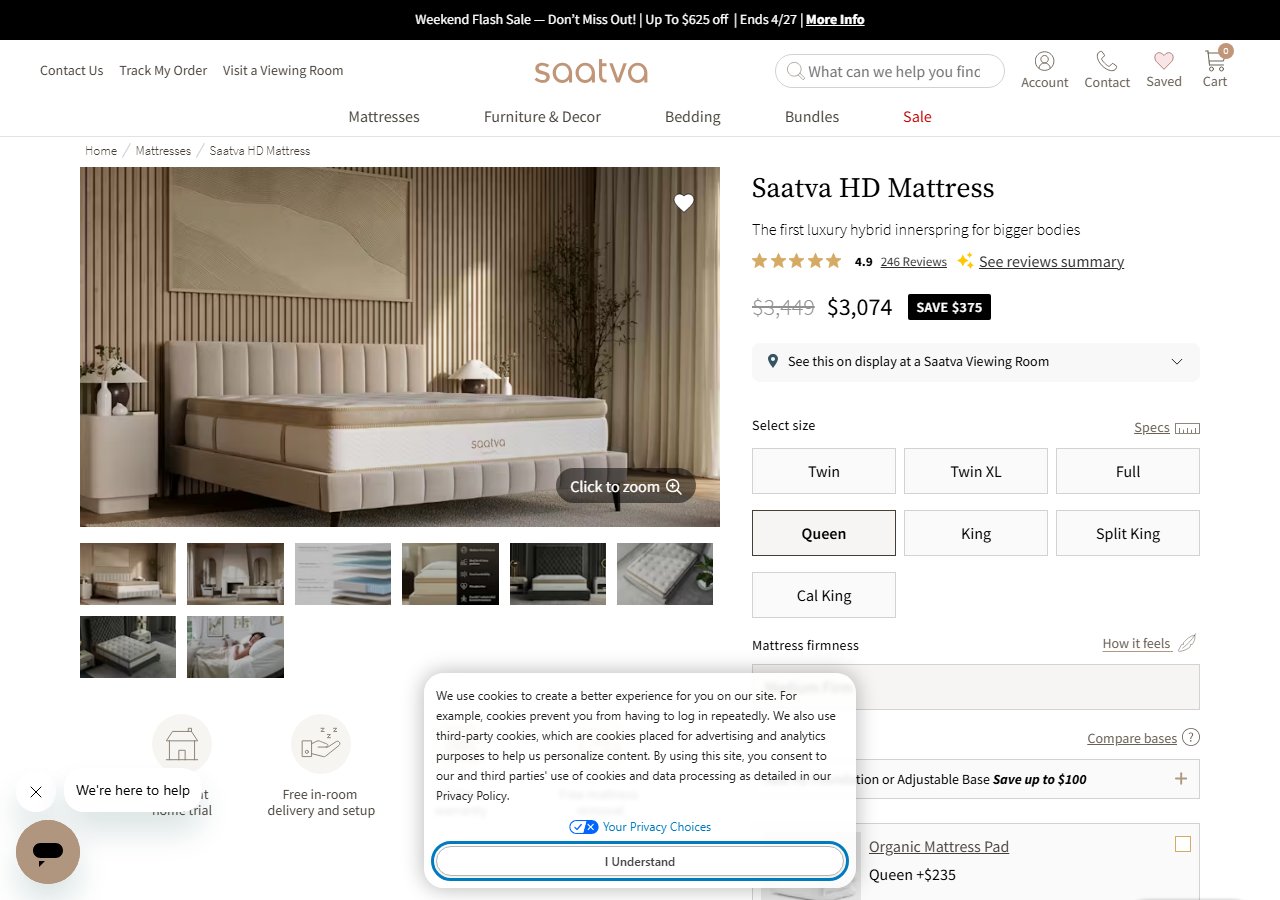
Saatva HD Mattress (Heavy-Duty)
$2,395-$3,995
See Price at Saatva →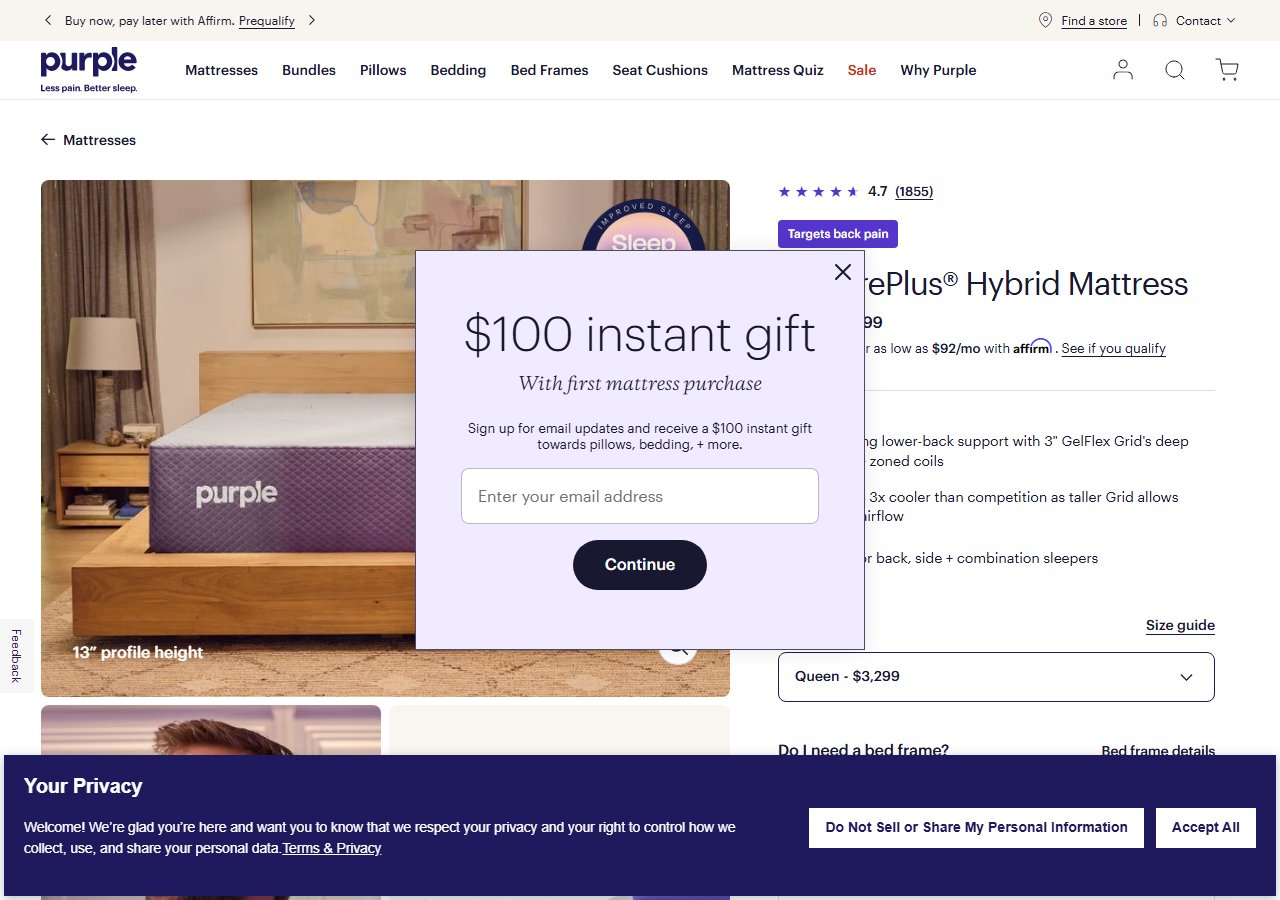
Purple Hybrid Premier Mattress
$2,499-$4,799
See Price at Purple →The Data-to-Decision Summary
The federal evidence is consistent and mutually reinforcing across agencies. BLS documents that healthcare workers sustain back injuries at high rates. NIOSH documents why — patient-handling tasks exceed safe spinal loading limits. CDC documents that sleep is already compressed for a third of U.S. adults, and shift work makes that worse. AHRQ documents what undertreated back pain costs. And SSA documents where it ends: musculoskeletal disability.
The intervention hierarchy that follows from this data is not complicated. Move daily — walking is the highest-evidence non-drug intervention for chronic low-back pain per NIH. Sleep in a position that keeps your spine neutral — NIH guidance is explicit on this, and it costs nothing. Fix your lifting mechanics both at work and off the clock — OSHA's guidance applies to groceries and laundry as much as patients. Replace a sagging mattress if it has passed its useful life. And if pain has neurological features, see a clinician before evaluating any product.
If you have done those things and your sleep surface is still letting you down — literally — the Saatva Loom & Leaf, Saatva HD, and Purple Hybrid Premier represent three engineering approaches to the same problem: keeping a healthcare worker's spine in neutral alignment during whatever hours of recovery their schedule allows. The federal data does not name brands. But it describes the problem precisely enough that the right surface features follow directly from it.