The Federal Data Behind a Problem You Already Feel in Your Back
If you weigh 250 pounds or more and work a physically demanding job — warehousing, construction, healthcare, transportation — you are not imagining the compounding toll. The federal data is unambiguous. BLS Musculoskeletal Disorders by Occupation tracking identifies the back as the single most common injured body part across all U.S. occupations that result in days away from work. That is not a near-miss — it is the top of every industry's injury chart. And while back injuries do not discriminate entirely by bodyweight, the biomechanical math is not neutral: higher mass means higher compressive spinal load under every lift, every reach, and every hour lying on a mattress that cannot distribute that weight.
The downstream costs are staggering. AHRQ HCUP data identifies back pain as one of the most expensive conditions in U.S. healthcare measured by combined inpatient and outpatient spend. AHRQ MEPS data shows that adults carrying chronic back conditions spend substantially more on personal healthcare annually than adults without those conditions. The CMS Drug Spending Dashboard flags opioid and non-opioid pain medications among the costliest Medicare drug categories — a direct financial fingerprint of the chronic-pain burden concentrated in working-age and older adults. Meanwhile, SSA Disability Insurance data shows musculoskeletal disorders are the single largest category of new disability claims filed every year. The back pain problem is not a personal failing. It is a measurable public health and occupational safety failure — and for high-bodyweight workers, the exposure is disproportionate.
Why High-Bodyweight Adults Face a Compounding Injury Cycle
Understanding why this happens requires a quick biomechanics detour, grounded in what federal occupational health agencies have actually measured. The NIOSH Lifting Equation — the gold-standard tool for calculating safe lifting limits in the workplace — documents that manual material-handling tasks across warehousing, construction, and healthcare routinely exceed recommended spinal load limits even for average-weight workers. When body mass is higher, the baseline compressive force on lumbar discs during any task — including simply standing, walking, or repositioning in bed — is elevated before a single box is lifted.
The mechanism has two distinct phases. During waking hours, the spine absorbs compressive and shear forces from occupational lifting, bending, and twisting. OSHA's ergonomics guidance identifies the key failure pattern: workers who hinge at the lumbar spine rather than the hips under load — a mechanical habit that is both common and correctable — create acute disc stress that accumulates over years into chronic degeneration. For higher-bodyweight workers, the margin for error is smaller. The spinal structures are managing a higher resting load, so the same mechanical error carries a higher injury probability.
During sleeping hours, the injury cycle continues if the sleep surface fails. A mattress that sags under higher body mass allows the lumbar spine to drop out of neutral alignment — typically into flexion for side-sleepers or hyperextension for back-sleepers. Eight hours in a compromised position means the paravertebral muscles that stabilized your spine all day are now working isometrically overnight to compensate for what the mattress is not doing. You wake stiff. You take ibuprofen. You go back to a job that stresses the same structures. The cycle compounds.
CDC NCHS Data Brief 390 reports that approximately 20% of U.S. adults — roughly 50 million people — experience chronic pain, with the lower back as the most common site. CDC sleep data shows 35% of U.S. adults report sleeping fewer than 7 hours per night, the threshold below which chronic disease risk rises materially. These two data sets overlap heavily in high-bodyweight, physically demanding workers: the people most likely to have daytime back pain are also the most likely to get inadequate sleep — and inadequate sleep, the neuroscience literature consistently shows, lowers pain thresholds and slows musculoskeletal recovery.
CDC arthritis data adds another layer: approximately 25% of U.S. adults report doctor-diagnosed arthritis, with prevalence concentrated in occupations involving sustained physical demand. Arthritis and degenerative disc disease frequently co-occur, and both are worsened by the load-then-recover-on-a-sagging-mattress cycle described above. This is not a coincidence. It is a predictable outcome when occupational and nocturnal spinal loading are both left unmanaged.
The Free Interventions Come First
Before we talk about any product — including a mattress — it is worth being direct: the cheapest intervention is the one that does not require buying anything. Federal and NIH guidance on chronic back pain consistently shows that behavioral, positional, and movement-based changes produce outcomes that many passive interventions — including expensive equipment — cannot match on their own. Products are adjuncts to these behaviors, not replacements.
Sleep position is the single largest free variable available to any back pain sufferer. NIH guidance on back pain is specific: side-sleeping with a pillow between the knees, or back-sleeping with a pillow under the knees, maintains lumbar spine neutrality during sleep. Stomach-sleeping torques the lumbar spine and worsens chronic pain by placing sustained stress on the facet joints and posterior disc elements — it is the position most consistently associated with morning stiffness in people who already have back problems. For higher-bodyweight individuals, neutral spine position during sleep is even more consequential because the gravitational forces working against that neutrality are larger.
Daily walking is the movement intervention with the strongest evidence base. NIH NCCIH's evidence review on low back pain concludes that walking 30 minutes most days reduces chronic low-back pain as effectively as most non-pharmacological clinical treatments. The mechanism is multifactorial — intervertebral disc hydration, paravertebral muscle conditioning, anti-inflammatory effect of aerobic activity — but the practical takeaway is simple: before spending $2,000 on a mattress, build a 30-minute walking habit. The walking will compound. The mattress will not.
Lifting and bending mechanics are the most directly occupationally relevant free intervention. OSHA's ergonomics solutions guidance emphasizes hinging at the hips rather than the lumbar spine, keeping loads close to the body, and avoiding rotation under load. Most acute back episodes in physically demanding occupations are mechanical in origin — meaning they are triggered by a specific movement pattern, not a degenerative event that could not have been avoided. That movement pattern is rehearsable. Workers who consciously retrain lifting mechanics reduce their acute injury rate.
Mattress replacement timing matters even before you choose a model. CDC sleep hygiene guidance supports replacing a mattress with visible sag, one that causes you to wake stiffer than when you went to bed, or one older than 7 to 10 years. No mattress overcomes poor sleep hygiene or a sedentary lifestyle — and for high-bodyweight users, mattress degradation happens faster than average because the foam and coil systems are under higher sustained load.
If you have worked through sleep position changes, started walking regularly, and addressed lifting mechanics — or if you already have those habits in place and still wake with significant back pain — then the sleep surface itself may genuinely be a limiting factor. For adults over 250 lbs, standard mattresses are frequently the problem: they are engineered for average weight distribution, and they compress or sag faster under higher load. This is where purpose-built sleep surfaces become a legitimate tool rather than a luxury.
When to See a Clinician Before You Buy Anything
A new mattress is not the right first move if your back pain has specific characteristics that signal something more serious than mechanical strain or poor sleep position. NIH's National Institute of Neurological Disorders and Stroke back pain guidance identifies several clinical red flags that warrant prompt evaluation rather than a shopping decision.
For higher-bodyweight individuals specifically, the risk of conditions like lumbar spinal stenosis, degenerative disc disease with nerve root compression, and sacroiliac joint dysfunction is elevated relative to average-weight adults — and these conditions produce symptoms that a sleep surface cannot address. If your back pain radiates below the knee, follows a traumatic event, is accompanied by leg weakness, or comes with changes in bowel or bladder function, those are neurological or structural warning signs. Fever with back pain suggests infectious etiology. These presentations need imaging and clinical workup — not a new mattress.
The BLS workers' compensation cost data is relevant here too: industries with high musculoskeletal disorder incidence carry workers' compensation rates 3–5x higher than low-MSD industries. That cost differential exists precisely because MSD cases that are not caught early — including back conditions that progress past the mechanical stage — become the expensive, prolonged claims that drive those rates. Early clinical evaluation is an investment, not a delay.
Where a Reinforced Sleep Surface Enters the Picture
For higher-bodyweight adults who do not have red-flag symptoms, who have corrected sleep position and built some movement habits, and who are waking with persistent mechanical back pain — the sleep surface is a legitimate variable to address. The engineering question is specific: you need a mattress that (a) does not sag or compress unevenly under higher sustained load, (b) provides enough support depth to reach and support the lumbar spine rather than just conforming to the surface contour, and (c) maintains that support for more years than a standard consumer mattress will.
Three products stand out in this space for the specific needs of high-bodyweight adults with occupationally-driven back pain.
The Saatva HD Mattress is the most directly engineered product for this reader. Built explicitly for users up to 500 lbs, it uses a dual-coil system — micro coils in the comfort layer above a heavy-gauge Bonnell coil support core — that provides the kind of structural depth that standard mattresses simply do not. The lumbar zone support is reinforced at the center third of the mattress, which is exactly where a heavier body concentrates load in back-sleeping position. For warehouse workers, construction workers, and healthcare workers who are asking a lot of their spines during the day, the HD is engineered to do serious recovery work at night rather than just conform to whatever position gravity puts the body in.
For users who want high-end memory foam contouring with clinical-grade back support rather than a coil-dominant system, the Saatva Loom & Leaf is the premium memory foam pick. The construction uses a 5-lb density memory foam comfort layer — meaningfully denser than the 3-lb foam found in most consumer mattresses — which resists the compression-over-time failure that causes standard memory foam to create the hammocking effect that worsens lumbar pain. The spinal zone gel layer in the center third of the mattress is specifically designed to provide additional lumbar support without creating a pressure point. For higher-bodyweight users who prefer the conforming feel of memory foam but have been frustrated by cheaper memory foam products sagging within a year, the Loom & Leaf's construction density is the relevant distinction.
For users whose primary complaint is pressure buildup at the hips and shoulders — the joints that concentrate load in side-sleeping position for heavier bodies — the Purple Hybrid Premier takes a fundamentally different engineering approach. The GelFlex Grid, Purple's proprietary comfort layer, does not compress uniformly the way foam does. Instead, it collapses in the columns directly under pressure points while remaining firm in adjacent columns — creating a dynamic pressure map that redistributes load away from bony prominences. For a 280-lb side-sleeper with hip pain that is worsening their sleep quality and back pain cycle, that grid behavior is meaningfully different from what any foam product achieves. The Hybrid Premier's pocketed coil support base provides the underlying structural support, while the grid manages the surface pressure distribution in a way that foam-only or foam-over-coil systems cannot replicate.
Reinforced Sleep Surfaces for High-Bodyweight Back Pain
These three mattresses were selected specifically for adults over 250 lbs managing occupationally-driven back pain — prioritizing structural depth, long-term sag resistance, and lumbar zone support that standard consumer mattresses do not provide.

Saatva Loom & Leaf Memory Foam Mattress
$1,695-$3,295
See Price at Saatva →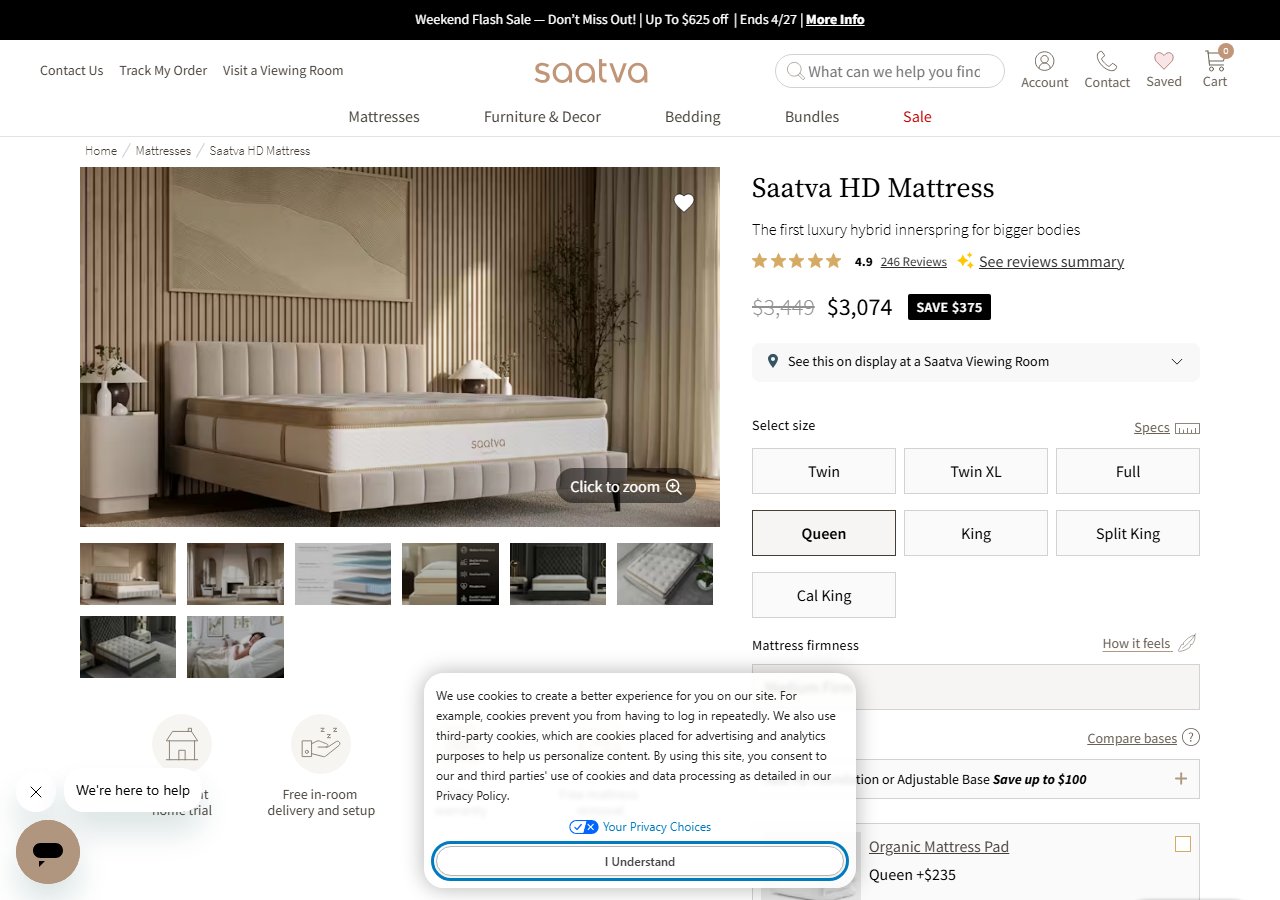
Saatva HD Mattress (Heavy-Duty)
$2,395-$3,995
See Price at Saatva →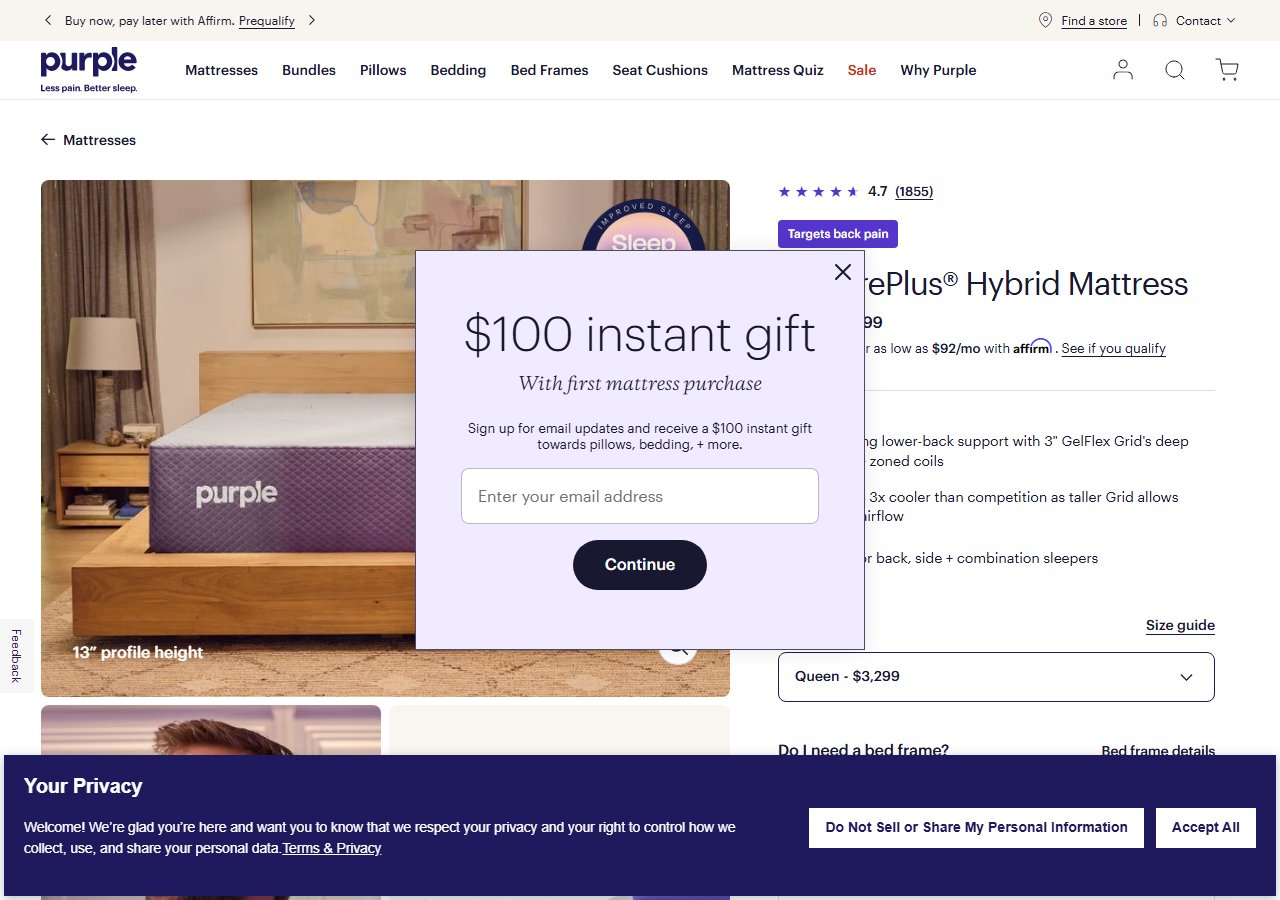
Purple Hybrid Premier Mattress
$2,499-$4,799
See Price at Purple →Putting the Data Hierarchy to Work
The federal data reviewed here is not subtle. BLS tracking puts the back at the top of every occupation's injury chart. NIOSH's Lifting Equation documents that the tasks generating those injuries routinely exceed safe load limits. SSA data shows musculoskeletal disorders are converting into permanent disability claims at the highest rate of any condition category. And CDC data places 50 million adults in chronic pain, predominantly in the lower back.
For a high-bodyweight adult doing physical work, the compounding risk is real and measurable. The interventions that work are also real and measurable: sleep position correction, daily walking, lifting mechanics retraining, and — when the sleep surface is genuinely inadequate for the user's body — a reinforced mattress engineered to the load requirements that standard consumer products do not meet.
The hierarchy matters. Movement and position changes first. Clinical evaluation if red flags are present. Then equipment — a properly specified mattress as one tool in a broader recovery and injury-prevention system. The data does not support leading with a purchase. But it does support making an informed one.