The numbers behind the ache every long-haul driver knows
If you drive a semi for a living, you already know the feeling: a slow, grinding burn that starts somewhere around hour four and migrates from the mid-lumbar region down into the hips by the time you hit your delivery window. What you may not know is that this experience is thoroughly documented in federal occupational health data — and it is not inevitable.
BLS industry injury data shows that truck drivers carry above-average lumbar-injury claim rates relative to the all-industry baseline. The BLS Survey of Occupational Injuries and Illnesses further identifies back injuries as the most common musculoskeletal injury type resulting in days away from work across multiple industries — and trucking sits at the sharp end of that distribution. These are not soft statistics. They represent real lost shifts, real medical costs, and real career-ending disabilities for drivers who don't catch the problem early.
The financial stakes reinforce the health stakes. BLS Workers' Compensation Costs data identifies back claims as among the highest-cost claim categories in the workers' compensation system — a fact that has led progressive carriers and logistics firms to start funding ergonomic equipment proactively. But most drivers are still on their own, navigating the cab with a seat that was engineered for durability, not spinal health.
CDC chronic pain surveillance reports that approximately 1 in 4 U.S. adults experiences chronic low-back pain in any given year. Among long-haul drivers, the occupational exposure profile makes that baseline risk substantially worse. Understanding why requires a short detour into biomechanics.
Why sustained cab-seat posture destroys lumbar discs
The human lumbar spine is designed to move. Its five vertebrae — L1 through L5 — are separated by intervertebral discs that function as hydraulic shock absorbers, distributing compressive load through a gel-like nucleus pulposus surrounded by a fibrous annulus. Those discs are largely avascular: they depend on the pumping action of repeated loading and unloading (walking, standing, bending) to drive nutrient-rich fluid in and metabolic waste out. When you lock that spine into a fixed seated posture for eight or ten consecutive hours, you starve the disc of that fluid exchange.
OSHA's ergonomic guidance formally classifies awkward and prolonged seated posture as a documented risk factor for chronic low-back disorders — and long-haul trucking is one of the most extreme examples of that exposure pattern in any American industry. The cab environment adds two compounding stressors that office workers don't face: whole-body vibration (WBV) and a fixed steering-wheel reach that locks the thoracic spine into a forward-rounded position, pushing the load disproportionately onto the lumbar segments.
Whole-body vibration — the rhythmic oscillation transmitted from road surface through the chassis, seat, and into the spine — has been associated in occupational medicine literature with accelerated disc degeneration. A diesel rig running at highway speed generates vibration frequencies that overlap with the resonant frequency of the lumbar spine (approximately 4–8 Hz), creating cyclical compressive stress that compounds over thousands of hours behind the wheel.
The postural problem is equally serious. When the lumbar spine loses its natural lordotic curve — the inward arch at the lower back — the load on lumbar discs increases sharply. OSHA's Computer Workstations eTool specifies that the lumbar curve of the chair should match the natural curve of the lower back to reduce static loading. In a truck cab, where seats are rarely adjustable to the precision of an ergonomic office chair, drivers routinely slip into a posterior-pelvic-tilt position that flattens the lumbar curve entirely, turning the discs into asymmetrically loaded wedges rather than balanced hydraulic pads.
Body composition adds another variable. CDC NHANES data documents adult obesity prevalence at approximately 40% in the U.S. population. For drivers — a profession with documented challenges to consistent physical activity and meal quality on the road — lumbar load is often higher than the average seated worker due to increased abdominal mass shifting the center of gravity forward and requiring the paraspinal muscles to work harder to maintain any residual lordosis. A properly fitted lumbar support reduces the muscular energy cost of maintaining that curve.
Try these first — the interventions that cost nothing
The cheapest intervention is the one that does not require buying anything. NIH NCCIH evidence reviews place ergonomic adjustments and non-pharmacologic movement interventions at the top of the management hierarchy for chronic low-back pain — above most equipment purchases, and certainly above pharmaceuticals for non-acute presentations. Before you spend a dollar on a lumbar cushion, work through the following.
Daily walking — the most underrated intervention in the cab driver's toolkit. NIH NCCIH documents walking as a first-line intervention for chronic low-back pain, with effect sizes comparable to many clinical treatments. Thirty minutes of walking on most days restores the disc fluid exchange that prolonged sitting shuts down. Every truck stop has a parking lot. The intervention is free, it works, and no lumbar cushion substitutes for it.
Core and hip mobility work — five minutes a day changes the loading equation. NIH NIAMS lists core stabilization and hip mobility as protective factors for chronic low-back pain. Bird-dog exercises, glute bridges, and hip-flexor stretches address the two primary muscular deficits that prolonged cab sitting creates: weak deep stabilizers (transverse abdominis, multifidus) and shortened hip flexors (iliopsoas). Shortened hip flexors anteriorly tilt the pelvis, amplifying lumbar compressive load even when you're standing. Five to ten minutes daily — executable in any truck stop parking lot — outperforms most equipment changes for long-term prevention.
Proper lifting mechanics at the dock. The back strain drivers accumulate behind the wheel is often worsened at pickup and delivery points, where hand-truck loading, liftgate operation, and cargo securing require bending and twisting under load. OSHA ergonomic guidance is direct: hinge at the hips, not the lumbar spine; keep loads close to the body; avoid twisting under load. These are teachable, rehearsable movement patterns. A lumbar cushion during driving hours does not protect you at the dock if your lifting mechanics are poor.
Chair setup before cushion addition. OSHA's Computer Workstations eTool prescribes a specific neutral-posture sequence: set seat height so feet are flat on the floor (or footrest), set seat depth so three fingers fit between the seat pan edge and the back of the knee, then address lumbar support. In a truck cab, the analogous sequence is: adjust the air-ride seat to the correct height for your steering-wheel reach, adjust lumbar support (if the seat has a built-in adjuster) before adding any aftermarket cushion, then verify that your mirror positions allow a neutral neck posture. A lumbar cushion placed on a seat that is too low just shifts the problem proximally instead of solving it.
If you have worked through those interventions consistently for four to six weeks and the pain persists — or if it is getting worse — two things should happen simultaneously: you should book an appointment with a clinician, and you should begin evaluating whether aftermarket lumbar support equipment is part of a broader management plan. The interventions above reduce pain and injury risk; the equipment below makes sustaining those interventions easier over an eight-hour run.
When to see a clinician — and when the cushion is the wrong answer entirely
NIH National Institute of Neurological Disorders and Stroke is explicit about the symptoms that require medical evaluation before any self-managed intervention. A lumbar support cushion is appropriate for mechanical low-back pain in drivers who are otherwise healthy. It is not appropriate as a primary response to the following presentations:
- Pain that radiates below the knee — particularly if it follows a dermatomal pattern (inner calf, outer foot, top of foot). This pattern suggests nerve-root compression from disc herniation or foraminal stenosis, conditions that require imaging and clinical assessment, not a seat cushion.
- Numbness, tingling, or weakness in the legs or feet — loss of sensation or motor control is a neurological sign requiring urgent evaluation. Driving with compromised lower-extremity sensation or strength is also a FMCSA medical fitness concern.
- Bowel or bladder changes — any new difficulty controlling urination or defecation alongside low-back pain is a red flag for cauda equina syndrome, a surgical emergency.
- Fever alongside back pain — the combination suggests possible spinal infection (discitis, epidural abscess) and requires same-day medical contact.
- Pain unimproved after 4–6 weeks of consistent conservative care — NIH guidance sets this as the threshold for escalation. If walking, core work, and ergonomic correction haven't moved the needle in six weeks, you need a differential diagnosis, not a better cushion.
For drivers, there is an additional layer: FMCSA medical certification requirements mean that unmanaged chronic back pain with functional limitations can affect your ability to maintain a commercial driver's medical certificate. Early clinical engagement protects your license, not just your back.
Where equipment enters the picture — and what federal data supports
For the majority of long-haul drivers with mechanical low-back pain — the aching, stiffening, fatigue-driven discomfort that is directly proportional to hours in the seat — properly fitted lumbar support addresses the exact mechanism that federal occupational health data identifies as the primary driver of injury: loss of lumbar lordosis under prolonged static load.
NIH NIAMS lists chair lumbar support as a modifiable factor in chronic low-back pain management — one of the few equipment interventions with explicit endorsement in a federal health agency's clinical guidance. The operative phrase is "modifiable": lumbar support doesn't fix the underlying injury, but it modifies the postural environment so that the disc is loaded more symmetrically and the paraspinal muscles don't have to contract continuously to prevent the spine from collapsing into flexion.
For truck cab applications, the design requirements are specific. The aftermarket cushion must:
- Survive vibration — foam that bottoms out under WBV is worse than no support at all, because the driver unconsciously leans into the absent support and worsens the flexion posture.
- Position correctly against the seat back without migrating down toward the seat pan over the course of a long run.
- Fit within the cab seat's existing geometry — oversized cushions push the driver too far from the steering wheel or prevent proper use of seat-integrated safety features.
With those design criteria in mind, three products rise from the field.
The Everlasting Comfort Original Lumbar Support Pillow is the lumbar-specific recommendation for drivers who need targeted low-back curve support rather than full-seat cushioning. Its contoured memory foam is designed to nest against the lumbar region of a seat back and is secured by adjustable straps that reduce the migration problem common in cab environments — critical when road vibration and repeated ingress/egress would otherwise displace a cushion mid-route. This is the product that most directly addresses the OSHA-documented mechanism: restoring the lumbar curve to reduce static disc loading.
For drivers who experience combined lumbar and coccygeal (tailbone) pain — common when the seat pan is hard or when the driver's seat lacks adequate cushioning — the Everlasting Comfort Memory Foam Seat Cushion addresses the sitting surface as well as providing a measure of lumbar angle correction through its wedge geometry. The seat cushion tilts the pelvis forward slightly, which helps recover some anterior pelvic tilt and reduces the flat-back posture that drives disc overload. For heavier drivers — relevant given CDC NHANES data showing approximately 40% obesity prevalence — a cushion that distributes seat-pan pressure more evenly also reduces the ischial pressure points that compound discomfort on long runs.
The ComfiLife Premium Gel and Memory Foam Seat Cushion introduces a gel layer that addresses one of the more significant driver-specific problems: heat accumulation. Foam-only cushions trap body heat over multi-hour runs, which increases driver discomfort and — through perspiration — can degrade the foam's structural properties. The gel layer disperses heat and maintains a more consistent pressure distribution over the duration of a run. For drivers in warm-climate routes or summer operations, this is a meaningful functional differentiator.
Lumbar Support Equipment Vetted for Long-Haul Cab Environments
Each product below was selected for the specific demands of truck cab seating: vibration resistance, migration control, and compatibility with the prolonged static posture that OSHA and BLS data identify as the primary driver of lumbar injury in commercial drivers.
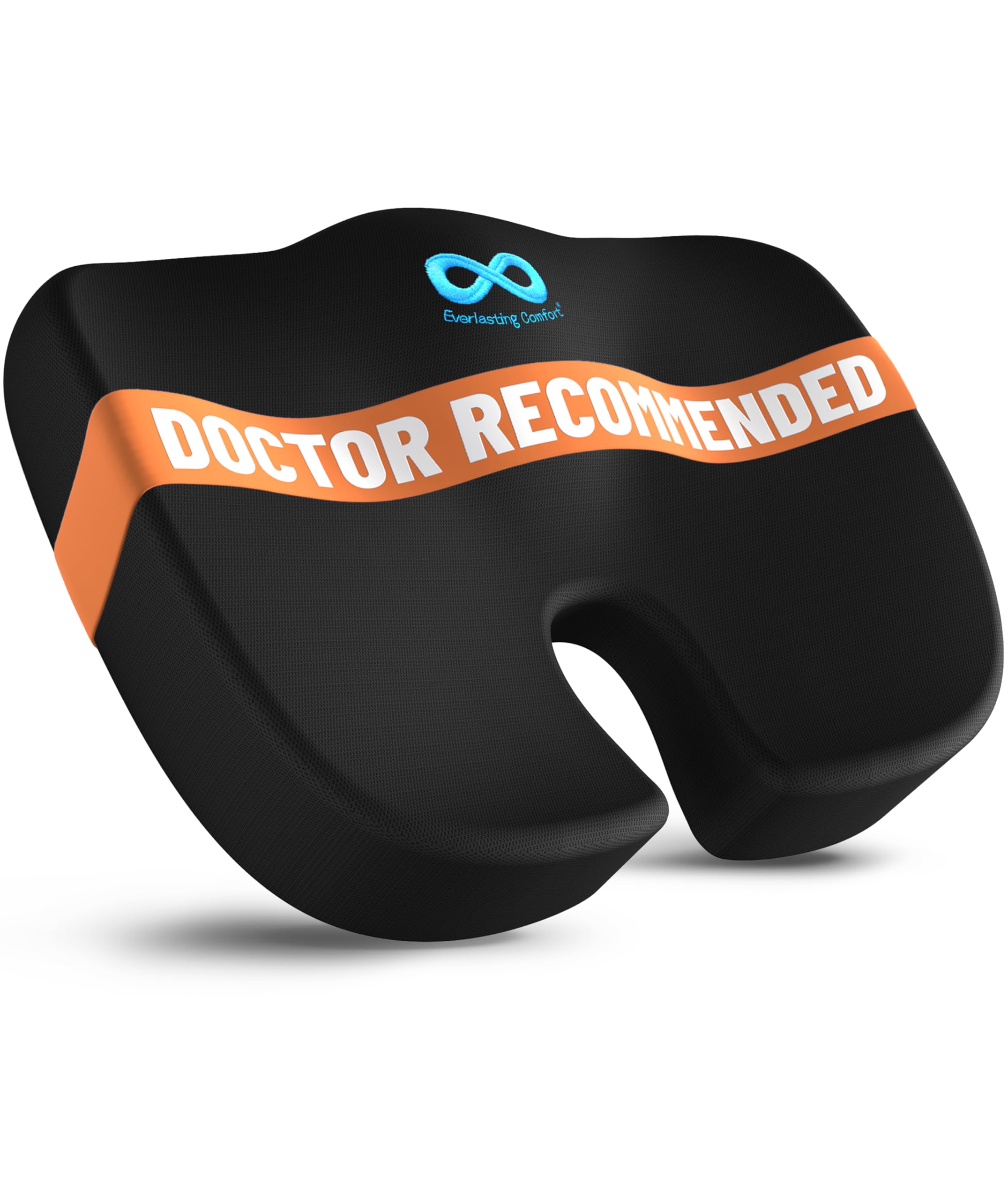
Everlasting Comfort Doctor Recommended Memory Foam Seat Cushion for Office Ch...
$47.98
Check Price on Amazon →
ComfiLife Premium Gel & Memory Foam Seat Cushion – Doctor Recommended Office ...
$41.39
Check Price on Amazon →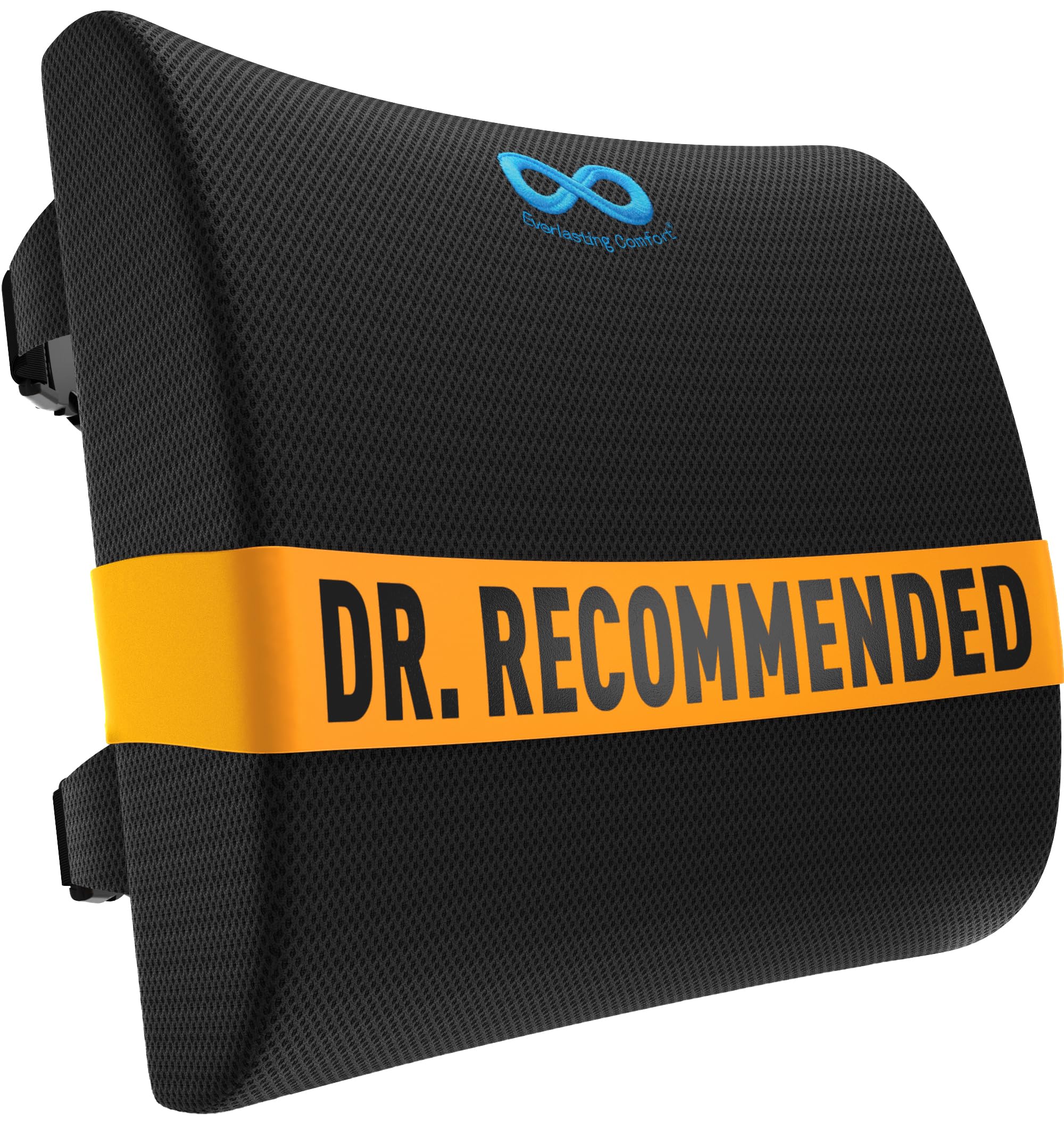
Everlasting Comfort The Original Lumbar Support Pillow for Office Chair - Imp...
$43.99
Check Price on Amazon →The evidence-based summary: mechanism, intervention, equipment — in that order
The federal data on long-haul driver lumbar health tells a consistent story. BLS industry data documents above-average injury rates. OSHA identifies the mechanism — prolonged awkward posture — explicitly. NIH NCCIH places non-pharmacologic interventions, including ergonomic support, at the top of the management hierarchy. NIH NIAMS endorses lumbar support as a modifiable factor in chronic pain management. BLS workers' compensation data quantifies the economic cost that makes employer and personal investment in prevention rational.
The correct sequence is: understand the mechanism, try the free interventions (walking, core work, proper seat setup, lifting mechanics), screen for clinical red flags, then evaluate equipment as an adjunct — not a replacement — for the behavioral and ergonomic work. Drivers who follow that sequence and add appropriately selected lumbar support into a broader posture management plan are working with the evidence, not against it.
Your back is your career. The federal data says it's worth protecting systematically.