Sleep After 60 Is a Different Biological Problem — Federal Data Confirms It
CDC sleep and sleep disorders surveillance puts the headline number at 35% of U.S. adults sleeping fewer than 7 hours per night — the threshold below which chronic disease risk rises measurably. But that 35% figure flattens the age gradient. The reality for adults over 60 is considerably worse, because sleep disruption after 60 is not primarily a behavior problem. It is a physiology problem, compounded by the accumulation of chronic conditions that arrive precisely in this life decade.
Three conditions cluster with particular frequency in adults over 60 and directly degrade sleep architecture: gastroesophageal reflux disease (GERD), osteoarthritis, and peripheral circulatory insufficiency. Each of these conditions has a positional component — meaning the angle at which you sleep determines how severely the condition disrupts your night. This is the biomechanical gateway through which adjustable sleep surfaces eventually become relevant. But we are getting ahead of the mechanism. First, the data.
CDC NCHS Data Brief 390 documents that approximately 20% of U.S. adults live with chronic pain, with the lower back as the single most common pain location. For adults over 60, that prevalence is substantially higher — arthritis alone affects more than half of adults over 65 according to CDC surveillance. When the joints that bear load during sleep (hips, knees, lumbar spine) are inflamed or degenerated, the body's natural microarousals — brief awakenings that normally go unnoticed — become conscious pain events. The result is sleep fragmentation: the person technically spends 7 or 8 hours in bed but cycles through so many arousals that they wake unrefreshed.
The SSA Disability Insurance Statistical Reports add fiscal weight to this picture. Musculoskeletal disorders are the single largest category of new disability claims filed annually in the United States. A meaningful share of those claimants are adults in their late 50s and early 60s whose physical deterioration has crossed the threshold from managed inconvenience to functional impairment. Disrupted sleep is both a symptom and an accelerant of that deterioration: pain interrupts sleep, and sleep deprivation lowers the pain threshold, creating a loop that conservative estimates suggest doubles the subjective pain burden.
The Three Mechanisms Breaking Your Sleep After 60
Mechanism 1: GERD and Nocturnal Acid Reflux
GERD prevalence increases with age. The lower esophageal sphincter loses tone over decades, and gravity becomes the primary barrier preventing stomach acid from traveling upward. When you sleep flat, you eliminate that gravitational advantage entirely. Nocturnal GERD causes micro-arousals, chronic cough, and in some cases aspiration events that further fragment sleep. The standard positional countermeasure is head-of-bed elevation — raising the torso 6 to 8 inches above flat. This is why adjustable bed bases are consistently recommended in clinical GERD literature as a first-line positional intervention: they provide continuous, precise elevation without the instability of stacked pillows, which collapse during the night and can cause neck hyperflexion.
Mechanism 2: Osteoarthritis and Pressure-Point Pain
Osteoarthritis degrades cartilage at weight-bearing joints — hips, knees, and the lumbar facet joints — over decades. In a flat sleep position, side-sleepers with hip osteoarthritis concentrate body weight at the greater trochanter (the bony prominence at the outer hip), where subcutaneous fat and muscle are thinnest. The pressure differential between the mattress and that bony landmark triggers pain signals within 90 minutes, producing an arousal. Morning stiffness in osteoarthritis is partially attributable to prolonged immobility in a mechanically suboptimal position during the night.
The AHRQ Healthcare Cost and Utilization Project documents back pain as among the most expensive conditions in U.S. healthcare by total inpatient and outpatient cost. A significant share of that cost comes from older adults whose pain management has become pharmaceutical-dependent — an outcome that federal data from the FDA Adverse Event Reporting System (FAERS) makes worth examining carefully. FAERS tracks adverse events for sleep medications and reveals a consistent pattern: sedative-hypnotics and muscle relaxants carry disproportionate fall-risk and cognitive side-effect profiles in adults over 65, making non-pharmacological sleep interventions especially valuable in this population.
Mechanism 3: Circulatory Insufficiency and Limb Elevation
Peripheral arterial disease, venous insufficiency, and lymphedema all become more prevalent after 60. Each of these conditions benefits from lower limb elevation during sleep — raising the feet above heart level reduces dependent edema (fluid pooling in the ankles and lower legs), reduces the pain from venous pressure, and in some cases improves arterial perfusion by reducing the hydrostatic work against gravity. A flat mattress offers no mechanism for limb elevation without unstable pillow stacking. The zero-gravity position achievable on an adjustable base — head and knees both elevated, with body weight distributed along the full posterior surface — is derived from aerospace ergonomics specifically designed to minimize cardiovascular stress.
The BLS Musculoskeletal Disorders data identifies the back as the most common injured body part across U.S. occupations resulting in days away from work. Adults over 60 in the workforce — including the large cohort of late-career healthcare workers, service workers, and tradespeople — carry accumulated spinal loading from careers measured in decades. The NIOSH Lifting Equation documents that manual material-handling tasks in warehousing, construction, and healthcare routinely exceed safe spinal loading limits. The cumulative disc compression and facet joint stress from 30 or 40 years of occupational loading does not reverse at retirement. It shows up as nocturnal pain in the decade that follows.
The Cheapest Intervention Is the One That Requires No Purchase
Before discussing any equipment, it is worth being direct: the federal evidence base for sleep improvement in older adults leads with behavioral and positional interventions, not products. The NIH, CDC, and AHRQ consistently rank sleep hygiene modifications, movement, and clinical screening above equipment purchases in their guidance hierarchies. Many readers who implement the interventions below will find meaningful sleep improvement without spending anything.
The CDC's sleep hygiene guidance identifies bedroom temperature (65 to 68 degrees Fahrenheit), darkness, and screen abstinence in the final hour before bed as the highest-leverage environmental changes available. These three changes cost nothing and consistently outperform equipment upgrades in head-to-head trials for sleep onset latency and total sleep time. If you have not optimized these variables, do that first.
Sleep position is the second free intervention with direct relevance to the conditions described above. NIH guidance on back pain from the National Institute of Arthritis and Musculoskeletal and Skin Diseases explicitly lists sleep posture as a primary modifiable factor. Side-sleeping with a pillow placed between the knees keeps the pelvis in neutral alignment and reduces lumbar rotational load. Stomach-sleeping — the worst position for both back and neck — should be actively avoided. For GERD, using a wedge pillow or stacked firm pillows to raise the torso 6 to 8 inches above flat provides meaningful positional relief before any motorized equipment enters the conversation.
For chronic back pain specifically, AHRQ evidence reviews and NIH NCCIH guidance list daily walking as a first-line non-drug intervention. Thirty minutes of moderate walking most days outperforms most passive interventions — including many devices — in meta-analyses. The mechanism is multifactorial: walking loads the disc in a pumping motion that promotes hydration and nutrient exchange, activates the posterior chain muscles that support the lumbar spine, and reduces the systemic inflammatory markers that lower pain threshold. If chronic back pain is your primary sleep disruptor, a walking program deserves a serious trial before any equipment purchase.
Finally, for anyone experiencing loud snoring, witnessed gasping during sleep, or significant daytime sleepiness, the NHLBI sleep apnea screening guidance is unambiguous: get a sleep study before purchasing any sleep equipment. Adjustable bases help with positional snoring and mild GERD. They do not treat moderate-to-severe obstructive sleep apnea. Undiagnosed and untreated sleep apnea in adults over 60 carries serious cardiovascular consequences, and no positional product substitutes for a diagnosis.
For readers who have already worked through these interventions — who are already sleeping in a cool, dark room, walking daily, and managing their sleep position — and are still experiencing pain-driven fragmentation or nightly GERD events, equipment becomes a legitimate conversation. The adjustable base is the one category of sleep equipment with the clearest biomechanical rationale for the specific conditions that cluster in adults over 60.
When to See a Clinician Before Buying Anything
The evidence base here is explicit, and this section deserves as much attention as the product discussion that follows. NIH guidance from the National Institute of Neurological Disorders and Stroke states that most low back pain resolves within 4 to 6 weeks without imaging. But several presentations require clinical evaluation before any sleep intervention is appropriate.
Back pain that radiates below the knee — particularly pain that follows a dermatomal pattern down the calf or into the foot — suggests nerve root compression that may require imaging and potentially intervention. Pain accompanied by bowel or bladder dysfunction is a red flag for cauda equina syndrome, a surgical emergency. Pain that follows trauma, or that comes with systemic symptoms like fever, night sweats, or unexplained weight loss, requires urgent evaluation to rule out infection or malignancy. In older adults specifically, new-onset back pain without a clear mechanical history warrants imaging to exclude compression fracture from osteoporosis — a diagnosis that changes the sleep surface recommendation entirely.
Similarly, if sleep disruption in an adult over 60 is primarily driven by daytime fatigue, morning headaches, or a partner reporting witnessed apneas, a sleep study is the clinical priority. The NHLBI is clear that positional interventions address positional contributors to snoring; they do not address the airway obstruction mechanism of sleep apnea. CPAP or alternative airway therapies are the evidence-based treatment, and an adjustable base may complement CPAP therapy but does not substitute for it.
Where Adjustable Bases Fit Into the Evidence Picture
For older adults who have addressed sleep hygiene, optimized sleep position with low-cost tools, ruled out sleep apnea, and are managing a clinically confirmed combination of GERD, arthritis-related pain, or circulatory issues, an adjustable base provides a genuine mechanical advantage that pillows and wedges cannot match with the same reliability or precision.
The FDA 510(k) clearance database provides federal-level engineering review of motorized adjustable base mechanisms — covering motor durability, pinch-point safety, and electrical component reliability. This federal review process is worth understanding because it distinguishes regulated medical-adjacent devices from commodity furniture, and the Sven & Son product line has been developed with these engineering standards as a reference point.
The three options below are curated specifically for the physiological demands of adults over 60: head elevation for GERD management, zero-gravity positioning for circulatory support and lumbar offloading, and low-profile entry height for fall-risk reduction during nighttime transfers.
The Sven & Son Bliss Combination Package
For older adults who want a single-purchase solution that addresses both the base and the sleep surface, the Sven & Son Bliss Adjustable Bed Base-Frame with 14-inch Hybrid Spring Mattress at $2,749.95 is the most comprehensive option in this set. The hybrid spring and foam construction in the included mattress is specifically relevant for older adults with arthritis: individually wrapped coils allow zoned pressure relief at the hip and shoulder contact points while maintaining adequate lumbar support. The adjustable base component provides head and foot elevation with zero-gravity preset positioning — the configuration most relevant for both GERD management and lower-limb circulatory support.
The Sven & Son Harmony Base for Independent Sleep
For couples where one partner has GERD or circulatory needs and the other does not, split-king configurations are the clinical preference — each partner can adjust their half independently without disturbing the other. The Sven & Son Harmony Adjustable Bed Base at $2,194.95 is designed for exactly this use case. The Harmony's motor system supports smooth, quiet elevation changes that do not disrupt a partner during nighttime repositioning — a practical consideration that matters significantly in the sleep-disrupted-couple demographic that is common among adults over 60 where one partner has more pronounced symptoms.
The Sven & Son Classic for Essential Positioning
For older adults whose primary need is reliable head and foot elevation without additional features, the Sven & Son Classic Adjustable Bed Base at $1,994.95 provides the essential mechanical functionality at the entry price point in this set. The Classic handles the core clinical use cases — GERD head elevation, zero-gravity foot raise, and the reduced-flat-position that makes seated transfers easier for adults with hip or knee arthroplasty — without the additional cost of features that may not be relevant for every buyer.
Adjustable Bases Designed for GERD, Arthritis, and Circulation After 60
These three Sven & Son adjustable bases were selected for their zero-gravity positioning, head-of-bed elevation for GERD management, and motor reliability relevant to nightly use by adults over 60 with chronic positional pain or circulatory conditions.
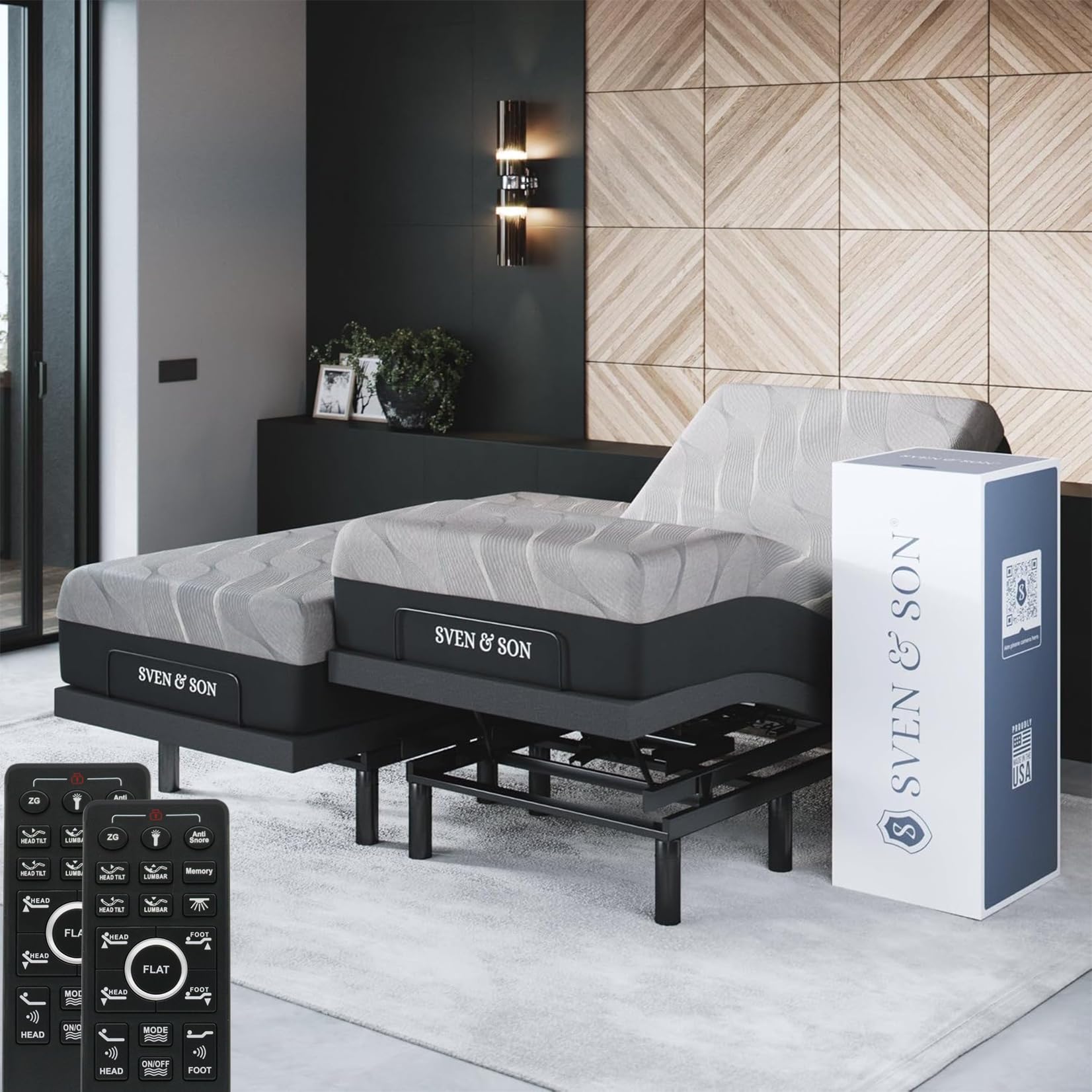
Sven & Son Bliss Adjustable Bed Base-Frame + 14 inch Hybrid Spring Matt (Medi...
$2,749.95
Check Price on Amazon →
Sven & Son Harmony Adjustable Bed Base, Head and Foot Lift, Massage, Under-Be...
$2,194.95
Check Price on Amazon →
Sven & Son Classic Adjustable Bed Base, Head and Foot Lift, Massage, Under-Be...
$1,994.95
Check Price on Amazon →Putting It Together: A Data-to-Action Framework for Adults Over 60
The evidence hierarchy here runs in one direction: behavior and position first, clinical screening where indicated, equipment as a targeted adjunct for specific confirmed conditions.
CDC data documents that 35% of Americans are already sleeping too little. For adults over 60, the compounding of GERD, arthritis, and circulatory changes creates a structural disadvantage that behavioral changes alone may not fully address — but behavioral changes remain the foundation. A cool, dark room and a consistent sleep schedule are free. A pillow between the knees costs $15. A daily 30-minute walk costs nothing and has the strongest evidence base of any single intervention for chronic low back pain.
Where those interventions have been genuinely applied and sleep remains fragmented by GERD events, arthritic pressure-point pain, or ankle edema from venous insufficiency, the adjustable base addresses the positional mechanism directly. The zero-gravity position is not a marketing concept — it is a biomechanically grounded posture derived from aerospace ergonomics that distributes body weight across the largest possible posterior surface area, reduces venous return work against gravity, and elevates the torso above the stomach to leverage gravity against acid reflux.
The SSA disability data makes one thing clear: musculoskeletal deterioration in later life carries enormous individual and social cost. Whatever combination of interventions and equipment helps older adults maintain restorative sleep — and thereby maintain the physical activity, pain tolerance, and cognitive function that delay functional decline — represents a meaningful return on investment. The goal is not a better mattress. The goal is another decade of functional independence.