The Federal Data Picture: Why Warehouse Work Is a Back-Injury Engine
If you work in a warehouse — picking orders, operating forklifts, loading trailers, managing returns — you are doing one of the most physically punishing jobs that exists in the American economy. That is not hyperbole. It is what the federal data shows, year after year.
The Bureau of Labor Statistics Musculoskeletal Disorder by Occupation tracking identifies the back as the single most common body part injured across all U.S. occupations that result in days away from work. Warehousing and storage consistently rank among the highest-MSD industries in that dataset. These are not papercut injuries. These are sprains, strains, disc compressions, and nerve impingements that pull workers off the floor for days, weeks, or permanently.
The mechanism is not mysterious. The NIOSH Lifting Equation — the federal government's primary tool for evaluating manual material handling risk — documents that warehouse tasks routinely and repeatedly exceed safe spinal loading limits. A standard 50-pound box lifted from a floor-level conveyor belt at arm's reach, twisted to a pallet, generates compressive forces on the L4-L5 disc that biomechanical research places at multiples of the NIOSH recommended weight limit. Do that 200 times a shift, five days a week, for years, and you are not experiencing bad luck. You are experiencing physics.
The downstream costs are staggering. AHRQ HCUP data identifies back pain as one of the most expensive conditions in U.S. healthcare by total inpatient and outpatient cost. CMS drug spending data identifies opioid and non-opioid pain medications among the most expensive Medicare drug categories — a direct reflection of chronic pain's treatment burden. And SSA Disability Insurance reports show musculoskeletal disorders are the largest single category of new disability claims filed each year in the United States. Warehouse workers are a significant contributor to every one of those numbers.
Why the Problem Doesn't Clock Out When You Do
Here is the part that occupational medicine literature has been slow to communicate to workers themselves: the eight-plus hours you spend off your feet are not neutral recovery time. They are either active rehabilitation or active harm, depending on what you're sleeping on and how you're sleeping.
CDC NHANES survey data finds that approximately 20% of U.S. adults experience chronic pain, with the lower back as the most common pain location. Among workers in physically demanding occupations like warehousing, that number is almost certainly higher. But the same CDC sleep data shows roughly 35% of U.S. adults are already sleeping fewer than 7 hours per night — the threshold CDC associates with elevated risk for chronic disease across multiple systems. Pair inadequate sleep duration with poor sleep quality driven by lumbar pain, and you have a compounding deficit.
The biomechanics are specific to warehouse work. Sustained loading on the lumbar spine — particularly the L4-L5 and L5-S1 motion segments that bear the brunt of lifting, bending, and twisting — generates inflammatory responses in the disc and paraspinal musculature. That inflammation does not resolve instantaneously when you stop working. During sleep, spinal discs rehydrate through a process called imbibition, pulling in fluid when compressive load is reduced. If your sleep surface creates uneven pressure — either by sagging under your body weight, or by being so firm that it forces your spine into extension — that rehydration process is impaired. You wake up stiffer than when you went to bed. Over months and years, that stiffness compounds into the kind of chronic pain that ends careers.
CDC arthritis data shows approximately 25% of U.S. adults report doctor-diagnosed arthritis, with prevalence concentrated in occupations involving sustained physical demand — exactly the profile of a warehouse career. Arthritis in the facet joints of the lumbar spine is not the same as disc injury, but both are aggravated by the same sleep surface failures: inadequate pressure relief at the hips and shoulders, failure to maintain a neutral lumbar curve, and material breakdown that allows the pelvis to sag below the thoracic spine.
BLS workers' compensation data shows that industries with high MSD incidence carry workers' compensation insurance rates 3-5x higher than low-MSD industries. That cost is ultimately borne by workers through wage suppression and by employers through insurance premiums — a structural incentive for prevention that most warehouses have not yet fully translated into practice. The AHRQ Medical Expenditure Panel Survey confirms average annual personal healthcare expenditures for adults with chronic back conditions substantially exceed costs for those without — costs that fall disproportionately on hourly workers with high-deductible health plans.
What the Research Says About Sleep Surface and Lumbar Recovery
The clinical literature on mattresses and back pain is more nuanced than most product marketing suggests. A 2015 randomized controlled trial published in Sleep Health found that medium-firm mattresses produced greater reductions in chronic low back pain than either firm or soft surfaces. The reasoning aligns with what biomechanics would predict: a medium-firm surface provides enough give to accommodate the width of the shoulders and hips (keeping the spine level), while maintaining enough support to prevent the pelvis from sinking and creating lumbar flexion under load.
For warehouse workers specifically, two additional factors matter beyond firmness: pressure relief at high-load zones (hips and shoulders accumulate more ground-reaction stress in workers who carry occupational inflammation), and durability under higher body weights. The BLS workforce demographic data for warehousing skews toward male workers, and the average body weight in that demographic group means a mattress rated for 250 pounds that actually sags at 220 is a clinical problem, not just a comfort inconvenience.
This is why the product recommendations later in this article weight durability and pressure-relief architecture more heavily than thread-count or cover materials.
Try These First: Free and Low-Cost Interventions That Work
Before any mattress discussion, a principle: the cheapest intervention is the one that does not require buying anything. Federal occupational health agencies and clinical guidelines consistently recommend behavioral and mechanical interventions as first-line approaches to musculoskeletal pain — not because products don't help, but because no product substitutes for the foundational work.
Start with your lifting and bending mechanics. OSHA's ergonomics solutions guidance is explicit: hinge at the hips, not the lumbar spine; keep loads close to the body's center of mass; avoid twisting under load. Most acute back episodes in warehousing are mechanical and rehearsable — meaning the movement pattern that caused the injury can be identified and corrected. A morning stiffness problem that originated from poor lift mechanics at work is not primarily a mattress problem. It's a movement problem that happens to show up in the morning.
Next, examine your sleep position. NIH's National Institute of Arthritis and Musculoskeletal and Skin Diseases back pain guidance recommends side-sleeping with a pillow between the knees, or back-sleeping with a pillow under the knees, as the positions most likely to maintain spinal neutrality during sleep. Stomach-sleeping torques the lumbar spine and cervical spine simultaneously, worsening chronic pain over time. This single positional change costs nothing and can meaningfully reduce morning stiffness within days.
Then consider daily walking. NIH NCCIH's evidence review on low back pain concludes that walking 30 minutes most days reduces chronic low back pain as effectively as most non-drug clinical treatments. For warehouse workers who are already on their feet, this seems counterintuitive — but purposeful walking for recovery is biomechanically distinct from reactive loading. It pumps synovial fluid through the facet joints and drives the spinal disc imbibition cycle without compressive loading peaks.
Finally, evaluate your current mattress honestly. CDC sleep hygiene guidance and clinical occupational health consensus both suggest replacing a mattress if it shows visible sag, if you consistently wake stiffer than when you went to bed, or if it is older than 7 to 10 years. Even the most precisely engineered sleep surface on the market cannot undo the effects of broken sleep hygiene, inadequate sleep duration, or sedentary recovery days.
Some readers will have worked through that checklist — corrected their mechanics, changed their sleep position, added walking, replaced a mattress that was visibly failing — and still wake up with lumbar stiffness that limits their next shift. That is where equipment designed specifically for the load patterns of manual-labor work becomes a clinically meaningful adjunct. Not a replacement for the behavioral work, but a force-multiplier for it.
When to See a Clinician Before You Buy Anything
Not every back problem is a sleep surface problem. NIH's National Institute of Neurological Disorders and Stroke back pain guidance is unambiguous about the red flags that require prompt clinical evaluation, not a mattress upgrade. If your back pain radiates below the knee — particularly with numbness, tingling, or a burning quality — you may have nerve root compression that needs imaging. If pain followed a discrete trauma event, presents with leg weakness, or comes with changes in bowel or bladder control, those are emergency presentations. Fever with back pain suggests a possible infectious process.
For warehouse workers specifically, the occupational medicine literature adds one more flag: if your pain is worsening despite modifications to lifting mechanics and sleep position, or if you've lost measurable strength in a leg, see a clinician before spending money on any product. The AHRQ HCUP data showing back pain as a top-cost healthcare condition reflects, in part, delayed diagnosis — workers who managed symptoms with over-the-counter approaches until a disc herniation or spinal stenosis required surgical intervention. Earlier clinical contact changes outcomes.
Where the Right Sleep Surface Actually Helps
For the warehouse worker who has addressed the free variables — mechanics, sleep position, movement, mattress age — and still wakes up with lumbar stiffness, mattress architecture matters in specific, documentable ways.
The three products discussed here were selected based on three criteria relevant to the warehousing worker profile: pressure relief at the hip and lumbar zones (to accommodate occupational inflammation without creating new pressure points), durability under higher body weights and sustained nightly use (warehouse worker demographics skew heavier and work schedules skew toward irregular shift patterns), and spinal alignment support (the ability to maintain a neutral lumbar curve for a side- or back-sleeping worker throughout the night without allowing the pelvis to sink into the sleep surface).
Saatva Loom & Leaf: Premium Memory Foam for Serious Back Pain
The Saatva Loom & Leaf Memory Foam Mattress is the first recommendation for warehouse workers experiencing chronic lumbar pain, particularly those who sleep on their side or back and have found that coil-based systems don't adequately cushion the hip pressure points that manual-handling work inflames.
The Loom & Leaf is constructed with a 3.5-inch comfort layer of gel-infused memory foam over a 1-inch transition layer, all sitting on a 5.5-inch high-density support foam core. That layering sequence matters for the warehouse worker: the top layers provide the conforming pressure relief that reduces morning stiffness, while the dense support core prevents the lumbar spine from sinking into a position of flexion that would defeat the purpose. Saatva offers two firmness profiles — Relaxed Firm and Firm — and for most warehouse workers with back pain, the Relaxed Firm hits the medium-firm target that the clinical literature identifies as optimal for chronic low back pain. White-glove delivery and in-home setup are included, which matters for workers who can't safely haul a heavy mattress without risk of acute injury.
Saatva HD: Built Specifically for Higher Body Weights
For warehouse workers at higher body weights — generally 230 pounds and above — the standard mattress durability curve becomes a real clinical issue. Most consumer mattresses are not engineered for the combination of higher body weight and the muscular tension patterns that manual-labor workers carry to bed. The Saatva HD Mattress is specifically engineered for this load profile.
The Saatva HD uses a patent-pending lumbar crown — a raised center section in the support layer — that provides targeted lumbar support for heavier bodies who tend to compress standard comfort layers all the way through to the base. It's built with an 887-coil Quantum Edge Coil system at the support layer, plus a 4-inch Euro pillow top and foam encasement, producing a surface that maintains consistent lumbar alignment even at body weights that would cause conventional mattresses to bottom out over 18 to 24 months. For a warehouse worker at 250 to 350 pounds, this is not a luxury upgrade. It is the engineering difference between a sleep surface that supports recovery and one that actively extends lumbar inflammation.
Purple Hybrid Premier: Grid Architecture for Pressure-Critical Recovery
The Purple Hybrid Premier Mattress takes a different engineering approach that is particularly relevant to warehouse workers whose primary complaint is hip and shoulder pressure — the workers who wake up sore in the joints that absorbed ground-contact force during the shift, not just in the lumbar musculature.
Purple's GelFlex Grid is a non-foam, hyperelastic polymer grid that behaves fundamentally differently from memory foam or latex under load: it collapses completely in the highest-pressure zones (hip and shoulder) while remaining firm in lower-pressure zones (lumbar, mid-back). The result is a surface that can simultaneously cushion the greater trochanter of the hip and support the lumbar spine — two objectives that traditional mattress materials often trade off against each other. The Hybrid Premier sits on a pocketed coil base, which adds edge support and airflow. For warehouse workers who run hot (a common complaint among physically active sleepers) and who experience concentrated hip pain from sustained standing and walking, the Purple Hybrid Premier's pressure-relief architecture addresses the specific injury pattern rather than generic comfort.
Mattresses Engineered for Warehouse Worker Lumbar Recovery
These three mattresses were selected specifically for the pressure-relief, durability, and spinal alignment requirements of workers whose jobs involve sustained manual material handling — not for general consumer comfort scores.

Saatva Loom & Leaf Memory Foam Mattress
$1,695-$3,295
See Price at Saatva →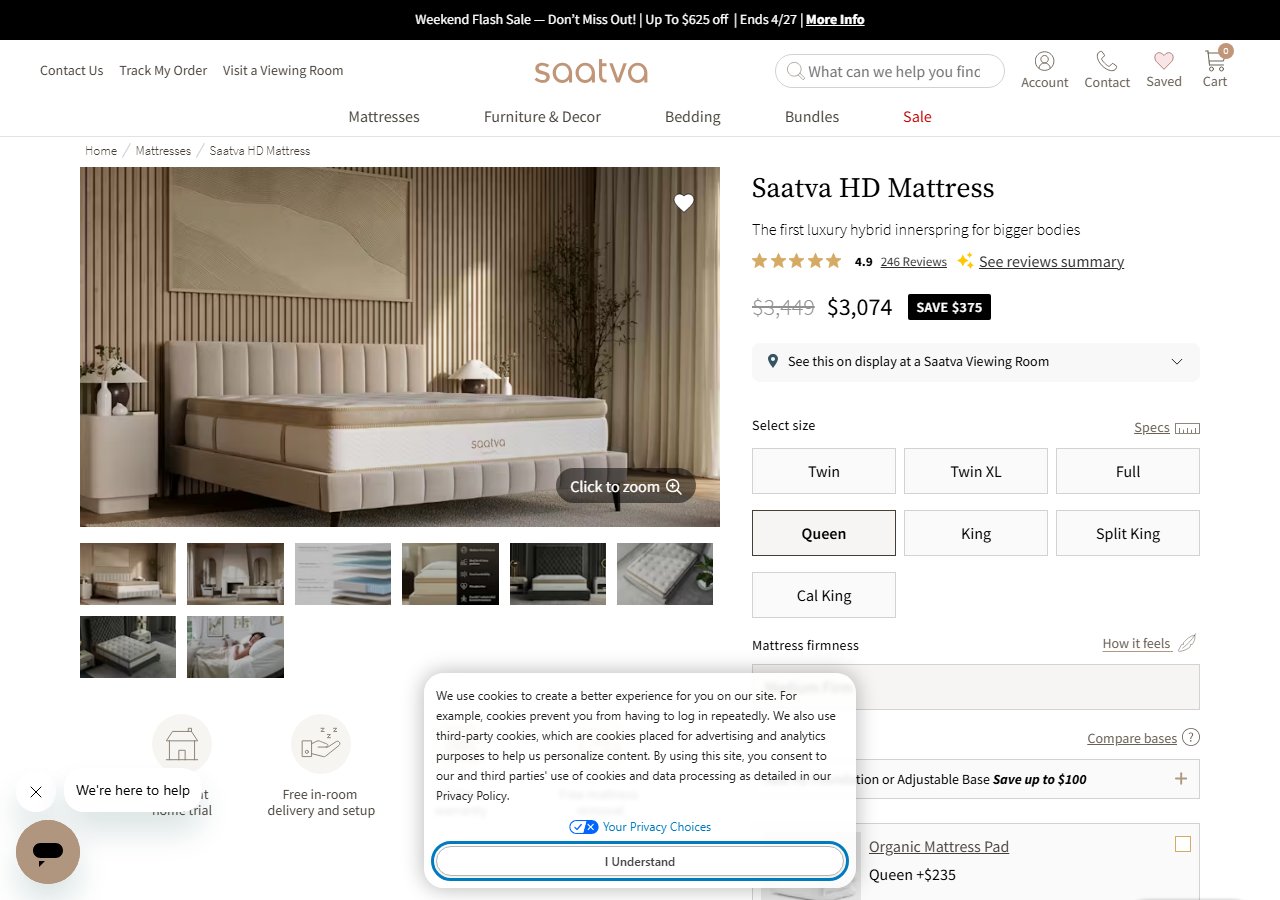
Saatva HD Mattress (Heavy-Duty)
$2,395-$3,995
See Price at Saatva →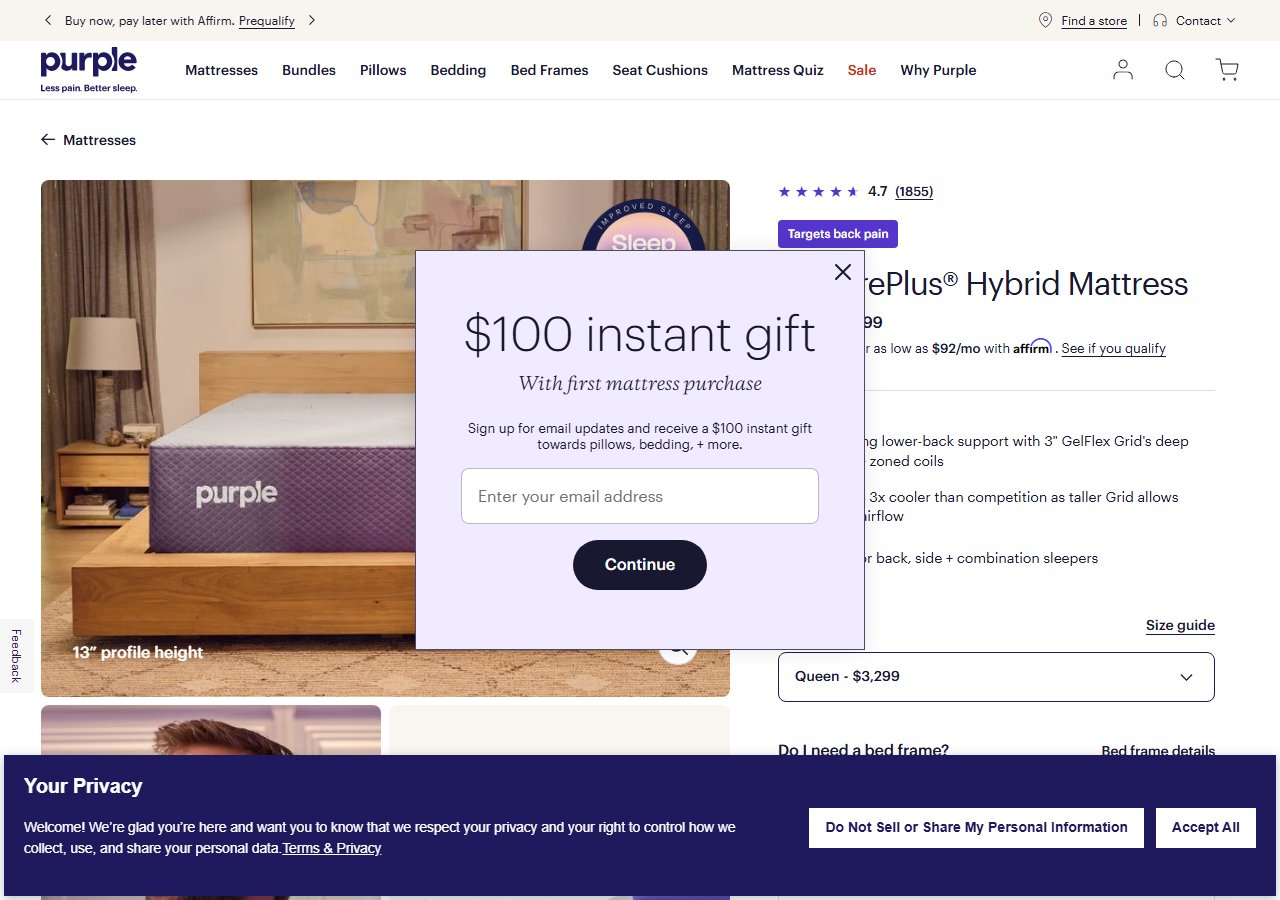
Purple Hybrid Premier Mattress
$2,499-$4,799
See Price at Purple →Pulling It Together: The Data-to-Recovery Framework
The federal data forms a coherent and sobering picture. BLS MSD tracking puts warehouse workers at the front of the back-injury queue. The NIOSH Lifting Equation explains exactly why — the physics of the job routinely exceed safe spinal loading. CDC chronic pain data shows 20% of U.S. adults are already in a chronic pain state, and CDC sleep data confirms a third of us are compounding the problem with inadequate sleep duration. SSA disability data shows where the trajectory ends if nothing changes: musculoskeletal disorders are the leading cause of new disability filings in the United States.
The framework for a warehouse worker addressing lumbar pain is sequential, not parallel. Correct your lifting and bending mechanics at work first — that is where the injury originates. Address your sleep position using NIH-recommended positioning techniques — that costs nothing. Add purposeful walking to your off-shift days — the NCCIH evidence base is strong. Evaluate whether your current mattress is structurally failed — CDC's sleep hygiene guidance gives you a clear diagnostic.
If you've done all of that and you're still waking up with lumbar stiffness that limits your next shift, then a sleep surface engineered specifically for your weight, your sleep position, and your occupational inflammation pattern is a legitimate recovery tool. The Saatva Loom & Leaf for medium-to-high-weight side and back sleepers who need pressure relief with solid lumbar support. The Saatva HD for workers at higher body weights where standard mattress durability is a documented failure mode. The Purple Hybrid Premier for workers whose primary pain is concentrated in the hip and shoulder joints rather than the lumbar musculature itself.
None of these products is a substitute for clinical care if your symptoms cross the red-flag threshold. And none of them matters as much as correcting the mechanics that load your spine 200 times a shift, five days a week. But for the worker who has done the work and needs a sleep surface that actually supports recovery — the engineering differences between these products and a standard consumer mattress are real, measurable, and clinically relevant to your specific situation.